The 1990s were a boom period for Disney feature animation, kickstarted by The Little Mermaid. Though many films of the era display some similar aspects or traits, from modern takes on classic stories to technologically groundbreaking uses of computer animation in key sequences, it’s the music that makes so many of these titles stand out. You can pick and choose from Ashman/Menken classics to songs co-written by Elton John and Phil Collins to the vast array of Danny Elfman songs in The Nightmare Before Christmas. But one animated feature that arrived 30 years ago this week has surprisingly become something of a cult favorite, in no small part because of its climactic piece of music. The song is “I 2 I,” and the film, almost inexplicably, is A Goofy Movie.
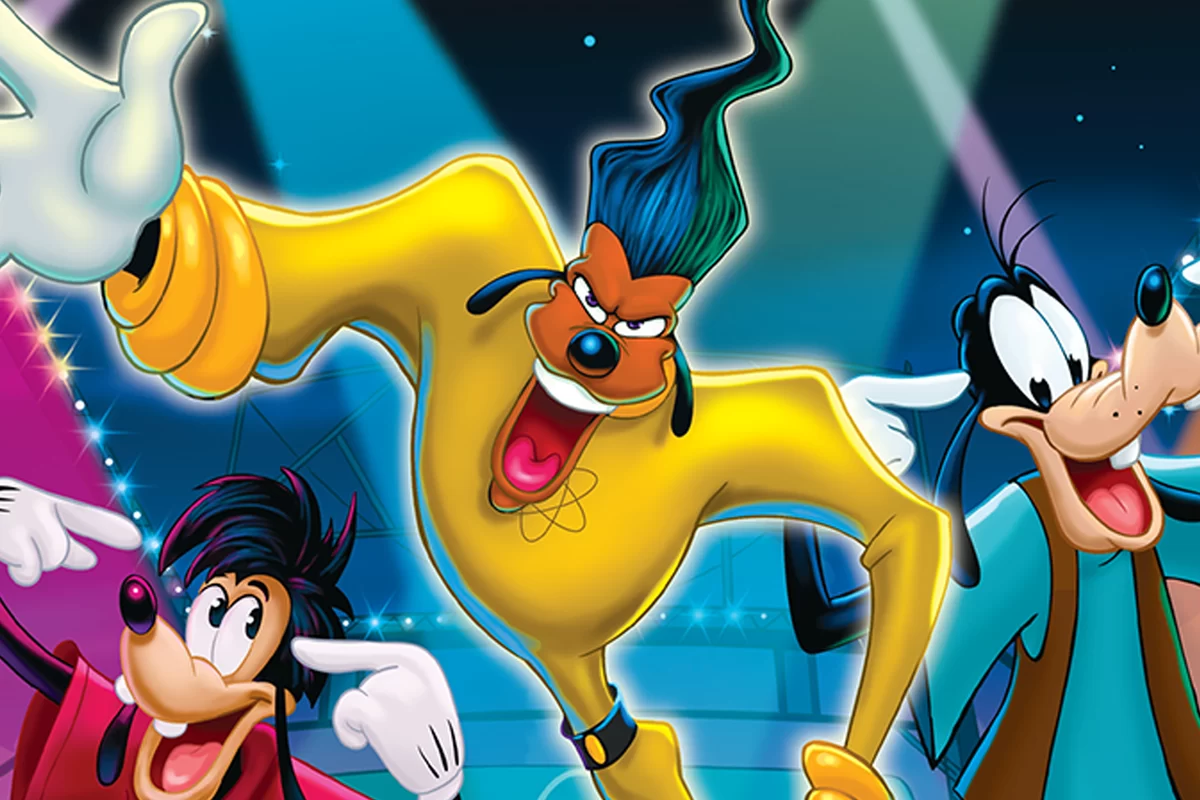
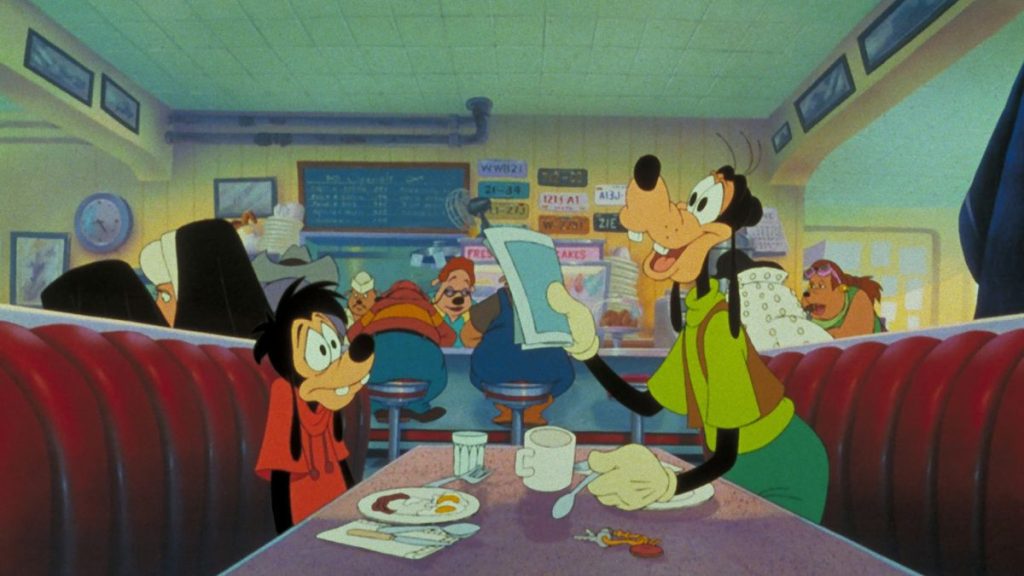
When A Goofy Movie arrived in theaters in the spring of 1995, it did so with slightly less fanfare than Disney’s Shakespearean riff in the jungle, The Lion King, or their attempt to redo Romeo and Juliet in their historical romance Pocahontas. This was a movie expanding upon the Disney Afternoon show Goof Troop, focused on the lovable Goofy and his son Max Goof. In the film, Goofy is compelled to take Max on a cross-country fishing trip to curb any potential negative influences in school, while Max only agrees to go in the hopes of steering the trip to Los Angeles, so he can see a Powerline concert to impress the girl of his dreams.
Powerline, you see, is a massively famous rock star who has a distinctive and colorful fashion sense, a mix of rock and R&B songs, a body made for dancing, and an impassioned fanbase. The reductive comparison is that Powerline is this film’s version of Prince, Michael Jackson, or Bobby Brown. (Brown was originally going to voice Powerline, before his many public controversies steered Disney towards the younger Tevin Campbell.) Though naturally Goofy and Max have a big argument when the truth comes out about why Max has even agreed to the trip, the actual climax occurs when father and son (also naturally) not only end up at the Powerline concert but manage to get on stage with Powerline himself, and even teaching him a new dance move courtesy of Goofy’s awkward fishing pose. (In context of the whole film, this dance move makes somewhat more sense, yet is still very silly.)

The dance move occurs during “I 2 I,” performed by Campbell and composed by Patrick DeRemer and Roy Freeland. (Notably, the song was produced by David Z, who worked with Prince on a number of albums, like the legendary Purple Rain.) The song itself is an exuberant and impressive closer, all the more so because the film’s few other original songs are vastly less memorable (and also sound nothing like “I 2 I”). But “I 2 I” helped craft a very unexpected legacy for A Goofy Movie, specifically for younger Millennials and Generation Z.
Not every Disney movie can inspire an entire episode of Donald Glover’s FX comedy Atlanta, but the series’ antepenultimate episode, “The Goof Who Sat by the Door,” exists as a 30-minute commentary on the film’s resonance with the Black community. (The premise of that episode is that you’re watching a faux-documentary about the fictional Thomas Washington, who is not only made CEO of the Walt Disney Company in the early 1990s but endeavors to make “the Blackest movie of all time,” with A Goofy Movie as the result.) Though the film’s cast is largely White (except for Campbell), the characters of Goofy and Max had long been coded as Black, and songs like “I 2 I” fed into the sense that A Goofy Movie, without even directly intending to do so, spoke to young Black people in ways that other Disney films did not.
A Goofy Movie, perhaps because it’s inspired by a TV show (and was animated by DisneyToon Studios, which was responsible for the slew of direct-to-video Disney animated sequels of the mid-1990s), has always had an uphill climb. It wasn’t a massive box-office success, nor did it receive massive critical plaudits. The film’s charms are much more low-key than something like Aladdin or Beauty and the Beast, but the climactic “I 2 I” number is arguably among the best musical sequences of the decade, because the song is undeniably catchy and tuneful and it helps wrap up the film’s plot without relying too heavily on an excess of dialogue or sappy sentimentality. (That sappy style exists in the scenes directly preceding “I 2 I,” to be fair.) Thirty years later, “I 2 I” remains a big hit with Millennials and Gen Z, showing up more regularly at the Disney theme parks and being championed online aplenty. It’s a strange source for cult fandom, but the film deserves it, goofy as that may sound.
“A Goofy Movie” is (obviously) streaming on Disney+.