The title Christmas Evil (also released as You Better Watch You) does not promise a complex psychological drama, and anyone going into Lewis Jackson’s 1980 holiday horror movie probably doesn’t expect anything more than a guy in a Santa suit killing people. Jackson does get around to that eventually, but the guy in the suit, Harry Stadling (Brandon Maggart), is no mindless slasher or hardened psychopath. He’s an emotionally damaged man-child whose murder spree is more of a cry for help than a destructive rampage.
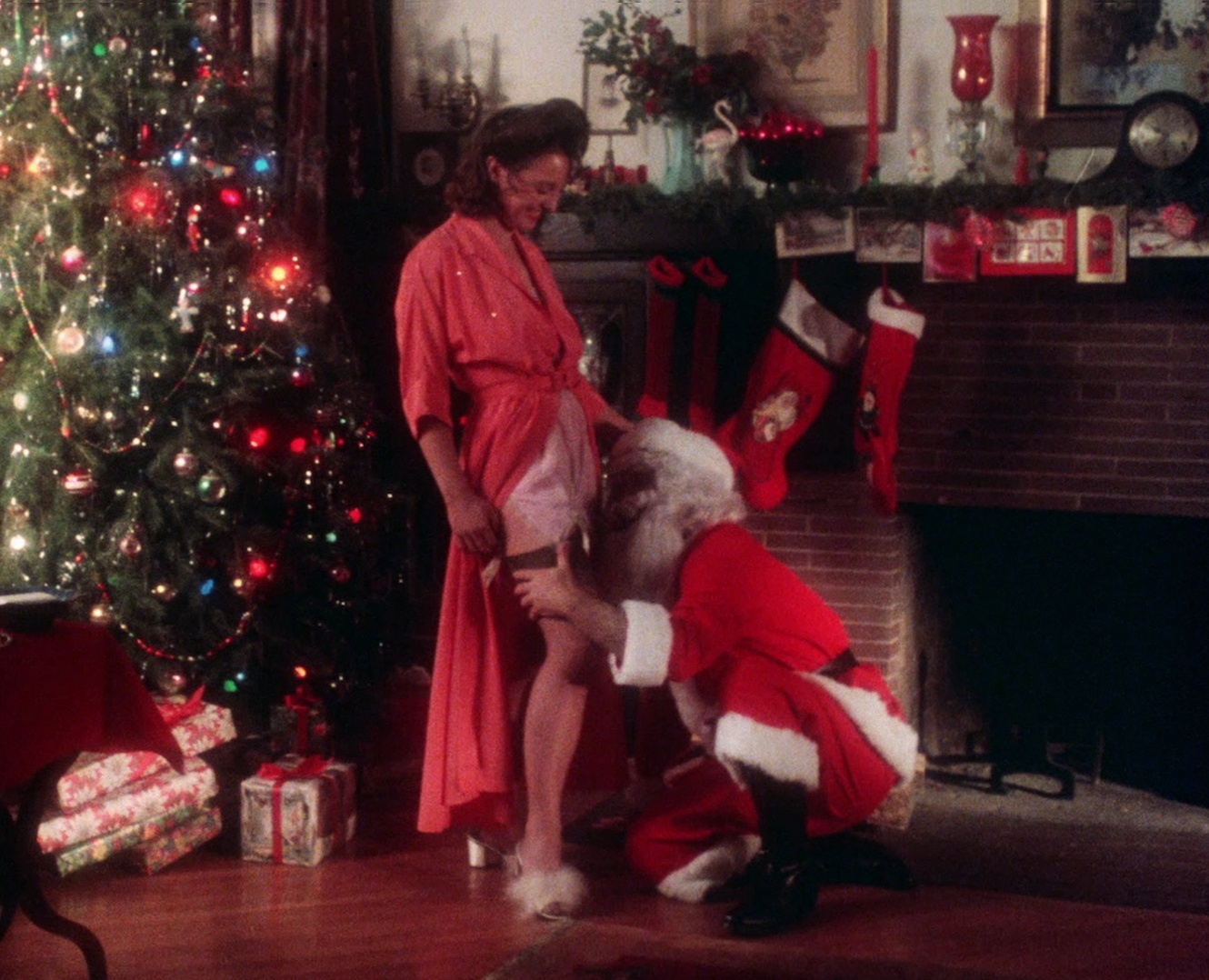
Harry’s yuletide zeal is inherently silly, but Jackson and Maggart give it a surprising pathos by never overplaying it and focusing on the real psychological consequences of such an all-consuming fixation. Harry keeps huge ledgers of “naughty” and “nice” kids in his neighborhood, and when he spies on them from afar with his binoculars, he looks like any haggard dirtbag in any late ’70s or early ’80s crime drama. He trudges through the drab, gray streets carrying his groceries, a portrait of recession-era scrappiness. Even the toy factory where Harry works (at what should be his dream job) is grubby and depressing, plagued by layoffs and corporate malfeasance.

Like Travis Bickle, Harry feels alone and misunderstood by the world, and he eventually takes out his frustrations violently. But even that violence is just an outgrowth of his love for Christmas, and he spreads at least as much joy as chaos. When he looks in the mirror while gluing on his long white Santa beard, he exclaims “It’s me!” with manic glee, and from that point forward, as far as Harry’s concerned, he is Santa Claus. That means delivering a bag full of dirt and rocks to local “bad kid” Moss Garcia (who’s shown being slapped around by his mom, less bad than abused and neglected). It also means hauling presents to the institution for mentally handicapped children that Harry’s company is only pretending to support. The employees at the facility are genuinely delighted with Harry’s gifts, and he seems equally delighted with himself, perhaps for the first time ever.

It takes nearly an hour for the movie get to Harry’s first kill, and his body count is low compared to other holiday slashers (or slashers in general). He remains sympathetic throughout, a man with a twisted but clear moral code, and when a mob of adults is closing in on him, he makes sure to protect the children he just wants to nurture and encourage. If he lived in 2018, Harry might be posting his rants online, lamenting the loss of innocence and purity in the world, and he might find an audience to cheer him on in his ill-advised quest. The movie’s controversial magical-realist ending implies that Jackson might be on Harry’s side, too, giving him a strange sort of redemption in his final moments.
Christmas Evil is an obvious low-budget effort, complete with sheets of fake snow that can’t stay in place and supposed New York City streets that are strangely underpopulated. But Jackson never treats it like a tossed-off cash-in, and his gritty, often naturalistic visual style ensures that it never looks like a typical horror B-movie. There are no jump scares here, and there’s no excessive gore. Maggart and DeMunn both give committed, serious performances that are even moving at times. Harry is a figure of pity and scorn, but by the end of the movie, he’s also a perverse embodiment of the Christmas spirit.
Christmas Evil is currently streaming on Shudder.