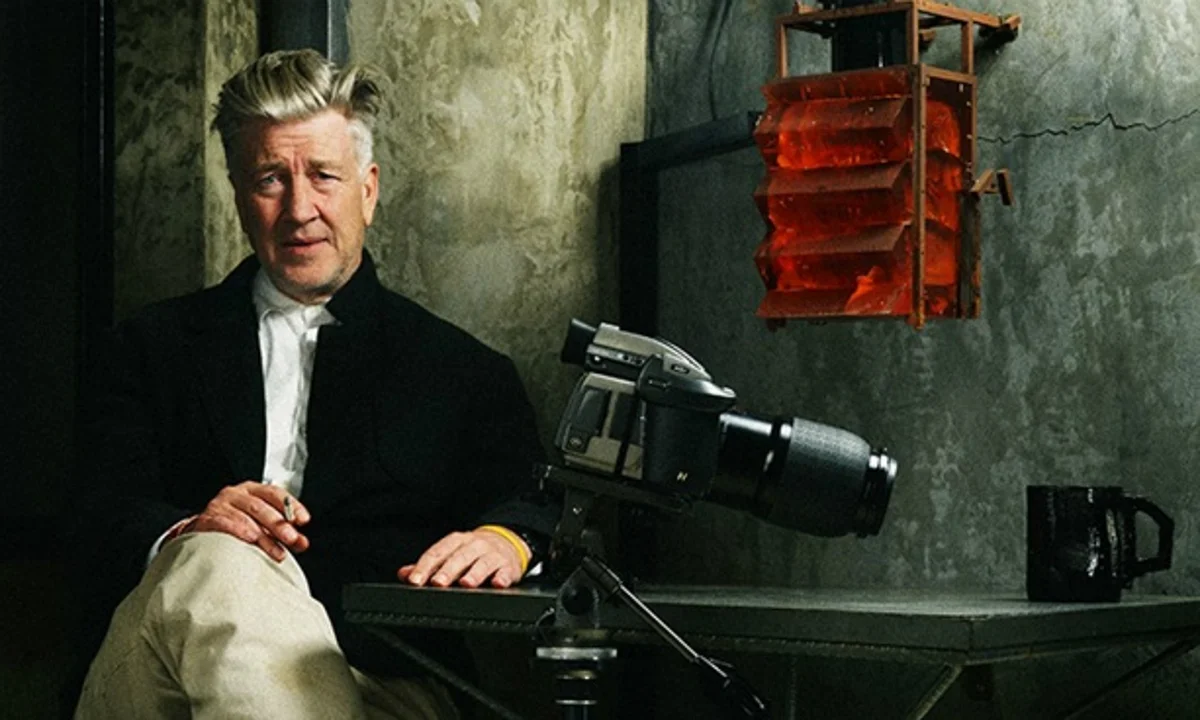
David Lynch was more than just a director: a painter, commercial artist, musician, actor, author, weatherman, cartoonist, activist, restaurateur, and coffee maker. He was also, like so many other big-name filmmakers, a producer—someone whose involvement, however limited, could help get another person’s project funded and/or distributed.
Lynch, who passed away one year ago at the age of 78, was not as prolific a producer as, say, Martin Scorsese. But the films he attached his name to are a fascinating if mixed lot, each one reminiscent of or directly connected to his own filmography.
The first title that credits Lynch as executive producer (not counting his own work) is a truly forgotten film: 1990’s The Cabinet of Dr. Ramirez. The sole cinematic effort of theater director Peter Sellars—best known for radical re-interpretations of classic plays and operas—it is, as evident by its title, a contemporary update of the legendary 1920 German Expressionist horror film The Cabinet of Dr. Caligari, albeit an extremely loose one given that Sellars and his collaborators were creating the story as they shot it. Transporting the setting from Germany’s Weimar Republic to New York City’s Financial District—the extensive use of the looming Fun City landscape is reminiscent of 1982’s non-narrative documentary masterpiece Koyaanisqatsi—Ramirez is entirely dialogue-free, though it features a wall-to-wall score from composer John Adams. It is a surreal satire of Reagan-era conformity, bureaucracy, and greed, Oliver Stone’s Wall Street if it were written by Franz Kafka. Sellars described his film as a “goodbye to the ‘80s” and a precursor to what he hoped would be a more spiritual ‘90s (tough luck on that score).
Despite featuring a surprisingly big name cast (at least by experimental cinema standards) including Peter Gallagher, Joan Cusack, and Mikhail Baryshnikov, Ramirez was only ever released in France, save for a single showing at the 1992 Sundance Film Festival. Lynch lent his name as an executive producer, but per what little sources there on the film, was not directly involved in its financing or production.
Still, many of the compositions within the film are reminiscent of those found within his own work, which is hardly surprising given how much of silent era and in particular German Expressionism influenced Lynch; it’s particularly noticeable in his own debut and sophomore features Eraserhead (1977) and The Elephant Man (1980). More intriguing is how reminiscent so much of Ramirez is to Lynch’s later work—from the ominous, supernaturally-tinged depiction of homeless characters that abound, to the improvisational structure of the production, a template Lynch would follow with his final feature, the dizzyingly expressionist Inland Empire (2006).
Four years later, Lynch would once again lend his name to a project he had zero involvement with prior to distribution: Terry Zwigoff’s masterful documentary Crumb. Ostensibly a look at the life and career of infamous underground comix artist Robert Crumb, the film expanded into a disturbing portrait of the family Crumb, who critic Edward Guthmann described in his Guardian review as “emblems of some fundamental failure in the American family—a deep, corrosive, indistinguishable sorrow.”
Zwigoff had approached Lynch about joining the project as an investor and hands-on producer, but Lynch was too busy at the time to accept the offer. However, once the film was finished, he agreed to lend his name to it—the first onscreen credits, poster, and initial home video release all read: “David Lynch Presents…”—to attract more viewers and attention. Given the acclaim Crumb received upon release, it likely would have proved a hit with the arthouse crowd regardless, but the Lynch connection certainly didn’t hurt it any.

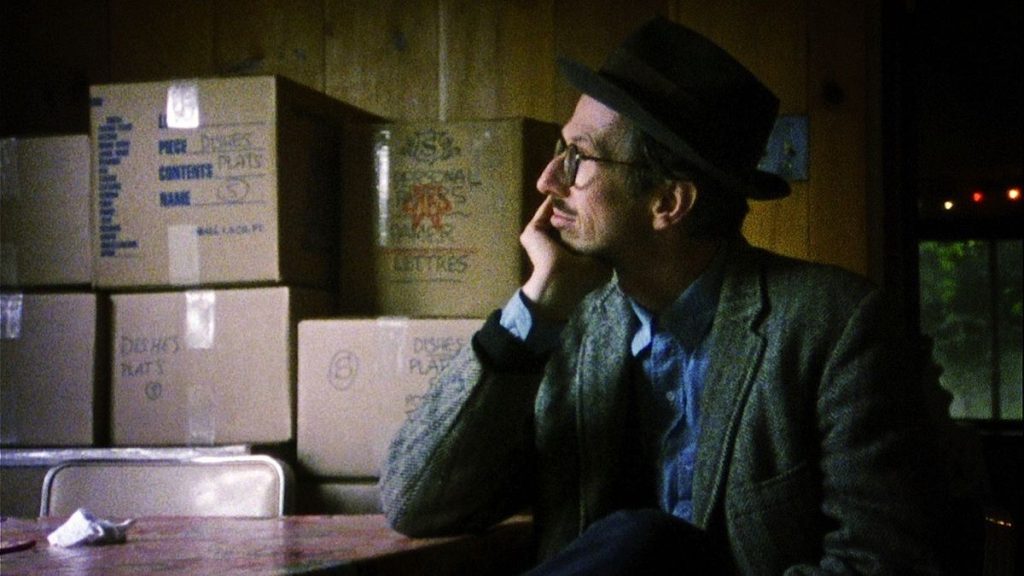
Again, despite not being directly involved with the film, there is lots of crossover here. Lynch, like Crumb, is a cartoonist himself (although nowhere near as prolific). Like Crumb, his work plumbs the dark, surreal, often psychotic depths of both the American suburban ideal and the grimy urban cityscape. Both men’s art has come under furious criticism for how unrelentingly dark and transgressive it is, particularly its depiction of sexual and sexualized violence. Like Sellars’s film, there is a heavy Kafka influence; while Lynch’s attempted film adaptation of The Metamorphasis never came to fruition, Crumb released an illustrated version of that story, as well as several others, in his 1993 graphic novel biography Introducing Kafka (aka R. Crumb’s Kafka).
Lynch and Crumb also share an affinity for American roots music, especially the blues, and both men have released albums that cover standards of the genre. (One of Crumb’s most famous illustrations is of legendary bluesman Robert Johnson, whose mysterious and mythical story Lynch also attempted, but failed, to bring to screens). Lynch and Crumb could probably also swap wardrobes, given their love of 1950’s-style tailoring (god love those high-waisted pants).
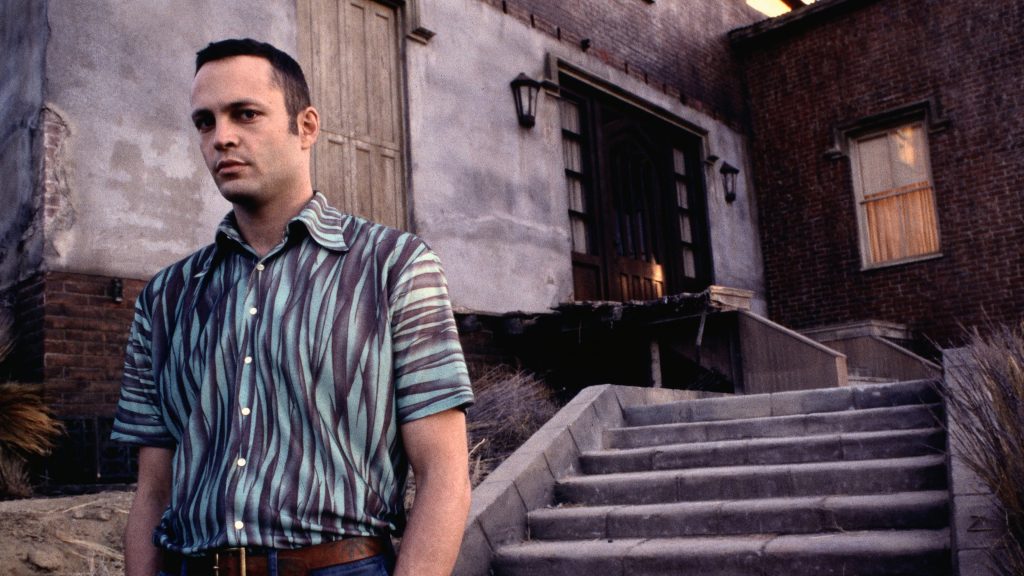
The same year that Lynch lent his name to Crumb, he was fronting the cash for a different film. Nadja is director Michael Almereyda’s modern, urbanized update of Bram Stoker’s Dracula (and simultaneously an even looser adaptation of André Breton’s 1928 surrealist novel of the same name), here focusing on the Count’s estranged daughter, the titular Nadja (Elina Löwensohn) as she traverses New York City and becomes romantically-entangled with the Van Helsing family following the death of her father.
Prior to production, Lynch had been trying to help Almereyda—who he called “one of the best independent, new wave directors in America”—raise funds for a horror projet based around the life of Edgar Allen Poe. When that didn’t work out, Almereyda pivoted, writing a more commercial script focusing on vampires. He was able to secure funding, right up until shooting was to begin, when the investors pulled out over concerns about the film’s commercial prospects (Almereyda’s insistence to shoot it in black and white was the main concern). Re-enter Lynch, who graciously decided to fund the whole thing himself.
Given how muted the response was, it seems unlikely Lynch ever got a return on his investment. Audiences ignored it, and while the critical consensus wasn’t entirely negative, it was damp, with Roger Ebert negatively describing it as a tired case of “Deadpan Noir… the kind of movie that deals with unspeakable subjects while keeping a certain ironic distance, and using dialogue that seems funny, although the characters never seem in on the joke.” In the very next sentence, Ebert would use Lynch’s films, including Blue Velvet, for which he held a long-running disdain, as a key example of this style.
(Ebert also names Hal Hartley as the other key progenitor of this style, which makes sense given that Hartley’s favorite leading man of that period, Martin Donovan, co-stars in Nadja. Oddly, he doesn’t cite Jim Jarmusch, whose influence is far more prevalent on Almereyda’s film than Lynch or Hartley. Said influence seems to be a two-way street, as Jarmusch’s own ennui-soaked deadpan vampire comedy of a decade later, Only Lovers Left Alive, owes quite a debt to Nadja.)
Nadja isn’t exactly a forgotten masterpiece—it greatly pales in comparison to Abel Ferrara’s similarly toned and styled black-and-white, New York-set, arthouse vampire drama of the following year, The Addiction—but it is the type of hip, funny, oddball indie that we used to take for granted and which is in short supply these days.

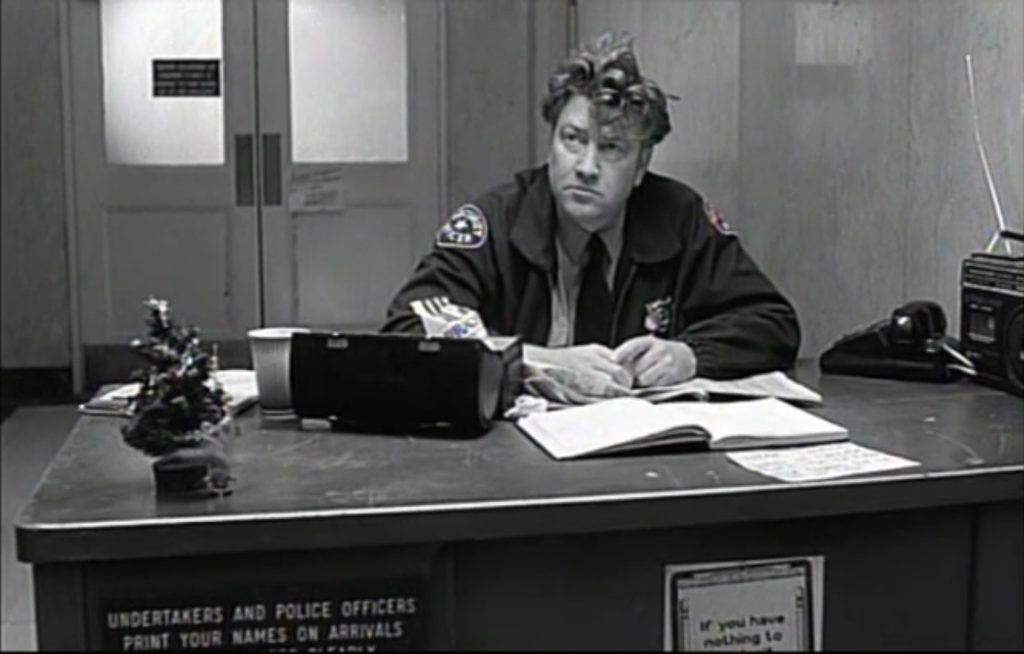
Nadja is the only third-party film produced by Lynch in which he appears (playing a hapless morgue attendant in a funny scene). It is not, however, the one most personal to him; that would be the next film he attached himself to as executive producer, 2008’s gnarly horror-thriller Surveillance. Directed by his daughter Jennifer, Surveillance is, of these films, the one most redolant of Lynch’s style.
A Rashomon-like tale of a roadside killing, Surveillance is chock full of night time shots of rolling blacktop, grotesque phantom-like killers, mysterious FBI agents, and comedy so black you could dip a fountain pen in it. The connection to the elder Lynch’s work is further highlighted by the fact that it stars Lost Highway lead Bill Pullman, making this the second time in a row Jennifer Lynch plucked her lead from her dad: 15 years earlier, her notorious flop Boxing Helena starred Twin Peaks breakout Sherilyn Fenn.
Jennifer Lynch, whose difficult birth and early struggles with club foot would greatly influence both Eraserhead and Boxing Helena, drew upon her experience of almost being paralyzed in a car accident for Surveillance. While we can’t pretend to know how this all affected her father, it’s obvious that he felt enough of a connection to it to help her make her sophomore feature, no small feat give how disastrous the reaction to Boxing Helena was. Hilariously, the end result greatly upset him, as Jennifer recalls his reaction to seeing the finished cut: “He was completely horrified. He said ‘You’re the sickest bitch I know. You can’t have the forces of darkness triumph over the forces of light.’”
The next year, Lynch teamed up with one of his peers, Werner Herzog, for a darkly comic true crime story titled My Son, My Son, What Have Ye Done? Based on a real case from 1979 in which a mentally disturbed man sought to recreate the plot of the Greek tragedy Orestes by murdering his mother with a sword, Herzog and screenwriter Herbert Golder had been struggling for years to bring the story to screens. In stepped Lynch, who had long admired Herzog and wanted to work with him (per Herzog’s interview on My Son, My Son’s DVD supplemental material, the two shared a desire to “return to essential filmmaking”). Production got underway, under the banner of Lynch’s Absurda production company (which, also in 2009, attempted but failed to bring an Alejandro Jorodowsky project called King Shot to fruition).
While the films of Herzog and Lynch certainly share some thematic overlap—namely their penchant for surrealism and grotesquerie—My Son, My Son is by far Herzog’s most “Lynchian” film, although as with Surveillance, much this comes down to the prevalence of actors previously associated with Lynch, in this case Brad Dourrif, Willem Dafoe, and especially Grace Zabriskie, who no doubt came at the latter’s recommendation. (Tantalizingly, My Son, My Son gives us a taste of what star Michael Shannon and nutso character actor Udo Kier would have been like in one of his films.)

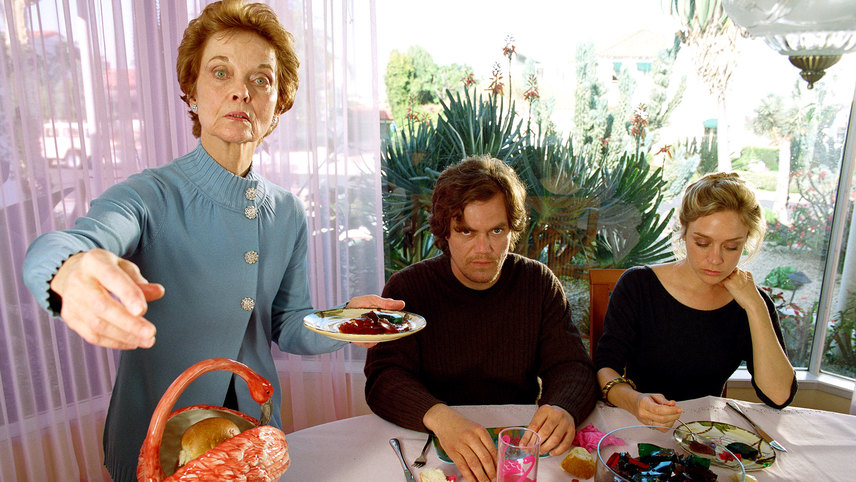
Beyond that, the film is rife with the type of bizarre, deadpan comedy and slow boiling terror that one finds throughout Lynch’s films, as well as a fracturing of reality by forces that seem to exist in a parellel dimension. At one point, a character describes Shannon’s disturbed protagonist as acting out a “cosmic melodrama,” an apt description not just for My Son, My Son, but almost all of Herzog and Lynch’s work alike. (Additionally, the final shot features a basketball stuck in a spindly tree, an image so similar to a certain character design in Twin Peaks: The Return that it can’t just be coincidence.)
My Son, My Son flew under the radar upon release, but has slowly gained a cult following. The same cannot be said of the penultimate film Lynch produced, 2022’s The Other Me. The directorial debut of Giga Agladze, a multifaceted artist whose personal website lists him as running the David Lynch Foundation Caucasus (which focuses on spreading the practice of transcendental meditation), the film is fantastical drama about a young man (Jim Sturgess) whose impending blindness opens him up to strange visions and otherworldly encounters.
In other hands, this might have made for an interesting modern spin on faerie lore, but unfortunately, Agladze’s script is so pretentious and overstuffed, his direction so stilted, and the acting so shoddy that it is a struggle to sit through. Fair play to Lynch for supporting his friends and associates in their artistic pursuits, but even completists can skip this one.
Whether that’s true of the last project Lynch is credited on is known only to a handful of people at this point. The Legend of the Happy Worker is a forthcoming film from director Duwayne Dunham, who served as editor for Lynch on Blue Velvet, Wild at Heart, Twin Peaks and Twin Peaks: The Return. Decades prior, Lynch wrote a script called The Happy Worker, adapted from the play by S.E. Feinberg, a bizarre comedy about people digging a giant hole in the desert, with the desire for Bobcat Goldthwait to star. He then turned the script over to Dunham to direct, a process that took 30 years and was interrupted when Lynch asked Dunham to cut the entirety of Twin Peaks: The Return.
Dunham did finally get the movie—now titled The Legend of the Happy Worker and starring Thomas Hayden Church and Colm Meany—made, premiering it at last year’s Locarno Film Festival. Reactions to that screening across Letterboxd run the gamut, and the production has yet to announce a release date or even a trailer.
While Lynch is no longer credited as the film’s writer, he is listed as executive producer. Regardless of how it actually turns out, it’s nice to know that, one year removed from his death, and with his absence on the cinema landscape deeply felt, we have one more Lynch-related movie coming down the pike.