Zach Vasquez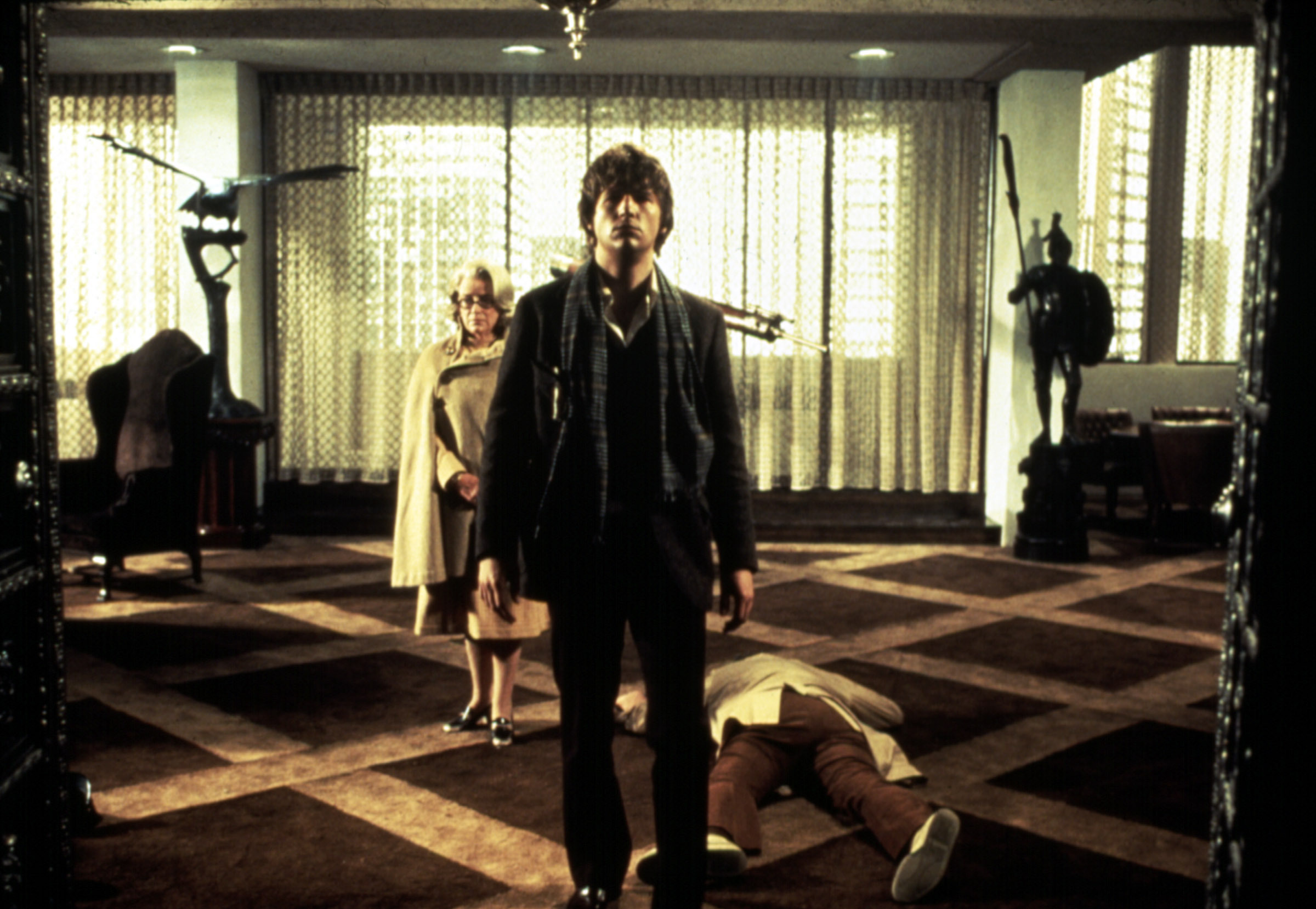
The JFK assassination is, as the kids today might say, a vibe.
The truly great works of fiction that have set the subject in their crosshairs—from Oliver Stone’s hallucinogenic epic JFK to the totemic literary investigations of Don DeLillo (Libra) and James Ellroy (American Tabloid) to Bob Dylan’s late-period musical opus “Murder Most Foul”— understand this, embracing not only the mystery at the heart of the tragedy, but it’s utter incomprehensibility. They all ask the same question: Who really killed the President? And they all come up with basically the same answer: Who didn’t? The assassination thus becomes a canvas on which to explore the chaos of the modern age.
But years before any of the above examples, Winter Kills (1979) got there first.
While the killings of both JFK and RFK (as well as MLK, Malcolm X, and various other political figures) proved extremely influential on the American cinema of the New Hollywood era, as evident by the spate of conspiracy thrillers that came out during the 70s, Winter Kills dealt with the murder of John Fitzgerald Kennedy more directly than any movie up to that point. It’s true that the names and some of the details are altered—President Kennedy becomes President Keegan, Jack Ruby becomes Joe Diamond, Dallas is swapped out for Philadelphia—but these aren’t meant to fool anyone.
The directorial debut of screenwriter William Richert, adapted from the 1974 novel of the same name by Richard Condon—whose most famous book, The Manchurian Candidate (1959), would eerily anticipate the events of November 22, 1963—Winter Kills stars a young Jeff Bridges (who, between his starring turns in this, Cutter’s Way, The Big Lebowski, Arlington Road, and his recent TV miniseries The Old Man, might just be the leading man of American Conspiracy cinema) as Nick Kegan, the younger brother of the slain president who, 19 years after his brother’s execution, discovers indisputable evidence of a conspiracy.
Under orders from his powerful, hedonistic industrialist father, Pa Kegan (a show-stealing John Huston, basically playing a funnier and more gleefully perverse version of his Chinatown villain), Nick conducts his own investigation and soon finds himself in an upside down America—or is it the real America after all?—run not by our elected officials, but an infinite network of disparate, but equally powerful forces: private intelligence agencies, multinational corporations, the Mafia, dirty Feds and city police, Cuban exiles, Commie double agents,Hollywood bigwigs, and any number of small time hustlers, flesh peddlers, and bagmen.
In the short making-of documentary Who Killed Winter Kills?, Richert explains how he sought to make a “political Alice in Wonderland,” a quest for truth in which a naive innocent has his blinders peeled off after he falls down the rabbit hole and discovers that there’s no such thing, that it’s all just—as one character puts it, cribbing a line from Winston Churchill that Stone would later re-crib for JFK—“a riddle inside a riddle.”
Winter Kills shares the kind of byzantine, at times incomprehensible plot you find in the novels of Raymond Chandler and Thomas Pynchon—indeed, it feels spiritually of a piece with the shaggy dog adaptations of their respective novels, The Long Goodbye and Inherent Vice—and the existential dread of Kafka (one has to imagine that Richert cast Anthony Perkins as the movie’s all-seeing technological mage as an homage to his starring role in Orson Welles’s film of The Trial). In adapting Condon’s story, Richert chose to heighten the humor, and at times, the film feels like a broad satire. But at other times Richert plays things deadly serious, his film containing scenes that are as unsettling and nerve-wracking as those found in the moody masterpieces of Alan J. Pakula (The Parallax View, All the President’s Men).
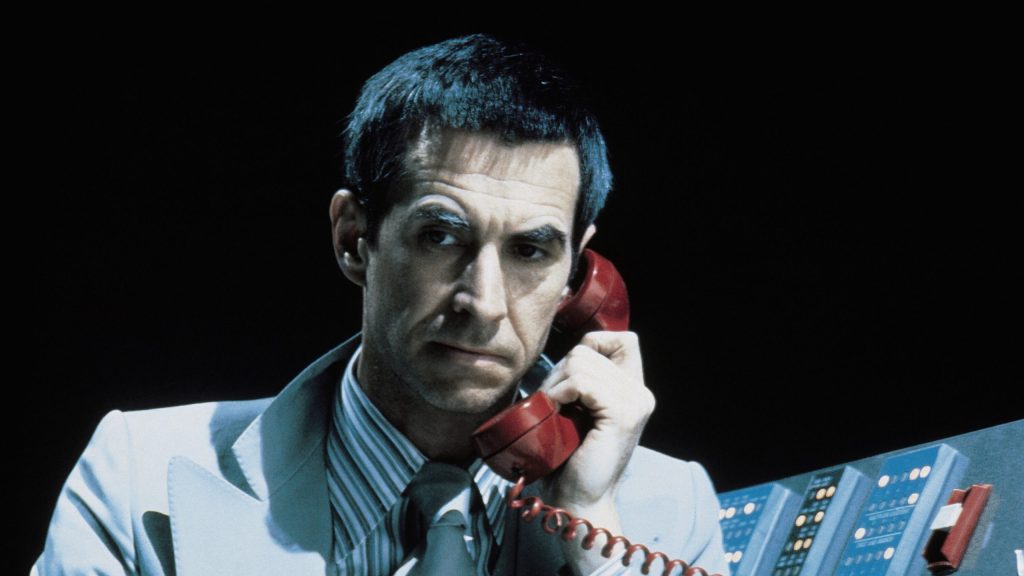
This intentional tonal discombobulation is heightened by the cast that Richert managed to assemble, a double-take inducing murderers’ row of instantly recognizable stars and character actors: Elizabeth Taylor, Tishiro Mifune, Eli Wallach, Sterling Hayden, Ralph Meeker, Richard Boone, Dorothy Malone, the aforementioned Huston and Perkins. Most of these actors were well past their prime, but Richert’s ability to get so many icons together for so strange and controversial a project speaks to his drive.
So too does the loyalty of his cast and crew, who followed him through what turned out to be an historically troubled production. Financed by Sterling Gold—the production company of Robert Sterling and Leonard Goldberg, two marijuana importers who moved into movies by way of the popular softcore Emmanuel films before attempting to go legit with this picture—the film ran out of money 11 weeks into shooting. So committed to the project was the key crew that they voluntarily went without pay until the IATSE union shut them down (literally turning the lights out during shooting).
Sterling and Goldberg were able to raise a little more money by borrowing from the mob, although they ran out again within a few more weeks and were once more halted by the IATSE. According to model-turned-actress Belinda Bauer, who plays Bridges’ suspicious love interest Yvette, Winter Kills was the first film production to ever file to bankruptcy. Things somehow got worse from there when Goldberg was shot to death over these unpaid debts. A couple of years later, Sterling would be convicted of pot smuggling and sentenced to an unprecedented 40 years in prison. (The story of Sterling Gold is long overdue for its own deep dive doc, wouldn’t you say?)
The film seemed all but dead when Richert hatched an improbable plan: he and Bridges would travel to Germany, where they would shoot a whole other movie, The American Success Story—an original dramedy written by the legendary Larry Cohen—and use the profits to finance the completion of Winter Kills. Against all odds, this somehow worked, and two years after production halted, Richert was able to reassemble his team (minus Zigmond, who had moved on to another project, but who gave his blessing for his personal operator, John Bailey, to replace him) and complete what by this point had become a passion project for all involved.
Unfortunately, that passion did not lead to success at the box office. Despite receiving mostly positive reviews from critics—although those who didn’t like the film hated it, with Gene Siskel claiming that it “rape[d] the memory of President John F. Kennedy”— distributor AVCO Embassy pulled it from theaters after only a few days. Some have wondered whether this was a case of real-world conspiracy: in his Harper’s article “Who Killed Winter Kills?”, Condon floats a theory that AVCO suppressed its own film in order to appease Senator Ted Kennedy who, about to run for President, would have say over defense contracts the company was involved in.
That the story of Winter Kills’s making and release proved as shady, convoluted, and ultimately as tragic as the story within it feels like some kind of grand cosmic joke. The film would go on to achieve a small cult following on VHS, with more people finding their way to it following an Anchor Bay DVD release in 2003, as well as in recent years thanks to its availability on streaming platforms. Unfortunately, said streaming transfer is rather shoddy, making it impossible to fully appreciate Zigmond and Bailey’s typically brilliant cinematography or Robert F. Boyle’s incredible production design (the scenes that take place inside Perkin’s sinister information silo are particularly jaw-dropping).
Thankfully, this wrong is soon to be righted, as Rialto Pictures and Studio Canal have teamed up with Quentin Tarantino to strike a new print of Winter Kills, releasing it in rep houses throughout this summer (a new physical release can’t be far behind). The sheer star power of the film’s pedigree, combined with the cachet of Tarantino’s name—the new print literally reads, “Quentin Tarantino Presents: Winter Kills”—all but guarantees it will find a new audience, and it’s only too bad that Richert, who passed away in July of 2022, isn’t around to see it. Winter Kills is sure to find purchase amongst new viewers, for whom it will no longer play as some heightened, confusing work of alternative history, but something far closer to the truth—if such a thing even exists.
“Winter Kills” is screening at New York’s Film Forum starting Friday and at Los Angeles’s New Beverly Cinema starting August 25th.