Audrey Fox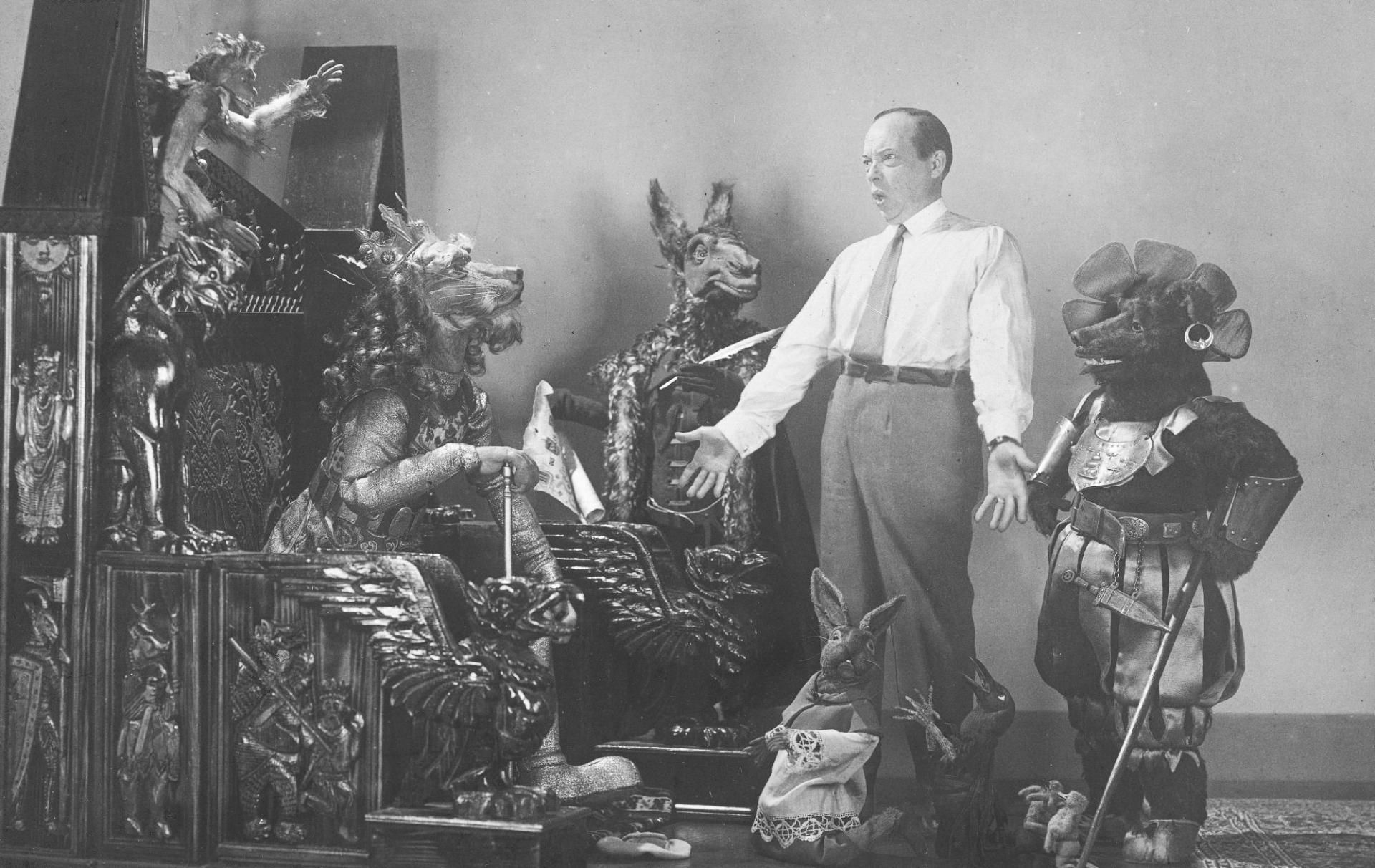
A Trip to the Moon’s shot of the rocket ship crash landing right in the middle of the moon’s face is an instantly recognizable image, in part because of its stunning ability to capture the imagination of the viewer. But also, let’s be honest: its creator, the French magician-turned-filmmaker Georges Méliès, has a monopoly on silent film history. His work is undeniably innovative, but there are other filmmakers from the earliest decades of cinema that have an equally significant impact on the development of movie artistry. Where Méliès used the camera as an extension of a magic show, playing tricks on the audience with rudimentary practical effects, Ladislas Starevich concerned himself with bringing life to the inanimate. He was a stop motion pioneer, and his work influenced directors as varied as Henry Selick, John Lasseter, and Stan Brakhage.
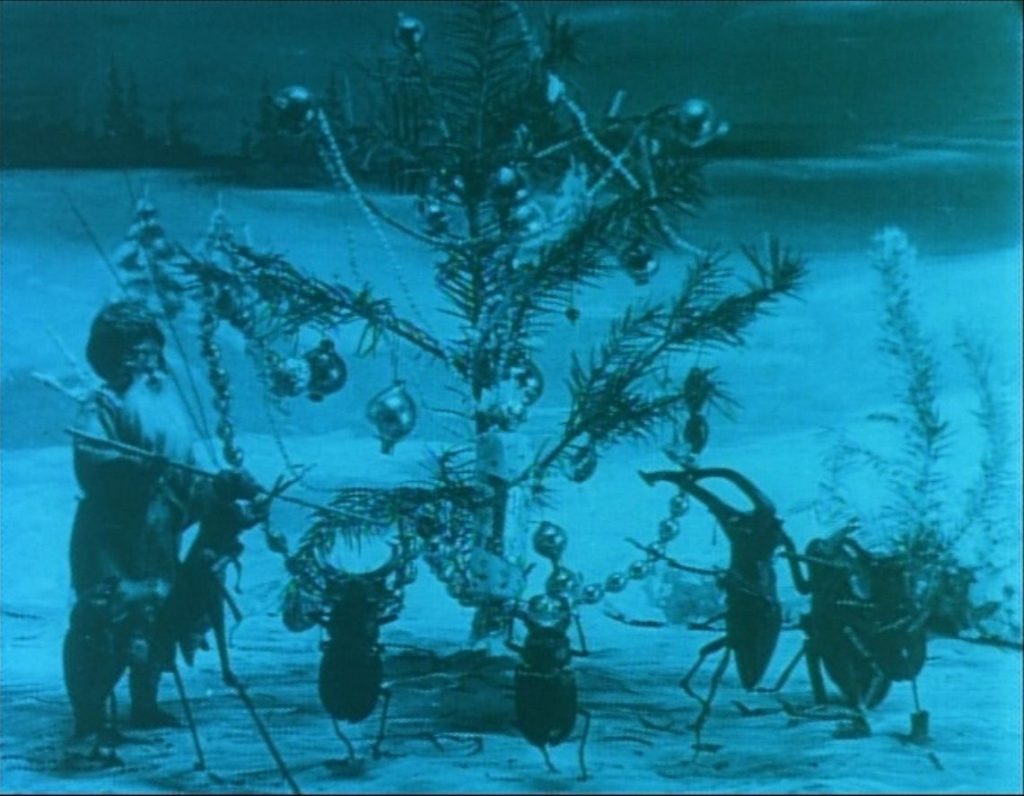
Starevich was born in Moscow in 1882, the son of Polish immigrants from what is now Lithuania. Although he worked as an artist for a number of years and attended painting school as a young adult, it was his work as the director of the Museum of Natural History in Kaunas, Lithuania that ultimately had the biggest impact on his filmmaking career. He was tasked with creating a series of educational short films for the museum when he ran into a problem trying to film a battle between two stag beetles: the bugs would either die from the heat of the lights required to film, or, at the very least, refuse to move. As time went by, and the beetle corpses began to pile up, he decided to get creative. After all, he was an artist. So he came up with a plan that involved Frankensteining the dead bugs into weird little puppets and manually manipulating them, creating essentially the earliest stop motion animation. His passion for entomology combined with his artistic sensibilities to create a singularly bizarre stylistic hallmark.
Necessity is the mother of invention, but although Starevich originally used dead insects on film because it was the only way to capture an authentic battle between two stag beetles, he quickly carved out a niche for himself in the bug filming business. And it was immediately apparent that he had a special gift of bringing these insects to life and imbuing them with amazingly human qualities. His films have a playfulness and sense of humor that give them a complexity well beyond the simple stories they would tell. Beyond the skill with which he carried out the animation (there was allegedly at least one British critic who, upon seeing Starevich’s work, was convinced that he had a troupe of exceptionally well-trained insects at his disposal), his films are defined by a whimsical approach to storytelling. The Grasshopper and the Ant begins with a grasshopper atop a flower, joyfully playing the violin until a butterfly lands nearby and he stops to chat. Later, he’s depicted dining with two beetles, drinking out of a bottle all while the ant industriously works away. Starevich has a unique understanding of what personality types suit which insects best, but more than that, his knowledge of their anatomy allows him to create the illusion of natural movement in a way that’s almost graceful. Even their antennae seem somehow alive.
Although his films that depict Aesop’s fables and other traditional narratives are charming, he would also create original works that would take the insects even further from the animal world and into a setting that is more explicitly human. A Cameraman’s Revenge is arguably his crowning achievement – here, he graduates from relatively minimalist sets to creating an entire miniature world for his bug actors. There’s a sophistication and astonishing attention to detail in his work, as he slyly tells the story of a hard-done-by grasshopper cameraman who secretly records his ex-flame, a dragonfly dancer, having an affair with a married beetle. It’s a silly concept, but Starevich executes the entire torrid encounter with a charm and deftness of touch that would make it instantly memorable.
Starevich’s career was upended in the wake of World War I and the Russian Revolution, when he relocated to France and got a fresh start. There, he continued his work with stop motion animation, creating The Frogs Who Wished for a King, a clever adaptation of an Aesop’s fable about a society of amphibians who repeatedly request a monarch from the gods, only to be disappointed with the results. His political sensibilities are on display in this film perhaps more than any other, released just a few short years after Europe was divided by war and Russia tore down its own ruling family.
He worked consistently throughout the inter-war period, releasing his most successful film, The Tale of the Fox, in 1937. It was another work of stop-motion animation, although here he uses proper puppets instead of dead bugs. The film begins with a title card that summed up how impactful Starevich’s work would be on the medium, saying, “This is not an animated cartoon. This is a revolution in the history of cinema.” Starevich’s ode to a French fairy tale featuring anthropomorphic animals predated Walt Disney’s Snow White and the Seven Dwarfs by about eight months, beating the Mouse ever so slightly to the punch. It’s hard to imagine Disney existing as an animation studio in the 1930s without Starevich’s work in the earlier decades of cinema.
But his influence goes far beyond just Disney and the world of children’s animation. (Although we see his style pop up again in A Bug’s Life, in the creation of a world for bugs in perfect miniature – the sequences in P.T. Flea’s Circus, with a bug cannon made from a straw and auditorium seats constructed from ice cube trays, have Starevich written all over them.) We see his dark sense of humor in Henry Selick’s stop-motion animation style, holding up a funhouse mirror to the world. Wes Anderson’s quirky but relentlessly detailed puppetry is an homage to his later work, and you can see a direct homage to his character design from The Tale of the Fox in Anderson’s Fantastic Mr. Fox. Even Stan Brakhage, one of the most abstract independent filmmakers of the 1960s, shared with Starevich an impulse to see beauty in the form of dead insects – his short film Mothlight is a collection of moth wings glued to celluloid, highlighting their unique natural patterns when held up to the light.
Although Starevich isn’t a well-known name to casual filmgoers, there is a near-reverence for him among animators. Terry Gilliam of Monty Python fame, who was responsible for creating the comedy troupe’s famous animated sequences, long considered Starevich an influence – in writing about his favorite animated films for the Guardian, Gilliam said of Starevich, “His work is absolutely breathtaking, surreal, inventive and extraordinary…It is important, before you journey through all these mind-bending worlds, to remember that it was all done years ago, by someone most of us have forgotten about now. This is where it all began.”