Josh Bell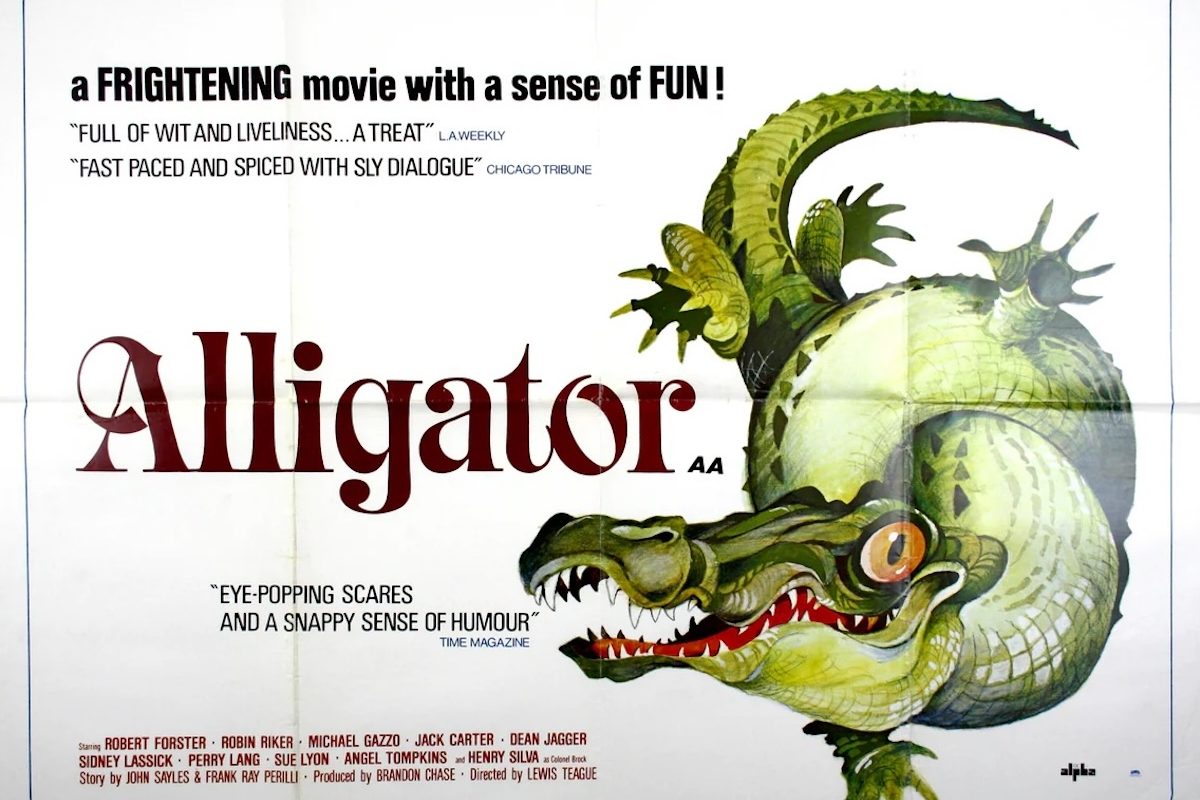
In the wake of Jaws’ massive box-office success in 1975, Hollywood studios did what they usually do, taking entirely the wrong lessons from the popularity of Steven Spielberg’s killer-shark thriller. Instead of trusting more young directors like Spielberg with substantial budgets and creative freedom, they decided to churn out as many movies about animal attacks as possible. In addition to Jaws’ own sequels, there were movies about orcas, grizzly bears, octopuses, and piranhas (among other creatures) terrorizing unsuspecting humans.
So it’s not unreasonable to expect 1980’s Alligator to be a cheap rip-off, hastily produced in order to capitalize on a pop-culture phenomenon. Maybe that was the producers’ initial motivation, but director Lewis Teague and screenwriter John Sayles use that mandate to deliver an exciting, witty, and well-acted thriller with judicious use of special effects that hold up remarkably well. It’s no Jaws, but it’s a highlight of the still-thriving animal-attack subgenre, and a prime example of talented filmmakers using the framework of an exploitation movie to deliver smart social commentary and quirky interpersonal drama.
The story’s catalyst is the persistent urban myth about alligators in city sewers, grown to full size after people flush their rejected pets down the toilet. That’s exactly what happens to young Marisa Kendall (Leslie Brown) after a visit to a Florida alligator attraction. One day while she’s not home, her belligerent father grabs the tiny pet she’s named Ramon and flushes it away, and it plops down unharmed in the sewer system of the family’s unidentified Midwestern hometown.
The alligator’s subsequent development, growing to enormous proportions thanks to exposure to illegally discarded chemicals from a nearby pharmaceutical plant, is the stuff of 1950s monster movies, and one of Alligator’s greatest charms is the way it combines those cheesy genre conventions with the rhythms of a 1970s cop drama, featuring Robert Forster as the sweaty detective protagonist. Forster’s David Madison has the requisite troubled past — with feelings of guilt over a partner who was killed — and a willingness to go against the system, especially when the system is in denial over the existence of a giant killer alligator.
“You just popped out of a manhole at Campbell Street and started yelling, ‘Alligator!,’” a nurse tells David after he survives his first gator encounter, during which his rookie back-up gets chomped to death. He’s treated as a lunatic, and even Marisa herself, now an adult herpetologist played by Robin Riker, dismisses the possibility of such a large alligator existing underneath the city. David might as well be the Serpico of unusually large predatory animals, and he’s similarly vindicated only after much greater damage has been done.
Cronyism within the police department is just one of the social issues that Sayles’ screenplay takes on, and the alligator’s rampage allows the movie to cut a literal swath through the city’s layers of corruption. Like the mayor in Jaws, Alligator’s mayor prioritizes his political self-interest over the safety of residents, and he’s even more spineless than Amity Island’s leader, taking orders directly from the slimy head of the pharmaceutical company responsible for the whole situation. That greedy CEO (Dean Jagger) puts on a fancy high-society wedding for his daughter while the city is gripped with fear, and Teague delights in showing the ways these horrible people get their comeuppance.
“Maybe it’ll die of cancer,” David says wistfully when he and Marisa discover that the alligator’s condition is a result of chemical contamination. There’s none of the atomic-age sensationalism of its 1950s forebears in Alligator, just a weary resignation at rampant corporate lawlessness. The pharmaceutical company’s head researcher bellows “Puppies!” at his illicit supplier, like a mad scientist demanding fresh corpses. It’s standard operating procedure, with no regard for unintended consequences.
Teague and Sayles balance Alligator’s cynicism with offbeat character moments, and Forster makes David into a likably insecure and self-deprecating protagonist. His comedic fixation on his receding hairline and penchant for wearing T-shirts with holes in them offset the obviousness of his inevitable romance with Marisa, and Forster and Riker have genuine chemistry as two weirdos who find common ground in alligator-tracking.
Even in the smallest roles, the supporting characters are equally distinctive, from David’s gravel-voiced, perpetually exasperated boss (Michael V. Gazzo), to the sleazy pet-store owner (Sydney Lassick) who kidnaps dogs to sell for pharmaceutical research, to the Kraven-like big-game hunter (Henry Silva) brought in to take the alligator down. Even in brief appearances, these characters are memorably odd, making sure that the movie never loses momentum during the interludes between alligator attacks.
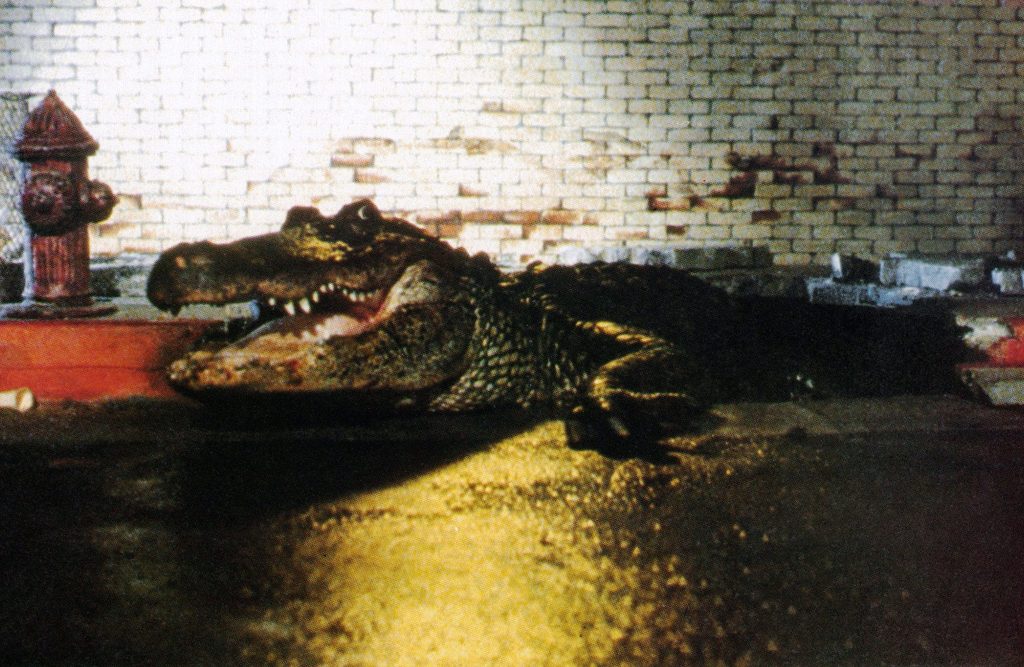
When they arrive, those attacks are suspenseful and convincing, despite the difficulties that the filmmakers had with their alligator prop. Teague occasionally deploys Jaws-style POV shots (with Jaws-referencing music from composer Craig Hundley), but he also provides plenty of clear views of the alligator. The mix of mechanical effects and miniatures utilizing real alligators is nearly seamless, and the actors completely sell their reactions to the absurd situation.
That dedication to craft, on all levels, is what sets Alligator apart from its shoddier counterparts, and makes it worth watching as more than a curiosity, 45 years after it was first released in theaters. It may have been produced to ride the coattails of a much more famous movie, but it easily stands on its own four webbed feet.
“Alligator” is streaming on Shudder, Prime Video, Peacock, and a variety of free services including Tubi and the Roku Channel.