Jason Bailey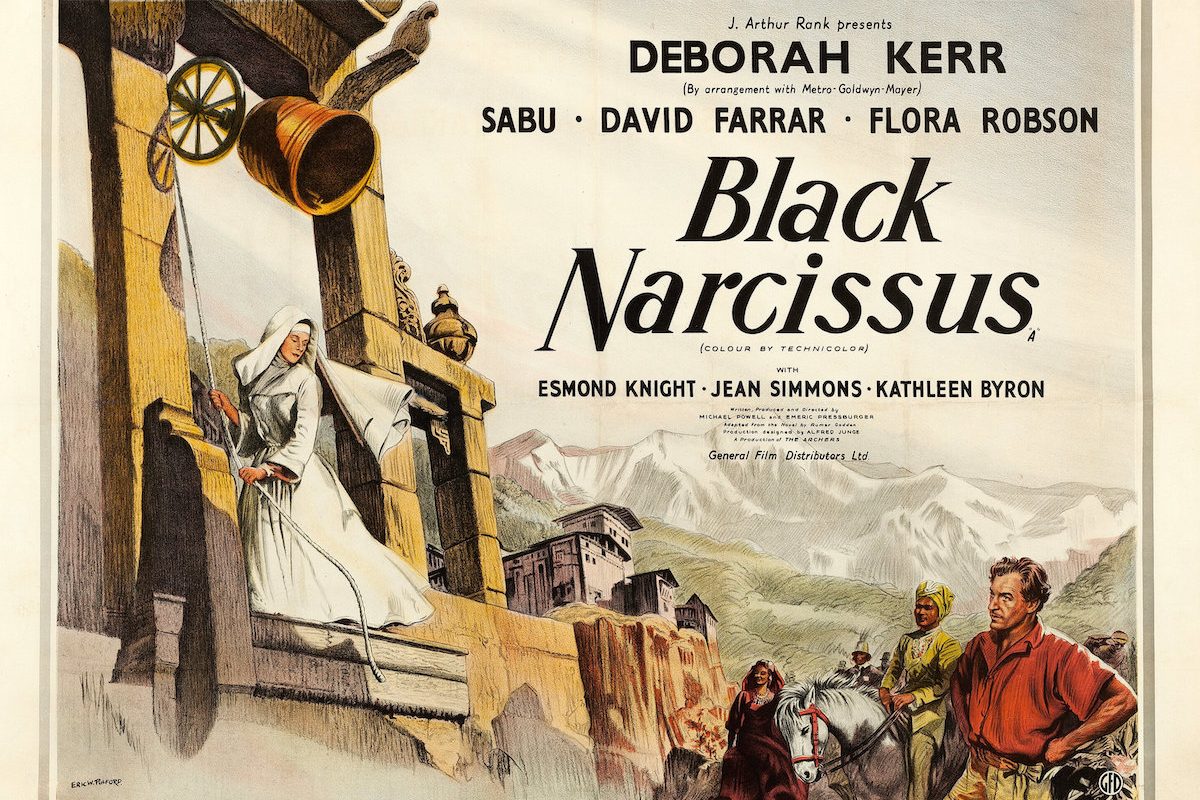
Powell and Pressburger are, thankfully, delightfully, having a moment. The release of the excellent, Martin Scorsese-presented documentary portrait Made in England: The Films of Powell and Pressburger has prompted new appreciations of Michael Powell and Emeric Pressburger, the British filmmakers who worked under the shared shorthand of “The Archers”; their films haven’t exactly disappeared in recent years, as they’ve long been recognized as among the finest filmmakers of their era, but curious cinephiles who’ve been meaning to get around to their work for years (hi) have been newly prompted to do so.
Their 1947 psychological drama Black Narcissus has a timeliness factor of its own (sort of)—there was a 2020 BBC limited series adaptation (seen here on FX), albeit one, its creators strenuously insisted, of the source novel by Rumer Godden. That’s a fool’s errand, no matter the ostensible inspiration; you don’t just go remaking one of the most distinctive and influential motion pictures ever made.
The Archers grab you from frame one, thanks to the ever-reliable work of their regular cinematographer Jack Cardiff: the opening credits, and every frame that follows, feature painterly compositions, in eye-catching color, of gorgeous scenery and jaw-dropping close-ups. His camera moves elegantly but with restraint; he’s showing off, but never just to show off. The setting is a convent in the Himalayas, where Sister Clodagh (Deborah Kerr) will be “the youngest sister superior in our order” (per the Reverend Mother). It’s a big assignment for her, and one handed to her with comical lack of confidence: “I don’t think you’re ready for it. And I think you’ll be lonely.”
One cannot envy Sister Clodagh’s mission; she’s going in to a difficult circumstance with precious few tools. The sisters who will work under her are various degrees of messy, difficult, and unreliable, no more than Sister Ruth (Kathleen Byron), who goes in a couple of sandwiches short of a picnic and only nosedives from there. Sister Blanche (Jenny Laird) condescends grotesquely to the schoolchildren they’re to teach (“They look very stupid to me”), and Angu Ayah (May Hallatt), the native caretaker, seems utterly insane. On top of all of that, Sister Clodagh must cowtow to the various local powers-that-be, “The General” and his heir and, worse of all, “Mr. Dean,” a smug sonofabitch who is, in her words, “objectionable when you’re sober and abominable when you’re drunk.”

These opening scenes set up what appears to be, and functions for no small amount of time as, a social drama, taking on hot-button issues of religion, patriarchy, and colonialism. The Archers hit these notes so adroitly that the picture’s slow, deliberate turn from respectable drama to unhinged insanity is, in retrospect, something of a bait-and-switch; we thought we were watching A Nun’s Tale and then, in the blink of an eye, we’ve plunged headlong into a psychological horror movie. It’s such a delicate balance, the slow build of mood, the mounting of tension, the shift from discomfort into something like madness.
Everyone starts to bring out the worst in each other, and Sister Clodagh feels the entire situation spinning out of her control—she knows, as she initially suspected, that she was put in a no-win situation. “I told you this was no place for a nunnery,” smug old Mr. Dean says, smugly. “There’s something in that atmosphere that makes everything feel exaggerated.”
That offhand statement feels like a mission statement for Powell and Pressburger, who ultimately find the onscreen vehicle for their fire and passion not in the perpetually restrained Sister Clodagh, but in Sister Ruth. Byron, with fire in her eyes, crafts a stark and stirring portrayal of going out of one’s mind, a woman so driven by her base desires that she chooses to renounce her sisterhood and pursue Mr. Dean. When he rejects her, she turns desperate (and impossible to stop watching), her voice going into hysterics, her wild eyes increasingly a-flutter, and she returns to the convent to kill Clodagh, stalking her and the other nuns like an ‘80s slasher villain. In those scenes, and in the unforgettable climax, we’re watching Powell and Pressburger clearing a path for an entire generation of erotic thrillers and operatic giallos. Some movies are mere entertainment; Black Narcissus is breaking new ground, an act just as thrilling as any of the theatrics onscreen.
“Black Narcissus” is streaming on Amazon Prime, Max, the Criterion Channel, Tubi, PlutoTV, and several other ad-supported streamers. You can hear me (and my co-host Mike Hull) discuss “Black Narcissus” with critic-turned-screenwriter April Wolfe on our podcast, “A Very Good Year,” here.