Sean Burns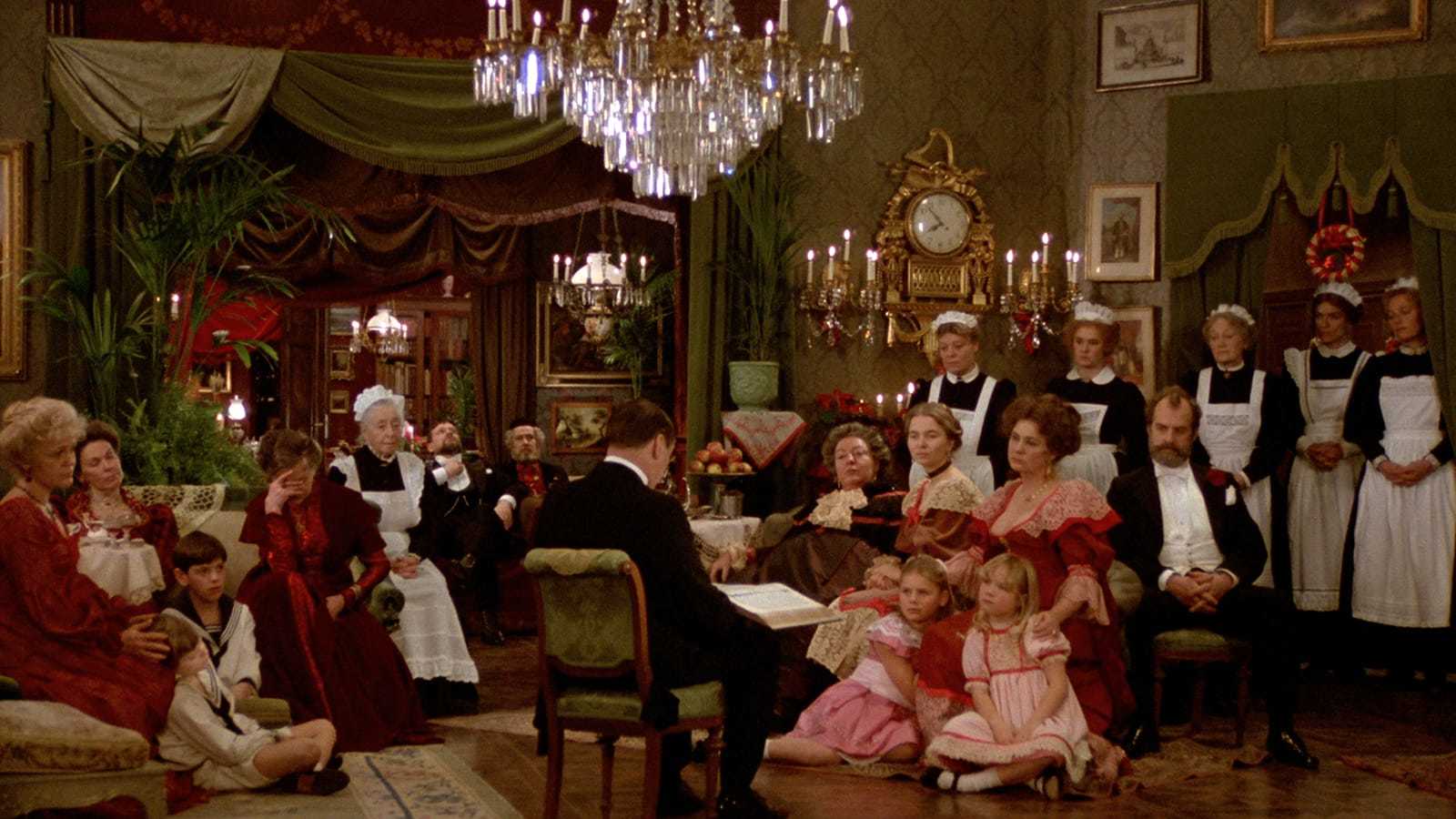
This week, we’ll be focusing our posts on holiday movies, including several that we feel are worth putting into your holiday viewing rotation this year. Follow along here.
“Everything can happen. Everything is possible and probable. Time and space do not exist. On a flimsy framework of reality, the imagination spins, weaving new patterns.”
The quote, from August Strindberg’s 1901 A Dream Play, is the last thing we hear in Ingmar Bergman’s final film, Fanny and Alexander. But it should probably be placed up front during any discussion of the movie, which unspools in a liminal space somewhere between memories and dreams. Bergman’s swan song for the cinema – though he continued to direct theater and television for the next two decades – is a massive, magnum opus intended to tackle all the topics and themes with which he’d been wrestling over his previous 41 years of filmmaking. It’s a sprawling epic featuring 60 speaking roles and over 1,200 extras, shot on a scale that Bergman –or any other Swedish filmmaker, for that matter—had never attempted before. (The film was later edited into a 312-minute miniseries that played on TV, but for the purposes of this essay we’re sticking with the director’s 1982 theatrical cut, which runs a brisk three hours and nine minutes.)
Fanny and Alexander found a wider audience than most Bergman films, and one can easily see why. It’s imbued with a warmth and earthy humor missing from much of his earlier work, which could admittedly be a bit chilly sometimes – though nowhere near as frigid as the filmmaker’s foreboding reputation might suggest. (The best kept secret in film schools is that The Seventh Seal is actually a very funny and entertaining movie. The Virgin Spring, not so much.) The first hour of Fanny and Alexander takes place at a raucous Christmas Eve celebration held by the Ekdahl family, a boisterous collection of theater people and restaurateurs from bourgeois backgrounds. It’s one of the great, extended, movie-starting parties, akin to the weddings in The Godfather and The Deer Hunter, making the viewer feel like an invited guest while casually introducing characters and conflicts that will later come to the fore.
This is quite the bash, full of singing, dancing and sloppy trysts behind the Christmas tree. One of the drunk uncles makes time with a voluptuous nanny while another blows out an entire candelabra with his farts. (As far as 20th century masters go, Bergman was nearly as fond of flatulence as Fellini.) We witness these adult antics through the enchanted eyes of eleven-year-old Alexander (Bertil Guve) and his sister Fanny (Pernilla Allwin) and at first it’s easy to understand why so many cinephile families claim they watch Fanny and Alexander together every Christmas. But they must shut it off after the first hour, because this lively Yuletide paradise is about to be lost.
The children’s sickly father suffers a stroke onstage during rehearsal (in costume as Hamlet’s father’s ghost, of all roles!). By the following spring, their mother Emilie (Ewa Fröling) has remarried to Jan Malmsjö’s Edvard, a dashing Lutheran bishop whose good looks can barely conceal a mean streak a mile wide. The cozy chaos of their old lives is replaced by austere, empty walls and rigidly enforced hours of silent prayer. The children are locked into their rooms with bars on the windows, held hostage by their stepfather’s increasingly sadistic whims.
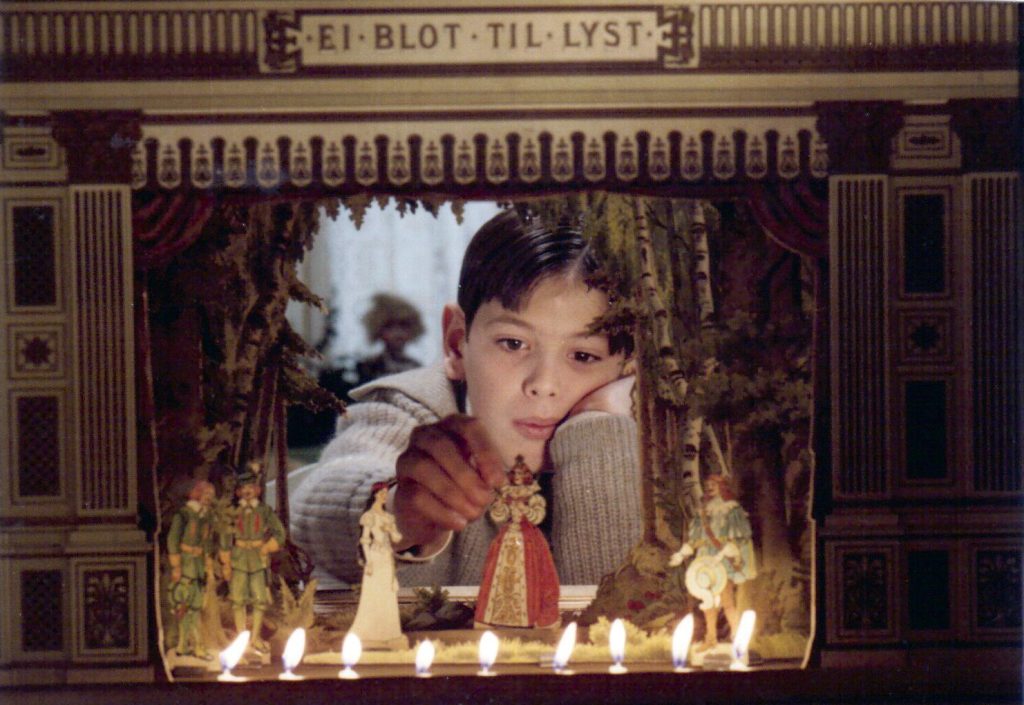
Abandoned for hours on end to contemplate his relationship with the Almighty, the young Bergman stand-in Alexander comes to the conclusion, “If there is a god, then he’s a shit, and I’d like to kick him in the butt.” His incipient atheism isn’t helping matters much, as it’s going to take more than mere mortals to bring the Ekdahl kids home. But then, it’s about time all those ghosts hanging around the closets and hallways finally made themselves useful.
Fanny and Alexander was a homecoming for Bergman, his first film shot back in Sweden since a trumped-up 1976 arrest for tax evasion had sent him into exile in Munich, where the filmmaker suffered from debilitating depression even after the phony charges were dismissed. Outside the obvious autobiographical shadings from Bergman’s childhood, the film is driven by the emotional intensity of someone violently ripped from their home in an artistic community and dropped into lonely, unfamiliar surroundings.
The return of the Ekdahl kids to their houseful of eccentric, actor relatives gets an extra-textual kick when you’re watching a director reunite with so many performers he’d worked with so memorably over the years. Here’s Harriet Andersson some 29 winters after our Summer With Monika, a scene-stealing turn from Scenes From a Marriage star Erland Josephson, and even a final role for Winter Light’s tormented priest and Bergman stock company mainstay Gunnar Björnstrand. (There were almost two more: The roles of Emilie and Evard were originally written for Liv Ullmann and Max Von Sydow, both of whom turned down the movie for reasons that remained contentious for quite some time.)
Even though Bergman would continue to write screenplays, and television projects like After the Rehearsal and Saraband received theatrical releases in the United States, Fanny and Alexander remains very much a filmmaker’s final statement. It’s bookended by blustery, farewell speeches from florid patriarchs to whom everybody’s only half-paying attention, and I get a big kick out of how the Ekdahl women strategically let the men run their mouths until they’re all talked out, gently indulging their fragile egos before going right back to running the show. It’s hard not to read the bishop’s cold quarters and the Ekdahls’ happy home as two sides of Bergman’s soul vying for custody of his alter-ego, Alexander. The film’s final reel upends Strindberg’s “filmy framework of reality,” slipping into surreal sleight of hand as this battle of love and libertinism versus religious self-abnegation wakes the ghosts. They’ve been waiting. 
“Fanny and Alexander” is currently streaming on HBO Max, and the Criterion Channel.