Sean Burns
I’m not sure it would be possible, for the purposes of this column, to pick a movie more unfashionable at the moment than Last Tango in Paris. Watching Bernardo Bertolucci’s searching, searing eruption of carnality and grief today isn’t so much like studying an unearthed relic as it’s like trying to decipher a transmission from an alien planet. It’s a capital-A art movie full of bold obscenity and brutal, transgressive sex acts, awash in brokenhearted machismo, ugly cruelty, and childish self-pity. This is an exhilaratingly reckless film, one in which we bear witness to artists digging deep and dredging up the unknown depths of their scarred psyches. When I was a teenager, I thought Last Tango was one of the most pretentious films I’d ever seen. A few years later, it became one of my favorites. I still love the film today, albeit with an air of affectionate indulgence. Bertolucci was 31 when he made it, and this is very much a young man’s picture.
The plot – insomuch that there is one – concerns Paul, a 45-year-old widower (played by Marlon Brando) still reeling from his wife’s suicide. While looking at an apartment for rent he meets Maria Schneider’s Jeanne, a cherubic 20-year-old engaged to a smothering, obnoxious filmmaker (Jean-Pierre Leaud) and to be married at the end of the week. After little in the way of conversation, Paul and Jeanne wind up having violent, nasty sex on the floor of the flat, falling into international arthouse cinema’s most notorious NSA relationship. They continue to meet and screw in the empty apartment, agreeing to exchange nothing in the way of personal information. “No names,” he insists, repeating it like a mantra. At one point they attempt to communicate entirely through grunts and animal noises, because enough with the pointless anecdotes already.
The premise is a knowingly ridiculous male fantasy, and also a terribly sad one. Eaten alive by his grief, Paul is attempting to anesthetize himself by creating a space where only sex and his basest desires exist, growing ever angrier and more degrading as semblances of the outside world keep intruding upon this smutty Eden. For Jeanne, it’s a walk in the wild side and a secret way to spite her over-controlling boyfriend. (“I’m tired of being raped,” is how she tells him she’s sick of being filmed without her permission. Meanwhile Paul is actually raping her back at the apartment.) This is loaded material which Bertolucci does not handle in an entirely responsible fashion. That’s what gives the film it’s unnerving, dangerous allure. Last Tango in Paris is one of the most controversial movies ever made because it deserves to be.
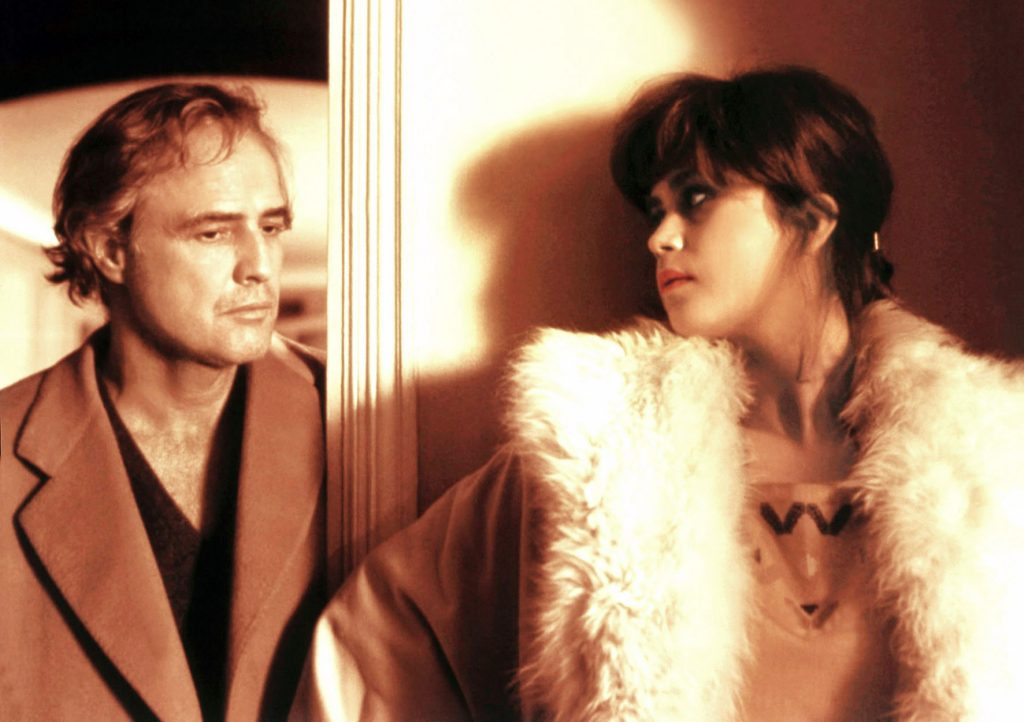
There has been much ado in recent years over Bertolucci and Brando’s unprofessional treatment of Schneider on the set, especially the two not warning her in advance about the addition of butter as a prop in the film’s most infamous encounter. A dick move. However, the internet being the internet, this story has been blown out of proportion to an urban legend that the film’s anal rape was improvised and unsimulated. Somehow this is now a generally accepted article of bad faith alongside other easily disprovable chestnuts like “Woody Allen married his daughter” and “Stanley Kubrick bullied Shelley Duvall into schizophrenia.” The kerfuffle reached its zenith of absurdity many years ago when a beloved superhero actor publicly called for the arrest of the long-deceased Marlon Brando, yet has persisted in online discourse to a point where my local newspaper felt comfortable branding Bertolucci a sex criminal in his obituary.
It’s intensely regrettable that Schneider’s experience was such a miserable one and that the movie’s notoriety mucked with her career, because she’s really quite remarkable in it. The more I watch the film the more taken I am with Jeanne, and what a mystery she is sometimes even to herself. For all the emotional violence, there’s never really a question as to whether or not she’s going to be okay. For her this a passing fancy, a phase she’ll probably already be over by the wedding. For Paul, this apartment is the end of the world, and I’m not sure any actor has flown closer to the sun than Brando did here. The character’s background is pointedly a mishmash of the star’s own life and some of his most famous roles, and don’t think it’s an accident that he’s skulking around the apartment in a Stanley Kowalski undershirt 20-odd years later. The man who revolutionized onscreen sexuality for the 1950s is at it again, except Paul’s obscenities are embarrassing and overwrought. The more powerfully he attempts to assert himself, the more pathetic he becomes. Brando goes to emotional places in this picture so vulnerable and humiliating other performers spend their entire careers never getting near the same neighborhood. She’s naked, he’s exposed.
But even if Pauline Kael’s legendarily ecstatic 10,000-word review in The New Yorker predicted that Last Tango’s New York Film Festival premiere would be remembered in history alongside the riots that greeted Stravinsky’s The Rite of Spring, the film now feels more like the end of a certain kind of art film than the beginning of revolution. This whole Norman Mailer/Philip Roth school of anguished men and their raging erections couldn’t be more passé in a contemporary culture where we’re all supposed to stay home and stream content containing positive messages about empowerment and inclusion. (Just look at the reaction to any interview with Jeremy Strong and tell me how well Brando’s Method madness would go over in our anti-art zeitgeist.) The age-gap cops would have a field day with this one, and the movie’s concept of consent is highly questionable, at best. Last Tango’s Francis Bacon painting opening credits, like Vittorio Storaro’s stunning cinematography, are more suited to museums than a window on your laptop. It’s a movie from another time and another place that never fails to leave me deeply troubled and emotionally overwhelmed. I’m so grateful it exists.
“Last Tango in Paris” is streaming on Amazon Prime Video.