Sean Burns
In the films of John Cassavetes, love is madness. It’s noisy, disruptive and it breaks stuff. You can try to shout down your feelings or bottle them up inside, but you still know full well that following your heart will probably ruin your life and you’re gonna wind up doing it anyway. His 1971 Minnie and Moskowitz is as close as the director ever came to shooting a straight love story – if anything in this cockeyed fairy tale can be described as straight, given all the punching and hollering and pounding on doors one comes to expect in Cassavetes country. “Romance takes place in a time before intellect,” the director once explained, lamenting that “the idea of love as a mysterious, undiscovered world has come to have no place in our innermost imagination.”
A loose emotional extrapolation of the director’s own relationship with his wife and muse Gena Rowlands, Minnie and Moskowitz is the frog and princess story of a free-spirited, ponytailed parking lot attendant (constant Cassavetes collaborator Seymour Cassel) and his unconventional courtship of a stately blonde bombshell (Rowlands, natch) from far above his station. She’s Minnie Moore, a museum curator stuck in an abusive, dead-end affair with a jealous, married man (Cassavetes himself, in a chilling cameo.) Nothing about Minnie or her social circle suggests she has anything in common with Seymour Moskowitz, a walrus-mustached, hot dog-chomping valet who spends his evenings watching old Bogart movies in run-down grindhouses. The attraction doesn’t make sense. She even tells him straight up that his is not the kind of face she’s been dreaming about.
Yet love persists, in the loudest, most reckless fashion imaginable. Minnie and Moskowitz can be annoying, even unsettling in the persistence and sometimes threatening physicality of Seymour’s grand gestures. A friend not incorrectly likened the movie to that old Onion article “Romantic-Comedy Behavior Gets Real-Life Man Arrested.” I don’t think my pal meant it as a compliment, but I feel like this is one of the film’s strengths. Love is scary and disorienting. You’re allowing yourself to be vulnerable in ways that can be terrifying. Most movies tend to equate romance with serenity, but the reality is something far woozier and more destabilizing. (Paul Thomas Anderson’s Punch-Drunk Love conjures the same wobbly feelings as Minnie and Moskowitz, with similarly scary eruptions of violence.)
The movie’s most emblematic scene arrives before Minnie and Seymour even meet, when she’s fixed up on a blind date by a busybody friend. Minnie doesn’t want to be there, but decides to humor the pricelessly named Zelmo Swift (Rowlands’ Faces co-star Val Avery) for the length of a meal, just to be polite. He’s sweating and laying it on too thick. She’s awful at feigning interest. The lunch goes on for so long you want to hide under your seat in embarrassment. Zelmo’s laboring to present himself in an attractive light, so this beautiful woman can see what a catch he is. But he can’t seem to get through to her, and the harder he tries the worse he comes off — his desperation swelling into rage.
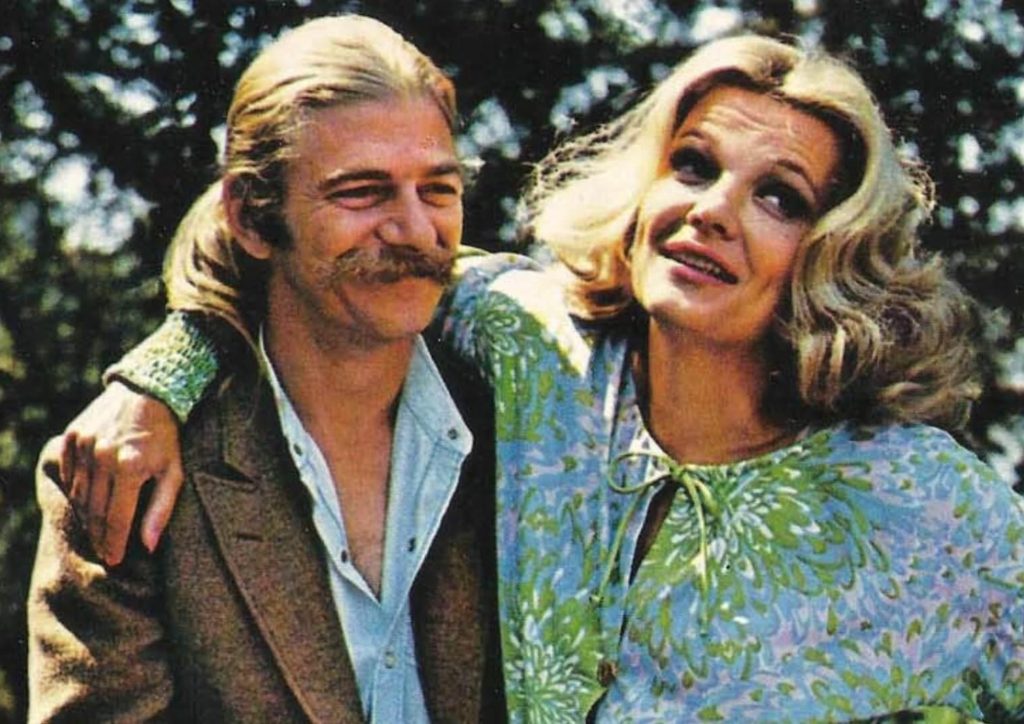
Because of their rough-hewn, handheld camerawork and focus on regular people, Cassavetes’ movies are often mistakenly described as “realistic,” when in actuality they’re anything but. These are grand operas of uncontrolled emotions spilling forth without a filter. Everything in his pictures is felt about ten times harder than in ordinary films, yet in these heightened states we find universal truths. Everyone’s been on a bad date like Zelmo and Minnie. (Sure, it probably didn’t end with you screaming “whore” and getting your ass kicked by the parking attendant, but I bet it felt like you might as well have.) This fundamental human need to be seen and deemed worthy of affection drives so much of Cassavetes’ most powerful work. Minnie and Moskowitz gives us a Los Angeles full of lonely hearts crying out to be loved.
It was one of the director’s rare studio pictures, part of what was supposed to be a long-term deal with Universal that fell through when Cassavetes butted heads with exec Lew Wasserman. You might notice the Assistant Sound Editor credit for a struggling young indie filmmaker named Martin Scorsese, though my understanding is that his work mainly consisted of hanging out in the cutting room with his mentor. (Scorsese had needed a place to crash in L.A., so Cassavetes tricked the studio into hiring him to “guard the set” and he slept in the location used as Minnie’s apartment.) Wasserman was reportedly furious that Cassavetes had stacked the cast and crew with so many friends and relatives, unaware that to this director, films were family affairs.
Suffering a similar critical and box office drubbing as his previous picture, Husbands (which was only recently and correctly reappraised as one of his very best) Minnie and Moskowitz also had the misfortune of opening three days after A Clockwork Orange, in a lot of the same theaters. Cassavetes was later heard joking that you couldn’t get in to see Minnie and Moskowitz for weeks after it opened in New York – but only because the crowds for Kubrick’s film were blocking the entrance.
“Minnie and Moskowitz” is streaming on Amazon Prime Video.