Sean Burns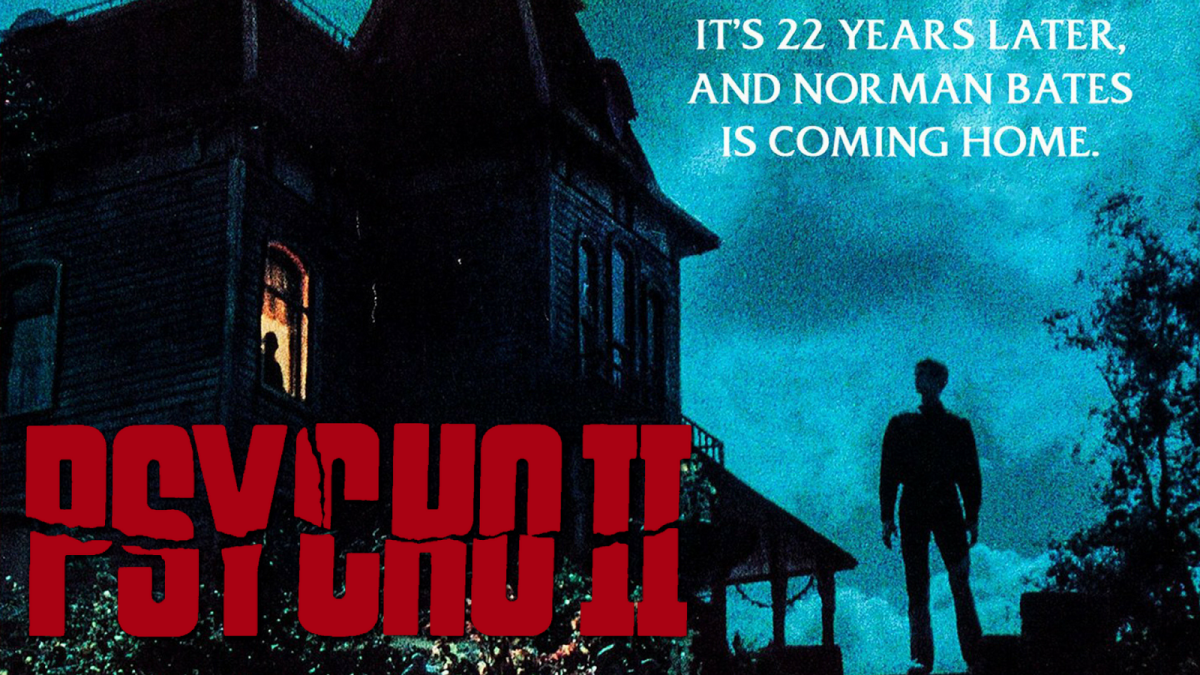
Franchises weren’t always an inevitability. It might sound strange now that movie studios have devolved into an ouroboros of IP-regurgitating content mills, but once upon a time, sequels were considered to be quite crass. I can still vaguely remember 1983’s Psycho II being regarded as such, with the Washington Post calling it “a travesty masquerading as a sequel” and even the warmer reviews having a begrudging quality. After all, it’s an insane act of hubris for a young filmmaker to think he can follow Alfred Hitchcock’s nasty little masterpiece—especially 23 years later, when Hitch was still recently deceased and the original film had already been enshrined for more than two decades as an untouchable classic.
Truth be told, I’d never bothered to see Psycho II until last week – probably for the same reason that I didn’t watch Jaws 2 until fairly recently, as the concept of making a Psycho movie without Alfred Hitchcock seemed about as silly as making Jaws without Steven Spielberg. (I’ll confess that I had, however, seen Jaws 3-D more than once in my younger days, but only because it featured Lea Thompson in a bikini. In 3D.)
So imagine this critic’s surprise when Psycho II turned out to be not just a cynical cash grab, but rather a worthy attempt to reckon with the original picture’s legacy and cast a surprisingly sympathetic eye on the plight of poor Norman Bates. (Not as big a shock as the first film’s shower scene, but close.) The sequel starts out unpromisingly, replaying Janet Leigh’s watery fate as an oddly edited and re-scored teaser, skipping the iconic shot of blood running down the drain and shifting into color to announce that we’ve arrived in the then-present day.
Tried for the first film’s murders and found not guilty by reason of insanity, Norman is released from the mental hospital now that doctors have deemed him back to normal. His kindly shrink (a warm, against-type Robert Loggia) explains that due to budget cuts there are no halfway houses or caseworkers to ease Norman’s transition back to society – a sizeable plot hole filled by the Reagan administration’s abysmal record with mental health institutions – and soon he’s on his own again at the Bates Motel.
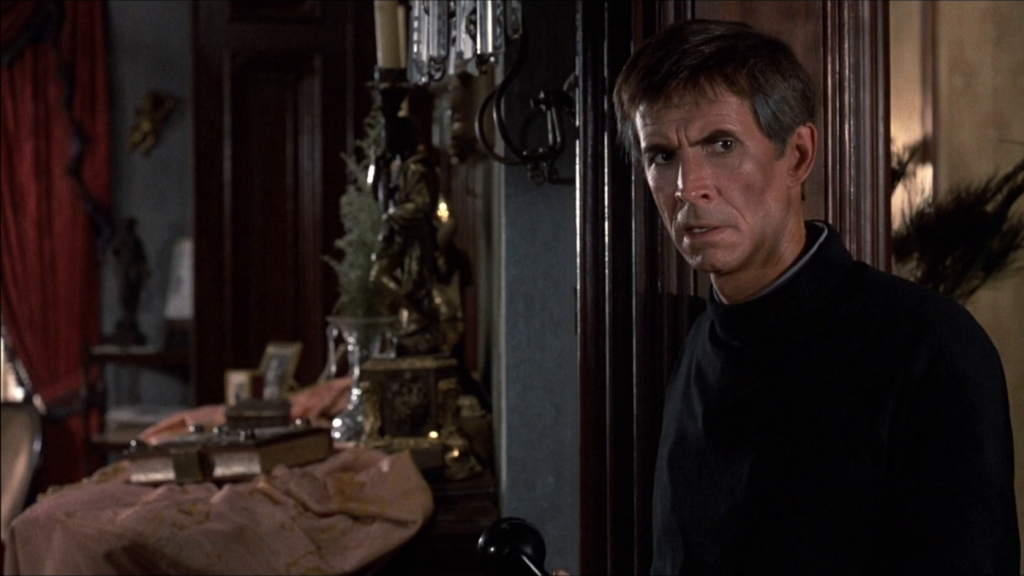
Norman’s none too happy to find the place has been turned into a no-tell, hourly den of iniquity by the sleazy interim manager – Dennis Franz in his full dirtbag mode familiar from Brian De Palma pictures – so he sets about getting it up and running right again with the help of a mysterious diner waitress Mary (Meg Tilly) who’s affectionate advances toward our gawky innkeeper seem at once ill-considered and less than genuine. There’s always been something just a bit unnervingly off about Tilly. Unlike her voluptuous older sister Jennifer, who resembles a naughty cartoon come to life, Meg was often cast for her eerie affect in stuff like Agnes of God or Abel Ferrara’s Body Snatchers, and would soon be no stranger to these sort of belated sequels, playing the missing Mulwray sister/daughter in The Two Jakes.
Someone’s messing with Norman, slipping him rude notes signed by his mother and popping up in windows wearing his mom’s old clothes. Either that or he’s cracking up again. Or maybe it’s a little bit of both, a possibility that courses through every delicate gesture of Anthony Perkins’ beautiful performance, returning to the role that (for better and worse) defined his career. Psycho II was originally developed as a project for cable television – see, studios used to have a sense of shame about these things – but made the jump to theatrical when Perkins expressed unforeseen interest in revisiting the character.
Jamie Lee Curtis was courted for Tilly’s part, a perhaps too-clever inside joke considering it was her real-life mother that Norman stabbed in the shower. Fright Night and Child’s Play writer Tom Holland’s screenplay hinges on at least one big twist too many, but he commendably makes a go of trying something new instead of merely rehashing beats from the first film. Road Games director Richard Franklin was brought over from Australia for his Hollywood debut. Perhaps wisely, he doesn’t try to ape Hitchcock’s showmanship, opting for a more workmanlike approach. (The obvious dream choice would have been De Palma, who had just a few years before made his own version of Psycho with Dressed to Kill. Composer Jerry Goldsmith doesn’t try to replicate Bernard Hermann’s shrieking strings, instead using sad, swelling melodies that sound uncannily like Pino Donaggio’s scores for De Palma.)
What’s most effective about this sometimes clumsy picture is that the world doesn’t really want Norman to get well. Characters are constantly taunting this sick man as if trying to bait him into living down to their worst expectations. By flipping our perspective to see one of cinema history’s most famous monsters as a tortured protagonist (maybe) more sinned against than sinning, Psycho II asks provocative questions about why we come to see movies like this in the first place. What are we really rooting for here, and why is it so satisfying when a well-timed shovel to someone’s head brings Norman right back to where he was when we first met the character in 1960? I mean, look at the poor guy. He wouldn’t hurt a fly.
“Psycho II” is streaming on Netflix — as is the original, if you’d like to make a night of it.