Sean Burns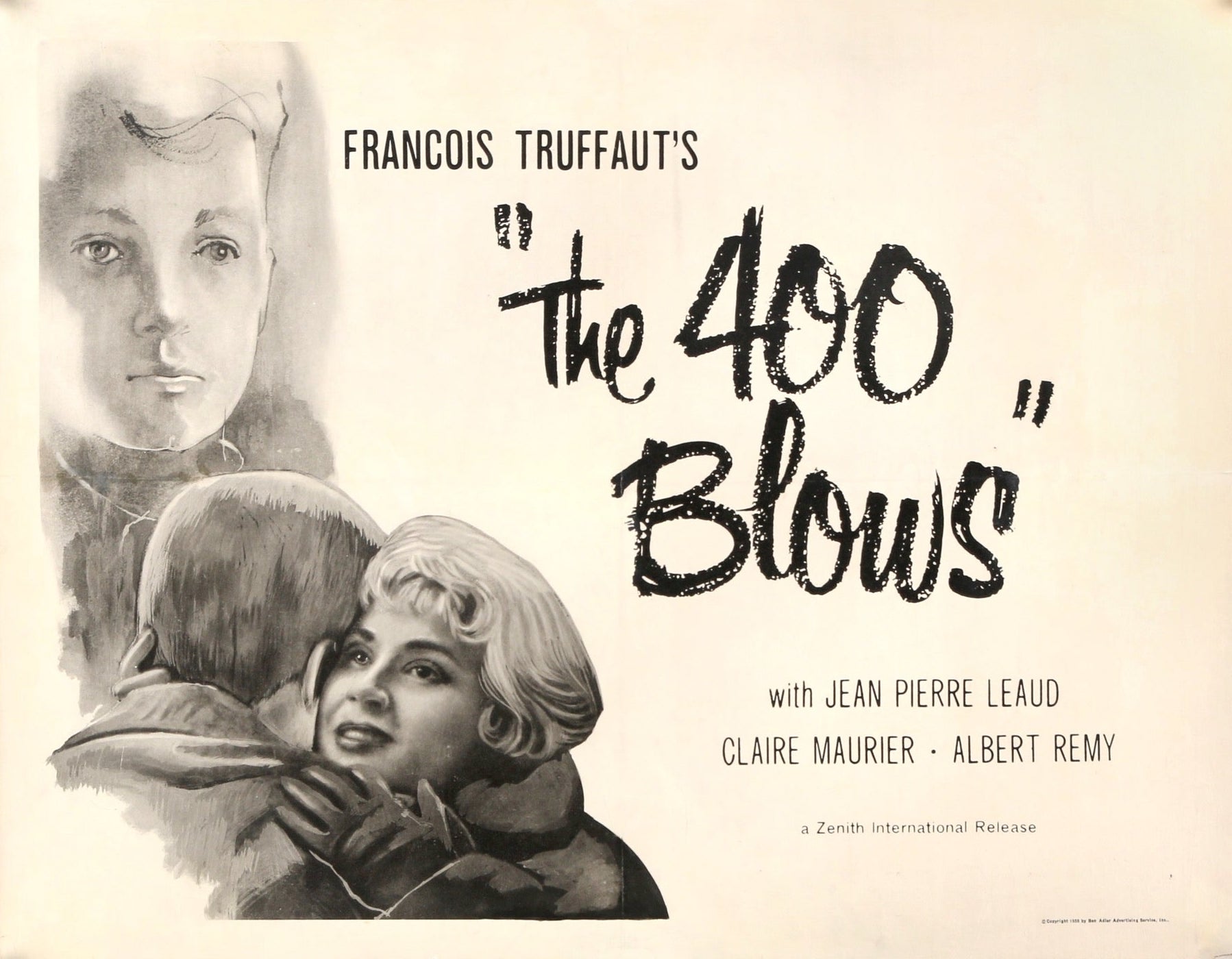
A portrait of the artist as a little shit, Francois Truffaut’s debut feature The 400 Blows is a bracingly unsentimental look back at the director’s juvenile delinquent days. The filmmaker was a reform school kid, rescued from a military prison and a possibly quite ignoble future by the great critic Andre Bazin (to whom this film is dedicated), who gave the then-20-year-old, movie-mad petty criminal his dream job writing for the famed French journal Cahiers du Cinema. You could say the movies saved Truffaut’s life, but they’re merely a brief respite from the daily grind for his cinematic alter-ego Antoine Doniel, played here for the first of five times by Jean-Pierre Léaud, delivering the greatest child performance in the history of film, at least until Henry Thomas came along in E.T. some 23 years later.
Antoine is a handful. First seen passing a girlie pinup calendar around the classroom, he’s a habitual truant and disruptive class clown, taking out all the anxieties of his parents’ collapsing marriage on the authority figures around him with a rebellious smirk. (As far as great filmmakers’ fictionalized childhood stand-ins go, Antoine would probably steal Sammy Fabelman’s lunch money and shove him in a locker.) He’s a weird kid, an avid reader with a shrine to Balzac in his room, and to call his mood swings mercurial would be an understatement. Yet we can’t help loving this little asshole all the same.
Truffaut enjoys plunking down into the protagonist’s perspective, allowing the camera to drift around with Antoine’s POV in moments like the one where he gets distracted by his hectoring mother’s new hat. Elsewhere, Truffaut and cinematographer Henri Decaë emphasize the schoolboy’s smallness, framing his tiny young body against massive, relatively ancient edifices. The former war photographer had shot Louis Malle’s Elevator to the Gallows the previous year, and part of what makes The 400 Blows so rich with sensation is the similarly run-and-gun approach Parisian street photography, hanging cameras out of windows and capturing a whole world around these characters as it goes bustling by.
Antoine skips school, tells stupid lies, runs away from home and stays out all night. One day while ditching class he spots his mom kissing somebody who sure isn’t his stepdad, and the two will never speak of this moment again. But the grass isn’t exactly greener on the swankier side of town, where his rich friend Rene has a drunkard for a mother and a degenerate gambler dad who tries to buy affections his son would much rather give freely. One of the movie’s most lyrical interludes involves an audience of children laughing enthusiastically at a puppet show. Truffaut lingers on this moment for a long, lovely time, as if to remind us of the uncomplicated joy that children deserve but seldom receive. Especially not these kids.
There’s respite at the movies, but not in the hackneyed way we see in so many contemporary “love letters to cinema.” The last time we see the Doniel family happy together is after they’ve gone to see Jacques Rivette’s Paris Belongs To Us (which actually wouldn’t be released for another two years but Truffaut was pals with the director and threw it in as an inside joke.) At least he knows better than to subject us to that hackneyed shot you see in every other movie now where the characters gaze upwards, pie-eyed with a flickering projector beam behind their heads. (I swear if I have to see that shot again I’m going to start levying fines.)
The anarchic comedy and the quick cutting patterns slow down as Antoine begins getting into the kind of trouble he so easily can’t talk his way out of. Typical of his rotten luck, he’s finally arrested for stealing a typewriter not while absconding with the item, but rather when he breaks back into the place and tries to return it. His incarceration has an almost dreamlike quality, with the little boy being swallowed up by a giant, impersonal process. The scenes get baggier here, emphasizing the mundanity and dulled rhythms of institutionalized life.
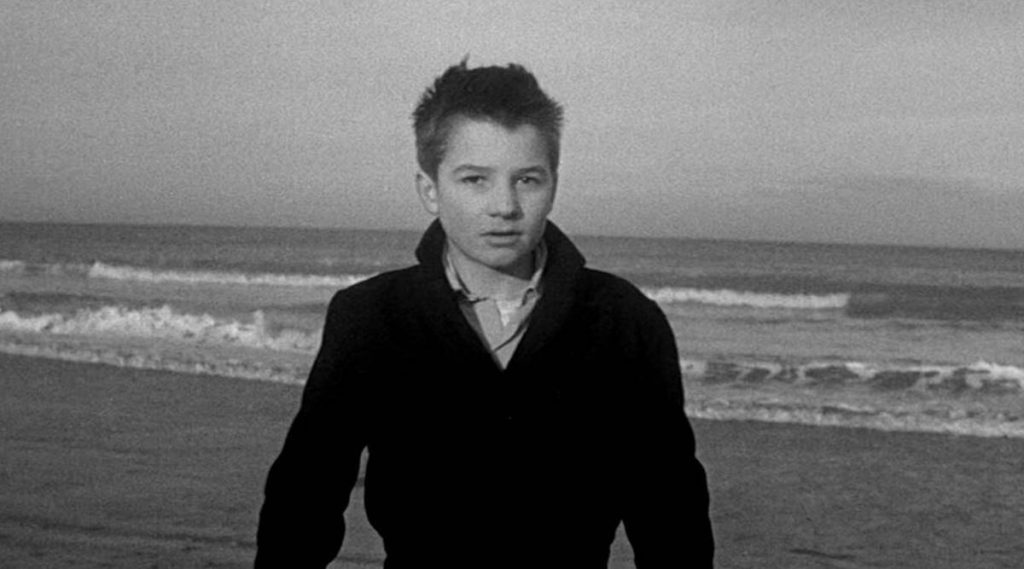
Antoine is often seen descending stairs, usually from left to right, acting out a downward trajectory that nestles subconsciously in the viewer’s head. When he finally slips free –probably not for the last time– the entire camera language changes altogether, exulting in Antoine finally finding the sea he’s never seen, before ending with a famous freeze-frame that feels more like an accusation. Truffaut and Léaud would repeatedly return to Antoine Doniel over the next 20 years with three more films and a short, presaging Richard Linklater’s Before series and Boyhood (and basically Linklater’s entire career), finding this snarling, unsettled teen grown up to be a happily horny and gently inconsequential little man.
Léaud has worn the baggage of the role uneasily at times, often employed to comment playfully on cinema itself in some of Jean-Luc Godard’s more waggish works or as the movie-mad cuckold in Bernardo Bertolucci’s Last Tango In Paris. When Léaud spent the entire running time dying in Albert Serra’s 2017 The Death Of Louis XIV, we were meant to read it as an entire tradition of film passing away before our eyes, which is a heavy burden for any actor to bear. Had Truffaut himself not died tragically early at the age of 52, I like to think he would have continued checking in on Antione over the years. I wonder sometimes how he’s doing. 
“The 400 Blows” is streaming on HBO Max, the Criterion Channel, and Kanopy.