Chelsea Spear
If you time traveled to the mid 1970s and flipped through the record crates in an average Boston-area undergrad’s dorm, one album would stick out among the prog rock records and singer/songwriter private pressings of the day. The sleeve art for The Harder They Come, with its primary-color comic book tableau, contrasted with the sepia tone photography on the kinds of albums you’d see on an endcap at the Coop in 1974. The music found inside that sleeve, with its slower tempos, syncopated beats, driving organ riffs, and trilling horn charts, may have a sound that was a million miles from the more temperate climes of Eastern Massachusetts, but Jimmy Cliff’s clear-eyed descriptions of life in Jamaica found an audience among fans of artists like Bob Dylan and Paul Simon.
When reggae pioneer Jimmy Cliff died, musicians and film fans mourned the loss of an influential figure. Boston filmgoers who remember the 1970s may have felt an especially acute pang. For seven years in the mid-’70s, The Harder They Come played to sold-out crowds at the Orson Welles Cinema, and its runaway success brought reggae to an unlikely audience.
The time is the early 1970s; the place, Jamaica. Ivanhoe Martin (Cliff) has just lost his grandmother and struck out on his own in Kingston. He takes odd jobs at a church and attempts to find his fortune in ganja and music only to become a national hero when he shoots two cops and goes on the lam.
While The Harder They Come was the first movie made in Jamaica by a Jamaican cast and crew, aspects of the film are in conversation with the New Hollywood features of the late 1960s. Like Bonnie and Clyde, The Harder They Come is inspired by a true story, but instead of just oversimplifying the legend of Jamaican criminal-turned-folk hero Ivanhoe Martin, screenwriters Perry Henzel and Trevor D. Rhone folded Jimmy Cliff’s experiences with the Jamaican music industry into the narrative. The character of Ivanhoe evolved from his legendary status in Jamaica as a spree killer to the kind of complicated, sympathetic antihero who’d find an audience at art house theatres in America.
Unfortunately, Roger Corman fumbled the first attempt at distributing The Harder They Come in America. New World Pictures “had marketed it by opening it in Harlem, the Bronx, and Times Square with a kind of ‘Superfly Goes to Jamaica’-style ad campaign, and it failed,” Larry Jackson, who managed and programmed the Orson Welles Cinema in Cambridge, recalled in a recent interview. The film’s episodic structure and deliberate pacing, combined with the cast’s thick Jamaican accents, made it a hard sell to the exploitation crowd.
Jackson heard about The Harder They Come through one of his roommates’ friends, who saw the film on a trip to Jamaica. “We hadn’t really heard of reggae music at the time,” Jackson said. “I had a print sent to me. I looked at it with my staff at the theater. We could barely sit still in our seats while we listened to that music.”
At the time, reggae was a new genre evolving from ska and rocksteady that had only broken through to American audiences through novelty hits like the Beatles’ “Ob-La-Di Ob-La-Da.” The 1970s Boston music scene, with its network of radio stations, record stores, and live music venues, was an ideal place to relaunch the film. Jackson partnered with WBCN, “which was then the dominant countercultural music station in Boston,” to get reggae music added to their playlists in advance of The Harder They Come’s Boston premiere. Working with in-house graphic designer Jane Fogle, he replaced the blaxploitation-influenced poster commissioned by New World Pictures with a line drawing of a palm tree that had a switchblade among its leaves, referring to the film’s Caribbean setting and the climactic knife fight that sets Ivan on the run. By focusing on the music and the location, Jackson was able to pitch the film to “the core audience (of) Black middle-class Americans and collegiate Americans in general.”
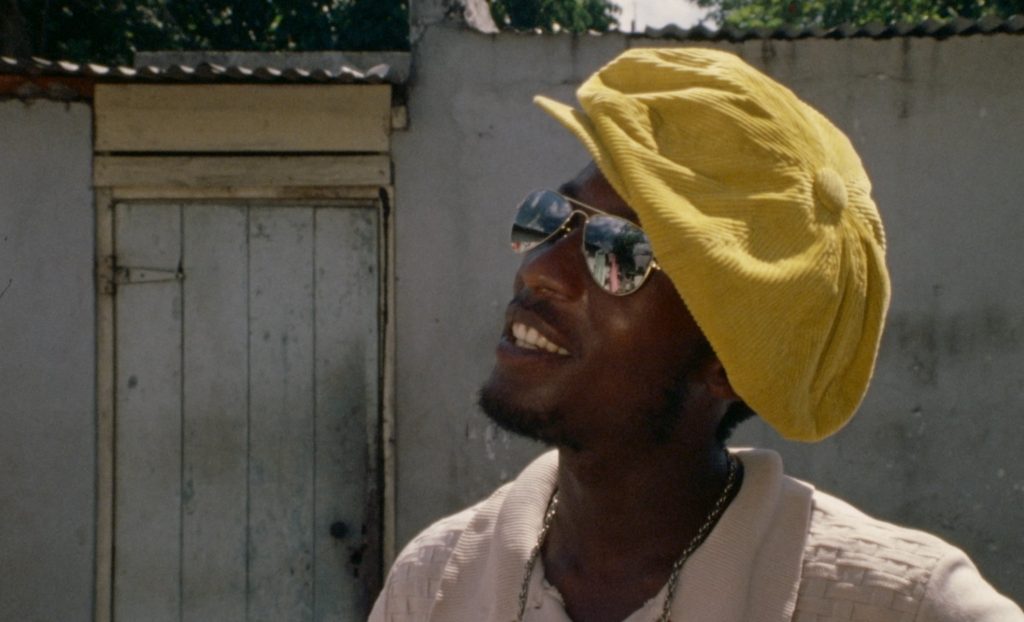
Jackson and his team relaunched The Harder They Come in the spring of 1973, “and immediately word was out, and we started playing to pack houses with 400 seats show after show after show.” The Orson Welles Theatre sold an estimated 25,000 copies of the soundtrack album at its concession stand, and even after the film moved from the main screening times to midnight showings, screenings attracted celebrity audiences like Caroline Kennedy and Orson Welles himself.
The years-long engagement of The Harder They Come overlapped with the Boston Public Schools’ busing riots, an attempt at integrating Boston schools that would become one of the most turbulent eras in Boston history. “I can’t begin to suggest that [screening The Harder They Come] made great strides in overcoming inherent racism, which is still an issue in Boston,” Jackson said. “It did help to bring people together in another way, in part because it introduces something about another culture in the world that most Americans had very little exposure to until this happened, until this came out. I like to say that one of the great things about foreign films is that you get to see the experiences in life of people in other cultures telling their stories in their own settings, in their own clothes, with their own music and in their own language. And no matter what the country is, it helps us come to understand and bring us closer to the lives of other people that we have ignored or taken for granted or perhaps even turned away from. Movies have the ability to do that in a way I think no other medium does.”
Jackson’s support for The Harder They Come had a long-term effect on both the film itself and the Boston music scene. WBCN, the radio station that included it on their playlists to promote the film, continued to include reggae music in their playlists into the 1990s, and also served as the media sponsor for the Reggae Sunsplash tours. In 2021, the soundtrack for The Harder They Come was selected for inclusion in the Library of Congress National Recording Registry.
Larry Jackson is also aware of his role in the legacy of The Harder They Come. “I was at an event for the New York State Archives about eight years ago in New York where I was a guest speaker. One of the board members of the trustees of the archive came up to me afterwards. He was the CEO of a major cable company and he said, ‘I so want to talk to you about The Harder They Come. I saw it at the Orson Welles more times than I can count, and I keep the CD in my car and I play it all the time.’”
“The Harder They Come” is streaming on Amazon Prime, Kanopy, Hoopla, and a variety of ad-supported services.