Jason Bailey
As the years pass, and my time begins to seem, if not precious, limited, I find myself gravitating more and more towards the non-fiction selections at film festivals. Simply put, if I’m interested in the topic, I’ll likely get something out of the movie – even if the film itself is standard stuff.
Now, I’d never be so bold as to imply that my thinking has become the prevalent one (God forbid). But it does feel like a kind of malaise has fallen over documentary cinema, at least at the level of a festival like Sundance; there are more documentaries being made and (thanks, in no small part, to the non-fiction content maw of the streamers) seen, but the form itself is getting musty. We know, more than ever, exactly what we’re seeing when we sit down for a documentary selection: a profile of a beloved or controversial figure, a twisty true crime investigation, a fly-on-the-wall portrait of an underground scene. And they frequently deliver exactly what we expect.
The documentary films I saw at Sundance this year were, at the very least, just fine; but I find myself, at what genuinely feels like a hinge moment in non-fiction movies (and movies in general) wanting more, and not often getting it. For example, documentaries rarely come more conventional than Judy Blume Forever – which is not to say that it’s bad, but merely that it will certainly not blow your mind. Blume, now 83, has retired from writing; she runs a bookstore in Key West, Florida. But she’s become the kind of celebrated, mostly non-problematic figure that documentary filmmakers love to give their (past) due.
If you grew up on her books (as I did), you’ll find much that rings familiar here, and if you “outgrew” them (guilty as well), it’s fun to see what she got up to in her later years, and what was going on in her sometimes stormy personal life while she was writing young-adults faves like “Superfudge” and “Are You There, God? It’s Me, Margaret.” But the best material in the picture, by a considerable margin, are the accounts of her ongoing correspondences with young readers, who came to treat her less as a figure of fan isolation than a trusted friend. She felt like that to those of us who didn’t write to her, too. Grade: B
* * *
The Stroll is also fairly standard stuff, at least in terms of technique. It’s the story of the trans sex workers who populated 14th street in Manhattan’s Meatpacking District, late nights in the wild days of ‘70s and ‘80s New York, and the HBO doc draws on interviews with participants and observers, archival video and audio, and some inventive animations to get the job done.
What makes The Stroll special is who’s telling the story – the picture is co-directed by Kristen Lovell, who worked the stroll for ten years and has a keener understanding of it than any outsider could. In interviews that mesh memories, chit-chat, and gossip, she and her fellow survivors detail the scene, the community, the lingo, and the dangers inherent in it (“these girls taught me how to survive”). It can feel like a 60-minute special stretched out to feature length, especially in the home stretch as Lovell and co-director Zackary Drucker begin to repeat themselves. But it is a valuable tool for understanding the struggles of trans women, then and now. Grade: B
* * *
The phrase “Netflix effect” has been bandied about to describe everything from the shifts in content spending to film literacy, but Victim/Suspect raises the question of the streamer’s effect on the actual, nuts-and-bolts technique of documentary filmmaking. They produce and air tons of non-fiction films and series, but in doing so have established a flashy house style that is too often at odds with the dour subject matter. That especially holds true in the case of Nancy Schwartzman’s look at the (none too recent) phenomenon of police using high-pressure confession techniques to coax rape victims to recant their stories, and then arresting them for filing false reports.
Schwartzman focuses on Rae DeLeon, a reporter from the Center for Investigative Reporting whose attention was caught by a couple of high-profile cases, and meticulously broke down how and why it happens – the consistent strategies and techniques, the recurring offenders, and most chillingly, the question of why police so often choose this route. But the film, which is a Netflix production, decidedly looks, feels, sounds, and cuts like one of their true crime doc-series, with the valuable archival footage and insightful interviews butting up against a generic score, flashy on-screen graphics, stock B-roll, and hacky dramatizations. The material is compelling enough to withstand it, but just barely. Grade: C+
* * *
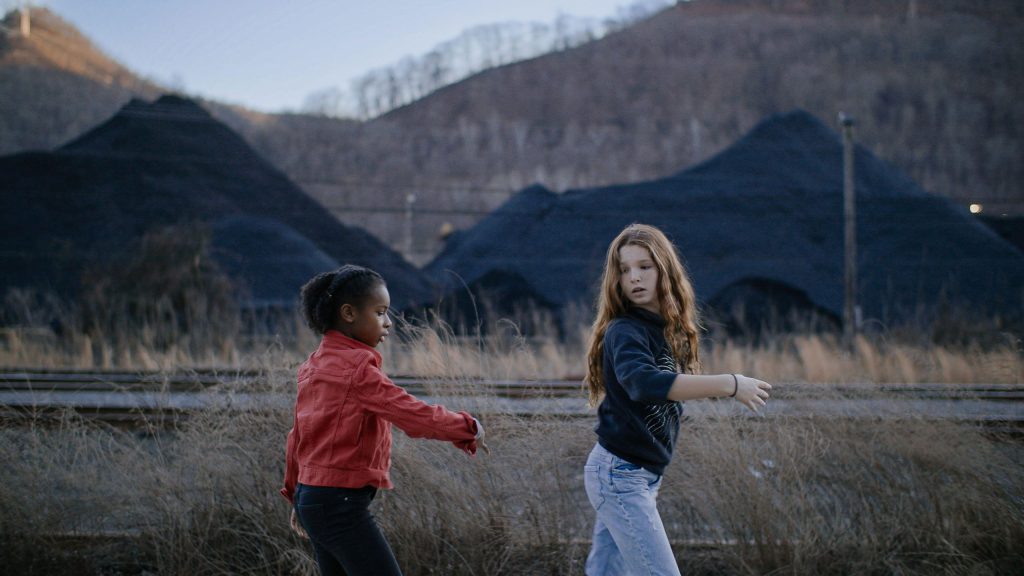
The “narrative-documentary hybrid” has itself become something of a cliche, with its own familiar devices and goofy go-tos, But done right, they beat conventional documentaries all to hell, and King Coal is done right. Director Elaine McMillion Sheldon is making less a conventional non-fiction film than a tone poem for the Central Appalachians, which she dubs “a place of mountains and myths,” and notes, “Maybe you’ve heard a story or two about us. Well, this story is about what it’s like to live underground.”
Her stylized combination of captured documentary footage, archival materials, poetic voice-over, and copious vibes recalls early Alma Har’el, but Sheldon has a style of her own – impressionistic, atmospheric, searching. She has a way of capturing casual conversations that don’t seem staged, and framing her characters sympathetically, even when they may not be. But she also refuses to soft-pedal the damage this industry has done to her home (“For some, the king has provided; for others, he’s stolen”), and the stories she tells are like old folk songs she calls up, echoing through the mountains, floating like ghosts. Grade: A-
* * *
Michael J. Fox’s story is compelling enough – the rags-to-riches tale of a struggling actor turned sitcom sensation turned movie star, struck down in the prime of his youth by a debilitating illness – to have made for a fairly conventional documentary portrait. Thankfully, Davis Guggenheim chose not to do that. Still: A Michael J. Fox Movie is a title to be taken literally: Guggenheim and editor Michael Harte cleverly use bits and pieces from his own films to tell that story (the closest thing to a previous example of this that I can conjure up is Room 237), ingeniously interweaving Fox’s memories, audio snippets, archival footage, film clips, stylized dramatization, and (most importantly) our general sense of who and what Michael J. Fox is.
It’s genuinely well-assembled, combining footage of his life now (doctor visits, physical therapy, speech therapy) with his memories of how he went from hiding this illness – in clips revealing him turning symptoms into bits of character business, Guggenheim and Harte make isolated moments from something as innocuous as Spin City feel like menacing indictments – to becoming the public face of it. Most importantly, Still leaves us with some sense of who he is: funny, open, completely disinterested in pity. “I’m a tough sonofabitch,” he says. “I’m a cockroach and I’ve been through a lotta stuff.” Grade: B+ 
Check out our coverage of this year’s Sundance narrative features here.