Craig J. Clark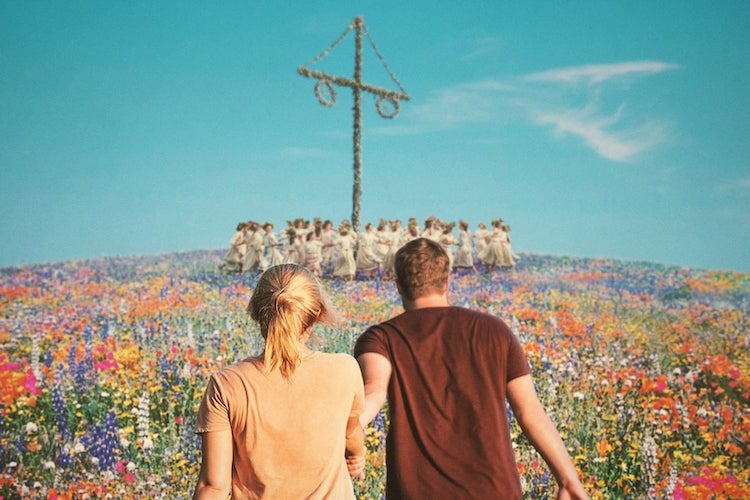
There’s scarcely a review of Midsommar that doesn’t include a mention of The Wicker Man — and with good reason. (Ours is no exception.) Robin Hardy’s 1973 cult classic is the pre-eminent folk-horror film and a clear influence on Ari Aster’s modern cult-film-in-the-making, but it’s hardly the only one. The last half-century has produced its share of stories centered on outsiders stumbling into isolated communities with obscure belief systems and arcane rituals, little realizing the parts they are to play in them until it’s too late. True, not all folk-horror films follow this template, but enough do that they’re worth investigating.
(Incidentally, this article is going to cross-reference plot points from The Wicker Man, Midsommar, and a number of related films made in between them, so read at your own risk.)
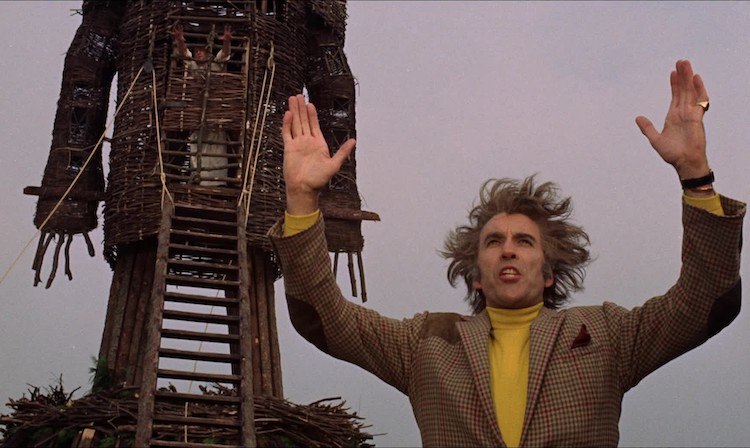 One theme many folk-horror films have in common is sacrifice, specifically a human sacrifice that the heroes (if there are any) try to prevent. This is certainly the case with The Wicker Man, which plays out in the lead-up to May Day on Summerisle, a private island off the coast of Scotland that is famous for its apples and has turned its back on Christianity, which the devout police sergeant who has been summoned there to track down a missing girl finds almost as disturbing as the fact that none of the locals seem too concerned that one of their own is nowhere to be found. In the course of his investigation, which takes him all over the island and brings him into contact with everyone from the schoolteacher to the gravedigger, Sgt. Howie (Edward Woodward) is stonewalled at every turn and unnerved by the bawdy songs he hears everywhere he goes, not to mention the public nudity Summerisle’s residents revel in.
“I trust the sight of the young people refreshes you,” says Lord Summerisle (genre veteran Christopher Lee) when he grants Sgt. Howie an audience, but the God-fearing copper’s mind is decidedly closed to the “regenerative influences” Summerisle espouses. Furthermore, he becomes so convinced the missing girl is going to be sacrificed at the climax of their May Day celebration that he sticks around after repeatedly being warned away and even takes the place (and costume and mask) of the townsperson playing Punch, which has its gruesome echo in the game of Skin the Fool played by the residents of Hörga in Midsommar. “Play the Fool, that’s what you’re here for,” Lord Summerisle commands, a line that, like many things in The Wicker Man, has a double meaning. When the game is over, it’s finally time for Sgt. Howie to keep his appointment with the Wicker Man — “the only possible, logical ending to the story,” Lee would later call it on the DVD commentary for another movie (see next paragraph). More than anything else, it is this sense of inevitability that Midsommar took from The Wicker Man, making it a worthier successor than the 2006 remake, which takes so many liberties with the story it’s frankly jarring whenever writer/director Neil LaBute drops in dialogue from Anthony Shaffer’s original script. And the less said about Hardy’s belated sequel The Wicker Tree, the better.
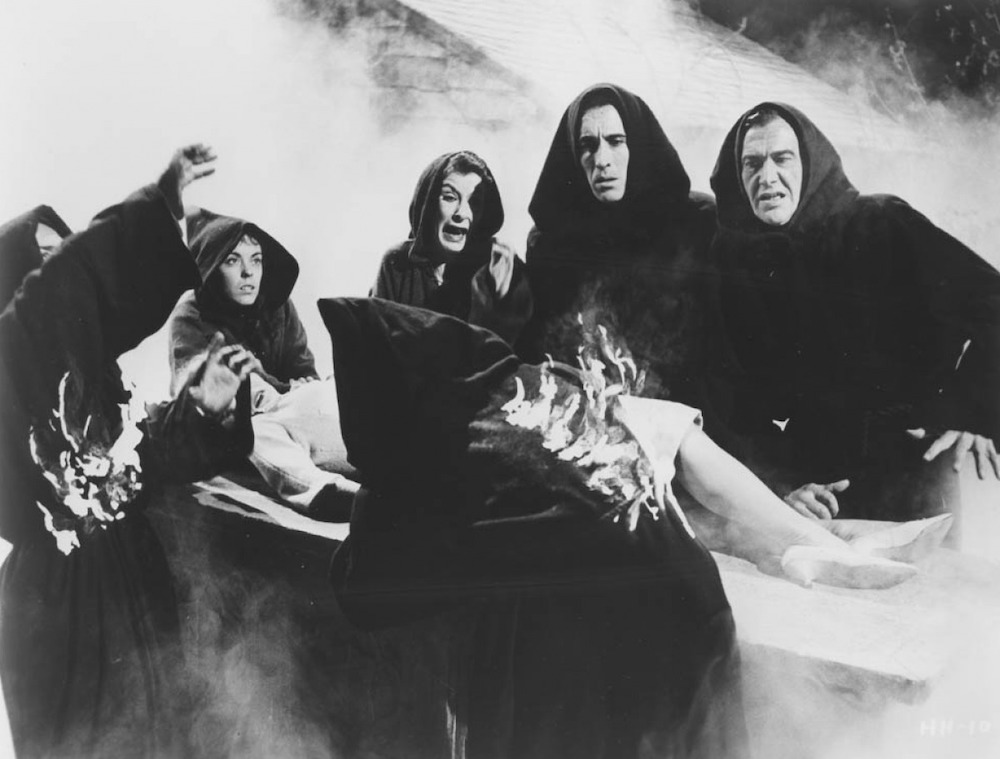 Thirteen years before starring in The Wicker Man, Christopher Lee appeared in the British chiller The City of the Dead, a.k.a. Horror Hotel, in which he plays a New England college professor whose specialty is witchcraft and the occult. Released in 1960, it is a film of two halves. In the first, an eager young college student travels to the blighted town of Whitewood, Mass. — where a witch was burned at the stake in 1692 — to do some ground-level research for a term paper (shades of Josh’s reason for summering in Sweden in Midsommar). She doesn’t get much further than picking up a tome entitled A Treatise on Devil Worship in New England, though, before being sacrificed by a coven of witches led by the reincarnation of the one burned three centuries earlier. In the second half, the student’s skeptical brother (a science professor, naturally) and boorish boyfriend follow in her footsteps to find out what became of her and try to prevent another young woman from being the coven’s next victim.
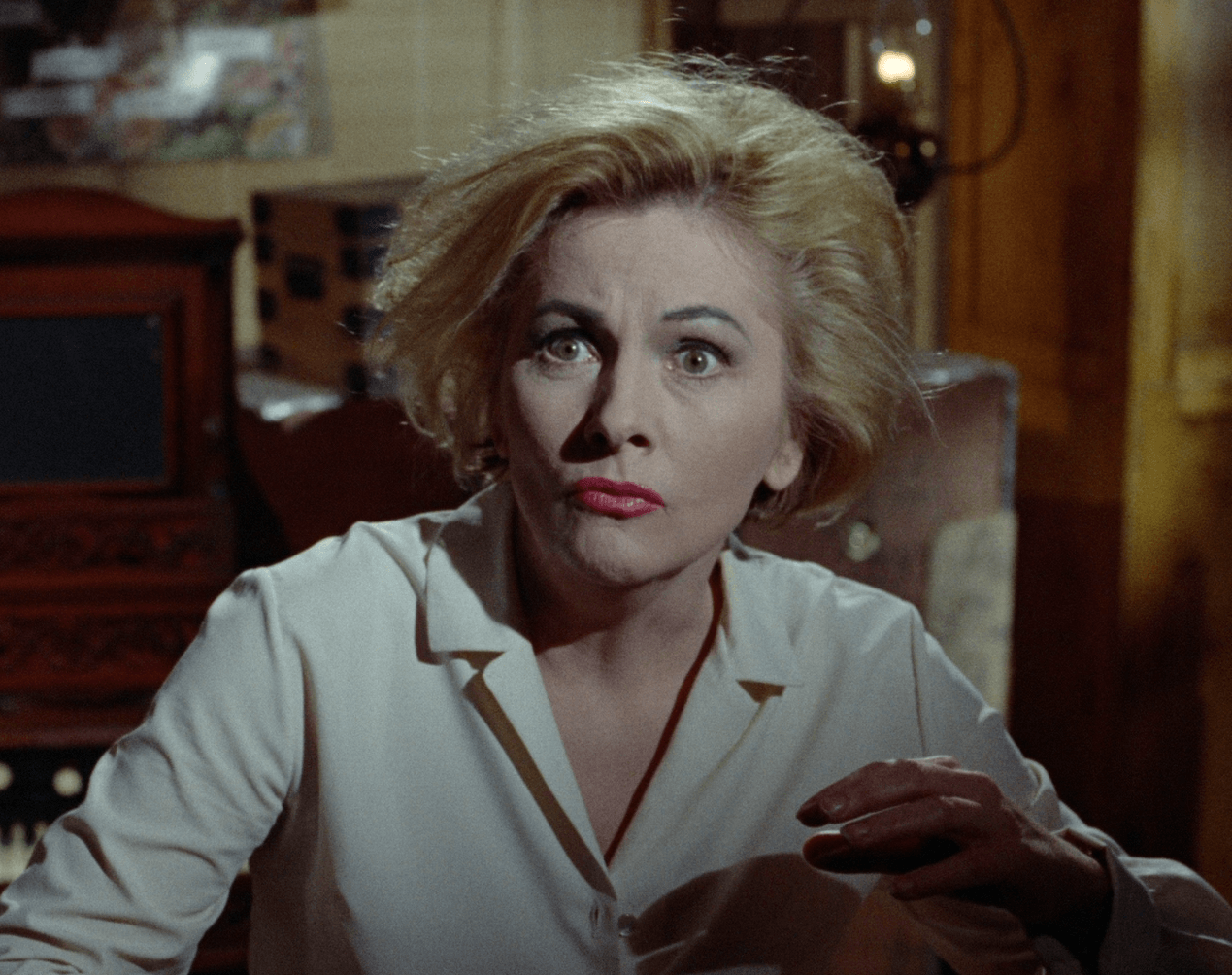 A human sacrifice is also in the offing in 1966’s The Witches, made by Hammer Films. In it, a former missionary (Joan Fontaine in her final feature) takes a position as the head teacher at a quaint little English village’s private school and runs afoul of the local coven, the head of which has her heart set on sacrificing one of Fontaine’s students. Their conflict sets the stage for a modern-dance-like ritual full of writhing bodies as the villagers regress to an almost bestial state. This is something that could also be said of the pagan residents of Summerisle, especially when they don animal masks and costumes to take part in their May Day festivities.
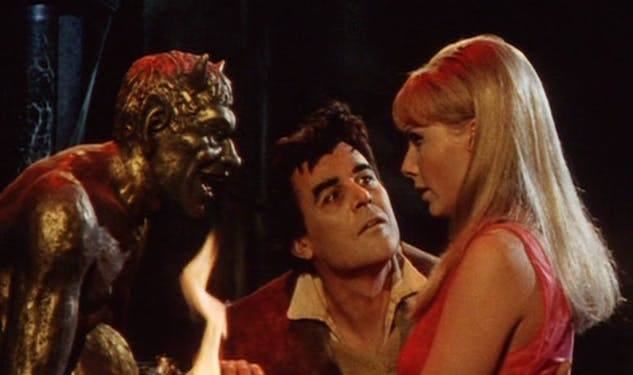 The practice of witchcraft and Satanism isn’t limited to English villages or New England towns, though, as the Louisiana-set obscurity The Witchmaker (1969) illustrates. Returning to the theme of academic types venturing off the beaten path to look into matters that shouldn’t concern them, the film follows a psychic researcher, his secretary, and two students to an isolated cabin in a swamp so he can conduct tests on a “sensitive” who reveals herself to be the daughter of a witch. This piques the interest of Luther the Berserk, who has been making a habit of murdering beautiful women and collecting their blood to appease his dark master. Naturally, Luther wishes to add her to his coven (which he pronounces the way Mark Borchardt does in American Movie — rhymes with “rovin’,” not “oven”) and bumps off the researcher’s assistants one by one, much like the unwary foreigners in Midsommar (and the Yanks in Herschell Gordon Lewis’s 1964 gorefest Two Thousand Maniacs!, which isn’t folk-horror since it lacks a religious component, but in other respects it’s of a piece with The Wicker Man, Midsommar, et al.)
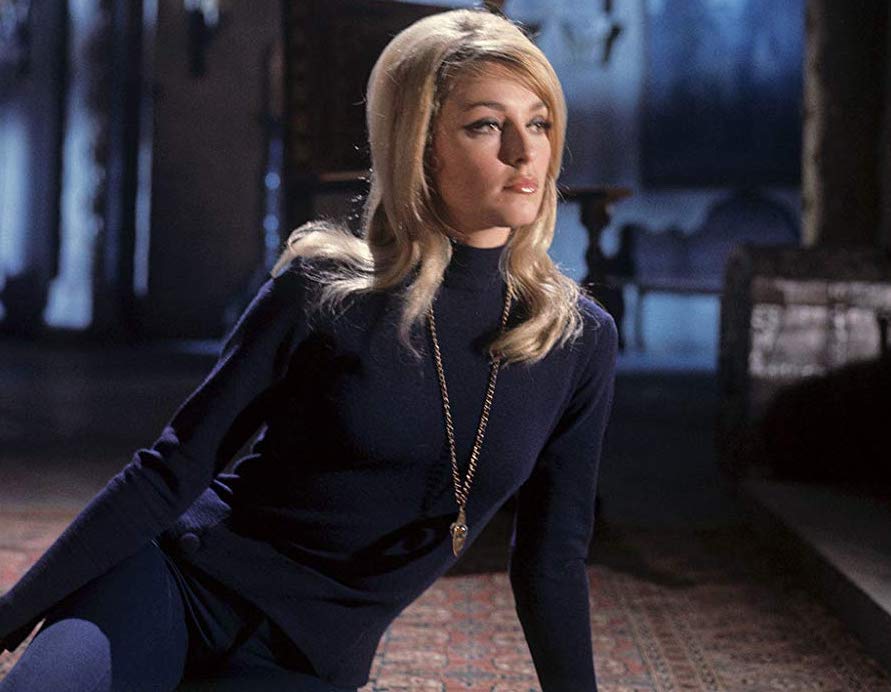 Before leaving the ’60s behind, it’s necessary to backtrack to 1967 and Eye of the Devil, notable today for being the film that “introduced” Sharon Tate, whose previous exposure was limited to a handful of uncredited film roles and a spate of TV guest spots. In Eye of the Devil, Tate and David Hemmings play sinister siblings who do their part to menace top-billed Deborah Kerr, who takes up the mantle of the outsider when she follows her husband, a French nobleman played by David Niven, to his ancestral home, where he has gone to willingly sacrifice himself to make up for the failure of the region’s grape harvest. (Sound familiar?) As unnerving as Hemmings and Tate’s behavior is, though, most of the heavy lifting is done by 12 locals in black hooded cloaks who run around the woods and accompany Niven to the appointed place at the appointed time so he can fulfill his noble obligation.
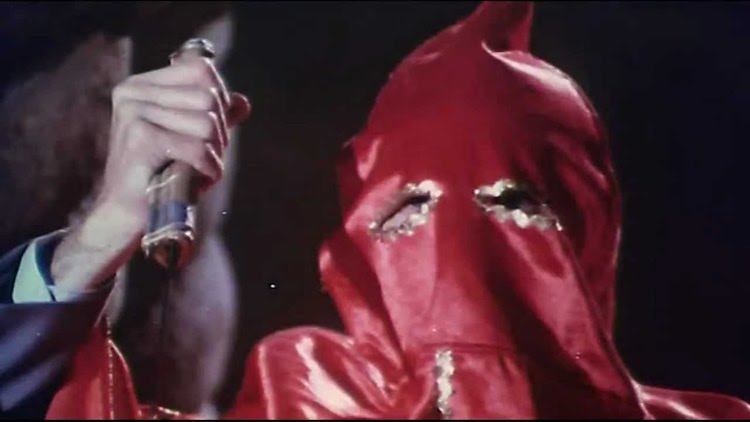 Among Eye of the Devil’s supporting players is Donald Pleasence as a priest who turns out to be very much on the side of the superstitious pagans in his flock. In 1976’s Land of the Minotaur, a.k.a. The Devil’s Men, he again plays a man of the cloth, only this time he’s decidedly against the local cult, which worships an anatomically correct Minotaur statue that emits flames from its nostrils. Their leader is an exiled Carpathian baron played by Peter Cushing, the red-hooded high priest who presides over their ritual sacrifices. For his part, Pleasance is an Irish priest who’s an expert on ancient religions, but is incredibly bad at convincing modern youths to stay away from the cursed village where the baron’s cult operates. That’s how three free-spirited archaeology buffs wind up in its clutches, prompting Pleasence to load up on holy water so he can put an end to their Minotaur-statue-worshiping ways once and for all.
 The next link in the cult-horror/human-sacrifice chain is 1984’s Children of the Corn, the first feature to be based on a Stephen King short story because he wasn’t cranking out novels fast enough for Hollywood. Set in Gatlin, “The Nicest Little Town in Nebraska,” it depicts an isolated farming community which has turned the clock back to pre-industrial times under the guidance of a child preacher named Isaac who, in response to a severe drought threatening the corn harvest, got his followers to kill every adult in town to appease He Who Walks Behind the Rows. That’s the situation a bickering couple (Peter Horton and Linda Hamilton) driving cross country are thrust into when they make the mistake of getting off the highway. Also a mistake: having the film be narrated by one of the kids, which makes little narrative sense, but does allow the filmmakers to get right to the adult-murdering. “Outlanders” Horton and Hamilton manage to get away unscathed, though, and the franchise lay fallow for eight years before producing the first of eight sequels, ironically titled Children of the Corn II: The Final Sacrifice. Further proof you can never believe a horror sequel that has the word “final” in the title.
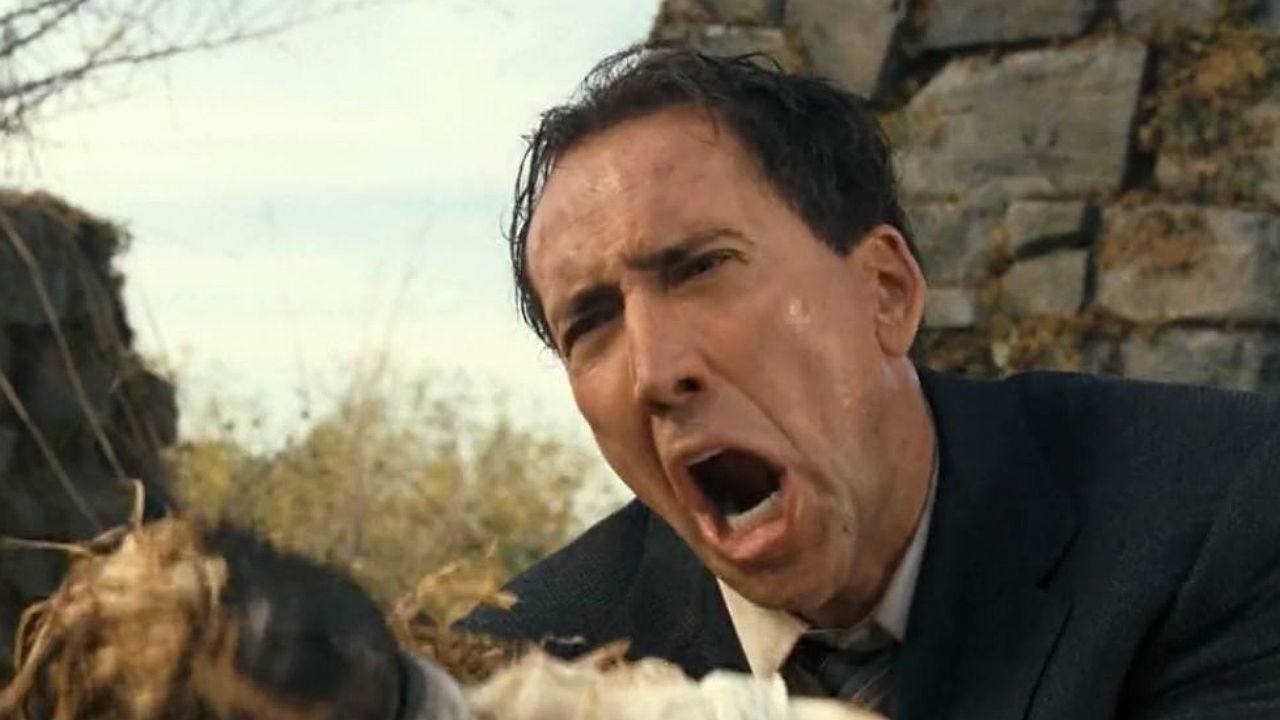 One link between Children of the Corn and The Wicker Man is that both films are centered on agrarian societies where the inhabitants’ names follow a theme. In the former, all the youngsters left in Gatlin are given names from the Bible. In the latter, most of the characters are named after trees and plant life, a convention Neil LaBute carried over to his remake, adding a Sister Honey to the mix to reflect the change from apple harvesting to honey production. LaBute also moved the setting to an island off the coast of Washington State and turned it into a matriarchal society under the sway of Ellen Burstyn’s grandmotherly Sister SummersIsle. (The extra “s” is for “superfluous.”) Other alterations (most of them for the worse) include changing the anonymous letter that lured Sgt. Howie to the island in the original to one from the protagonist’s ex-fiancée, having the missing girl be the daughter he never knew about, and reducing the third act to a succession of meme-ready moments where Nicolas Cage’s loose-cannon Seattle cop acts as erratically as possible, which only serves to make his sacrifice seem reasonable in comparison.
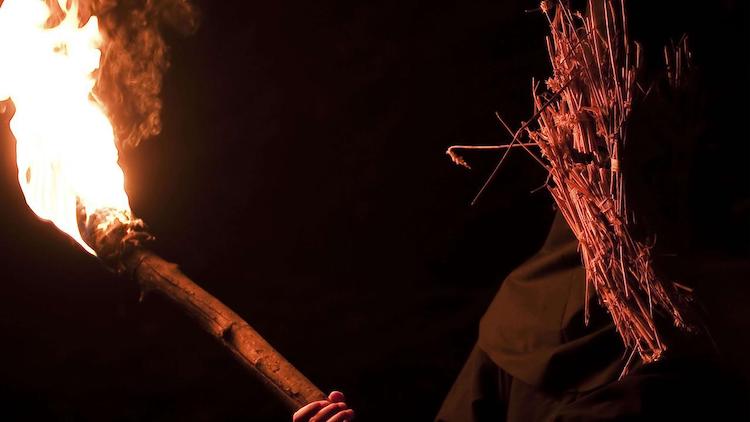 In the past decade, folk-horror has been experiencing a boom comparable to its late-’60s/early-’70s high-water mark. (In addition to the films already mentioned, that period also produced Witchfinder General, The Devil Rides Out, The Blood on Satan’s Claw and such well-regarded television plays as Robin Redbreast, The Stone Tape, and Penda’s Fen.) In many ways, the filmmaker most responsible for bringing the sub-genre back to its roots is Ben Wheatley. His 2011 film Kill List starts out as a naturalistic portrait of the home life of a professional killer named Jay who’s not too far removed from the nondescript, low-level gangster at the center of Wheatley’s 2009 debut, Down Terrace. Money’s tight since Jay’s been out of work for eight months, but when he accepts a lucrative job he finds it’s not as straightforward as he would hope. For starters, the client insists on sealing the contract with blood, and his targets keep thanking him just before he pulls the trigger. One even cryptically says, “I’m glad to have met you,” which understandably unnerves Jay and his partner Gal. Things really come to a head, though, when they tackle the final name on their list, a politician whose sprawling, isolated estate is the setting for a most unusual gathering of the country’s elites. It’s there that Jay comes face to face with just how much of a cog he is in their machine, and Wheatley reveals the subtle foreshadowing he and co-writer Amy Jump have employed from the start. Even a scene of Jay horsing around in the backyard with his wife and son turns out to have sinister repercussions.
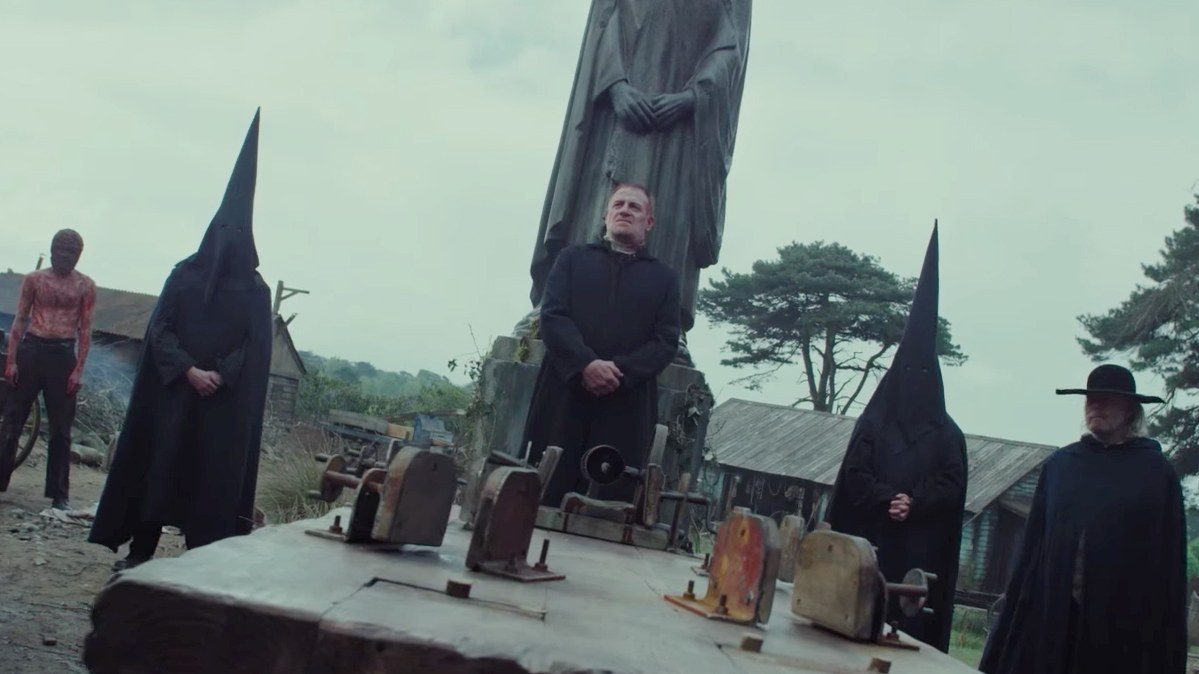 In short order, Wheatley and Jump followed Kill List with 2013’s psychotropic A Field in England (which features a mushrooms-enhanced trip to rival Midsommar’s), clearing the way for Robert Eggers’s The Witch in 2015 and the Estonian folk-horror of November and David Bruckner’s The Ritual, both from 2017. The purest example, though, may be last year’s Apostle from The Raid director Gareth Evans. Echoing The Wicker Man (and Ti West’s 2013 non-folk-horror film The Sacrament, in which a Vice reporter and his cameraman bear witness to a Jonestown-like mass suicide), it follows an outsider who infiltrates a dangerous religious cult in thrall to a charismatic preacher that has a remote island off the coast of Wales all to itself. His goal is the rescue of his sister, who is being held for ransom, but the more time he spends there and the more of the cult’s rituals he witnesses (including one of the most gruesome sacrifices ever filmed), the more he understands what his true purpose for being there is.
While it’s abundantly clear Midsommar has a great many antecedents, what makes it stand out is the way Ari Aster synthesizes his influences and marshals them to tell a story that is compelling in its own right. As Hörga’s nine-day festival progresses and the outside observers are eliminated one by one, everything eventually boils down to Dani (Florence Pugh), still reeling from the tragedy that took the lives of her sister and parents, and her unsupportive boyfriend Christian (Jack Reynor). As the film’s prologue shows, their relationship was doomed from the start, but once Dani has been crowned May Queen and Christian has been stuffed into a bear skin (reminiscent of the costume Nicolas Cage dons in The Wicker Man), their final parting is as inevitable as the sunset.