Rob Hunter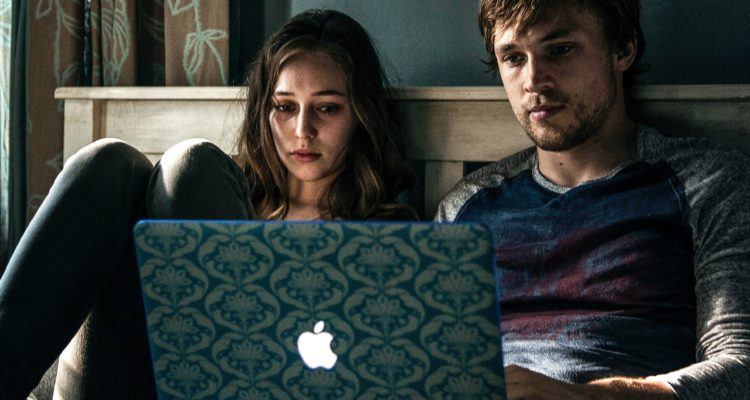
Horror movies use every trick in the book to get butts into seats, including one that’s almost unique to the genre: focusing on something people are afraid of and making it the “monster” of the movie. That something could be anything from redheads to clowns, but one common thread across the decades has been targeting new technologies as something to fear.
The latest horror film to do so is the not-so-scarily titled Friend Request, which explores the dangers of unfriending someone on social media for snobbish reasons. Facebook’s End User Agreement clearly states that doing so will result in being targeted by a demonic presence intent on lowering your friend count to zero, thus embarrassing you in front of all the friends you once had, and the film apparently dramatizes it for those of you who don’t read the fine print. While social media is the “advance” we’re being warned about here, past technological creations have seen equally compelling cautionary tales.
ELECTRICITY
If we’re talking about movies showcasing the dangers of technology — and we are — then we have to start with a well-meaning scientist named Frankenstein. Not even appreciated for his pro-life stance, they called him mad back in 1931 when he attempted to reanimate dead flesh with the assistance of his assistant, Fritz, and the harnessed power of lightning.
The idea that electricity could bring the dead to life has been endlessly riffed upon ever since, with slight tweaks along the way. Squirm (1976) saw downed electrical lines draw carnivorous earthworms up to the surface with grisly results. Pulse (1988) goes the supernatural route as a throbbing evil travels over power lines to wreak havoc from one house to the next. And who can forget Wes Craven’s Shocker (1989), about a murderer whose execution in the electric chair transforms him into a malicious electrical current? Now try to imagine what would have happened had he been put to death in a wicker chair.
ATOMIC BOMBS
The dropping of two atomic bombs on Japan to end World War II had profound effects on the nation as a whole, but one of the only positive ones was the creation of 1954’s Godzilla as a way to fictionalize the horrors of an atomic reality. The giant, bipedal reptile was birthed through atomic testing and is still going strong decades and dozens of films later. He’s shifted over the years from monster to monstrous protector and back again, but the constant through most of it has been his awakening due to mankind’s continued testing of bigger, deadlier bombs. Later years would see a shift toward more radiation-heavy horrors and the creation of its own sub-genre in “post-apocalyptic” films, but The Day the Earth Caught Fire (1961) is one of the few to again place direct blame on atomic bomb testing for the horrors that follow. Here the blasts knock the Earth off its axis, which moves the planet closer to the sun while upending the weather, tides, and surface temperature.
TELEPHONES
The early 20th century saw the arrival of telephones into people’s homes, and while they had to go through a central switchboard at first, the ease of long-distance communication made it an invention worth celebrating. Once those operators were removed from the conversation, though, those innocuous handsets became tools of terror. Canadian director Bob Clark, who would later find fame by giving audiences bush and BB guns, crafted perhaps the most terrifying phone call in film history with 1974’s Black Christmas. When a Stranger Calls mined similarly effective territory five years later, and then 1982’s Murder by Phone raised the bar by eliminating the middle man — the slasher killer — and just having the phone’s tone itself kill whichever sap was unlucky enough to answer. Of course that’s all child’s play compared to Wes Craven’s A Nightmare on Elm Street (1984), which sees a nasty janitor’s tongue come out of the mouthpiece to lick a teenage girl’s face. Japanese filmmakers kept the supernatural element sans saliva with ghostly calls in Ringu (1998) and One Missed Call (2003), but while most of these featured nightmarish incoming calls, 1988’s 976-EVIL (coincidentally directed by Robert “Freddy Krueger” Englund) finds terror on the other end of the line. Mobile phones have led to their share of horrors too, most notably in the recent Stephen King adaptation Cell, about a cell signal that turns people into zombies, but they’ve hurt the genre far worse by making certain plots impossible in a world where the characters can just call for help.
TELEVISION
TV sets were still relatively new back in 1953 when a deceptively terrifying comedy called The Twonky was released into theaters, but the message was clear. Television was going to control your every move and thought. Maybe it was sour grapes — film studios weren’t initially thrilled at the idea of screens in every home — but the story was actually a prescient one as the walking TV used a noisy laser beam to change people’s minds, put them to sleep, and worse, before being revealed as a visitor from the future where people’s lives are manipulated by their devices. Other scares followed, leading up to perhaps the most memorable TV-related horror moment in Tobe Hooper’s 1982 chiller, Poltergeist, as a little girl was sucked into its purgatory-like void by otherworldly spirits. That said, James Woods getting to first base with a TV in the following year’s Videodrome is probably more disturbing.
ROBOTS
Of all the many technological advances that have been used to scare viewers over the years, robots are most likely at the top with regard to frequency. Metropolis (1927) got the mechanical ball rolling, and genre films have been overflowing with deadly “friends” ever since. 1984 was a particularly good year for bad robots, as we were gifted with both James Cameron’s The Terminator and Michael Crichton’s Runaway. (I said good year, not great.) Some of Hollywood’s biggest stars faced off against the intelligently murderous machines, including Will Smith (I, Robot), Kirk Douglas (Saturn 3), Jamie Lee Curtis (Virus), and whoever starred opposite Robin Williams in Bicentennial Man. One film that blended robotic terrors with the feared threat of artificial intelligence to an alarmingly unsettling degree is Demon Seed (adapted from a Dean Koontz novel). The 1977 movie posits a house controlled by computer, an A.I. capable of learning, and an eventual desire by the machine to bond physically with humanity by procreating a hybrid being that’s both robot and flesh. New movies continue to mine this particular fear of humanoid machines rising up against us, but I think we can all agree it’s been a downhill slide since the sub-genre’s greatest triumph, 1986’s Chopping Mall.
APPLIANCES / GADGETS
Mechanical devices big and small have saved countless hours of our time previously spent doing things by hand like baking bread, cutting bread, and toasting bread — OK look, I don’t actually know if people even thought to toast their bread before toasters came along, but you get the idea. Appliances are a great help, so it was only a matter of time before they started trying to kill us in the movies. A laundry press folds flesh for satan in The Mangler (1995), a floor lamp goes on a killing spree in Amityville 4: The Evil Escapes (1989), and a refrigerator racks up a body count in the aptly titled The Refrigerator (1991). The big, bad daddy of them all, though, is Stephen King’s Maximum Overdrive (1986), which tosses in everything mechanical including the kitchen sink. The semi-trucks get all the attention, but electric knives, vending machines, lawn mowers, hair dryers, and more all get a taste for human blood.
THE INTERNET
As scary as physical objects in the real world can be, they pale sometimes beside the anonymity-emboldened terrors of the online one. Most horror movies about it focus on the dangers of communicating with strangers on the Internet, as the risks are very real indeed — both for the innocent (Megan Is Missing) and the guilty (Hard Candy) — but while teens do get lured into unwanted body-piercing scenarios (Strangeland), they can also find themselves targeted by tech-savvy snuff entrepreneurs (The Den). These things can totally happen, like, for real. Just as frightening are the imagined horrors, including ghosts returning to the world of the living through the internet (Kairo) and tech-savvy suicide victims haunting chat rooms from beyond the grave (Unfriended). It’s only getting worse from here, as unlike many of the technological items on this list, the Internet is only becoming more and more necessary in our daily lives.
VIRTUAL REALITY
The idea is that as computer graphics get more realistic and processors get fast enough, we’ll eventually be able to enter virtual worlds from the safety of our La-Z-Boy recliners. We’ll be wearing week-old pajamas and a big helmet on our head, but we’ll think we’re dressed to the nines on an adventure in Hong Kong. Not so fast, says Hollywood. The Lawnmower Man (1992) posits VR will lead to increased intelligence and a world-ending god complex. Brainscan (1994), by contrast, just wants to have fun by playing killer games that are revealed too late to have real-world death tolls. David Cronenberg’s Existenz (1999) is all about the games too, but the nightmare fuel comes courtesy of the VR console itself, which looks like a human organ stuffed with several more human organs and which plugs into your belly button. Scariest of all, though, is 2009’s Gamer, which puts players inside Gerard Butler.
APPS
The newest sub-sub-genre in the “tech goes amok” sub-genre are films about killer apps for your phone. Is this a dumb idea? Obviously. But that’s never stopped filmmakers before — which is why we have 2013’s App, a horror thriller that actually came with a real app programmed to interact and react while you’re watching the actual movie and for a few days after; 2015’s i-Lived, which features an app designed to improve your life until you have the nerve to delete it from your phone; and a brand new movie called Killer App, about an anti-social networking app that leads to violent deaths. You can use your Netflix app to search for all three.
Rob Hunter lives in California, uses a rotary cellphone.