Craig D. Lindsey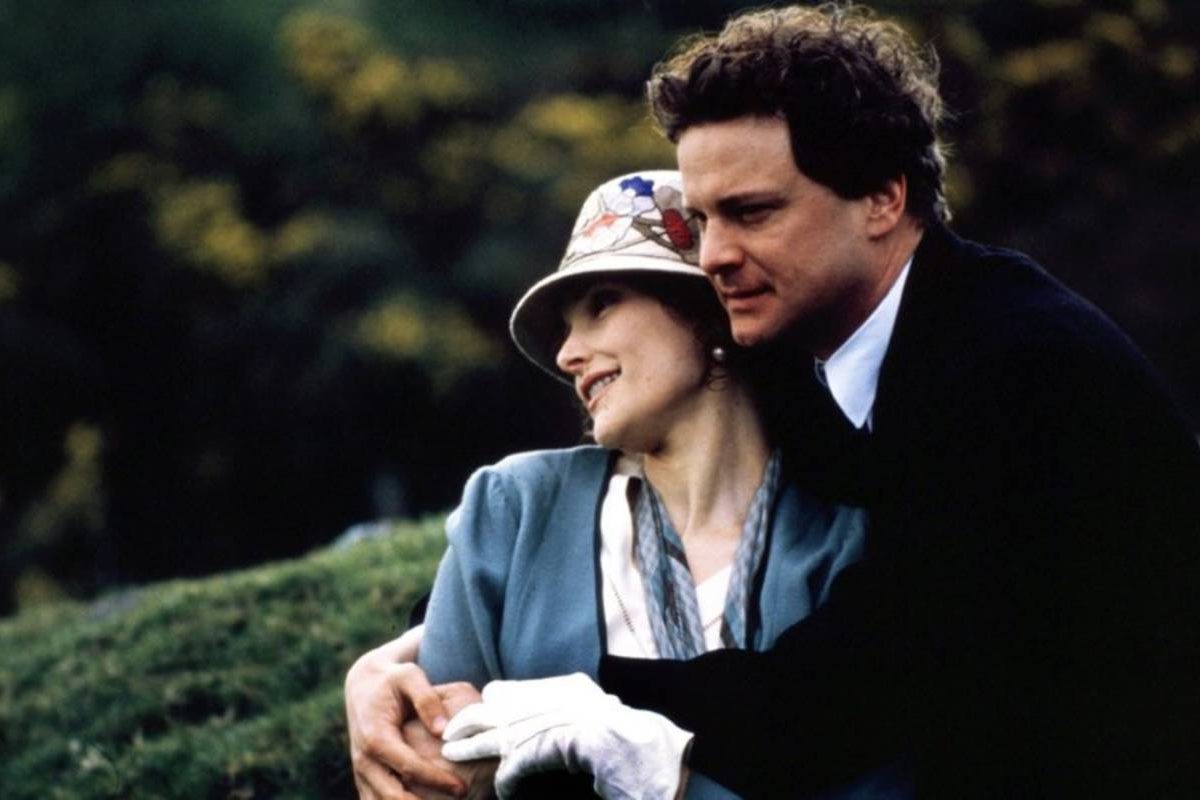
Welcome to Harvey’s Hellhole, a monthly column devoted to spotlighting the movies that were poorly marketed, mishandled, reshaped, neglected or just straight-up destroyed by Harvey Weinstein during his reign as one of the most powerful studio chiefs in Hollywood. In part two of “Summer of ‘99,” we take a look at another UK import that took its sweet time getting here, mainly because you-know-who couldn’t stop fucking with it.
You would think a sumptuously shot, sparklingly middlebrow movie like My Life So Far would’ve gotten a lot more push from Harvey and them back in the day. Pleasant period pieces that could snatch up Oscar noms and box-office tickets were always in Weinstein’s wheelhouse. Not to mention the same team behind the Oscar-winning Chariots of Fire — producer David Puttnam and director Hugh Hudson (his first film in a decade) — were also behind this film.
The problem was, Weinstein already threw his support behind another pleasant period piece in theaters, the Oscar Wilde adaptation An Ideal Husband (which I’ll delve into in a later column). For some reason, Harvey could only concentrate on one period piece at a time. Weinstein most likely stuck with Husband because of its hella photogenic stars, including Oscar nominees (and eventual Oscar winners) Cate Blanchett and Julianne Moore.
What does Life have? Well, it’s got Colin Firth, playing yet another stodgy, sexually repressed fella. He’s Edward Pettigrew, an eccentric family man living with his brood in Kiloran, his family’s beauteous estate, in 1920s Scotland. A Beethoven-loving Bible thumper, his life goes quietly off the rails when his hipper, globe-trotting older brother Morris (Malcolm McDowell) brings his fetching, French fiancee Heloise (Irene Jacob) to the estate.
Edward isn’t the only dude smitten by this good-hearted, good-smelling cellist. There’s also Edward’s ten-year-son Fraser (Robert Norman), aka the narrator of this story. (He’s also the kid version of British TV mogul Sir Denis Forman, whose 1991 memoir Son of Adam this movie adapts.) He gets miffed at the old man for shooing him away when Fraser and Heloise had some alone time. This makes Edward hole up in the Kiloran attic, where he reads his late grandfather’s books and learns more about women — particularly naked women. It seems Grandpa had a lot of nudie sketchings tucked away.
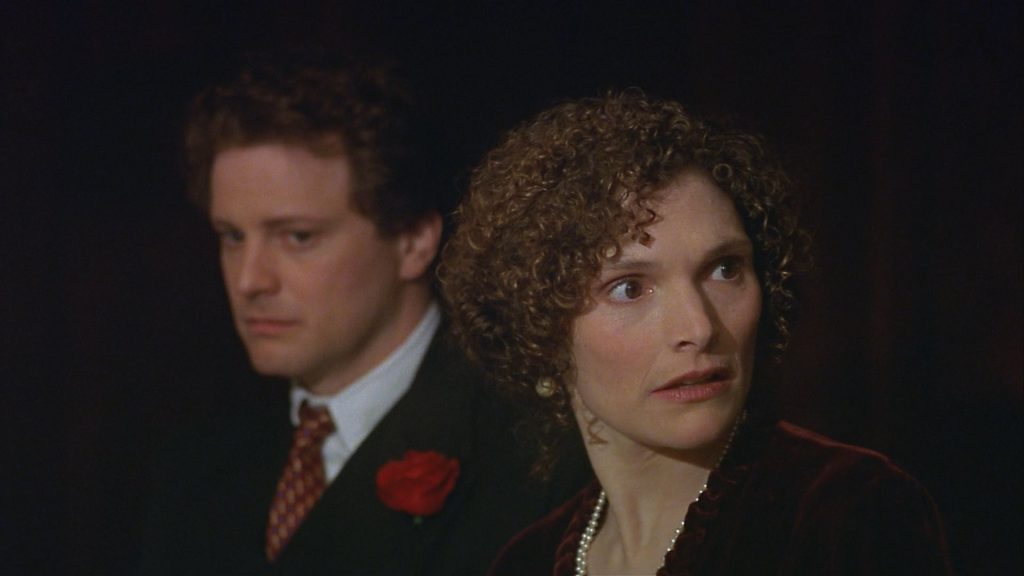
A lot of adorably weird shit happens in Life: the family’s occasional visits from a aviator (Tcheky Karyo) who calls himself the “emperor of the air” (he catches the attention of Fraser’s older sister, played by a barely-there Kelly Macdonald), an awkward dinner where the God-fearing grandmatriarch (Rosemary Harris — Aunt May from the Tobey Maguire-era Spider-Man movies) accidentally gets drunk off sherry-filled trifle. But since this is a movie told from a child’s perspective, we mostly get a coming-of-age tale of a kid learning about adulthood, particularly how some adults are still petulant children inside.
Originally titled World of Moss, the movie was shot in 1997 on a $7 million budget, which included $5 million from Weinstein and $1 million from a lottery grant provided by the Scottish Arts Council. (The film was recommended by the Scottish Film Production Fund, where Forman formerly served as a chairman.)
Life was scheduled to premiere in Cannes the following May. But, of course, Harvey and them came in during post-production and demanded changes. The title was the first to go. Reshoots were also done. Even the original score was thrown out. (In a 2020 blog post, composer Colin Matthews recalls how he didn’t know his score was axed until he read in the paper that Howard Blake was the film’s composer.) Surprisingly, Miramax’s tinkering didn’t bother Hudson, who preferred not to be rushed in post-production. “Chariots of Fire came out two full years after it was made,” he told The Guardian in 2000.
Life did make it to Cannes in 1999, but it was screened out of competition; Miramax showed it as part of an American Foundation for AIDS Research fundraiser. While it may have looked like Life was going to have a sweet one thanks to Weinstein, the movie quietly slid into theaters two months later. Some critics were kind — Roger Ebert gave it three stars — but others were unimpressed. The San Francisco Examiner’s Wesley Morris said it was “a willfully turgid demonstration that if a filmmaker puts his mind to it he can tell a tale about a boy sexually coming of age as if the birds, bees and educated fleas were the only ones doing it.”
Indeed, Life is chaste but bawdy when it comes to visualizing Fraser’s sexual discoveries. One not-so-subtle sequence splices together shots of him looking at the nude drawings, while aggressively handling his rod during fishing. But the movie’s unfocused tone is its biggest offense. It teeters between comedy of manners (several scenery chewers in the cast certainly play it that way) and dysfunctional-family dramedy. I have no doubt Harvey and his Miramax minions made things even more misguided in post-production..
With Life making a pitiful $635,620 worldwide, Hudson’s filmmaking career was even more sparse than before. He only directed two films before dying last year in London at age 86. Before he passed, he did a 2012 interview where he briefly summed up why My Life So Far wasn’t his best by far: “I had very good reviews from that film but it was dumped by the distributor Harvey Weinstein. It got in the way of something else he was promoting.”
“My Life So Far” is available to stream on Hoopla Digital and Pluto TV.