Bill Bria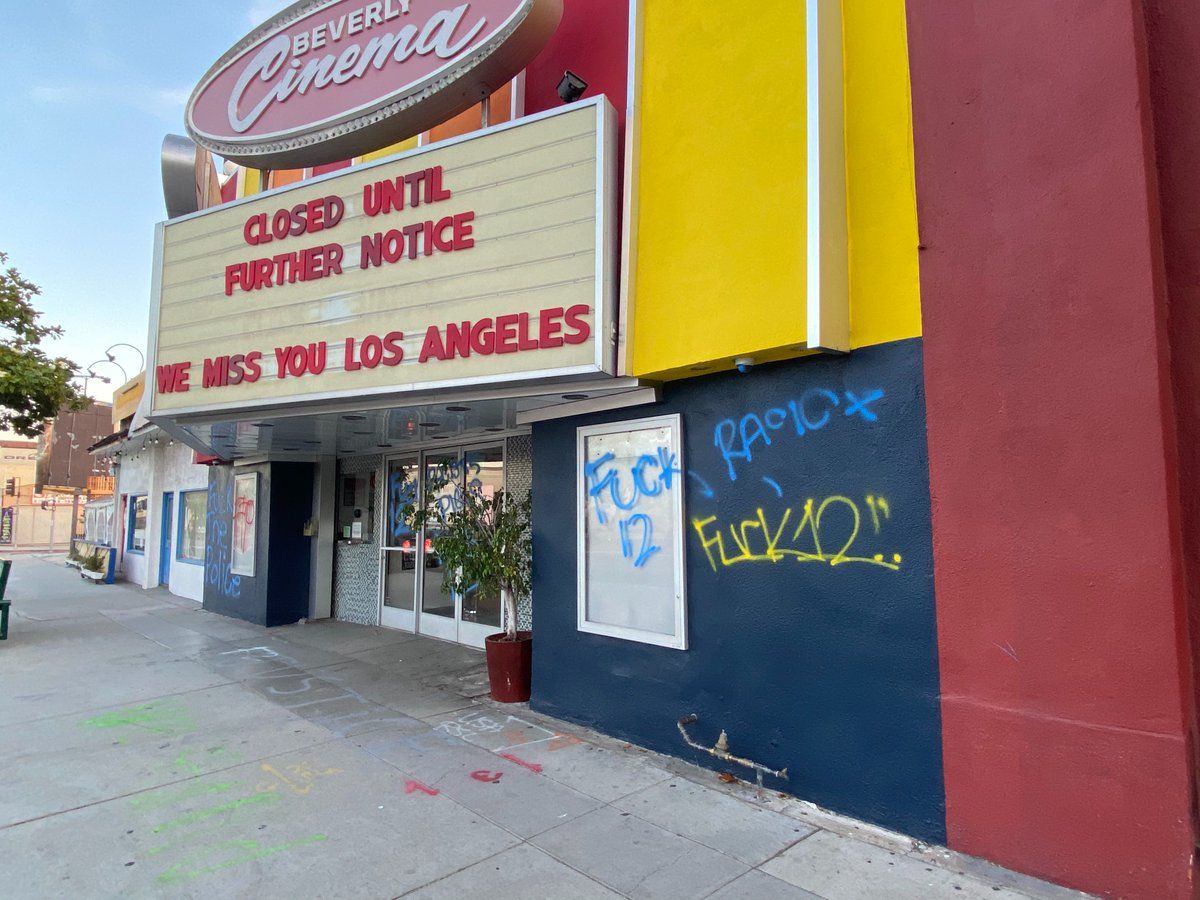
In the 100-odd years since cinema’s conception, the death of the theatrical experience has been prognosticated numerous times over. Despite such doomsaying, movie theaters continue to exist, though the threat facing them has always been formidable. in 2021, this threat is both immediate and vague: most clearly, the COVID pandemic has hit theaters hard financially, leaving some chains like the Arclight shuttering forever and others on their last legs. The more abstract threat comes from audiences themselves, or lack thereof—with streaming rampant and studios fully backing (even controlling) such services, more and more people seem to be watching films at home. Movie theaters have faced similar competition before, but the combination of these factors have left them extremely vulnerable. In order for theaters to survive, they might have to turn to the thing that has helped them weather such storms in the past: pure, unabashed gimmickry.
Of course, gimmickry and cinema have always gone hand in hand. Movies themselves were a gimmick upon their invention—when the first motion pictures were made in the late 1800s, some of them were distributed via devices like the Kinetoscope and the mutoscope, both of which were stand-up machines intended for single-person use just like an arcade game. Even those that were projected at theaters had an element of sensationalism: the story that the Lumiére brothers’ L’Arrivée d’un train en gare de La Ciotat (1895) caused the audience to run out of the theater believing a real train was coming at them is likely a myth, yet such sights were novel enough in that time period to create such a story, and the film was in fact the Lumiére’s attempt to create a true 3D image decades before such technology would be widely used.
As the cinema became more popular and prevalent, its various technical milestones also acted as gimmicky selling points to audiences. Perhaps the biggest, most successful and longest lasting motion picture gimmick is one that’s taken for granted today: sync sound. When the “talkies,” as they were referred to in order to distinguish them from silent films, came around in the late 1920s, they helped the movies surpass other forms of entertainment like theatre and radio thanks to fantastic proceedings (not to mention movie stars) that could be heard as well as seen. This widespread development was quickly followed by color movies—although various processes to shoot films in color had existed prior to the 1930s (including an early Technicolor technique), these tended to be expensive. It was only with continued research and Hollywood’s growing nervousness with the dawn of television that color took over black & white as a standard. With these innovations, moviegoing became more special, and thus more attractive to audiences.
Second in influence only to sound and color, the widescreen format was the next transformative element in cinema’s gimmickry bag that allowed moviegoing to thrive. The format began in the biggest possible fashion, with inventor Fred Waller introducing Cinerama to the world in 1952. Cinerama’s 3-strip projection system onto a giant louvered and curved screen enveloped an audience member’s range of vision that included the peripheral, and combined with a series of surround speakers, it created the illusion of virtual reality. 1952’s This Is Cinerama, the format’s flagship film, played in only one theater on Broadway and became the highest grossing movie of that year, proof that such an experience could draw a massive audience. Unfortunately, Cinerama’s technical requirements made it prohibitive to convert theaters on a grand scale; even more damning was the format’s expense and unwieldiness in attempting to use it to make narrative features, as only two 3-strip non-documentary Cinerama films were ever made. However, the success of the process convinced the studios to pursue their own cheaper, more manageable widescreen formats, resulting in 20th Century Fox’s Cinemascope, Paramount’s Vistavision, and so on. As a result, the widescreen format became the new standard, and helped set the theatergoing experience apart from television.
After these innovations revolutionized moviegoing, filmmakers continued to explore pioneering tech that would draw a crowd, yet not all of these developments were built to last. With most theaters continuing to use single-speaker sound setups for exhibition well into the 1970s, studios attempted to introduce new sound gimmicks to make the theater experience more attractive. Universal’s “Sensurround” (essentially a subwoofer system) created a small stir in the mid-‘70s, but by the end of that decade such gimmicks became irrelevant as more theaters began to be outfitted with surround speakers, the trend eventually resulting in Dolby Digital sound systems becoming a new standard in theater chains. Filmmakers still attempted to manipulate picture as well as sound, the flashiest instance of this being the 3D movie explosion of the 1950s. Those films that were shot and projected in proper 3D wowed audiences, yet making a movie in true 3D proved costly, and combined with the fact that too many theatre projectionists didn’t take the proper care in displaying them, the format eventually died as a fad. Hilariously, this chain of events repeated itself not once—during a small revival period in the early 1980s—but twice, as James Cameron’s Avatar (2010) claimed to be a “game changer” for the format and cinema itself, only for the “new” 3D to follow pretty much the exact path as prior 3D booms. Still, each time it was introduced, 3D got butts in seats, but the relative cost—for studios and audiences—was too high.
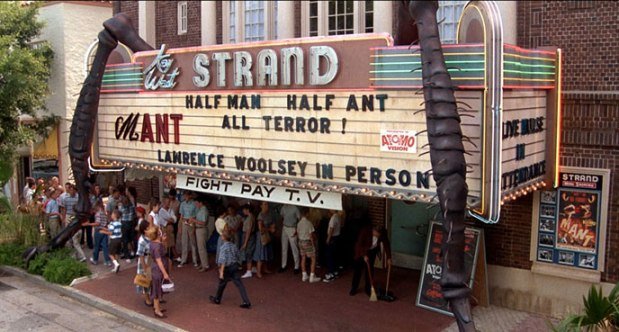
The cheapest gimmick that has worked just as well as any newfangled tech breakthrough for attracting audiences is good old-fashioned showmanship. Numerous films have been promoted sensationally, yet the master of attaching a gimmick to a film was producer William Castle. Castle’s gimmicks ranged from the prohibitively complicated—arranging for plastic skeletons to fly over the audience during House On Haunted Hill (1959) and outfitting theaters with seat buzzers for The Tingler (1959)—to the fiendishly clever, such as offering a “fright break” during Homicidal (1961) during which “cowards” could claim an admission refund. Castle’s success with his promotions influenced the likes of Alfred Hitchcock, who insisted that audiences could only be sat for specific showtimes of Psycho (1960), a practice previously unheard of which has now become standard. Other filmmakers have followed in Castle’s footsteps in various ways, from the direct (John Waters providing “Odorama” scratch n’ sniff cards for 1981’s Polyester) to the indirect (Daniel Myrick and Eduardo Sánchez insisting that 1999’s The Blair Witch Project was real). These outrageous gimmicks moved online with the dawn of the internet: as geek culture rose during the 2000s, Hollywood began producing Alternate Reality Games (ARGs) that successfully built buzz for a release, making theatregoing the final step of an interactive experience.
In the last decade and change, most new gimmicks attempted by both filmmakers and studios have drummed up little interest. In addition to the new 3D wave that was forced down audience’s throats and ultimately fumbled, some directors like Peter Jackson and Ang Lee believed that high frame rates were the new revolutionary way to watch films, yet their experiments served to mostly confuse audiences. Premium theater chains such as iPic and the Alamo Drafthouse have gained loyal fans by essentially combining a full-service restaurant with moviegoing, as well as the Alamo’s depressingly unique policy of no talking or texting during a show.
Yet these additions to the theater experience end up diluting more than enhancing, and even genuinely great exhibition formats like IMAX have been sullied in a similar fashion to 3D, with screens half the size of the proper IMAX format being sold at full price. The fact is that filmmakers are currently at a loss with any new innovations, Hollywood studios are more interested in their bottom line (which streaming makes more robust), and theater chains are simply struggling to survive and have no room to experiment. Not to be a doomsayer, however—all this means is that a sea change is imminent, and the joy movie audiences returning to theaters seem to be experiencing as the pandemic lessens is indicative that perhaps the next gimmick to save movie theaters may be their mere existence. That said, a little showmanship couldn’t hurt, either.