Bill Bria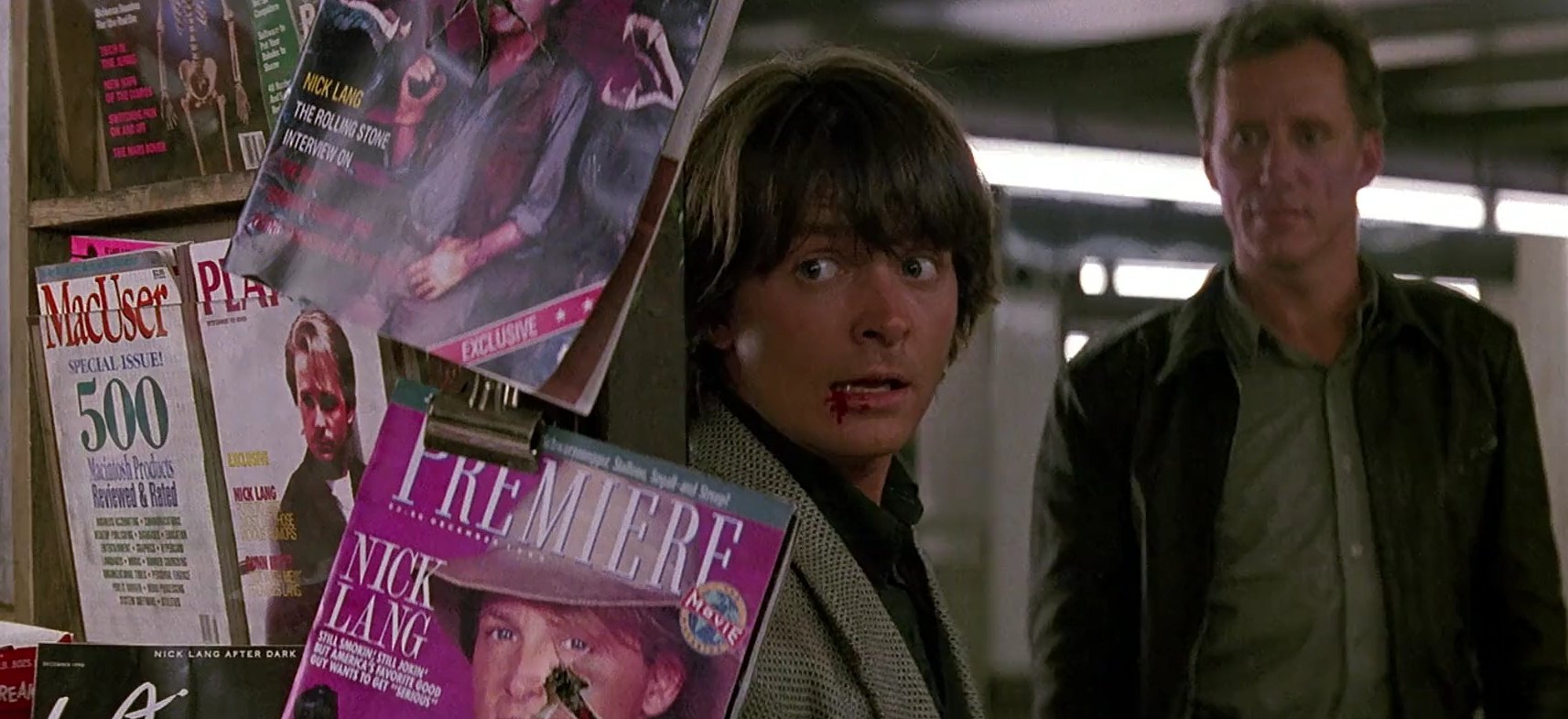
While numerous actors help represent the respective decades during which they came to prominence, there are only a few who feel more like mascots of that decade, their image evoking the politics and culture of that time. Michael J. Fox feels affixed to the 1980s in this fashion, thanks in large part to his role as Alex P. Keaton on TV’s “Family Ties.” That sitcom’s basic premise—a middle-aged liberal couple who were hippies in the ‘60s must deal with their teenage, Young Republican son—acted as a light encapsulation of the political and cultural climate during the decade, the disillusioned radicals of the Summer of Love confronting the Reaganite youth.
As Fox’s star gradually rose thanks to the show, his film career saw him similarly used as a stand-in for the decade: Back to the Future (1985) sees the “modern” ‘80s meeting the “innocent,” nostalgic ‘50s with Fox as the ’80s’ representative, while The Secret of My Success (1987) and Bright Lights, Big City (1988) had the actor embrace his latent Yuppie image. Fox had stretched his persona before the decade ended a few times, trying out horror (1985’s Teen Wolf), a musical (1987’s Light of Day) and a Vietnam War film (1989’s Casualties of War); he said goodbye to the ‘80s by completing “Family Ties” and revisiting Marty McFly in the back-to-back Future sequels of 1989 and 1990. When those sequels were shot, Fox was only a few years shy of 30, meaning his days of playing teens were pretty much over. It was time to grow up, literally and figuratively.
The films Fox starred in during 1991—The Hard Way and Doc Hollywood—prove that the actor realized this need to move past the ‘80s in a big way. Both movies swerve away from Marty and Alex, allowing Fox to develop his craft and show his range. Yet they also are knowing comments on not just Fox’s screen image but the typical late ‘80s young white male, using that stereotype as a jumping off point for Fox’s characters. This is in part because both movies seek to join then-current cinematic trends while subverting them: The Hard Way is a movie that satirizes the buddy cop action film while serving as an example of it, while Doc Hollywood attempts to graft the wholesome blend of character study and romantic comedy of ‘40s Frank Capra onto the early ‘90s. In playing an action hero in the former and a romantic lead in the latter, Fox uses both movies to expand his screen persona while retaining his roots as a comic actor.
In The Hard Way, Fox portrays Nick Lang, a conceited Hollywood actor whose concerns extend no further than himself. While he’s the hugely successful and popular star of a franchise called “Smoking Gunn” (a splashy blockbuster series that appears to be an amalgam of ‘40s detective pulp and Indiana Jones-style adventuring), Lang demands to be taken more seriously, and happens upon a news story detailing NYC cop John Moss (James Woods) and his pursuit of a vicious serial killer known as the “Party Crasher” (Stephen Lang). Convinced that studying Moss, Method-style, would allow him to land a role in a gritty cop movie, Lang uses his considerable charm and connections to be assigned as Moss’ partner.
While movies satirizing the backstage world of filmmaking featuring actors portraying themselves (or generic stereotypes) as egotistical are a dime a dozen, The Hard Way gets a little unique juice out of the gag in casting Fox. The actor’s reputation wasn’t anywhere near difficult or demanding, so seeing nice guy Fox act like a spoiled, clueless brat lends what could be a tired joke some nice contrast. It also gains some added satiric weight given that Fox—who is emphatically not playing himself—can make Nick Lang as obnoxious as he needs to be, sending Woods’ Moss into a apoplectic rage (thereby feeding the film’s odd couple comedy) and not have to worry about hurting his own image in the process, unlike Arnold Schwarzenegger’s good-sport turn in Last Action Hero (1993), for instance.
Fox’s casting also allows Lang to more easily transition into becoming a real-life hero by the end, exploiting the actor’s natural, good-natured likability to make such a character arc believable. Throughout the film, Lang’s attempts to ingratiate himself to Moss and the cop’s girlfriend, Susan (Annabella Sciorra), come off as genuine efforts to connect and help them with their problems, whereas another actor may have played such scenes more self-centered. The film is securely aligned with Moss at the beginning, viewing Lang and his Hollywood-skewed vision of the world as hopelessly incorrect, but Fox and Lang slowly but surely win the movie over. Lang accurately predicts the behavior of the Party Crasher during the third act (which Lang is sure to label the third act, in one of the film’s meta-touches) and even saves Susan during the big climax (which takes place on a giant animatronic billboard of Lang’s face, the contrast between the ego-driven persona and the real man made manifest). Lang’s selflessness earns him that coveted role, in a movie that is implied might just be The Hard Way. It’s subtle, but the film seems to say that the self-centered excess of the ‘80s, through Fox, might find a way into a more introspective ‘90s.
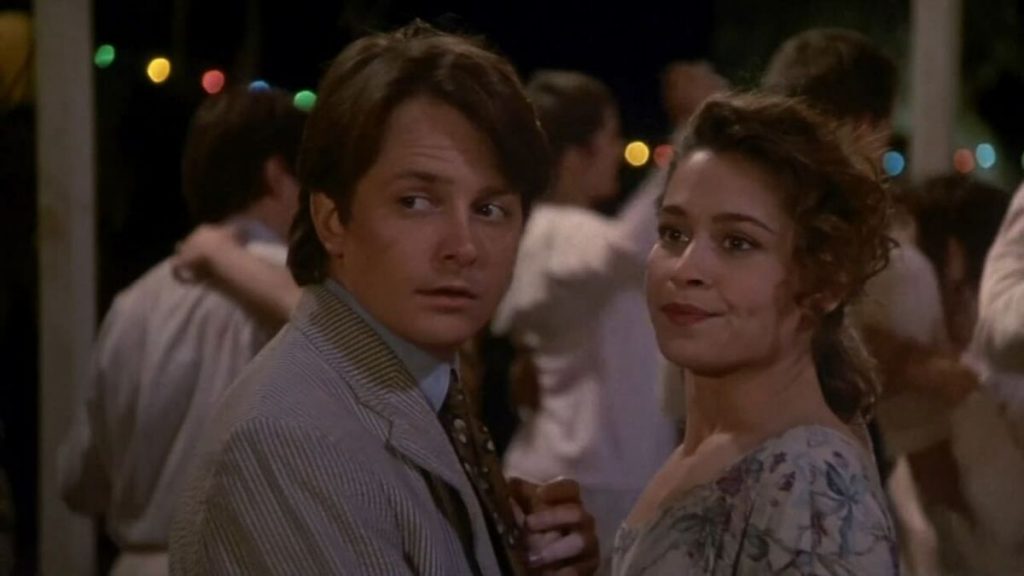
Introspection is what’s on Doc Hollywood’s mind—the film and the character—as Dr. Ben Stone (Fox) finds his cushy Beverly Hills plastic surgeon job interview delayed by getting stuck in the small Southern hamlet of Grady, a town that’s badly in need of a family doctor. Ben is callous, friendless (the opening sequence makes a point of how none of his colleagues like him enough to genuinely wish him well on his West Coast move) and capitalistic, nakedly chasing his opportunity to work as a plastic surgeon solely for financial gain. When his car crashes in Grady, Ben is expectedly put off by the town’s cuddly simplicity, but reluctantly agrees to act as substitute local doctor.
Doc Hollywood is part of a wave of films in the late ‘80s/early ‘90s that saw yuppie characters either foolishly choosing to live or accidentally ending up living in rural towns suffused with Americana—that basic setup runs through films like Arachnophobia (1990), Groundhog Day (1993) and Trapped In Paradise (1994), to name just a few. It also belongs to a revival of Capra-esque wholesomeness of that period, with the jaded city slickers (another one!) learning the value and charms of country living. Ben, with the help of ambulance driver Lou (Julie Warner), comes to see that having a practice in a small town would feed his soul if not his wallet, and the movie goes so far as to have Ben land that Beverly Hills gig, the world of L.A. and plastic surgery portrayed as a Tim Burton-lite nightmare that Ben can’t wait to escape. Doc Hollywood is far less subtle than The Hard Way in its using Fox to supplant ‘80s selfishness with ‘90s self-reflection, allowing love to supersede financial gain.
Doc Hollywood shifts Fox’s image from snot-nosed Alex P. Keaton/Marty McFly teen arrogance into humble romantic leading man, thereby prepping him for the next phase of his career. He plays Ben initially not as a cartoonish douche, but rather embodies most people’s cynicism toward doctors in general. Fox still had his winning boyishness, but now had a layer of innate maturity, making Ben’s relationship with the no-nonsense Lou a clearly adult one as opposed to the teen romances of his early films. His natural ability to find chemistry with Warner along with most of the supporting cast allows Ben’s inner humanity to emerge, and demonstrates the actor’s range once again.
It’s this new adult image Fox would carry with him into his next few leading roles, from the family comedy Life With Mikey (1993) to another romantic comedy, For Love or Money (1993), to his next television role on the sitcom “Spin City” (1996-2001). Even Fox’s return to genre in films like Mars Attacks! (1996) and The Frighteners (1996) had him playing more complicated and idiosyncratic characters than he had in his youth. While the actor may forever be associated with the ‘80s more than anything else, it’s through these two films in 1991 that he expanded his persona sufficiently to not be left behind in the ‘80s. Put another way, Fox may help define the ‘80s, but the ‘80s don’t define him.