Craig J. Clark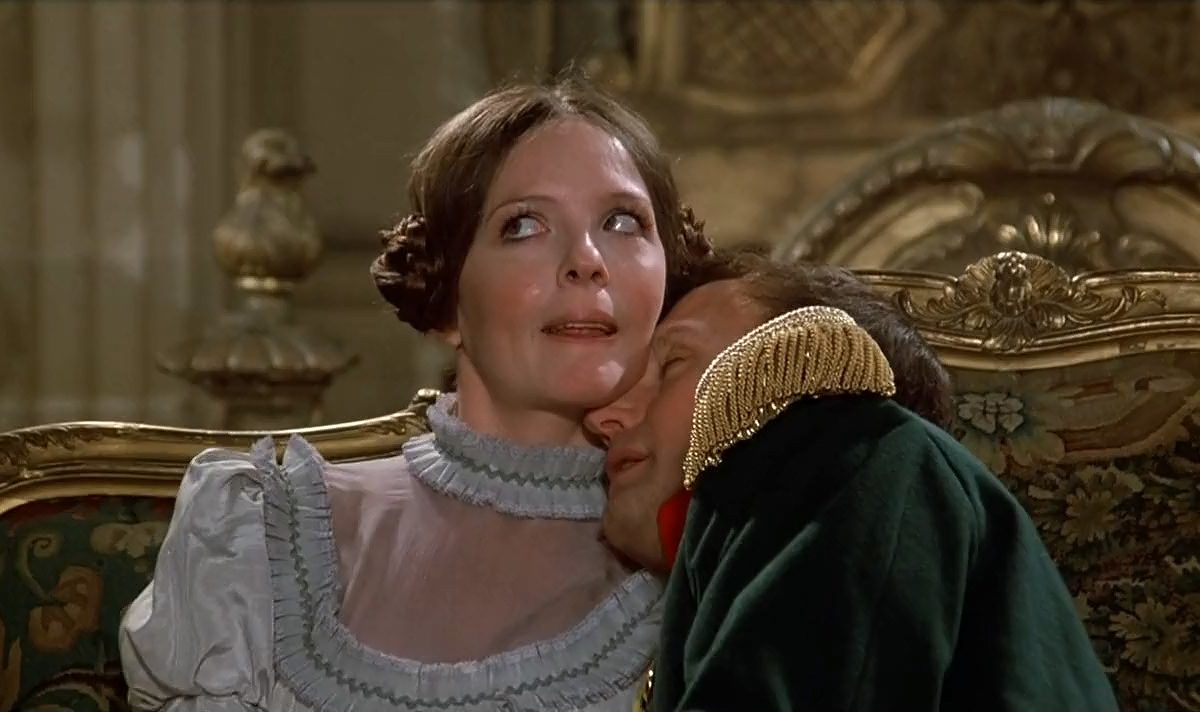
Diane Keaton’s first scene in 1975’s Love and Death introduces her character, Sonja, engaged in a philosophical discussion – the first of many the picture will have to offer – with her cousin Boris, played by writer/director Woody Allen. As his voice-over makes plain, Boris is infatuated with Sonja, from whom he notes he is “twice removed,” and who can blame him? “In addition to being the most beautiful woman I had even seen,” he says, “she was one of the few people I could have deep conversations with.” While she may see him as her intellectual equal, however, her heart belongs to Boris’s boorish brother Ivan, even after he passes her over in favor of another.
This state of affairs – people in love with those who don’t return their feelings – is part and parcel of Love and Death’s riotous send-up of Russian literature (and Swedish cinema, as evidenced by the Bergman homages). The mind/body split is perfectly captured by Sonja’s character and Keaton’s performance, which runs the gamut from verbal gymnastics to physical comedy. As Love and Death pivots between the profound and nonsensical, Keaton doesn’t miss a beat, her comic instincts homing in on precisely what each situation needs.
It’s a nimble tightrope walk Keaton previously pulled off in 1973’s Sleeper, in which her character Luna goes from being a pampered ditz to a spirited revolutionary. Luna even does a dead-on impression of Marlon Brando’s Stanley Kowalski from A Streetcar Named Desire, adding mimicry to Keaton’s skill set. While Sleeper found her playing second fiddle to Allen, though, Love and Death puts them on equal footing, devoting ample screen time to Sonja’s plight at home while Boris is shipped off to the front to fight Napoleon’s invading army.
After impulsively announcing her engagement to herring merchant Leonid Voskovec, Sonja is trapped in a loveless marriage and ends up taking a bevy of lovers. “How many lovers do you have?” Boris asks while he’s on furlough (and considering an affair of his own with a flirty countess). “In the midtown area?” is Sonja’s reply. When her husband shoots himself while cleaning his pistol, she rushes to his side to comfort him in his dying moments, saying she “could have been a better wife.” The minute he passes, though, and before the corpse is even cold, she’s already thinking about her next meal. Contrast that with how bereaved she is by Ivan’s death. Her scene with his widow, in which they divide his possessions (Sonja gets his mustache) is wonderfully underplayed by both actresses, their deadpan delivery selling the absurdity of the gesture.
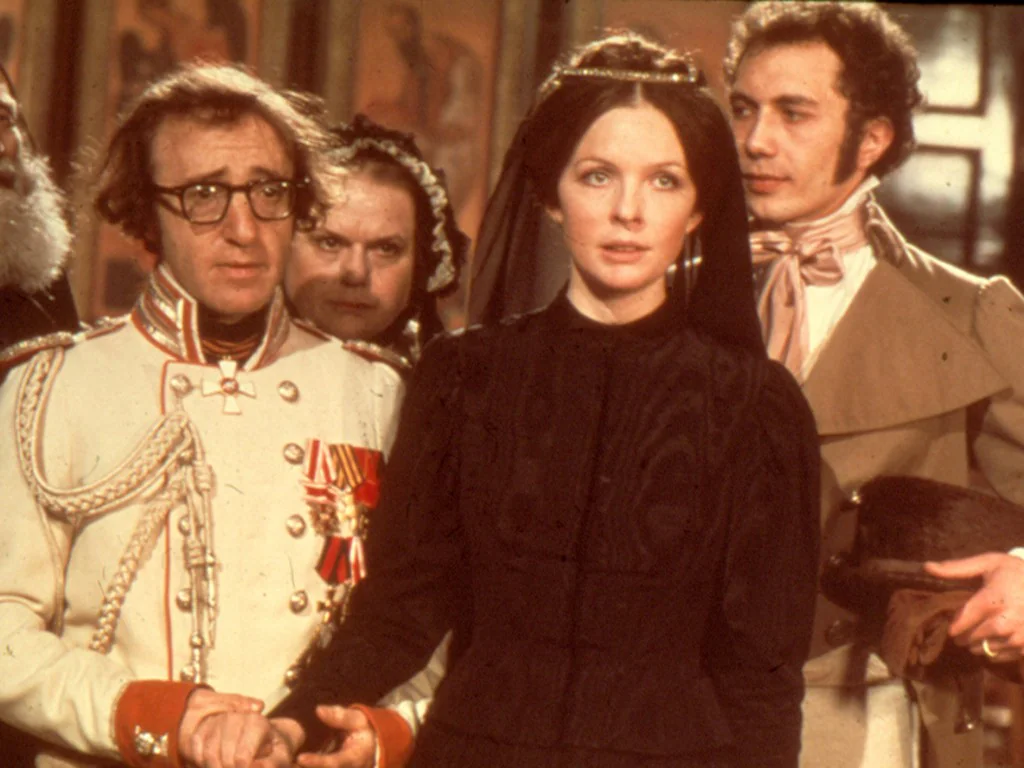
When Boris returns from war an unlikely hero and has to fight a duel (over the aforementioned countess), he asks if Sonja will marry him if he lives “by some miracle.” Her measured response: “What do you think the odds are?” Her inner monologue (which runs in tandem with Boris obsessing about wheat) ends with her agreeing once she’s assured of his opponent’s prowess. When Boris isn’t killed, however, she’s practically catatonic at the altar, repeating “He missed” while Boris exults in his good fortune. Commence loveless marriage number two, but this time she warms up to her husband and shares some moments of happiness with Boris, only for Napoleon to once again intervene.
As Love and Death enters the home stretch, it also invades Marx Brothers territory (which Allen and Keaton previously staked out in Sleeper by abducting the Leader’s nose) when Sonja hatches a plan to assassinate the diminutive emperor. A chance encounter with the Spanish ambassador and his sister allows them to get close to Napoleon and facilitates two classic comedy routines. One is silent in nature (the bottle that fails to knock out the ambassador) and the other entirely verbal. (“And you must be Don Francisco’s sister.” “No, you must be Don Francisco’s sister.”) Both are perfectly executed, which is also Boris’s fate when he’s framed for the shooting of Napoleon’s double, which neither he nor Sonja had the stomach to do.
Diane Keaton’s final scene in Love and Death follows Boris’s death by firing squad, as Sonja entertains her cousin Natasha (Jessica Harper in a bit part, but destined for a larger role in 1980’s Stardust Memories), who regales Sonja with her complicated love life. Sonja’s advice for her, nonsensical as it comes out, emerges from hard-won wisdom, and their scene culminates in a parody of Persona’s most famous shot as Sonja and Natasha repeat the word “wheat.” Even if Sonja doesn’t get the last word (naturally, Allen reserves that for himself), Keaton takes the one she’s given and spins it into comedy gold.
“Love and Death” is streaming on an abundance of services.