Chelsea Spear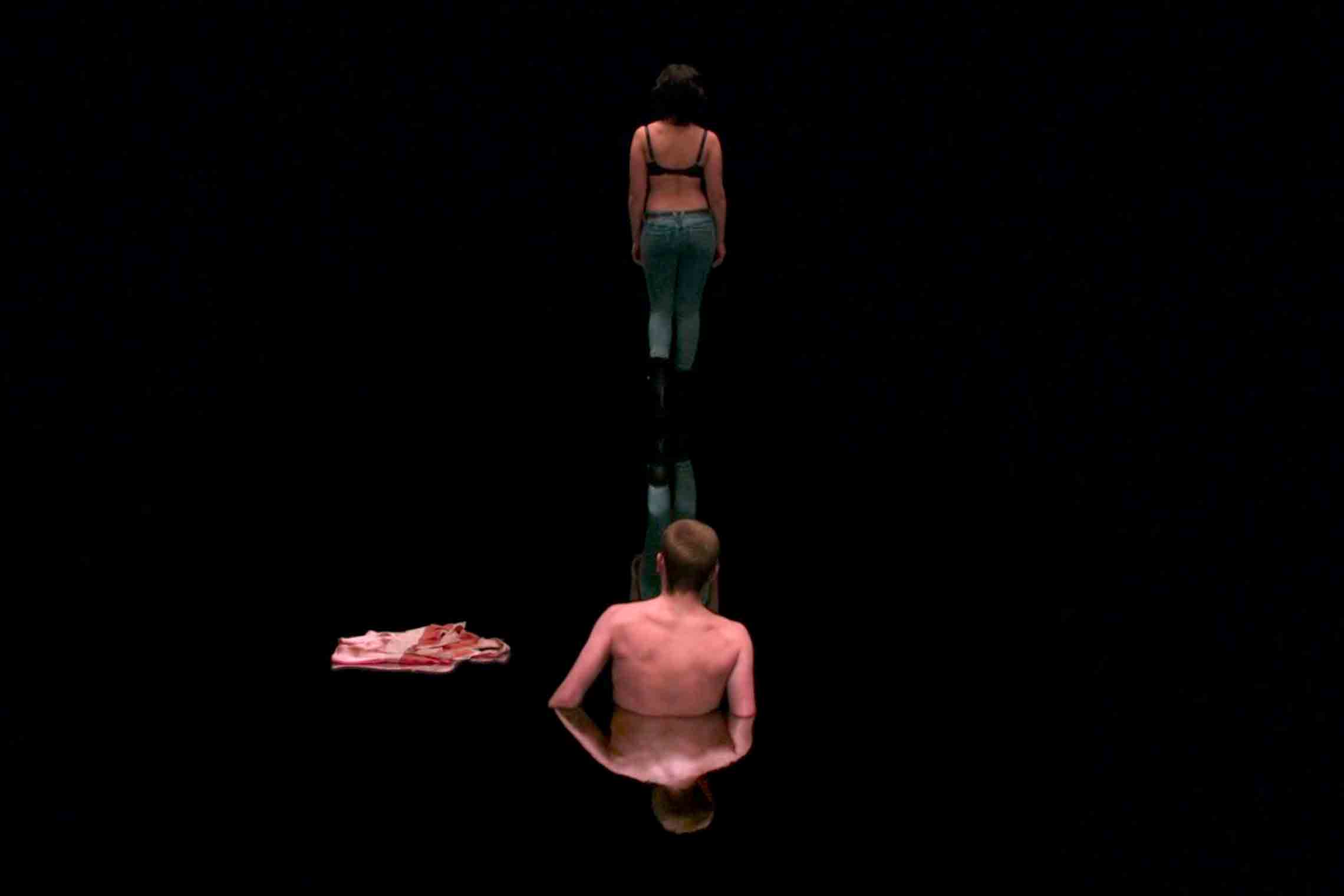
Sugary midi strings cling to The Female (Scarlett Johansson) like stale perfume as she confidently strides through a black space. An unnamed man follows behind her, following her lead as she discards her clothing with a studied yet indifferent air. The room goes dark and the picture goes silent as the man—now completely naked—floats in a vicious underworld. Another man floats next to him, reaching towards him as gravity pulls his body in the opposite direction. When the second man’s body pops like a pricked balloon, the strings fade back in, buzzing like a colony of Martian hornets whose nest has been invaded. The first man is still floating in inky darkness as the music swells and reality has started to dawn on him.
Over a decade ago, Mica Levi made headlines in the music press as the mischievous frontwoman for the band Micachu and the Shapes. The band grabbed listeners’ attention with its cacophonous rhythms, layers of found sound, and raucous lo-fi production. Because Levi’s music commands so much attention on its own, she might seem like a counterintuitive choice for the collaborative process of writing film scores, where the music must support the image. Alongside her body of work in experimental pop, however, Levi has made a name for herself as a film composer, collaborating with well-respected auteurs like Jonathan Glazer, Pablo Larrain, and Michael Almeyreda on a series of uncompromising films that depict complicated female (or female-presenting) characters in painful moments of transition.
Not long after the release of Micachu and the Shapes’ second album, Never, Levi was invited to join the team working on Jonathan Glazer’s long-gestating adaptation of the novel Under the Skin. “[Music supervisor Peter Raeburn] played me some [known] film composers, but I thought this film would require a new voice,” Glazer recalled in a 2014 interview with Pitchfork. “I heard ten seconds of [Chopped & Screwed, Levi’s collaboration with the London Sinfonetta] and said, ‘Stop the tape, use that.'” The vertiginous violin pizzicatos, trebly snare percussion, and looped vocoder chants sound like a turning point from Micachu and the Shapes to Levi’s film scores.
“I felt like it was so far-fetched I didn’t really have anything to lose,” she told Interview magazine about her work on the film. Collaborating closely with Glazer, Levi drew on her lifetime of musical and composition experience when writing the score. Because she was classically trained on viola from a young age, the instrument played a prominent role in Under the Skin, and the qualities that made it the butt of jokes in orchestras allowed it to shine in the film. “A viola is not solid, the sound it produces is like a photocopy of a photocopy of a photocopy of something, because you get an airiness, and creepiness, and there’s a struggle in that,” she told Indiewire. In other parts of the score, midi strings play alongside live string quartets, underscoring the unease of Under the Skin’s alien protagonist as she navigates life on earth in a human-shaped disguise.
Scores can emphasize the importance of different moments in film, and they can pull different scenes together using melodic or instrumental themes. Under the Skin goes one further. The high-pitched buzz of the strings and the near-subliminal bass—sometimes mixed into the diegetic sound—vibrated in my eye sockets and nasal passages when I watched the film. Levi’s score gives listeners a palpable feeling of discomfort that complements the uncanny mood.
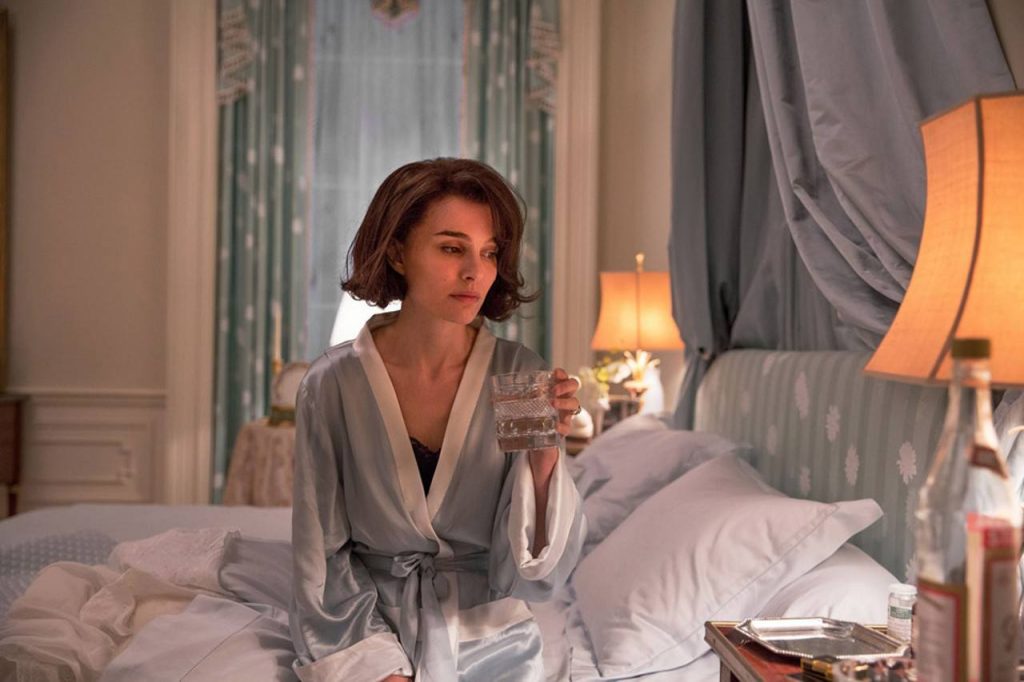
Discordant strings would become a leitmotif in her later scores. Before we even see the title character of Jackie (2016), a string quartet plays a descending note from a major chord, emphasizing the feeling of Camelot-lost that Jackie Kennedy experienced in the film. In scenes set on the Kennedy compound, the minor-key, reverb-light string parts sound like the chilly wind of a late New England autumn. Other scenes that cut between Jackie’s idyllic life in the White House and the aftermath of JFK’s assassination lead with a melodic motif only to introduce discordant elements—like a slightly out-of-tune-sounding violin, a bar held a beat or two too long, or a wobbling glissando—that complicate the First Lady’s bucolic reflections.
Both Under the Skin and Jackie immerse viewers in their protagonist’s perspective, which Levi followed as she composed their scores. When composing the Under the Skin score, Levi took Glazer’s direction to focus on The Female’s experience; her work on Jackie followed that precedent. “I had read the script, and it was quite dynamic and it showed her sass,” Levi told NPR’s All Things Considered in 2016. “All I could really do … is concentrate on her, because that’s all I had to go with.” The way the score plays with Jackie’s subjectivity further emphasizes the theme that drives Jackie, of her lived experience against the historical record of her husband’s administration and his violent death.
In 2017, Levi became the fourth female composer—and the first in 20 years—to get an Oscar nomination for Best Original Score. She followed up Jackie with Marjorie Prime, Michael Almeyreda’s adaptation of Jordan Harrison’s Off-Broadway play. Marjorie Prime explores memory and subjectivity through a matryoshka-like narrative that begins with the titular matriarch receiving an AI version of her late husband to help her with her memory as she succumbs to dementia.
Thematically, Marjorie seems like a transitional film for Levi. Like her next project, Monos, it’s an ensemble piece with no true protagonist, and her score sets the mood instead of following one character’s experience. A repeated minor-key string motif cradles a series of wordless flashbacks that show the family in happier times, the bittersweet tone calling back to Levi’s work on Jackie. Shorter violin riffs sweeten some of the sourer scenes among the family, allowing the audience to see how the family cares about one another under the tension that drives the earlier parts of the film. Though Marjorie Prime is a return to form for Almeyreda, whose directorial vision has gone from quirky and understated to solipsistic in recent decades, Levi’s more distinctive work was before and after this film.
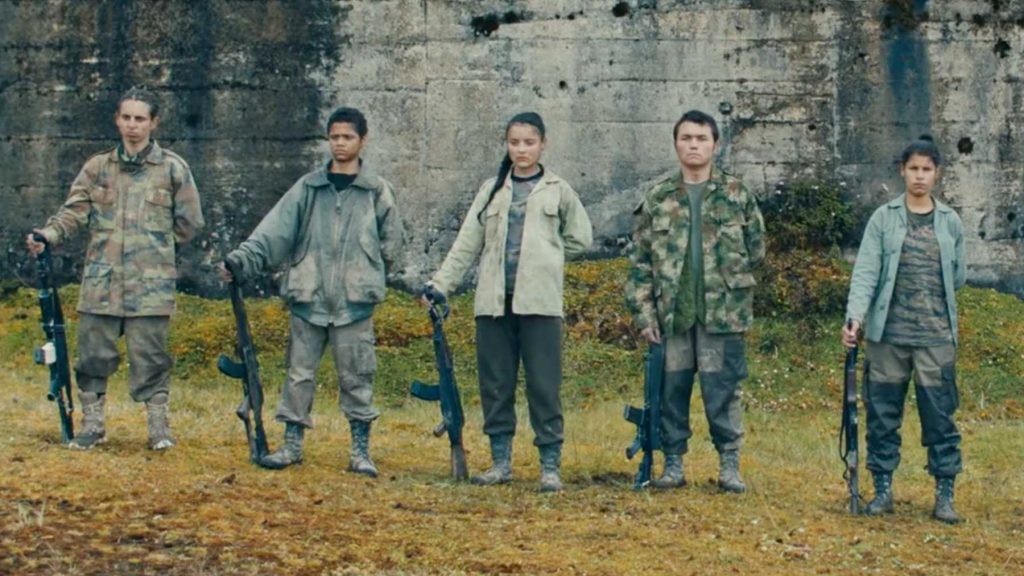
Levi’s score for Monos, a little-seen feature about child soldiers in the Colombian jungle, drew on her experience with her rock band the Shapes, in which she made her own instruments and looped samples of vacuum cleaners on her three-minute pop songs. Many of the themes incorporate different whistles, which she made just by blowing into glass bottles. “I hope you can see the instruments like they’re all found,” Levi told Indiewire in 2019. “Like one day someone went to this remote mountain and found all the elements that make up the film, all the objects.” Even the synth lines have a surprising harmony with the natural surroundings, as low-volume synth bass rises from the diegetic noise in a visceral, disturbing way and higher-pitched synth lines amplify and distort the sounds of native insects.
Monos marked a departure of sorts from Levi’s previous filmography. While the audience’s sympathies are with a kidnapped engineer and with the lone female soldier in the squadron, the film follows the squadron overall as they grapple with the demands of The Organization. Levi’s score helps draw out the personalities of individual characters and emphasize the unruly environment of the jungle. “The music is just another element of the condition they are in,” Levi said to Indiewire. “It’s kind of like these extra sort of onlookers, almost like a fairytale type of thing. Then there’s adrenaline in there, and that somehow comes together to tell the story.” Some of the “adrenaline” comes through with Levi’s trademark use of contrasts. In one scene, where the female soldier recalls her loss of virginity while patrolling the jungle, a sharp descending whistle cuts through a synth line, pulling viewers between the two contrasting moods and undercutting any eroticism in her memory with a feeling of dread.
Steve McQueen’s Small Axe anthology is slated to premiere on Amazon on 20 November. The three episodes Levi scored, “Mangrove”, “Lovers Rock”, and “Red, White, and Blue”, closed the 2020 New York Film Festival. Her work on this miniseries has already drawn acclaim; The Wrap describes the score as “subtly haunting”, a mood well within Levi’s wheelhouse. Though A24 has delayed the release of the Sundance hit Zola, based on the harrowing true story about two sex workers’ ill-fated road trip to Florida, reviews indicate that Levi’s score could be another left turn for the peripatetic composer; The Playlist described her work as “unusually gentle (and) marked with fairytale-ish glissandos”. Mica Levi is just getting started, and cineastes should be excited about what she’ll do next.