Josh Spiegel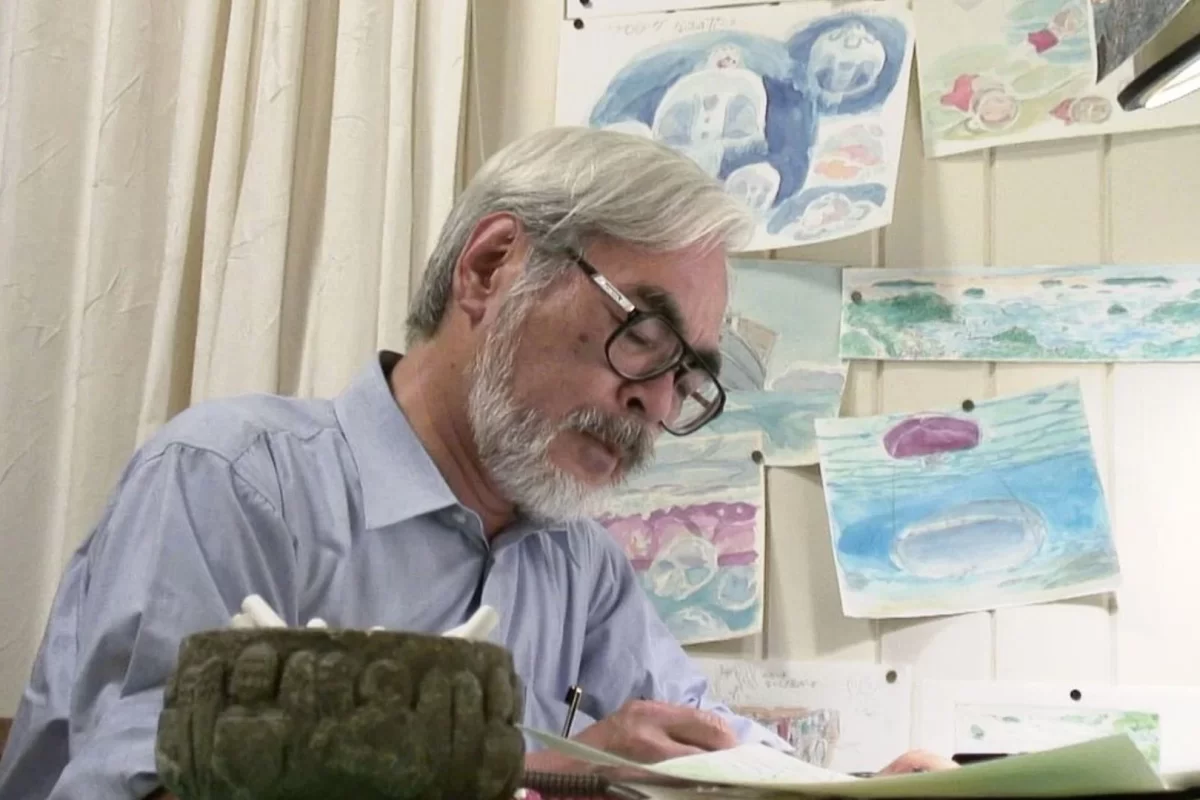
A few weeks ago, the Hollywood Reporter published a profile of big-name producer Roy Lee, largely as a celebration of his very successful year producing profitable intellectual-property claptrap like A Minecraft Movie. But near the end of the profile, the story’s headline came into full view, as he described how badly he wanted to turn the beloved comic strip Calvin and Hobbes into a movie. “I’ve been chasing that for years and years, and I just have gotten nowhere with [creator] Bill Watterson,” Lee said, suggesting a lack of understanding of the strip and its legacy that’s almost laughable. Watterson is, for Millennials of a certain age, their version of J.D. Salinger, a recluse whose rare appearances via interview serve as reminders of how fervently he does not want his work turned into a movie or a TV show or the merchandise associated with such projects.
Today marks the 85th birthday of another legend of tactile, hand-drawn animation that comments on modern life, the environment, and what it means to grow up in a world full of adults who seem stridently unwilling to understand the next generation: Hayao Miyazaki. Miyazaki has long since established himself as one of the great animators of all time, considering his massive influence on younger generations of artists in Japan and abroad, while also seeming to cut an air of slight discomfort at the massive level of multi-cultural success of the work created at his Studio Ghibli. Miyazaki sometimes makes headlines (without trying to) by rightly criticizing the impact of AI on animation as “an insult to life itself.” (He made those comments in 2016, so he’s always been ahead of the curve.)
In the late 1980s, Miyazaki jabbed at the standard-bearer of Western animation, Disney, suggesting that their films show “nothing but contempt” for the audience. Though such incendiary takes might bug some (think of how Quentin Tarantino made headlines last month for his slams against actor Paul Dano, seemingly out of nowhere), Miyazaki has backed it up with some of the most incisive, beautiful films ever made, all of which happen to be animated. Yet in hindsight, it’s a bit funny to see Miyazaki take Disney down a peg or two (and just before their renaissance of the 1990s), seeing as the partnership Ghibli embarked upon with Disney in the late 1990s, eventually driven by then-Pixar honcho John Lasseter, is what has led to the most dissonant aspect of Miyazaki’s legacy: merchandising.
The Walt Disney Company no longer has any partnership with Ghibli, one that began in 1996 and extended for just over two decades. On one hand, it is easy to look at this international deal as a massive boon to a Western audience that may not have otherwise been familiar with films like My Neighbor Totoro, Kiki’s Delivery Service, or Princess Mononoke were it not for the House of Mouse. But Studio Ghibli is the studio that released Totoro on the same day as Grave of the Fireflies, a film focused on two children attempting to survive in Japan at the end of World War II. (If you haven’t seen it, the film is exactly as heartbreaking as it sounds.) Disney, however, is so risk-averse as to only release some of Ghibli’s films either in theaters or via home media depending how creatively challenging they were.

Yet as Miyazaki turns 85 and seems to have truly, finally, actually retired (though hope always springs eternal that The Boy and the Heron won’t be his last title), one of his chief Stateside legacies is in the vast amount of stuff you can buy at chain stores like Hot Topic and Box Lunch – everything from hoodies to stuffed animals to soot-sprite hair clips. As these are all officially licensed, it’s far from the equivalent of the pervasive bootleg car decals with Calvin peeing on any number of pop-culture items for a laugh. But Miyazaki and Studio Ghibli, very much unlike Western companies like Disney, often made proudly anti-corporate and pro-nature films, from the raucous Pom Poko to Miyazaki’s first “I’m retiring after this one” movie, the complex anti-war biopic The Wind Rises. These are the types of films, in short, that feel antithetical to the vast amount of tie-in merchandising that studios like Disney thrive upon, and yet now, decades after any of these titles could have been the source of Happy Meal toys, Ghibli lives on for many American audiences as a vast mountain of cultural detritus that one generation may embrace even if they don’t know what inspired those toys and knick-knacks.
It would be easy to stand apart from all the merchandising that’s available in the States to celebrate Studio Ghibli. This writer can’t do much more than pretend himself, considering that there’s a tiny Totoro plush sitting right next to the laptop on which this essay was written. And some extent of this exists even in Miyazaki’s homeland, with the Ghibli Museum welcoming visitors year-round to celebrate the legacy of this 40-year old animation company. The Ghibli Museum, too, has been open for nearly a quarter-century, yet unlike our expectations of museums, your exit through the gift shop is minimal at best. There’s a bookstore, which mostly highlights books Miyazaki recommended; as well as a souvenir shop that promotes non-Japanese animated films, including the Wallace and Gromit shorts and features.
But the difference is stark down to admission: for adults, it’s 1,000 Japanese yen to enter, which converts to less than $7 in the States. (Don’t ask how much it costs to go to Disneyland for a day.) You can buy things at the Ghibli Museum, yes, but its existence (one that bars photo or video recording) suggests that the legacy Hayao Miyazaki has left behind in Japan is far different, and vastly preferable, to the one that’s been co-opted in his name here in the United States.