Chelsea Spear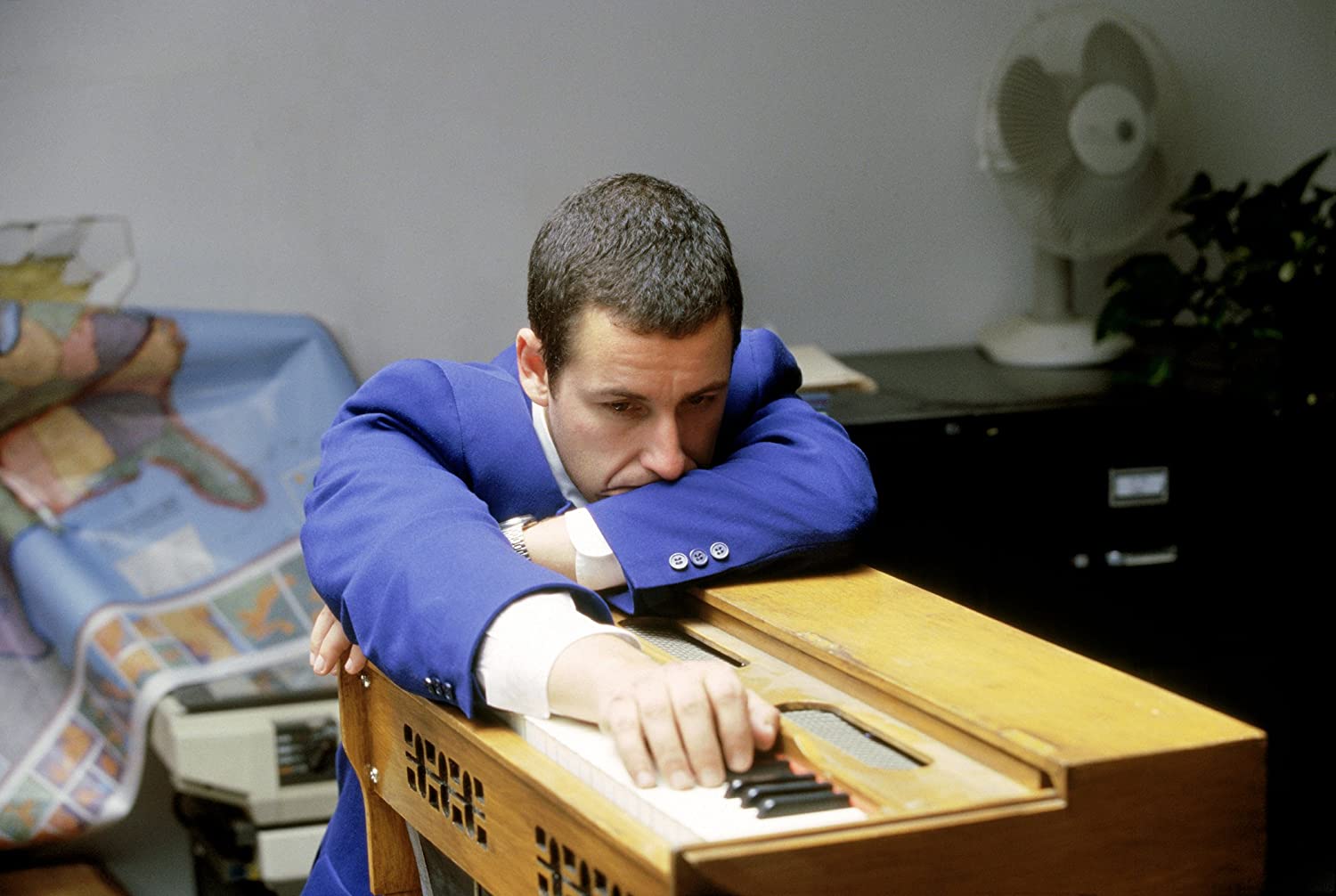
The music of Jon Brion sounds like Los Angeles’s idea of itself. His rangy melodies and exquisitely detailed production have inspired many lazy critics to describe his work as “cinematic”, and his use of vocal harmonies and antiquated instruments recall a time when Rubber Soul and Pet Sounds were flying off the racks at the Tower on Sunset. Little flaws—an out-of-tune toy piano, a distorted guitar, a violin in a minor key—punctuate his mixes, giving the sunny tone of his songs a shading that suggests the underside of the City of Dreams. On his 2001 solo album, Meaningless, he weaves studio chatter between the songs, giving his work the artificiality we associate with Hollywood filmmaking.
In the 1990s, Brion found his match in the film director Paul Thomas Anderson, whose gritty fairy tales of the San Fernando Valley echoed the cracked glamor of his pop confections. The scores Brion wrote for Anderson’s films emphasize, and sometimes prepare the audience for, the fantastical plot twists, while his incorporation of diegetic sound grounds his score in the real world of suburban Los Angeles.
Brion and Anderson first crossed paths through a mutual collaborator. “He’d been listening to Michael Penn’s first record and tried to get in touch with him about doing music for the movie,” Brion told Rolling Stone in 2016. “Michael told Paul, ‘Well, I wasn’t planning on working on any films, but there’s a guy I’ve wanted to work with, and he knows a bunch of musicians and stuff. Between the two of us, we could probably cover anything that comes up.’”
Something that came up was Hard Eight, Anderson’s first feature film, a character study that follows John (John C. Reilly), a down-on-his-luck gambler, as he meets the mysterious Sydney (Philip Baker Hall) at a diner outside Reno. Under Sydney’s tutelage, John becomes a competent gambler, but his life crumbles t when he falls in love with the cocktail waitress Clementine (Gwyneth Paltrow).
Hard Eight is the outlier in Anderson’s collaborations with Brion. It’s set in Reno, follows a handful of characters instead of a big ensemble, and has a straightforward, melancholy realism unleavened by the idiosyncratic touches of his later movies. But Anderson’s trust for his characters and their dialogue remains consistent with his later work; he shoots his cast at eye level in long, unbroken shots, allowing them to find themselves and one another in what seems like real time, and cinematographer Robert Elswit emphasizes the loneliness of the characters by illuminating them in pools of overhead light against inky black backgrounds.
While Anderson’s approach to the material is one of slight languor, the score Brion wrote with Michael Penn has a percolating rhythm that nudges the film along as scenes build momentum. As in Brion’s later scores, he draws on diegetic sound—or, at least, the music you’d hear in diners and shabby casino lounges—to guide his compositions. These two stylistic choices dovetail in the opening scene, when Sydney offers to get John a cup of coffee. A nondescript bit of guitar-driven muzak plays under their dialogue, as anonymous as the pleather booth and laminated wood tables. Through Sydney’s compassionate questioning, we learn that John’s mother recently died and that he was trying to make enough money to bury her, a problem that Sydney can’t quite help him solve. As Sydney puts together a plan, the music shifts from the ignorable elevator music that wallpapered the previous scene to an insistent piano line. A descending cello harmony plays under John’s claims that he knows “three kinds of karate”, and when he finally accepts Sydney’s offer, a horn fanfare out of a 1970s cop show contrasts with his skepticism.
Penn would write the organ-driven, circusy score for Boogie Nights, but Brion and Anderson reconnected on Magnolia. The 1999 feature finds Anderson working in what many consider to be classic mode, with a sprawling cast of characters—including a pickup artist, a cocaine addict, a failed salesman, a child prodigy, and a nurse tending to a dying man—on an apocalyptically bad day in the Valley.
In the liner notes for the Magnolia soundtrack, Anderson cited frequent Brion collaborator Aimee Mann as an inspiration for his screenplay, saying that he “sat down to write an adaptation of Aimee Mann songs,” which are placed so perfectly within the film that Brion’s music cues almost don’t register on first viewing. While Mann’s song score tells us how the characters feel but would never say out loud, Brion’s rumbling, string-heavy score sounds like storm clouds gathering on the horizon—appropriate for a film that ends with frogs raining from the sky.
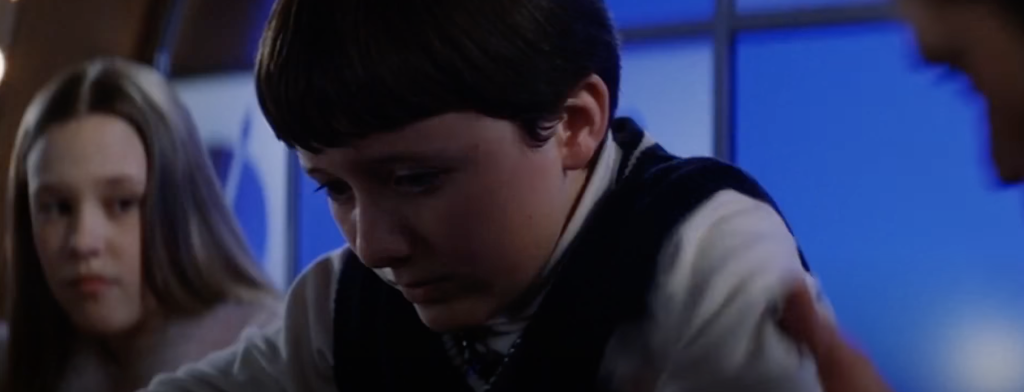
Brion does his best work in the scenes that take place on the set of the quiz show What Do Kids Know. Stanley Spector (Jeremy Blackman), the show’s resident child genius, is having an especially bad day; he’s bullied by his fellow panelists and, after being prevented from using the bathroom multiple times, soils himself on live TV. When he is ridiculed for deferring the final challenge of the show, he breaks down and gives an impassioned speech about the treatment of child performers. The key lights dim behind him and the camera slowly zooms in to a close-up as Brion’s score builds from a single note held on a violin to a lurching woodwind melody. The bass notes and off-kilter rhythms echo the slow-motion fear that comes with the worst anxiety attacks, making Stanley’s despair seem all the more palpable.
Anderson and Brion most recently collaborated on Punch Drunk Love, the director’s unlikely star vehicle for Adam Sandler. The candy-colored romance balances the lonely life of Barry, a tempermental salesman (Sandler), with unexpected violence and fairy-tale romance as he falls in love with Lena (Emily Watson), an unusual woman whose calming presence hides surprising depths.
Brion was involved with the film before Anderson had written a script. “There were discussions about different subject matter, or he’d give me a piece of music to listen to and go, okay, now, tell me why does this have the feeling it does?” Brion told Rolling Stone. “Even after the script was more or less finished, we’d discuss things like films that had music we both liked, or stories we’d heard about people working on films for hours. We each had our own ideas in our heads months before he started shooting anything.”
The long development period for Punch Drunk Love gave Brion the opportunity to experiment with techniques he’d already used here and there in his own work, such as the use of diegetic sound and broken instruments. These musical motifs intersect in a scene early in the film, after Barry finds a harmonium that was left on the street by his office. As he begins working the bellows and idly plinking at the keys, a scatter of woodwinds flutters in to harmonize with the music Barry is trying to make; just after he drops the bellows, a tuba sounds. The music eventually picks up momentum, and as Jeremy Blake’s blurry, kaleidoscopic title screens fade in, a full orchestra begins playing the kind of lush melody you hear at the start of a classic romantic comedy. Brion’s use of sound effects, including a tendril of steel guitar and a sample of Shelley Duvall singing “He Needs Me,” undercut the sweetness of the theme and prepare the audience for what’s about to unfold.
While Brion was given free rein to experiment, he’s also adept at composing more standard music cues. Barry travels to Hawaii to confess his feelings for Lena, and the pair have their first kiss in her hotel room. Brion’s steel guitar-driven music cue picks up from the Hawaiian song playing at the resort, a repeating melody that sounds like it was recorded down a phone line—a musical symbol of all the missed connections that led them to this moment. The sweetness of the melody contrasts with the cartoonish violence of their pillow talk (“I just wanna fuckin’ smash your face with a sledgehammer”), emphasizing the bittersweet humor of their connection.
Paul Thomas Anderson’s next film, There Will Be Blood, began his collaboration with Jonny Greenwood, the classically trained multi-instrumentalist who rose to fame as the lead guitarist for Radiohead, which has continued into his most recent film, Licorice Pizza. “He’s got a great thing going with Jonny Greenwood,” Brion told Vulture earlier this year. “I don’t see an issue with that as long as good work is getting done. I’m not an unsatisfied fan. Everybody’s working.” Fans who have been waiting two decades for another Anderson/Brion collaboration shouldn’t lose hope: The pair have worked together on “live-theater-y things” in Los Angeles. “The actual nature of collaboration is that there should be change,” he added. “There’s one thing we’ve talked about that would be for a future film. So one never knows.”