Jason Bailey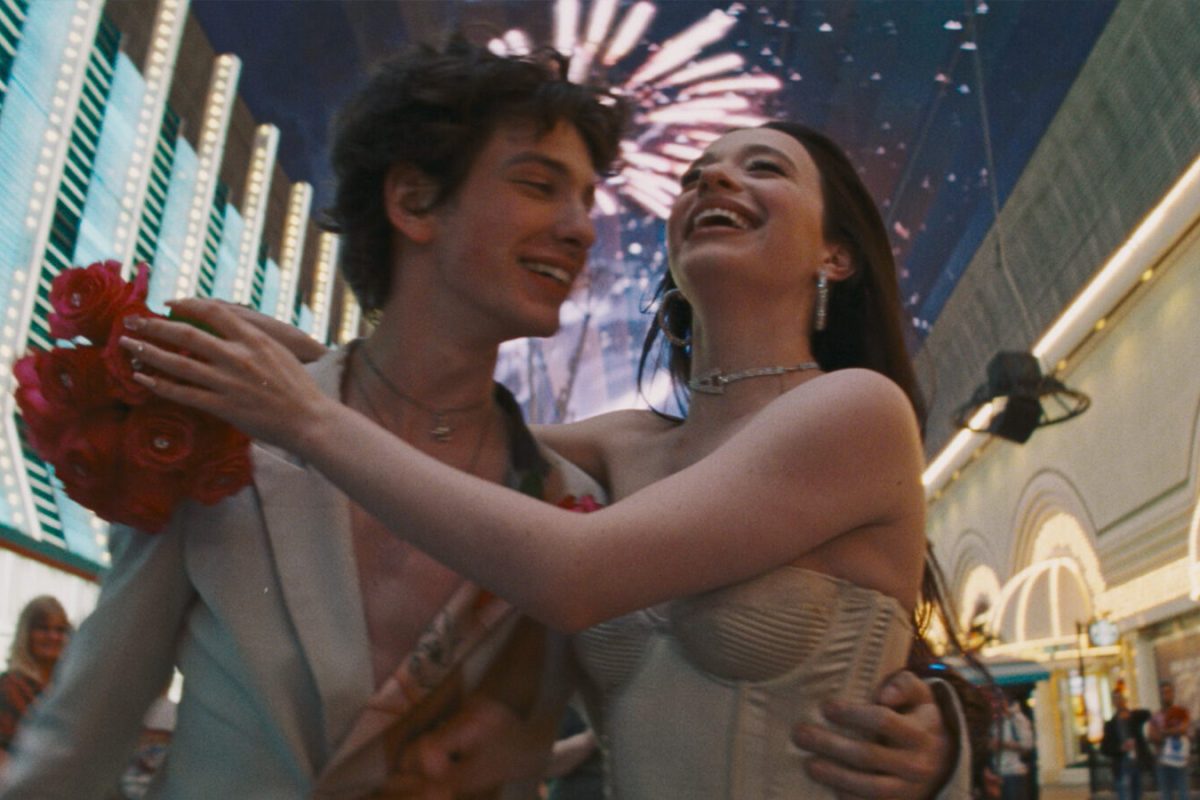
Sean Baker has always been a filmmaker who finds beauty in the most unlikely of places, and in his latest film, the Palme d’Or winner Anora, he finds it in the neon sleaze of a Manhattan strip club. It is perhaps revealing too much to note that he adroitly captures the look, the feel, the very sound of these joints, but the scenes he sets there are less interested in bare flesh than in backstage chatter and shop talk between the employees. This is his fourth straight film about sex workers, following Tangerine, The Florida Project, and Red Rocket, but from the very first, he found the right approach, granting these characters a flawed but undeniable humanity; he doesn’t judge, but also resists the urge to veer into nobility and tragedy. It’s work, plain and simple, and some people are good at it.
Ani (Mikey Madison) is good at it. This information is conveyed right up top, efficiently and matter-of-factly. We see how she works the pole, and (much more importantly for her pocketbook) how she works the floor, inviting customers for a lapdance or a private room, smiling just so, throwing just enough interest to hook them, perpetually offering more, but only if that’s what she wants, or if the price is right. “This is not allowed,” she tells one, as she slips off her g-string, “but I like you.”
His name is Ivan (Mark Eydelshteyn), and he’s the ne’er-do-well son of an extravagantly wealthy Russian businessman whose businesses, we assume, are not entirely legit. Ivan is just in America for a week or so, during which he seems to have decided to party as much as possible, and she’s sent his way because she can kinda-sorta speak Russian (her grandmother never learned English). He’s playful, childlike even, which is endearing at first—it will not be later—a giggly kid who knows the score enough to ask if she works outside of the club, which she does. After a meeting or two, he makes an offer for more of her time. “Simply be my girlfriend for the week,” he proposes, and they start bartering. Baker is aware of the Pretty Woman echo, and even paraphrases a line or two of the dialogue, which makes sense; that’s a movie they (well, definitely she) would have seen. A few days later, they fly to Vegas on a whim, and on another one, they tie the knot. And that’s when the trouble starts.
As is his style, Baker populates his cast mostly with unknowns—save Madison, who was one of the daughters on Better Things and played Susan Atkins in Once Upon a Time in Hollywood. Her Ani is totally convincing, businesslike about the business stuff, but she puts her guard up when he first floats the marriage proposal, insisting, “don’t fuckin’ tease me with that shit.” The marvel of this performance is how carefully she lets the mask slip, if only for a moment; it’s a tough trick for a character who is, at least initially, always performing. But Madison understands the difference between performative vulnerability and the real thing (witness the genuine hurt on her face and in her voice when she asks why he didn’t answer her calls) and conveys it with the skill of a much older and more experienced actor. It’s a dynamite performance.
The dialogue is funny and memorable yet nevertheless natural; Baker has a real ear for certain affections (like the way young women use “”bro”), and as a director, he has an exhilarating sense of montage, a gift for showing us the sliver of a scene that we need to get from one beat to the next, and not one frame more. The first section of the picture hurdles through the action with headlong abandon before crashing at the comedown—the vibe of a great party that ended very badly. When news gets out of the marriage, Toros (Karren Karagulian), the hired hand who is supposed to keep an eye on Ivan for his father, informs the young man, “Your parents are on their way,” and you see his blood turn to ice, a scared kid who can only think to run away. In doing so, he abandons Ani with Toros and his two goons. “You don’t know this fucking guy,” Toros says, with an edge to his voice that makes it credible.
What follows is the picture’s centerpiece sequence, which veers from danger to slapstick to one-crazy-night farce as Toros and his guys drag Ani out for a needle-in-a-haystack hunt into the Brooklyn night for Ivan’s dumb ass. This would’ve been a five-minute montage in any other film; here, it’s something like half of the movie, and miracle of miracles, Baker sustains it. He’s breaking the rules of traditional screenwriting, bending our internal moviegoing clocks to his will, and not just for kicks. All three of these guys would’ve been generic thugs in any other movie; here, they have quirks and eccentricities that define them as real people. And that ultimately matters more than expected, because without those dimensions, the final scene wouldn’t land like the haymaker it does. Anora is Baker’s best movie to date, and that’s no small compliment. It’s also one of the best movies of the year.
A
“Anora” is in theaters this weekend.