Kimber Myers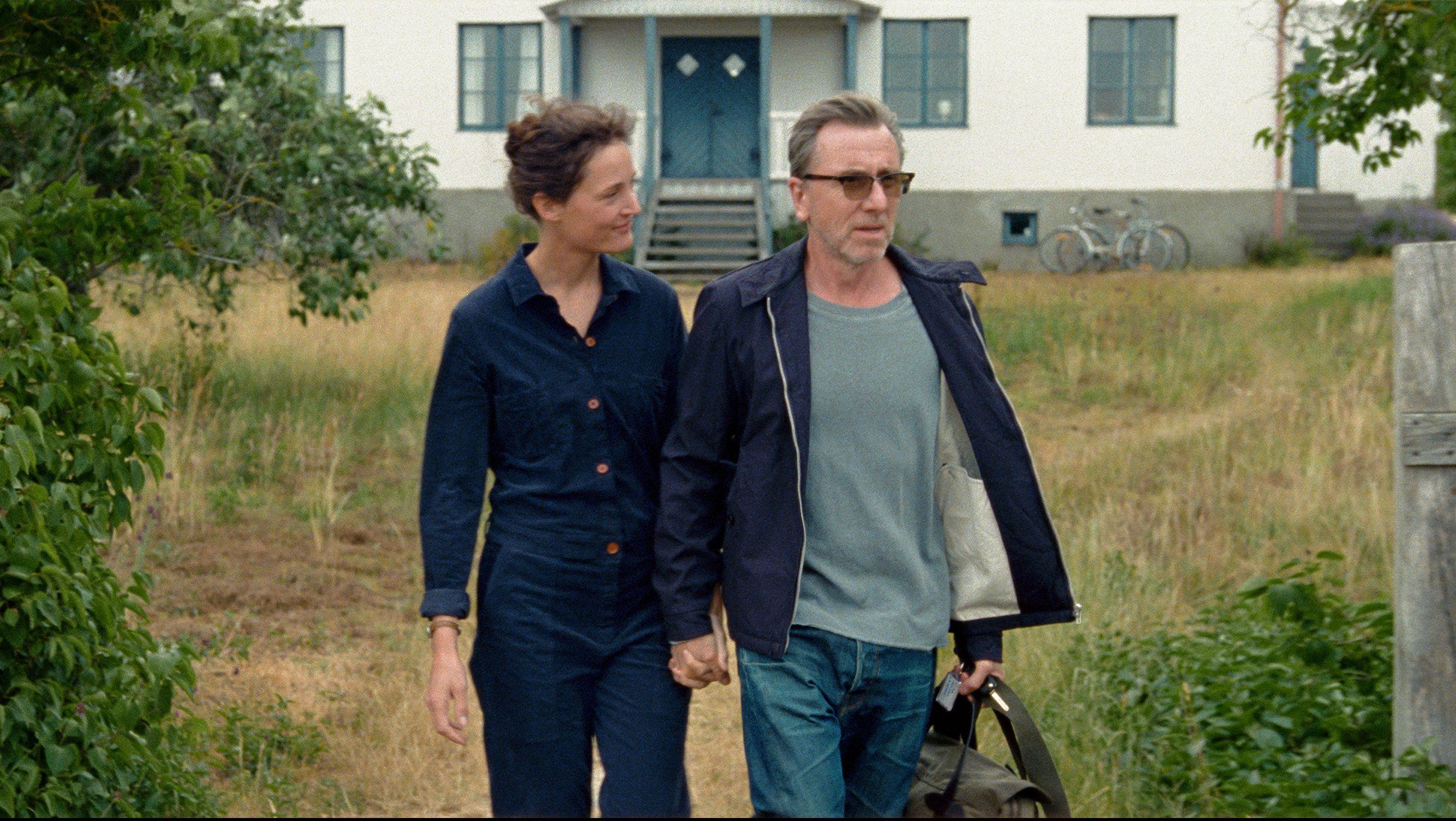
It’s tempting to read Mia Hansen-Løve’s Bergman Island purely from an autobiographical perspective, casting the filmmaking couple at the center of the movie as the on-screen counterparts of the director and her former partner Olivier Assayas. But the cinematic reality is slippery here; real life seeps into fiction and vice versa within the world of the film, and it’s all far more interesting than simply serving as the cinephile’s equivalent of TMZ. Hansen-Løve goes beyond any gossip, delivering a witty, warm commentary on the creative process and the dynamics of relationships where both partners are artists.
Like Hansen-Løve’s previous films Things to Come (2016) and Eden (2014), Bergman Island examines the seesaw of personal and professional life. Here filmmaker Chris (Vicky Krieps) and her more famous director partner, Tony (Tim Roth), have traveled from America to Fårö, an island off the coast of Sweden. Fårö was both the setting and inspiration for Ingmar Bergman for works like Through a Glass Darkly (1961) and Persona (1966), making it the perfect place for Chris and Tony to each work on their next films — despite the humorously ominous presence of the bed from Scenes from a Marriage (1973) in the home where they’re staying. Tony quickly finds his groove, filling pages in his notebook, while Chris struggles to produce. She finally breaks out of her writer’s block and tries to relay her next movie to a distracted Tony.
Her main character, Amy (Mia Wasikowska), is also a filmmaker who has traveled to Fårö, but she is on the island for a friend’s wedding, where she reunites with an old lover, Joseph (Anders Danielsen Lie). The lines between Chris’s life and her work begin to bleed into one another, as Chris — and Bergman Island — tenderly interrogate a variety of ideas: As a mother, could a woman amass the artistic output of Bergman? Can we reconcile the fact that Bergman wasn’t a great father — or human —with his status as a talented auteur? Can both members of an artistic couple create equally, or is one likely to eclipse the other as she (always she) shoulders more of the domestic responsibilities?
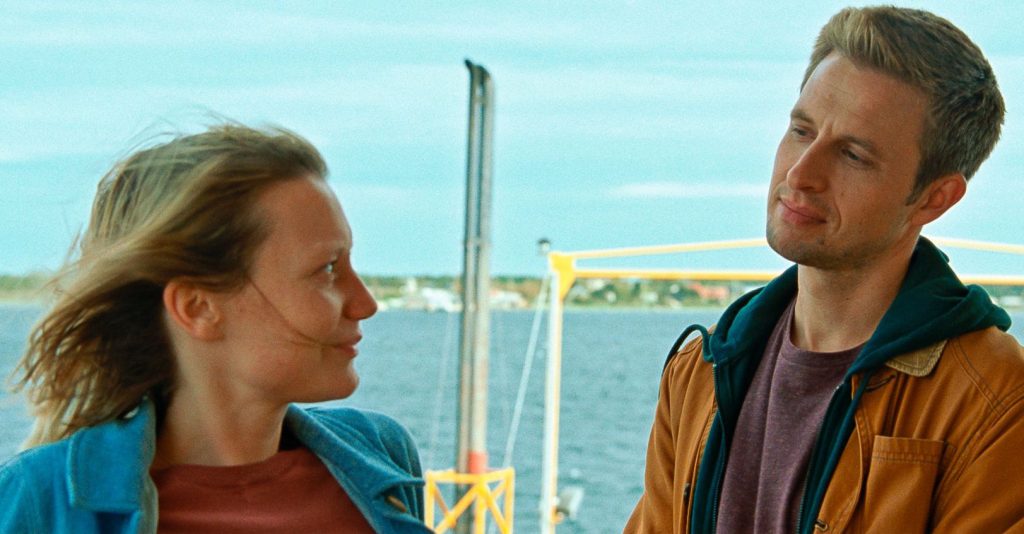
Hansen-Løve doesn’t dive too deeply into any of these issues; despite the omnipresence of Bergman on the island and within the film, it isn’t trying to be a Bergman movie. Instead, it is pure Hansen-Løve in its sly, light touch. Bergman Island playfully asks the big questions and doesn’t shy away from gently poking fun at the pretension of a particular type of film lover, while simultaneously displaying a clear affection for the Swedish filmmaker. But what it does share with Bergman is a palpable intimacy; whether Hansen-Løve is depicting the relationship between Chris and Tony or in the movie-within-a-movie between Amy and Joseph, these connections feel real and human.
Hansen-Løve also brings detail to the more concrete elements of the film. Mikael Varhelyi’s production design is as much a joy for film nerds as it is for Scandinavian design fans, with white wood, exposed beams, and a wishbone chair that exactly matches the one on my mood board. Costume designers Judith de Luze and Julia Tegström outfit the actors in breezy dresses and the kind of enviable knitwear that is de rigueur for any Nordic-set film. Fårö gets as much love as its most famous former resident, with Denis Lenoir’s cinematography capturing the island’s rustic beauty of sand dunes, winding roads, and windswept grasses. Chris observes of the idyllic location, “All this calm and perfection — I find it oppressive.” The line gets one of the bigger laughs of the movie, but the landscape does bring such serenity amidst the quiet inter- and intrapersonal drama.
Bergman Island could feel slight, especially in comparison to the films of the director of its title, but audiences shouldn’t expect Hansen-Løve to ape Bergman. There’s somehow profundity, even without plumbing too deeply. “No one’s expecting Persona,” Tony tells Chris as encouragement during her block, but like much else in the film, it’s as much about the movie as it is a metacommentary. Berman Island isn’t meant to be Persona, but that doesn’t take away from the many pleasures of Hansen-Løve’s creation. 
A-
“Bergman Island” is out Friday in limited release.