Kimber Myers
Biosphere presents a unique challenge for a critic. This indie sci-fi-comedy is quite rich for a film that seems so small on the surface, offering up a lot to think — and write — about within the curved walls of the singular setting of the title. Yet a significant part of the joy found in Biosphere is in the surprises of its central and its characters’ responses to them. As a critic who loves movies (and likes this one in particular), I want the audience to experience these revelations by watching the film, rather than through reading a review. And so begins the tightrope walk of talking about Biosphere and its themes with enough clarity to put it on your radar of movies to see, while hopefully still keeping what makes it special a secret.
Written by Mark Duplass with frequent collaborator and first-time feature director Mel Eslyn, Biosphere’s 106 minutes are set entirely in one location with just two actors on screen. For Billy (Mark Duplass) and Ray (Sterling K. Brown), there are worse scenarios than being alone at the end of the world with your oldest and best friend. After an unexplained apocalypse in the near future, these two men appear to be the last survivors on Earth, still alive thanks to the ingenuity of biochemist Ray and the structure he built. The biosphere has everything they need to survive (for now, at least): renewable food sources, electricity, water, a running track, books, and a Nintendo. However, when one of the systems begins to fail (thankfully, not the Nintendo), there’s cause for panic, but there may also be reason to hope for their — and humanity’s — survival.
Biosphere is neither a big-budget post-apocalypse story or even a small one interested in the details of how these two men stay alive. This low-key comedy is far less nerdy than something like The Martian, spending more of its running time and energy on the connection between these friends than the minutiae of what is sustaining them. Like Billy, we trust that Ray’s efforts work — until they don’t.
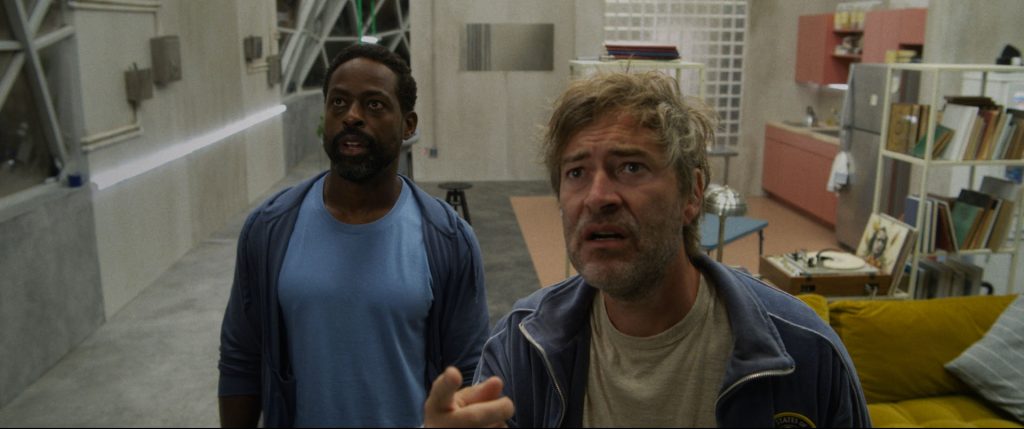
However, that trust feels real and earned, thanks to both the script’s characterization of Billy and Ray and the performances of Duplass and Brown. If either role was miscast or the actors’ work were slightly off, it could all fall apart. But there’s an easy, natural chemistry between them, making the changing dynamics of their life-long friendship feel real.
Their relationship and how it evolves is the heart of the movie, but it isn’t just about these two dudes. (It never is.) Biosphere uses Billy and Ray’s interactions to playfully poke at the larger concepts of male friendship and masculinity. It’s equally smart and silly in its approach, never taking these questions too seriously while also not making them a joke. It has a light touch — sometimes to its own detriment when it just skims the surface of these issues — but the overall effect makes for an end-of-the-world movie that isn’t a bummer. Instead, it has the warmth and humanity present in other Duplass products like Somebody Somewhere, Togetherness, Your Sister’s Sister, and Safety Not Guaranteed, and there’s more than a glimmer of hope present at the end.
Eslyn and Duplass have made a movie that uses its limited setting and minimal number of characters well, surprising the audience with what they do with so little. Despite this, Biosphere meanders to the finish line, with some of its energy flagging in its latter half. For her first film as a director, Eslyn struggles with pacing; it feels like we’re running in circles on the track that rings the biosphere, treading the same steps with these characters without really going anywhere,
Yet that’s partially by design. Ultimately Biosphere isn’t really about the destination so much as it is about the surprising changes that happen to these two friends along the way, even while they’re literally stuck in the same place.
B
“Biosphere” is out Friday in theaters and on demand.