Kimber Myers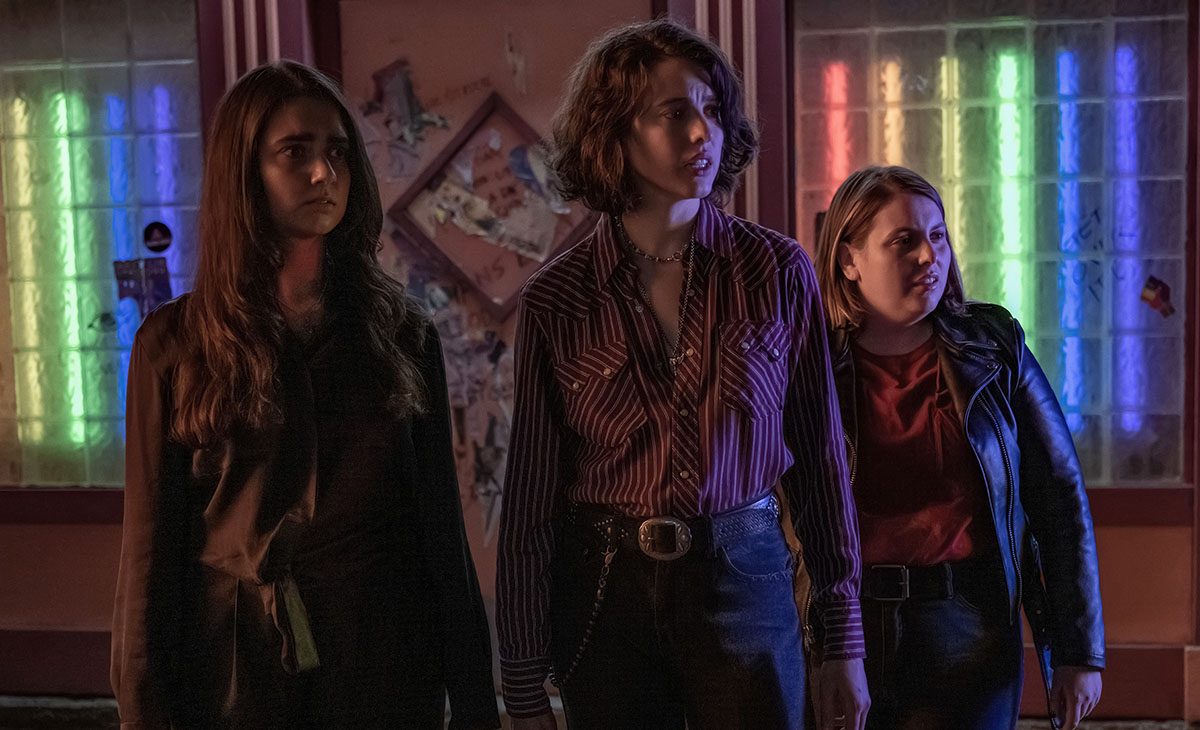
On the surface, the Coen Brothers’ output is easily divided between the comedic entries in the fraternal filmography (Raising Arizona; The Big Lebowski; Hail, Caesar; etc.) and their dramas (Blood Simple, Miller’s Crossing, Inside Llewyn Davis, etc.). However, there are scenes of gravitas in the comedies and moments of laughter in their more serious films, making the genre line in their work a little fuzzy. Yet, when the partnership diverged and Joel made The Tragedy of Macbeth, it was a little clearer which brother brought what offerings to the table. Drive-Away Dolls, Ethan’s solo narrative directorial debut, adds further clarity to each of the filmmaker’s sensibilities, with its madcap road trip adventure populated by garrulous weirdos and punctuated by bursts of violence. It’s more serious than it looks at first glance, but this is definitely a comedy. Only half of the directing duo may be present here, but Drive-Away Dolls has most of the hallmarks of a Coen Brothers movie, though it ultimately amounts to what would be a lesser entry on their collective resume.
Written by Ethan and his wife, editor Tricia Cooke, Drive-Away Dolls is a comic caper whose action begins in Philadelphia in 1999. After her romance with Sukie (Beanie Feldstein) goes south, Jamie (Margaret Qualley) decides to literally do the same. Her unlikely friend and fellow lesbian Marian (Geraldine Viswanathan) is headed to Tallahassee to visit an aunt, and Jamie tags along and takes over. Their mode of transport? A beat-up Dodge Aries from a driveaway shop that needs to be driven down to Tallahassee, but the girls accidentally rented a car meant for someone else, which has something very unusual — and very valuable — hidden in the trunk.
As the Texas-twanging, muscle-tee-wearing Jamie, Qualley quickly finds the rhythm of Coen and Cooke’s dialogue, speechifying like a classic Coen character with both impressive speed and wild digressions. Yet she doesn’t just nail the vocal aspects of the role; Qualley’s background as a dancer imbues Jamie with a bold physicality as she takes up as much space on screen as possible, sprawling across chairs with legs akimbo. Both the character and the actress are an absolute force, full of brio, specificity, and swagger.
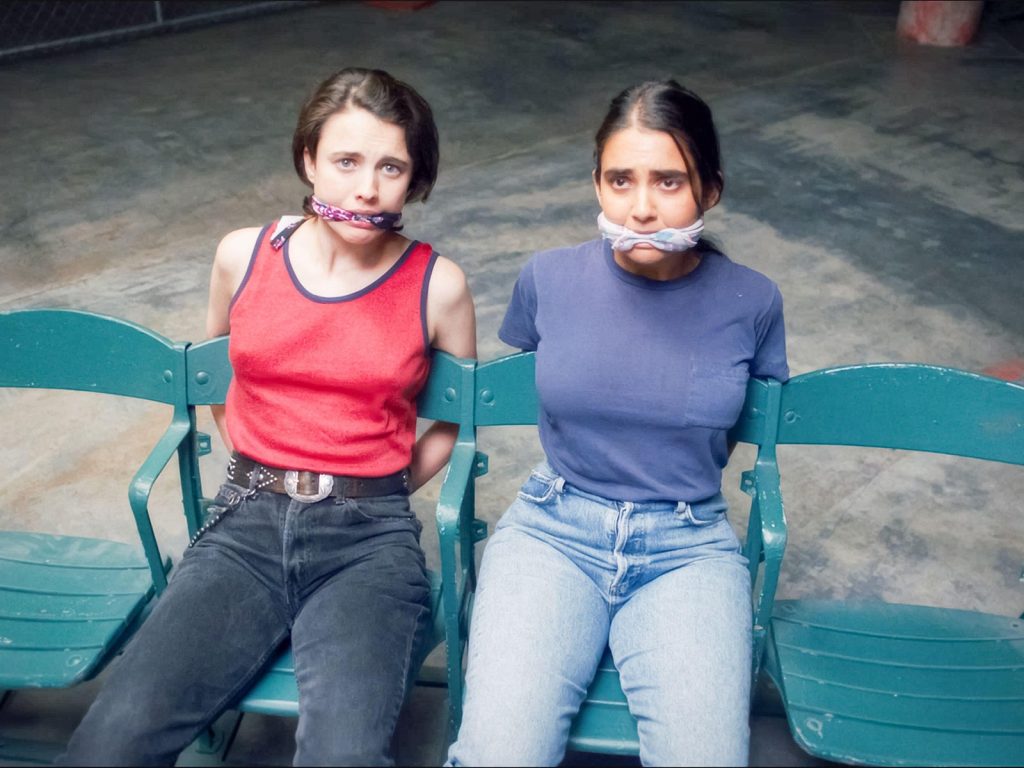
Viswanathan’s Marian is under Jamie’s spell as much as the audience, pulled into her orbit and unable to escape. She’s the buttoned-up, button-down-clad voice of reason to Jamie’s charismatic chaos, and in Drive-Away Dolls, chaos reigns. Viswanathan plays the straight woman (so to speak?) to Qualley’s chatty character, but anyone who saw Blockers knows her penchant for comedy. Qualley gets the showier role (and is easily the best part), but Viswanathan holds her own and gets her share of the laughs. It’s still a Coen movie, so there are the requisite secondary roles played by top-notch stars, including the aforementioned Feldstein, Matt Damon, Pedro Pascal, and Colman Domingo.
Though shot by Ari Wagner, Drive-Away Dolls doesn’t have the rich, textured look of her previous work in films like The Power of the Dog, Lady Macbeth, and In Fabric. Other than a few trippy, lava-lamp-looking transitions, it’s not as visually impressive as one might expect of the Coens. For what it’s worth, Bruno Delbonnel’s striking black-and-white cinematography on Joel’s The Tragedy of Macbeth was nominated for an Oscar, but that’s neither here nor there…
Drive-Away Dolls takes plenty of detours, and it’s delightfully unclear exactly where it’s headed. If you’re along for the ride, this is an exhilarating experience, full of thrills and unexpected diversions. Literary allusions from Henry James to Alice B. Toklas abound, but it’s not all high-brow references for lit majors. Coen has made a raunchy, silly movie that plays nicely with recent queer comedies like Bottoms and Joy Ride, which is never what I would have guessed he’d make for his first solo narrative effort. Drive-Away Dolls won’t sit alongside the Coens’ award-winning movies like Fargo and No Country for Old Men, but it’s an enjoyably weird little movie with pleasures all its own.