Jason Bailey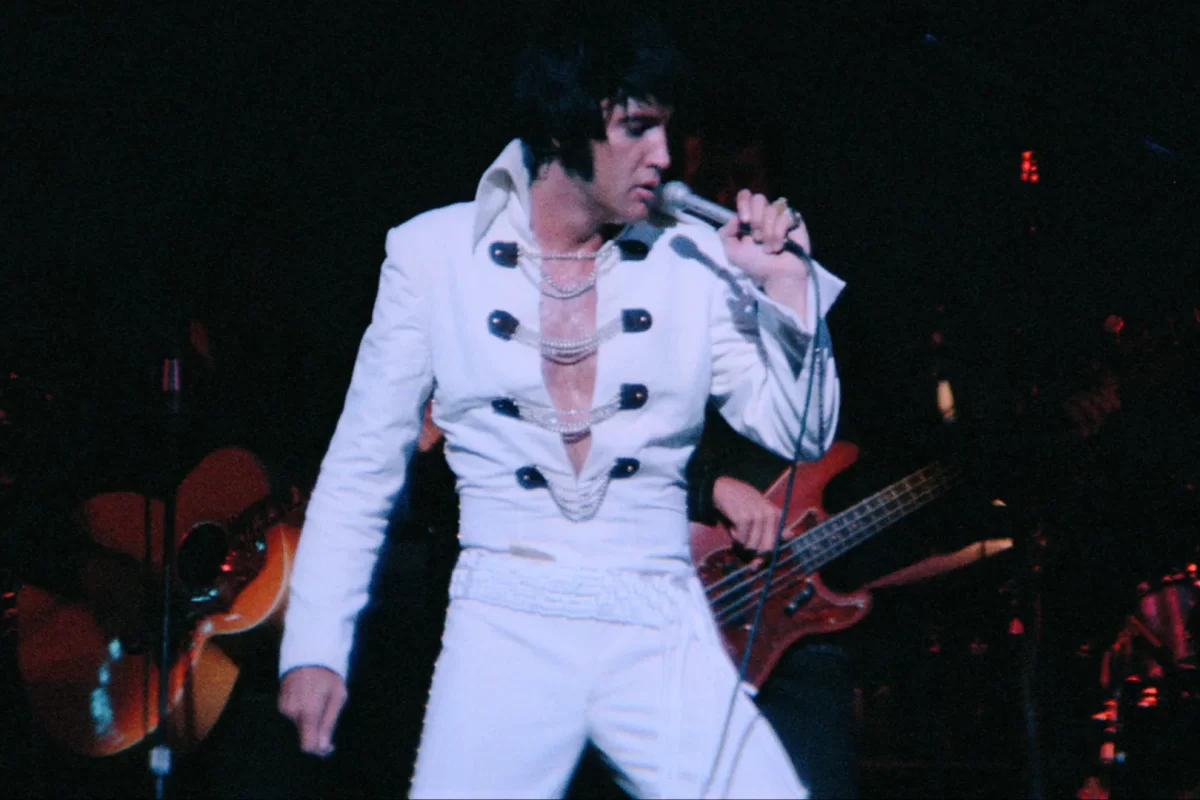
Baz Luhrmann’s EPiC: Elvis Presley in Concert opens with the “branding” of Luhrmann’s proper Elvis biopic, a film I have not seen and know enough about myself to know I should not see. But if it led to this big, splashy, IMAX-formatted spotlight for the real thing, well, I’m thankful for it. It’s comprised of mostly unused footage (much of it shot for Warner Bros’ 1970s concert movies Elvis: That’s the Way It Is and Elvis on Tour) that Luhrmann accessed while working on Elvis; he and his his longtime creative partner Jonathan Redmond oversaw the painstaking restoration of that footage, combining it with other archival clips, stills, and interviews to create a unique combination of bio-documentary and concert movie.
It’s impeccably assembled, its rapid-fire editing assuring us that Luhrmann’s hyperactive aesthetic won’t be toned down for the documentary format. It begins with an efficient biographical summary (he gives you what you need to know about the pre-live era, and illustrates it well) before moving into the meat of the movie, spotlighting the King’s live performances in the late ‘60s and early ‘70s. His Vegas debut in 1969 came when Presley was at a creative impasse, deftly illustrated by a witty and winking montage of the throwaway movies that occupied too much of his time in the 1960s: strikingly monotonous imagery of driving, kissing, and singing, cut together to illustrate his comment that “the pictures got very similar.”
Going back on stage, reconnecting with live performance and live audiences, was essentially a life raft for the King, and it was how he spent the rest of his short life; onscreen text at EPiC’s end informs us that he did a jaw-dropping 1100 shows, sometimes three a day, from 1969 to 1977. The film does not touch much upon the later years of this cycle, when Presley’s health spiraled and his performances suffered; indeed, Luhrmann studiously avoids some of the more controversial aspects of this period, like his increasing drug use and continuing interest in very young women. But they sneak in subtle bits of commentary (like cueing up “Devil in Disguise” when Colonel Tom Parker is first mentioned), and the decision to have the King narrate his own story means they can dodge those aspects with a stylistic choice.
But EPiC’s ultimate aim is not to reexamine his personal life but to reclaim his identity — not as a star, an icon, or even a singer, but as a musician, a man whose entire understanding of the world around him was through notes, instruments, and lyrics. As with the earlier docs, the rehearsal footage is enlightening, spotlighting the camaraderie and familial feeling of the band and backing vocalists, his playfulness, and his skill as a programmer and bandleader (perhaps his most underrated talent). Throughout the picture but particularly in those scenes, we’re treated to material that couldn’t be used in the G-rated That’s the Way It Is and Elvis On Tour, raunchy alternate versions of songs in consideration or off-color jokes that break up the singer and his collaborators (“Where’s the, pardon the expression, clap board?”).
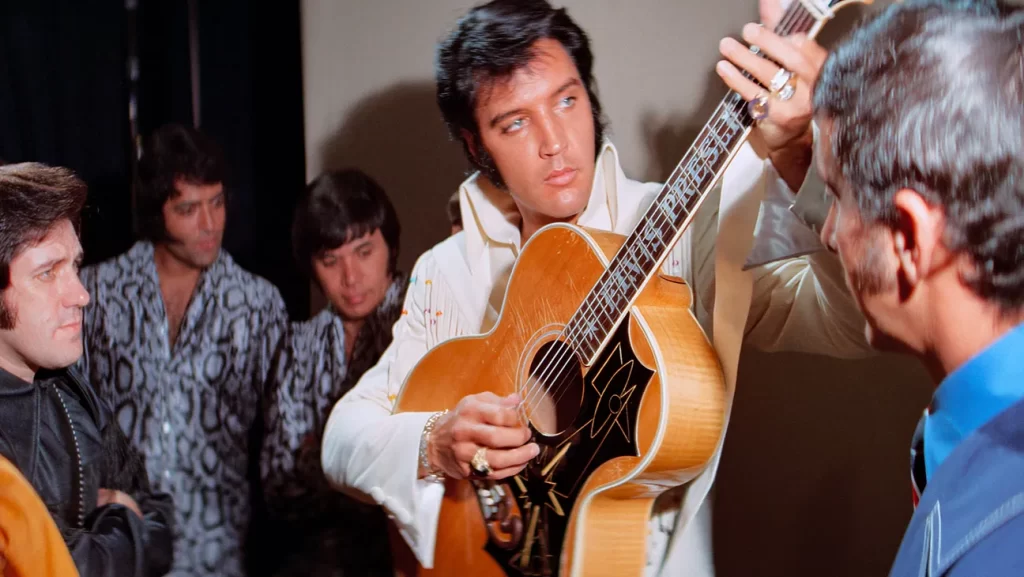
Those documentaries were prompted by, and detailed, his first shows in Vegas and his first tour across the country, so EPiC is understandably focused on those moments as well. In some ways, it’s a procedural, detailing the process of putting a show like this together, or the logistics of a giant tour for one of the biggest stars in the world. And so we have fascinating B-roll of the well-oiled machine around Presley, as well as insightful audio of him detailing his philosophies of performance.
And the concert footage is electrifying; I found myself watching every single song with a big, stupid grin on my face. “Those people wanna see a show,” he notes at one point. “They came out to see action.” Boy, do they ever. These are sequences of pure joy, for both the performer and his orgasmic audience; watch closely as he deftly orchestrates the breakdowns and resurrections of “Suspicious Minds,” taking down the instrumentation and bringing it back, conducting the drum breaks and increasing tempo. You get wrung out just watching him, and when you see him totally drained, going back to this dressing room at the end of the show, you understand why.
Most importantly, folding the bio-doc into the concert movie is a masterstroke, allowing surprising freedom of structure and organization as they drop in archival audio of Elvis’s stories and memories, from bits of interview audio and stage chatter, between the songs that best illustrate and complement them. The first words we hear are a bit of a manifesto: “I’d like to talk to you a little bit, ladies and gentlemen, explain a few things about how I got into this business… how things happened, from my side of the story.” And what is perhaps most impressive about Luhrmann and Redmond’s achievement is how seamlessly they manage to do both jobs; they will, for example, show us an interview where Presley explains how and why he’s never been out of the country (save for his military service), and then they’ll cut to him onstage, singing the opening lyrics of Three Dog Night’s “Never Been To Spain.”
Moments like that underscore how, for Presley in this era, there was little separation between his life on- and off-stage. By these years, it was all a performance, and Elvis was always “on,” at all times. It took something out of him, and may have even killed him — the filmmakers leave that for the audience to decide. The result may not be a cradle-to-grave documentary, but for God’s sake, we’ve had plenty of those for Elvis Presley. EPiC is its own thing, and it’s a real treat.
B+
“EPiC: Elvis Presley in Concert” is out this weekend exclusively on IMAX screens. It opens February 27th in theaters everywhere.