Josh Bell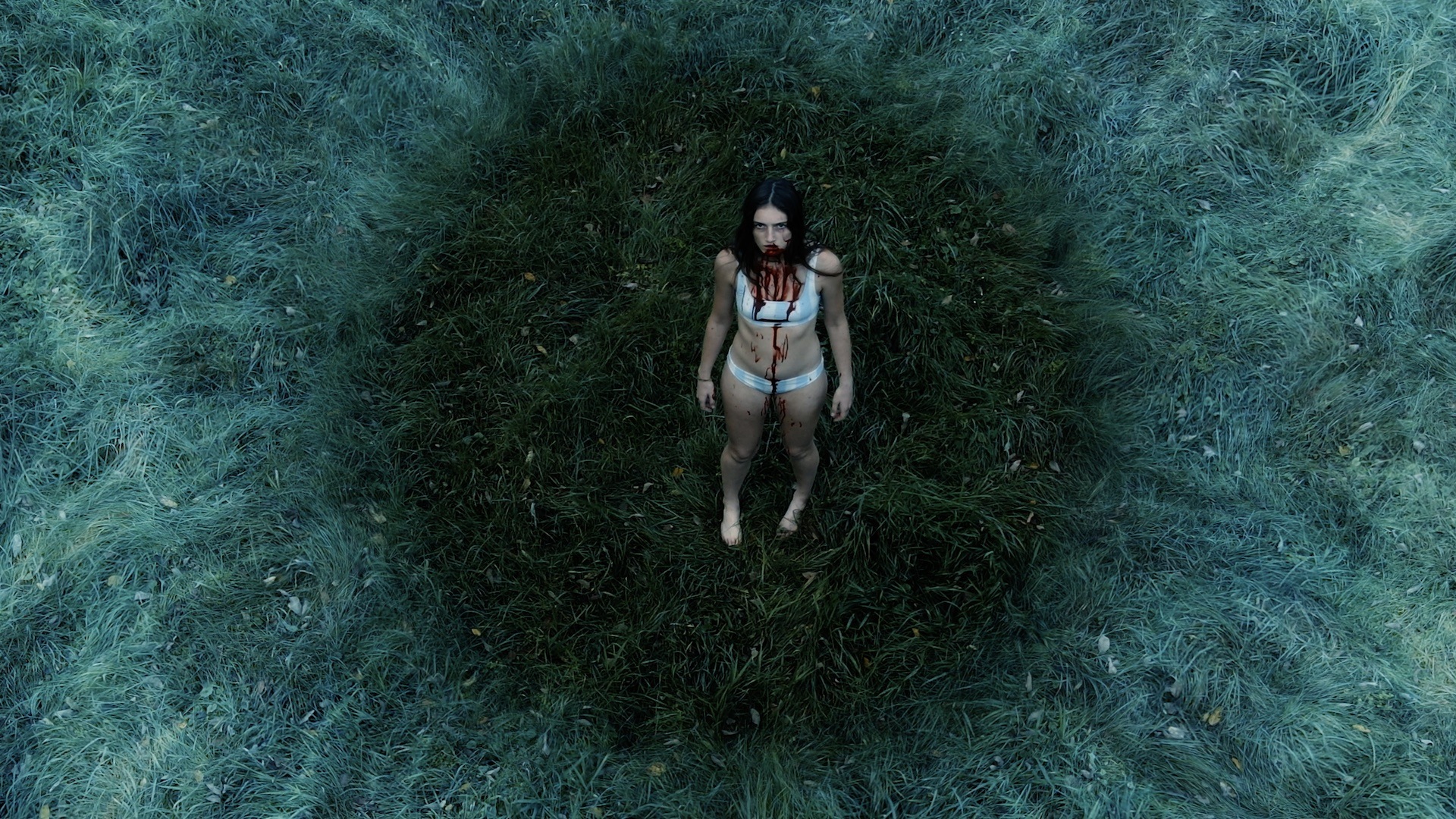
The appropriately named Adams family (father John Adams, mother Toby Poser, daughters Zelda Adams and Lulu Adams) has been making creepy, kooky, mysterious and spooky films together for years now, slowly building a following at film festivals for their unique DIY projects. The Adamses reached a wider audience when their 2019 film The Deeper You Dig was picked up by Shudder, and they creep even closer to the mainstream with Hellbender, a festival favorite that’s also set to premiere on Shudder. Even with greater attention on their work, though, the films remain a family affair, and every credit on Hellbender aside from special effects and some supporting performances goes to one of the Adamses.
For the first time, Zelda Adams shares writing and directing credits with her parents, and Hellbender is an impressive showcase for her talents both behind and in front of the camera. She plays Izzy, a sheltered teenager living with her unnamed mother (Poser) on a rural New York estate. Izzy’s mother has told her that she has a rare autoimmune disease that requires her to isolate from all other people, and so the two of them live alone, cut off from the world except for the mother’s occasional trips into town for supplies.
Like most teenagers, though, Izzy is entering a rebellious phase, and she doesn’t entirely understand why she can’t be around anyone aside from her mother. She encounters a lost man in the woods who mentions his niece living nearby, so she ventures to a house on the other side of the mountain, where she meets Amber (Lulu Adams), a sarcastic teen who offers Izzy a beer and a dip in the pool. It all seems harmless, but of course there’s a reason for Izzy’s mother’s protectiveness, as Izzy finds out when she eats a live worm as part of a typical teenage dare.
It turns out that Hellbender isn’t just the badass name of the hard rock duo that Izzy and her mother have formed as one of their housebound hobbies. It’s also the name for their supernatural legacy, as a type of witch whose power derives from devouring living things, especially when those beings are consumed with fear. There’s a bit of a Carrie dynamic to the relationship between daughter and mother, who’s been keeping Izzy hidden away not so much to protect Izzy from the world as to protect the world from Izzy.
Izzy’s mother is much less harsh than Carrie White’s, though, and once Izzy discovers her powers, her mother embraces passing along her knowledge of spells and abilities, while also passing along warnings about abusing them. The Adamses’ depiction of witchcraft is unique, smartly working within their budgetary limitations to create a system of rules and powers. Both women experience psychedelic visions connected to a book locked away in a secret room, and the Adamses hint at a wider mythology with judicious use of simple, evocative special effects.

Although Hellbender is a horror movie (and has its share of gory images), it’s more contemplative than scary, focused on the relationship between Izzy and her mother, which is alternately supportive and antagonistic. There’s genuine joy in the scenes of the duo, clad in glam-style face paint, rocking out to the catchy, exuberant tunes they create in their musical side project (all of which, of course, are composed and performed by the Adams family). And even when Izzy embraces her dark side, wreaking the havoc that her mother has worked so hard to prevent, she doesn’t forget about everything that her mother has done for her.
It helps that the stars are actual mother and daughter, with an easy rapport onscreen. Zelda Adams, who’s now grown up onscreen in her family’s films, mirrors Izzy’s coming-of-age journey, and she captures both the awkwardness of teenage exploration and the confidence that comes from discovering your independence. Poser conveys her character’s maternal concern while also embodying the pride that parents feel when their children become fully realized people, even if they aren’t the people the parents always hoped they would be. The matrilineal nature of Hellbenders makes the movie into a quiet sort of female empowerment tale, in a horror tradition that celebrates both The Craft and The Witch.
Some of the supporting performances are stilted, and there are moments when the visual effects can’t keep up with the Adamses’ artistic ambitions. The lack of manufactured suspense surrounding Izzy’s burgeoning powers is refreshing, but it can also make the movie feel shapeless, even at just 82 minutes. The Adamses’ films fall somewhere between outsider art and calling-card projects, and it’s easy to see Hellbender as the next step on their journey to bigger budgets and higher profiles. There’s something precious here to preserve even in the raw, unfocused elements, though, an expression of family connection and ingenuity that transcends conventional filmmaking expectations. 
B
“Hellbender” streams Thursday on Shudder.