Kimber Myers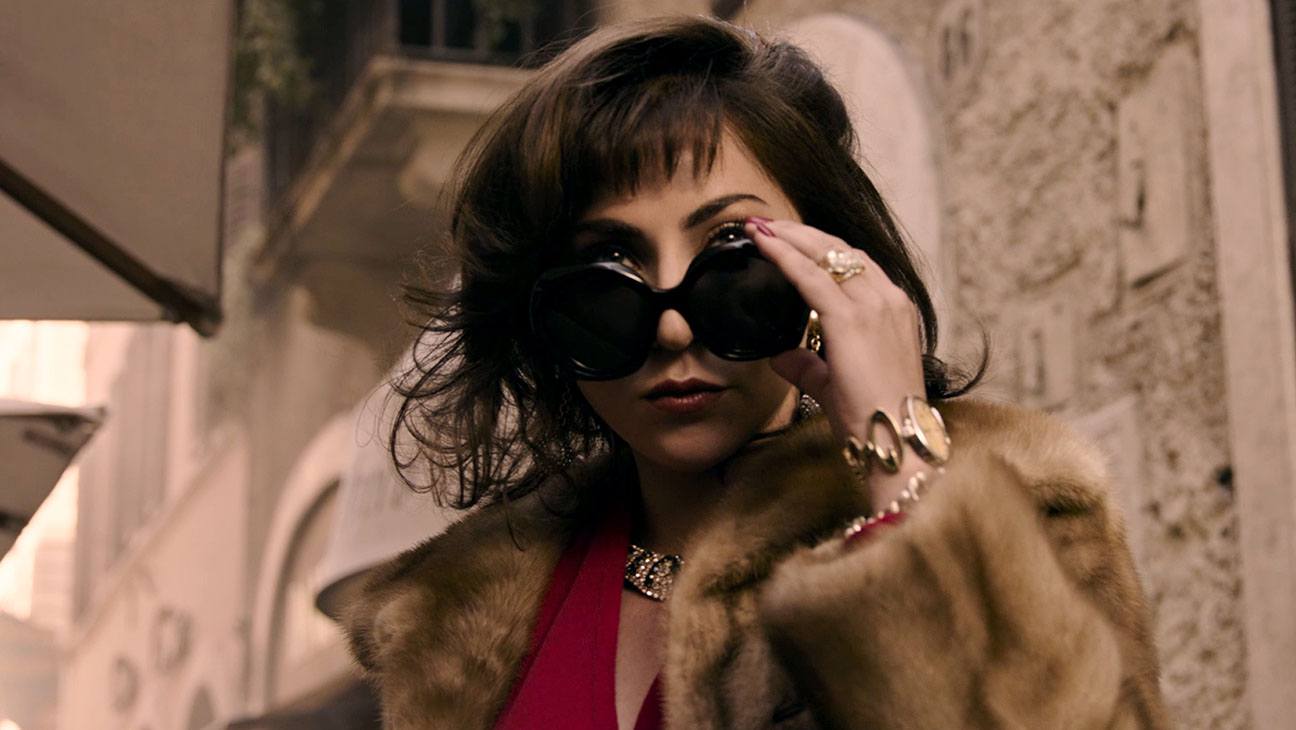
Ridley Scott’s House of Gucci could have been a dour, overserious affair, consumed with fidelity and structure over pure entertainment value. Instead, this melodrama à la mode is 150 minutes of goofy fun, filled with wild performances, killer costumes, and Salma Hayek playing a goddamn witch. What more could you want from a movie? (Well, maybe a little less movie.)
Comparisons to The Godfather (1972) are apt — and apt to annoy overly fastidious cinephiles who have taken them purely as a measure of the film’s quality. Instead, House of Gucci follows the Francis Ford Coppola classic’s basic arc of a son brought into the family business who then finds success as he loses his good character. Basically, Adam Driver’s Maurizio Gucci is Michael Corleone, but with even better hair and a worse wife. Casting Al Pacino in a supporting role cannot be a coincidence, and I applaud Scott for this giant nudge in the ribs of the audience.
Based on Sara Gay Forden’s nonfiction book of the same name, House of Gucci spans three tumultuous decades of style, scandal, and strife in the Italian fashion dynasty. In the late ‘70s, reluctant fashion scion Maurizio Gucci meets crafty middle-class girl Patrizia Reggiani (Lady Gaga) at a costume party, where she can’t believe her luck. She emerges truly smitten with the sweet, unassuming heir who’s studying to be a lawyer, but she’s also attracted to his famous name. After a romantic courtship (including a ridiculous sex scene in a construction office that brings to mind a jackhammer), Maurizio goes against the wishes of his father, Rodolfo Gucci (Jeremy Irons), and marries Patrizia. She wants familial reconciliation (purely for her husband’s sake, of course) and finds it in Maurizio’s uncle, Aldo (Pacino). Aldo is the more hands-on of the elder Guccis, and he doesn’t trust that his bumbling son, Paolo (Jared Leto), will be able to manage the company on his own. Maurizio — and especially Patrizia — gain power at the brand, as they consolidate power. Late-night TV viewing leads Patrizia to connect with dial-a-psychic Pina (Hayek), who becomes her literal partner in crime as she scrambles to keep her place within Gucci.
In a turn sure to be as iconic as the brand’s horsebit loafers, Gaga goes for broke as the scheming Patrizia. It’s a performance as big as her character’s ‘80s hair, teased to the brink, and just as ratty. Could the accent be more, umm, Italian? Sure. But vocal verisimilitude aside, this is a captivating turn that earns her equal footing with her co-stars, who rank among cinema’s best acting talents of the past and right now.
If Gaga’s performance is at a 10, Leto is somewhere in the triple digits. The usually gorgeous actor is unrecognizable as the balding, age spot-speckled Paolo, who is often pathetic but rarely sympathetic as the Gucci son who has the desire — but not the talent — to evolve the fashion line into a modern powerhouse. He’s in an entirely different, even sillier film than the rest of the cast, and while his performance doesn’t fully work within the context of the film, he’s still super watchable and is the source for some of the bigger laughs here, often at the expense of either Paolo or the actor himself. It’s jaw-dropping but mesmerizing in its goofiness.
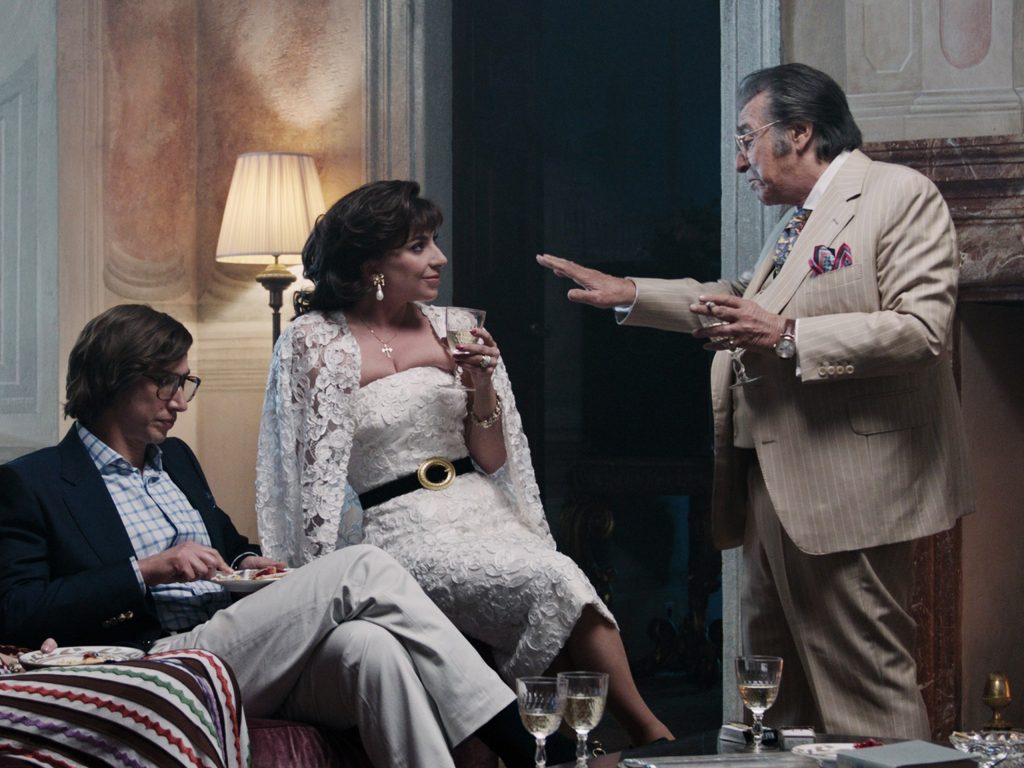
Driver rarely gets to smile as much as he does here, particularly in the film’s first act where he’s playing the innocent entranced by Gaga’s Patrizia. It’s not as showy of a role as his co-stars, but Maurizio does evolve the most over the film’s two-and-a-half hours, with a marked difference between the grinning law student at its beginning and the Machiavellian businessman at the end.
Beyond all the performances, House of Gucci is stitched together more by craft than by the messy script from Becky Johnston and Roberto Bentivegna. Credit goes to Letizia Santucci’s sets and Janty Yates’ costumes for building this decadent world to perfection. For the soundtrack, era-appropriate (if obvious) disco and pop alternate with overly familiar opera tracks that even those who groan at the genre’s appearance as a Jeopardy! category will recognize. These are not deep cuts. But the musical choices point to the epic, over-the-top nature of the story; House of Gucci is the A-list equivalent of a soap opera, full of betrayals, affairs, and schemes.
It’s all delightfully silly, but it’s interesting to consider in conversation with Scott’s film released just a few months earlier: The Last Duel, a 14th-century set film full of shifting perspectives and a grimy, grisly brawl. Despite surface differences (and a wide gap in quality), House of Gucci is not a total thematic departure for the director (and could anything be at this point, given Scott’s wide-ranging filmography?). Both films deal with how men underestimate women and their intelligence — often at their peril — as well as how power (or lack thereof) changes people, but one is actually a good film.
House of Gucci has the sheen of its award-winning director and cast, but in reality, it’s more of a greasy slick sitting on top of the film than evidence of real gold. This is far from Scott’s best movie, but it still is highly watchable in its melding of high-class pedigree with delicious trash. 
B
“House of Gucci” is in theaters Wednesday.