Craig D. Lindsey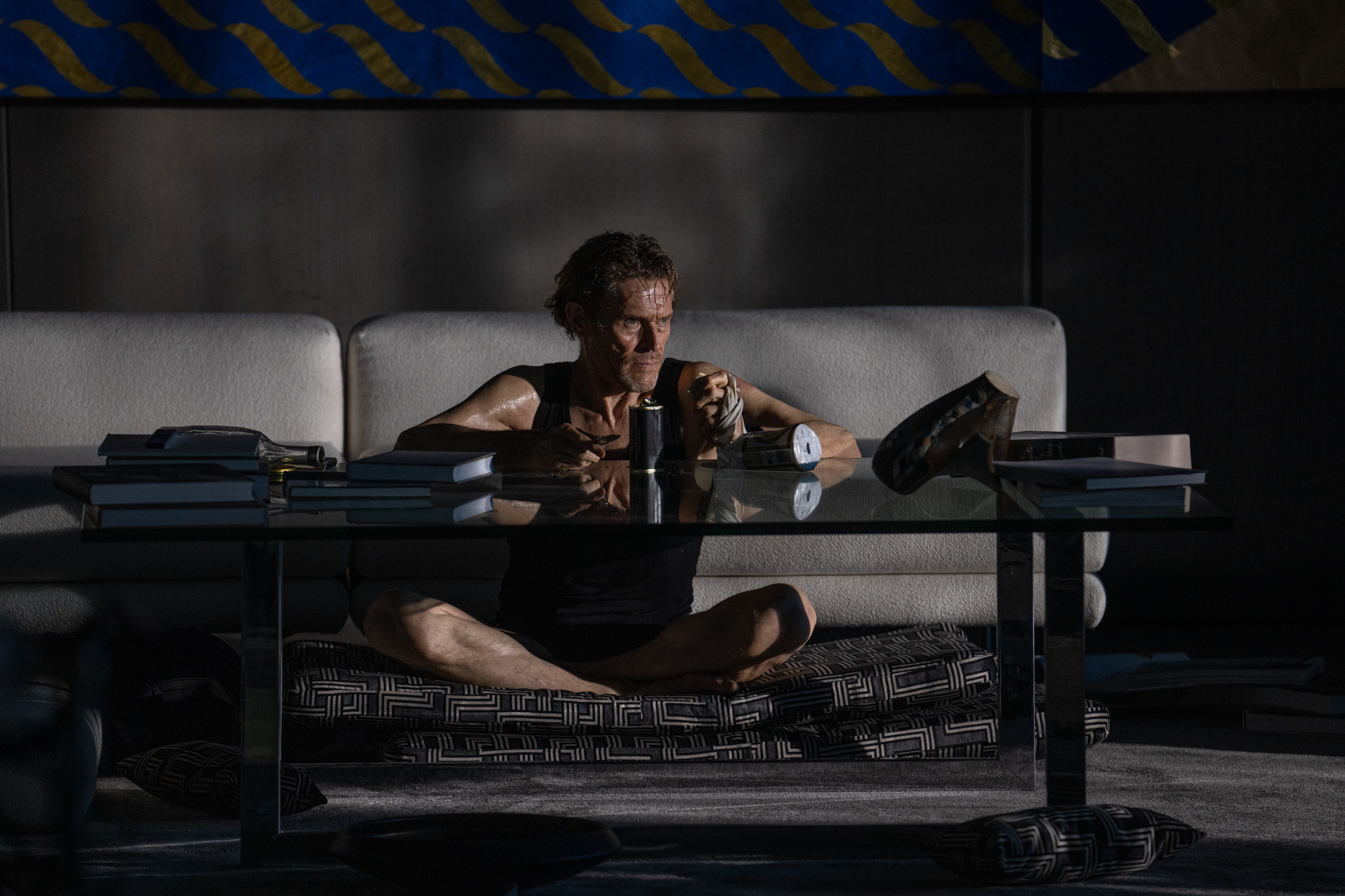
Why is it so fascinating to watch Willem Dafoe trapped and suffering?
A few years ago, he was a lighthouse keeper stuck on a craggy, 19th-century New England island, practically terrorizing co-keeper Robert Pattinson with his farts, in Robert Eggers’ The Lighthouse. For his latest film, Inside, Dafoe doesn’t have The Batman or anyone else to keep him company. Dude is all by his lonesome on this one, and it’s quite the bizarre-yet-absorbing, solitary journey.
“Art is for keeps,” Dafoe’s art thief Nemo says in voiceover, before breaking into the New York penthouse of an unnamed art collector (Gene Bervoets), currently away in Kazakhstan, with a lot of expensive works on his walls. An on-the-low artist himself (he has his small, trusty sketchbook on his person during this B&E), Nemo seeks to snatch up some of these pieces. Unfortunately, he trips an alarm that traps him in the apartment. With his partner on his walkie talkie cutting off all communication, Nemo is on his own, unable to contact the outside world. (This movie may make some of you nostalgic for the days when people still had landlines.)
In addition to being trapped in an impenetrable fortress, our criminal also has to deal with limited food, a plumbing shut-off, and a malfunctioning AC, which makes things hot as hell before it gets balls-out cold. (The refrigerator also plays “Macarena” if the door is open for a long time.) His only source of entertainment is watching security-camera footage the owner somehow has access to, shown on his flatscreen. That’s where Nemo gets smitten with the cleaning lady (Eliza Stuyck) who obliviously vacuums outside the apartment door. While Nemo does what he can to survive and stay sane (he gets drinking water from the sprinklers that go off in the indoor garden), he builds a makeshift furniture mountain to climb up and dismantle the skylight above – his only way to get out of this high-class purgatory.
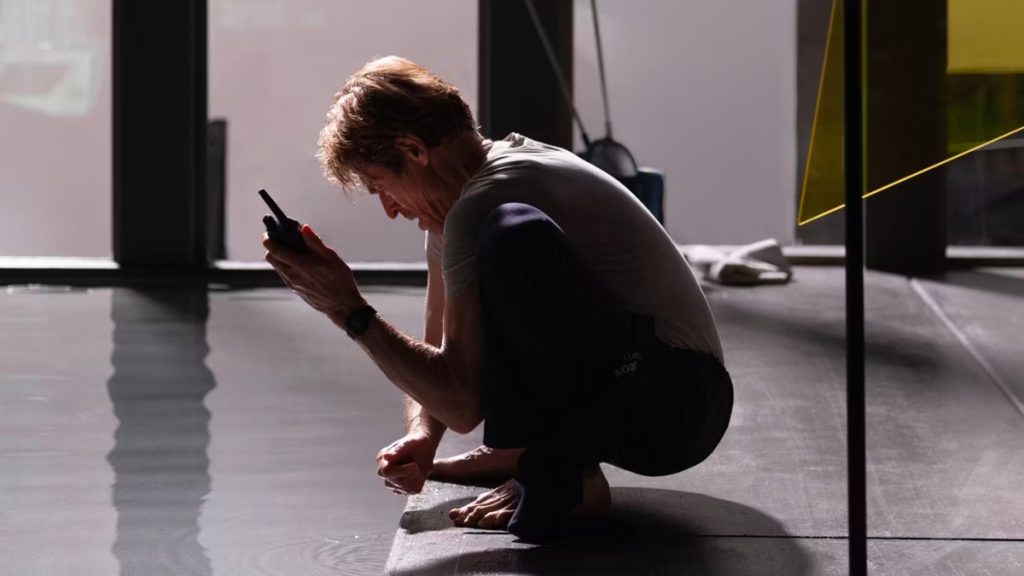
It’s too easy to call Inside an paranoid allegory on our insular, introverted, pandemic-heavy times. (It was shot in early 2021, back when COVID was still forcing us to stay in the gotdamn house.) It appears that debut director Vasilis Katsoupis (working from a script by filmmaker/novelist Ben Hopkins) wants to make a statement about how art can easily be as imprisoned as people. It isn’t long before Dafoe’s art-loving criminal starts desecrating the pieces that hang in this rich muhfucka’s abode. Inside seems to say that art, much like people, needs to roam free.
It’s also a more twisted version of All Is Lost, that Robert Redford movie from a decade ago where the Sundance Kid is lost at sea, all by his damn self, and does everything humanly possible to keep afloat. With Dafoe – a man who’s generally built like he’s been starving in some caged location – front-and-center, this one-man show feels more primal, more grungy, more despondent. Katsoupis seems to get a kick out of capturing Dafoe going through it. The director practically gets all up in Dafoe’s personal space, making sure he films all the flowing blood, sweat, and tears.
You may start wondering if this whole thing is some wild hallucination by Dafoe’s tortured, wannabe artist, a nightmare where artwork is being held hostage and it’s up to him to liberate it (like the Monuments Men!). If art is truly about suffering, Dafoe (who did get a Best Actor nom playing suffering artist Vincent van Gogh in At Eternity’s Gate a few years back) goes through a lot of it in Inside – and it’s a sight to behold.
B
“Inside” is in theaters Friday.