Jason Bailey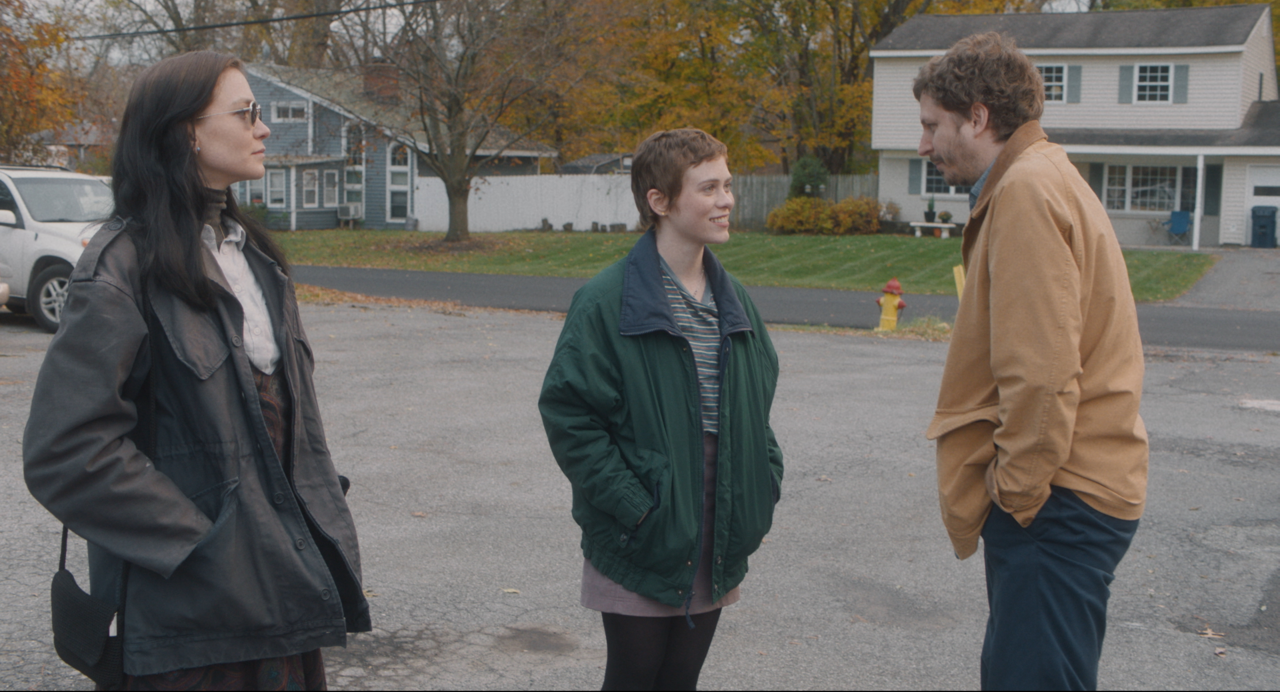
We first meet Eric (Michael Cera) as he settles into his hotel room, and it’s the kind of private moment where you can size someone up pretty quickly. He plugs in his bluetooth speakers and his laptop computer, unpacks his things, and fields two calls: first he lies to his friends, saying he can’t come by tonight because he has to go see his family, and then lies to his family, saying he has to go see his friends. Then he goes out to find a game. Eric is a compulsive gambler, you see, and everyone regards him with understandable suspicion.
This description might imply that The Adults is some sort of gambling addiction drama, an Owning Mahowney for Millennials, but this angle ends up being a bit of a head fake. It’s not that Eric doesn’t have a gambling problem; he ends up turning what was to be a weekend visit into a multi-day affair, changing his flight home each day when another (higher stakes) game becomes available. (This is, it’s very clear, the only reason he’s extending his trip, though he spins it otherwise for his family.) But the film isn’t about his gambling problem. It’s about the elements of his family life, and of his own personality, that have resulted in a gambling problem.
Eric is visiting his hometown in upstate New York; he lives in Portland now, and although he travels a lot for his job, he hasn’t been home in three years. His two sisters remained behind, to take care of their dying mother and of each other: older sister Rachel (Hannah Gross), who conveys her frustration and depression in a facade of sarcasm, and younger sister Maggie (Sophia Lillas), the cheerful, optimistic charmer who is trying, with some difficulty, to keep things together. Each and every one of them is a total mess, albeit in their own hyper-specific way.
There are prickly catch-up conversations and endless insinuations, and writer/director Dustin Guy Defa has a keen ear for the varying strands of poor communication in a dysfunctional family. Everyone has a customary role to play, and all of them quickly fall back into their regular rhythms, patterns, and expectations; they relate entirely via familial running gags, cutting barbs, and seething resentments, and when they can no longer bear to speak to each other, or can’t find the strength to say things directly anymore, they do weird little characters for and with each other.
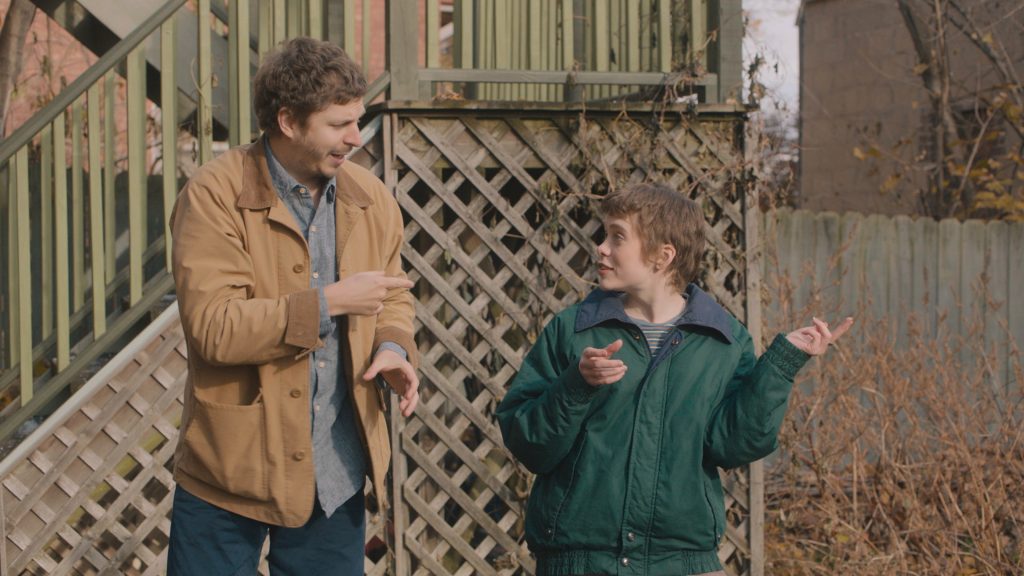
Yet their timing is off. “When did you start being like this?” Eric asks Rachel early on, after an especially thorny interaction; later, he asks Maggie pointedly, “Why does Rachel hate me?” He seems to be overstating his case—they’re all drama queens, at one time or another—but in one extraordinary scene, Defa hones in on how the smallest slight (in this case, the running of a vacuum cleaner) can be seen as an act of total emotional brutality. “You don’t have to fucking be this way with me!” he despairs, and everything vomits out of them both, a torrent of words and accusations and bad-faith interpretations, a poorly-built dam giving way to a lifetime of victimhood.
Defa’s last film, Person to Person, was a little gem, the kind of low-key indie New York ensemble comedy/drama that you keep thinking they don’t make anymore, until they do. He works in a likably deadpan style; he loves his characters, and he’s not judging them, but he’s certainly not protecting them either. Cera was part of the Person ensemble, and he gets even more to work with here, proving particularly adept in recent years at playing characters who are just barely functional. (He has a very funny, very odd monologue during one of the poker games that I wouldn’t dream of spoiling.) Gross and Lillas have less to play, since they spend most of the picture in his orbit, but they find and squeeze the nuances of these characters so adroitly that by the end, these three really do feel like something resembling a family.
Defa overplays his hand a bit in the third act, hitting the emotional crest firmly, but then going on a few scenes too long. There’s a wordless interaction between them at a party that’s both emotionally and cinematically satisfying (especially if you like French New Wave movies)—so much so that there’s nothing they can say explicitly after that which they’re not saying implicitly right then. But this is a minor complaint; I kept thinking about an early scene, when they’re in the midst of one of their endless role-plays, and Rachel asks her brother, pointedly, “How far are you gonna take this?” It’s a key question, in this movie, and in real life.
B
“The Adults” is in theaters Friday.