Audrey Fox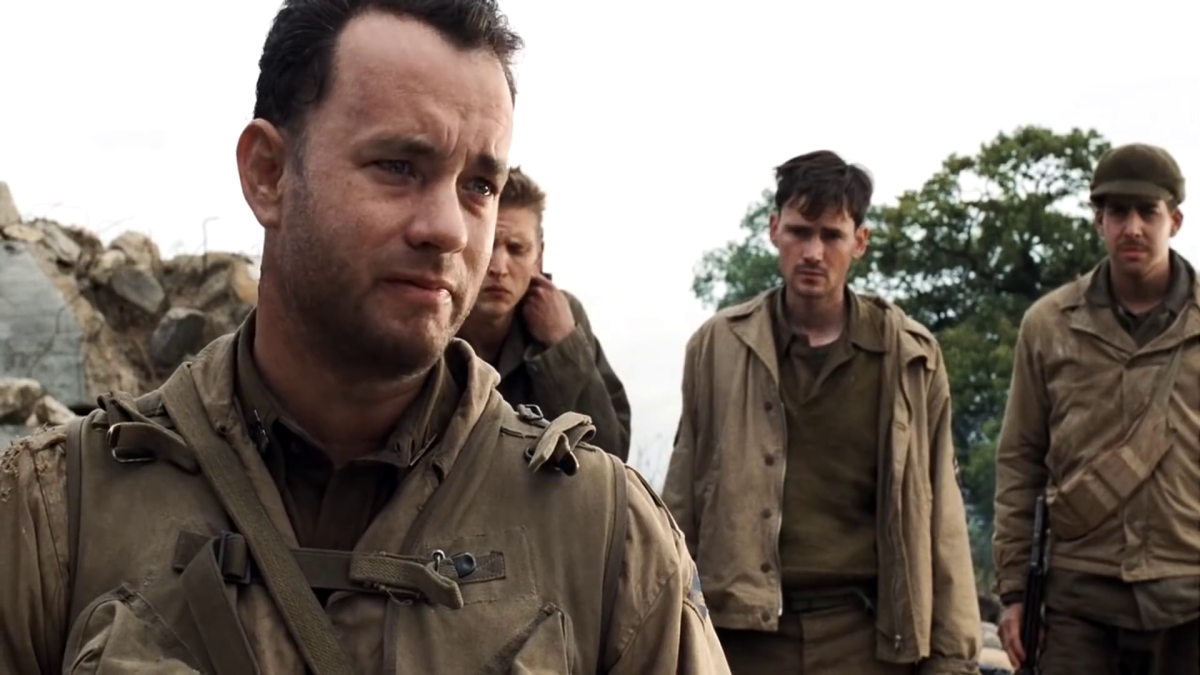
Looking back, the collaboration between Steven Spielberg and Tom Hanks on Saving Private Ryan was an obvious one. The two had worked together twice before (Spielberg served as producer on two early Hanks vehicles, The Money Pit in 1986 and Joe Versus the Volcano in 1990), Hanks was by this point a back-to-back Oscar winner, and Spielberg was one of the most prolific directors working in Hollywood. It’s such an expected pairing with hindsight that it’s easy to forget that there is also a significant element of novelty in bringing on Tom Hanks, not exactly the type audiences would normally look for in a World War II combat film, to play the lead role. But rather than coming across as merely a lazy opportunity to put a random A-List actor in the lead role, or an attempt at casting against type gone terribly wrong, it speaks to the everyman quality of WWII heroism that Spielberg wanted to highlight in Saving Private Ryan.
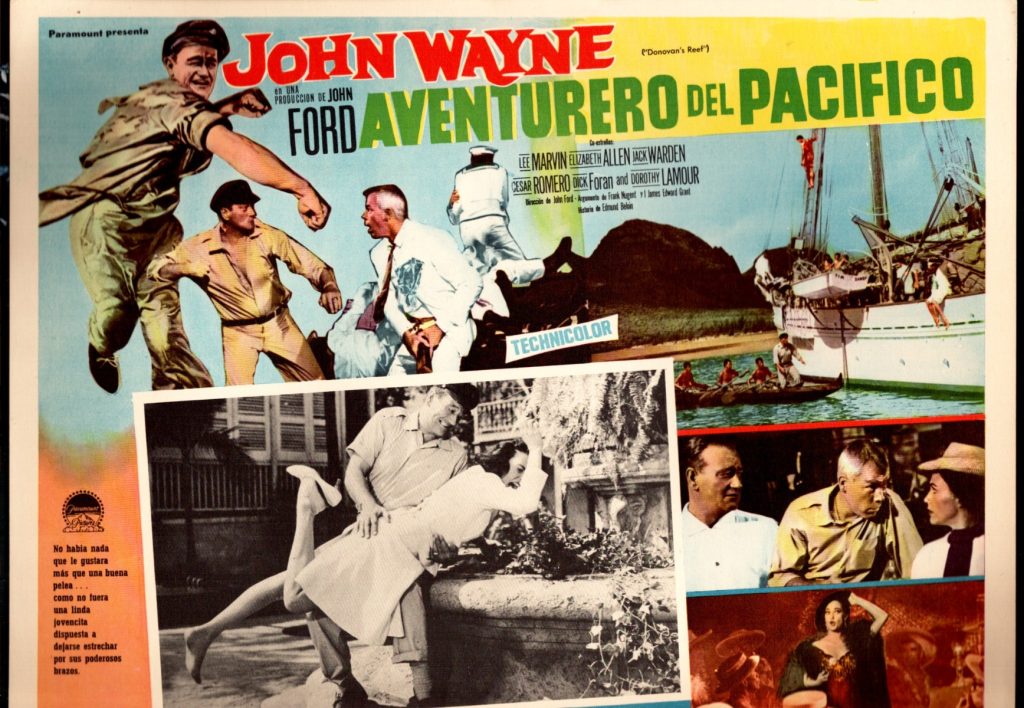
There’s a grand legacy of WWII combat films, which usually feature a very specific type of actor in the lead role. Think John Wayne in Sands of Iwo Jima – a gruff, stoic, no-nonsense leader dripping with machismo, the kind of man who can keep his subordinates in line through the sheer force of his dominant personality. In the propaganda films of the 1940s, these lead roles offered up a portrait of peak performative masculinity to encourage the boys at home to fight, and give them a combat role model. It’s a generally accepted trope of the genre that weak, emotionally compromised men die in combat. The second you see a photo of a soldier’s girlfriend, the director has basically given you a cue that he’s a goner. There’s no room for sentiment in the army.
But Saving Private Ryan is all about sentimentality. Why else would they risk the lives of an entire combat unit just to rescue one man, all because his brothers died in battle and the Army didn’t want their mother to lose another son in the war? The Army unexpectedly puts emotions before practicality, deciding that this empathetic gesture to a grieving mother is worth the risk involved to the men tasked with tracking Private Ryan down. So it would negate the entire concept of the film for its hero to be a paragon of combat-ready masculinity. Instead, we have Tom Hanks, who’s a strong leader respected by his men, but not a physically imposing figure. He possesses an everyman quality which underscores the emotional impact of the film. The revelation late in Saving Private Ryan that his character was a schoolteacher before joining the Army speaks to the idea that anyone can find within themselves hidden reserves of strength when faced with such a world-shaping conflict.
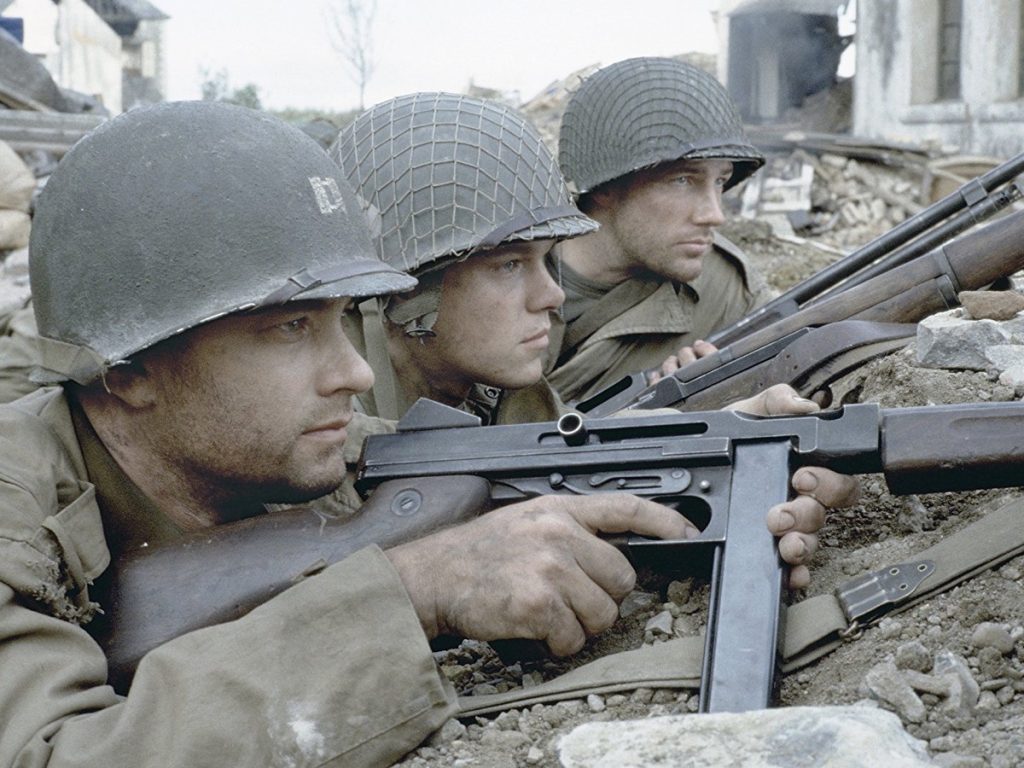
Spielberg and Hanks, as part of the generation born in the aftermath of World War II, were keenly aware of the fact that it wasn’t just a bunch of Rambos who served on the front lines in Europe, but everyday people, which makes their sacrifice all the more potent. Spielberg’s dad was in the Signal Corps, while Hanks’s father served as a US Naval Mechanic. For them and so many others of their generation, WWII vets were not John Wayne – they were their dads, their uncles, their neighbors. The hero of the film who inspires his troops to embark on what is essentially a suicide mission is a mild-mannered English teacher. The soldier who survives the entire affair, the young Private James Ryan (Matt Damon), has done nothing in particular to distinguish himself, other than accumulating a lot of dead brothers. In Saving Private Ryan, being tough and brave and strong will not necessarily be enough to keep you alive; war is indiscriminate, and survival is mostly a matter of luck. Are you on one of the Allied transports landing at Utah Beach, where casualties were limited, or did you disembark at Omaha? Were you an anonymous soldier destined for the meat grinder, or did the Army see enough value in keeping you alive that they sacrificed an entire unit to do so?
Saving Private Ryan captures this sense of capricious fate, where the hyper-masculine figures identified with American WWII propaganda can die next to the utterly unremarkable schoolteacher, distinguished only in his ability to rise to the occasion. In doing so, it depicts a different and more realistic version of the war than the combat films that Spielberg would have grown up watching. And in casting Tom Hanks, no one’s idea of the stereotypical soldier, Spielberg stakes his territory in telling a World War II story unlike anything that audiences had seen before, bringing humanity to an increasingly distinct conflict in a way that is representative of his uniquely empathetic approach.
“Saving Private Ryan” is streaming on Amazon Prime and Paramount+.