Craig J. Clark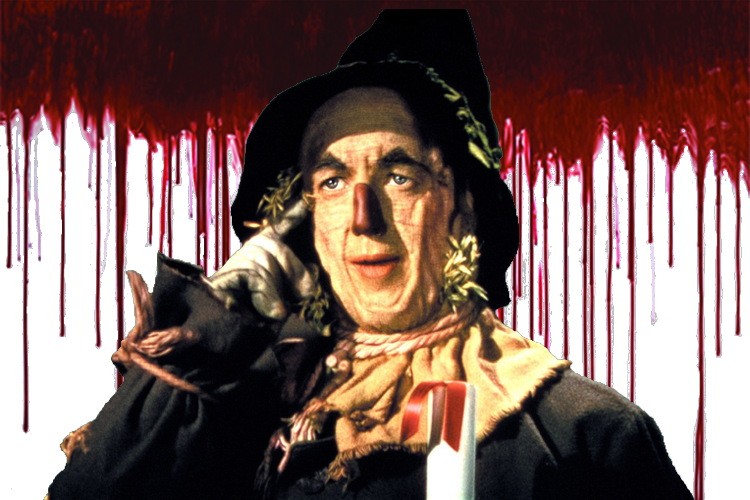
We’re the scarecrow people, have we got lots in common with you.
And if you don’t start living, well, you’re all going to wind up scarecrow people, too.
— XTC, “Scarecrow People”
In the past few decades, killer scarecrows have become such a common horror staple that Drew Goddard and Joss Whedon could throw “The Scarecrow Folk” onto the whiteboard of potential antagonists in The Cabin in the Woods without batting an eye. For readers of a certain age, the ambulatory scarecrow as a figure of fright can be traced to two literary sources: R.L. Stine’s Goosebumps book The Scarecrow Walks at Midnight (published in 1994) and the story “Harold” from 1991’s Scary Stories 3: More Tales to Chill Your Bones, the final volume of folklorist Alvin Schwartz’s Scary Stories to Tell in the Dark series. Originating as an Austrian-Swiss legend, Harold is a memorable enough creation that he’s heavily featured in the trailer for the Scary Stories film adaptation, which bears the imprimatur of producer Guillermo del Toro.
Scary Stories to Tell in the Dark is sure to supersede the direct-to-video likes of Dark Harvest and its sequels Dark Harvest II: The Maize and Dark Harvest III: Skarecrow (all 2004), Scarecrow Gone Wild (also 2004), and Scarecrows of the Third Reich (2018) in the scarecrow-horror pantheon. But the gold standard remains a pair of features from the ’80s, one of which was made for TV but is no less effective for that.
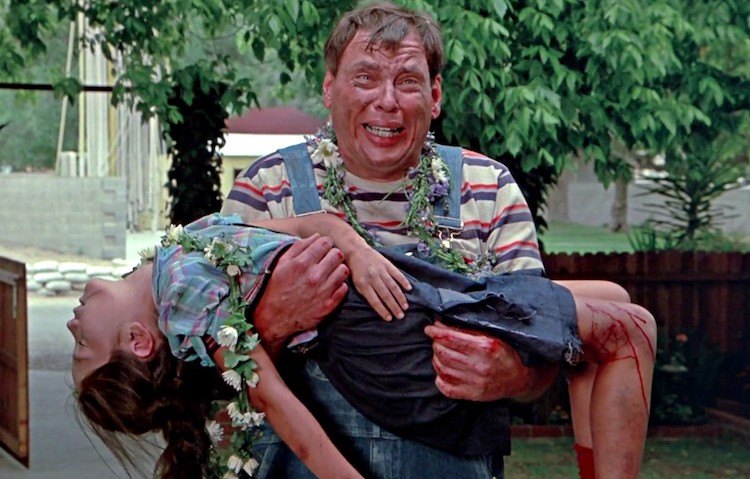
Broadcast in 1981, Dark Night of the Scarecrow opens with a grown man picking flowers with a little girl in a field, evoking the scene of Boris Karloff’s childlike Monster playing with the girl in Frankenstein. In this case, the man is the mentally challenged Bubba Ritter (Larry Drake, laying the groundwork for his Emmy-winning turn as Benny on L.A. Law) and the girl is Marylee Williams (Tonya Crowe), who apparently knows better than to play with him near a pond. The proverbial gentle giant, Bubba is perfectly harmless, but is seen as a menace by vindictive mailman Otis Hazelrigg (Charles Durning), who’s been gunning for him for years. “He’s a blight,” Otis says to one of his cohorts, and they get their chance to remove him from the community when Marylee is attacked by a vicious dog while walking home with Bubba and rumors spread that a) she died, and b) he killed her. That gives Otis all the excuse he needs to turn vigilante and hunt Bubba down with three of his hick buddies, one of whom brings his dogs along so they won’t lose him the way they have in the past.
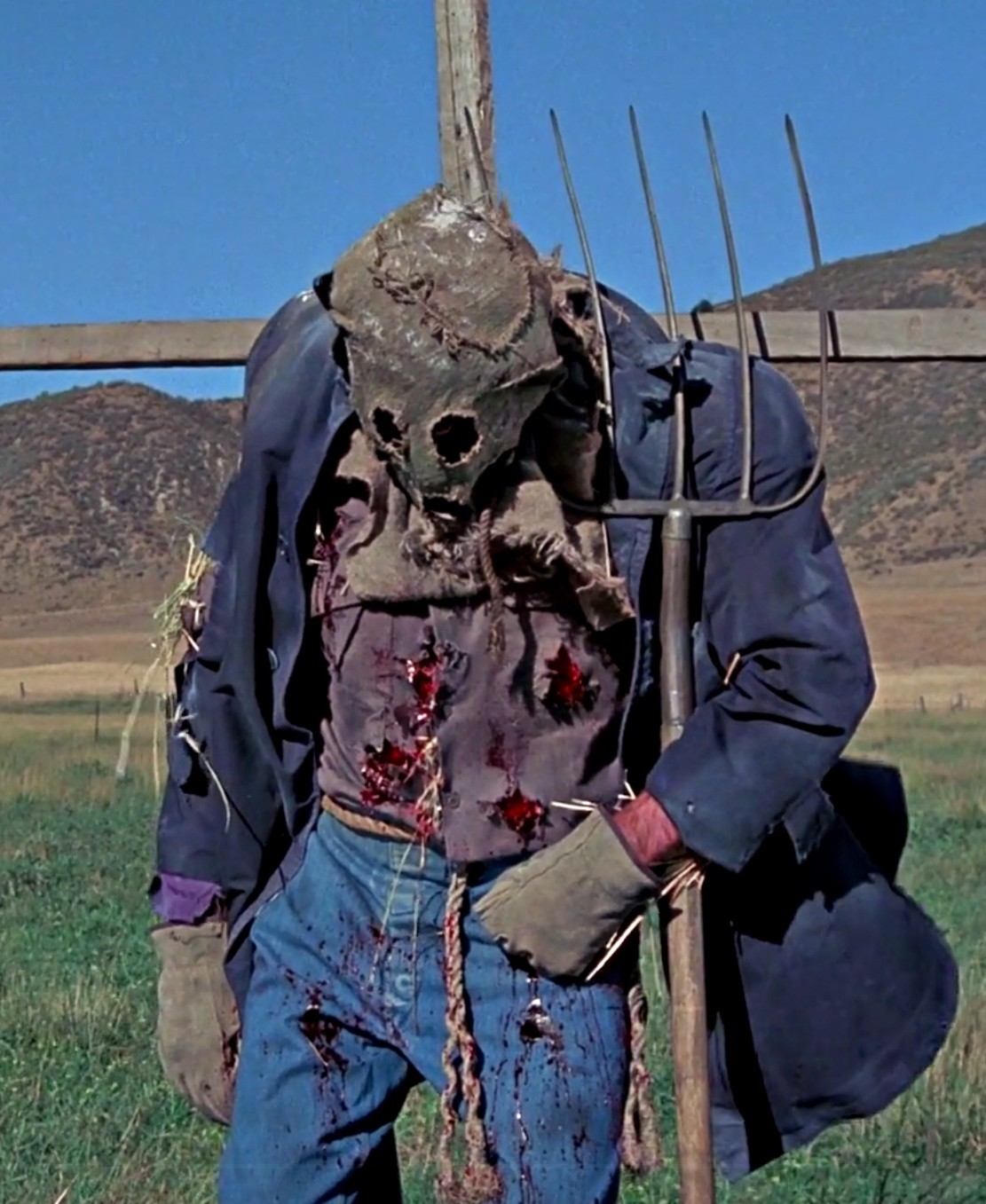 This is because Bubba’s mother (Jocelyn Brando) has, out of necessity, taught him to play “The Hiding Game,” which entails posing as a scarecrow in their field. Otis sees through the disguise this time, though, and he and three accomplices shoot him full of holes (a reasonably bloody effect for early-’80s TV) just before word reaches them that a) Marylee is okay, and b) Bubba actually saved her life. Next thing you know, Otis and the boys are standing trial for murder, but the judge dismisses the case for lack of evidence, prompting Bubba’s mother to declare that “there’s other justice in the world besides the law.”
That becomes clear when a scarecrow appears on one of the killers’ property and he’s lured into his barn and falls (or is pushed) into his own wood chipper. This leads to further scarecrow sightings and “accidents” (including one involving a grain silo), as well as rampant speculation about who’s behind what Otis takes to be a scare campaign to get them to confess to killing Bubba in cold blood. De Felitta and writer J.D. Feigelson keep things ambiguous right up to the end, however, by which time Otis has snapped, convinced by process of elimination that Marylee is the one moving the scarecrow around and turning farm equipment on and off. How ironic, then, that the pitchfork he placed in Bubba’s lifeless arm so he could claim “self-defense” in court is the very instrument of his own demise.
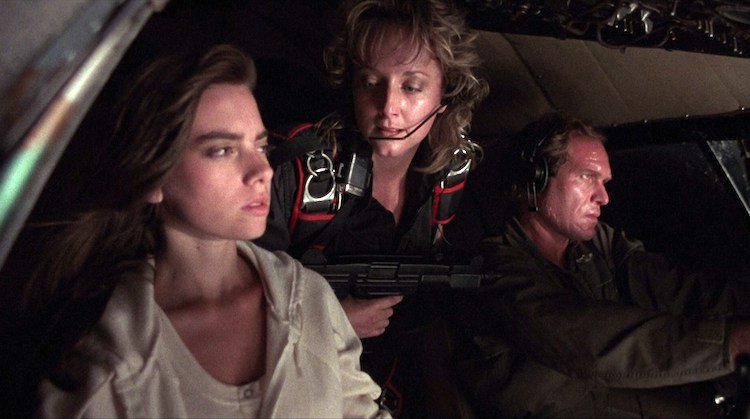
As killer scarecrows go, Bubba doesn’t get a great deal of screen time. The opposite is true in 1988’s Scarecrows, although co-writer/director William Wesley does wait until a quarter of its 83-minute running time has elapsed before showing one of his trio of homicidal straw men claiming their first victim. To make up for this, he does favor them with plenty of lingering close-ups accompanied by composer Terry Plumeri’s ominous score, showing off the work of special make-up effects artist Norman Cabrera, who does an amazing job considering he had a paltry $5,000 budget and was still in his teens when Wesley hired him.
In many ways, Cabrera’s creature effects are the whole show; the story of Scarecrows, which Wesley fleshed out with screenwriter Richard Jefferies, is fairly boilerplate. It concerns a four-man, one-woman paramilitary unit that heists a $3.5 million payroll from a military base and takes a cargo pilot and his teenage daughter hostage. When one of the rogue operatives bails out of the plane with the cash, his peeved partners circle around and parachute down to intercept him, making them easy pickings for the sinister scarecrows guarding an abandoned farmhouse near where they land.
Now, when it comes to supernatural threats in horror films, it’s helpful to know what rules govern them (if any) so the viewer can know when to be scared (if at all). In Scarecrows, it’s suggested that the title creatures are possessed by the spirits of the Fowlers, a father and two sons seen in a framed photograph hanging inside the farmhouse. Or perhaps the scarecrows are their actual bodies which have been hollowed out, stuffed with hay, and brought back to hideous life thanks to some kind of black magic hinted at by the blood-spattered altar inside the house situated beneath a crow crucified on an inverted cross. According to Jefferies, this ambiguity was intentional. “In horror, mystery is a good thing,” he says on one of the two commentaries on the Scream Factory Blu-ray. “I don’t think too much explanation helps horror movies.” The one thing that’s certain, then, is each time they get down off their perches to claim their next victim, these scarecrows grimly set to work gutting them, stuffing them with their ill-gotten gains, and dispatching them to bedevil their compatriots.
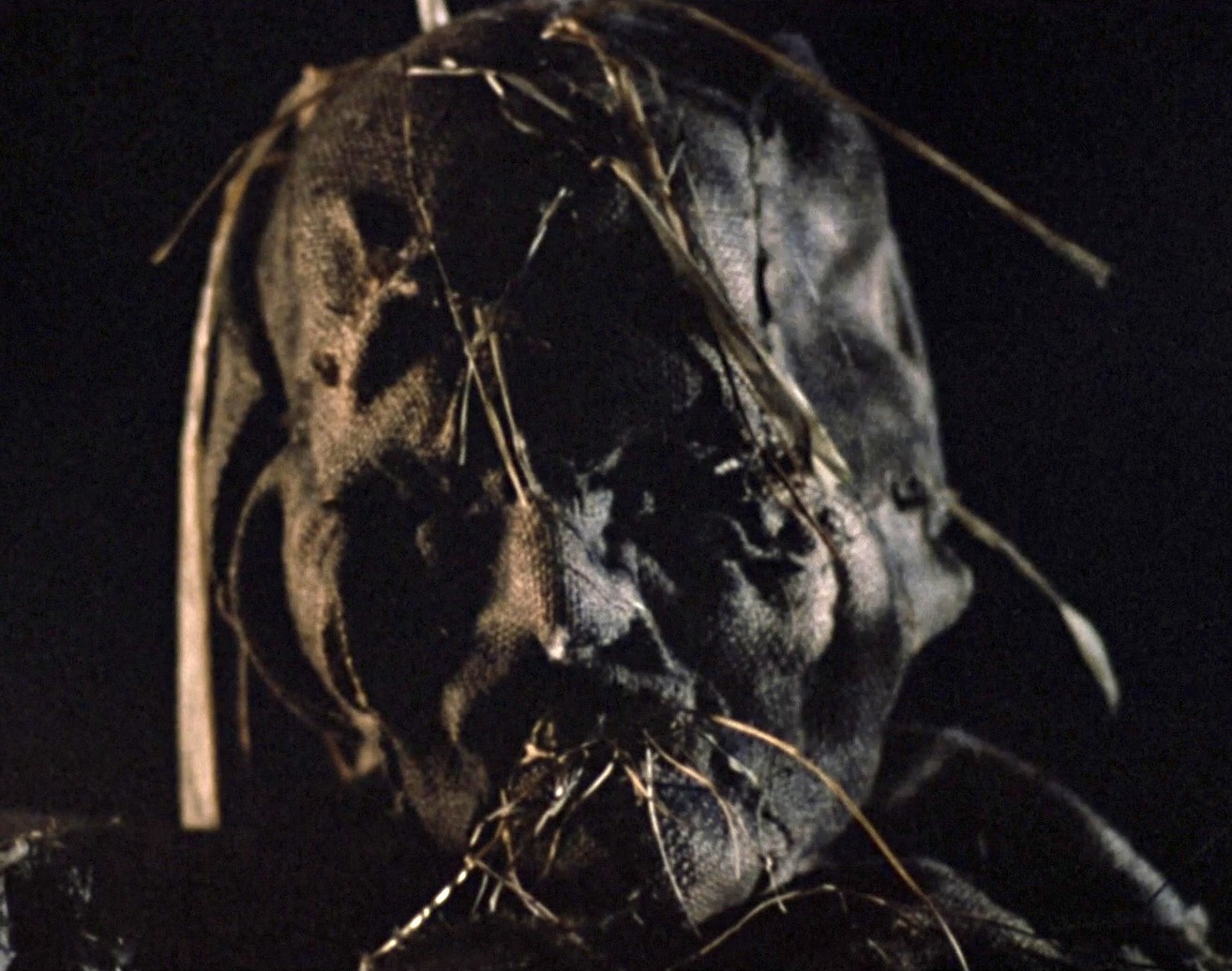 Additionally, these supernatural stalkers have the ability to throw their voices and imitate other people’s, which is their primary means of luring the unwary to their doom. That finds its echo in the wall-to-wall radio chatter Wesley added to the film in post, which helps keep the soundtrack active while the Fowlers wait patiently (along with the viewer) for the “crows” to come to them.
By far, the highest concentration of killer-scarecrow action occurs in the final third of the film, which kicks off in spectacularly gory fashion with the Fowlers pinning their second victim to the ground, sawing off one of his hands, throwing a sack over his head, and plunging a knife straight into his mouth. Unsurprisingly, that’s one of the moments that troubled the MPAA, which demanded heavy cuts before it would be granted an R rating. Wesley’s unrated cut is the version released by Scream Factory, however, which highlights the subtle work of director of photography Peter Deming, who went on to shoot Evil Dead II and Drag Me to Hell for Sam Raimi, several films and TV shows for Wes Craven and David Lynch (including the most recent season of Twin Peaks), and, yes, The Cabin in the Woods.
Arriving late in the slasher cycle, Scarecrows was shot in 1985, received a limited theatrical release in 1988, and almost immediately went to home video, where it joined Dark Night of the Scarecrow. Whatever influence they had on the genre was slow to manifest itself, but they were eventually joined by 1992’s Dark Harvest (a.k.a. Bloody Harvest), 1995’s Night of the Scarecrow, and 1996’s Psycho Scarecrow, with plenty more to come in the decades that followed. 1996 also brought forth the “Scarecrow Walks at Midnight” episode of the Goosebumps television show, which features some of the creepiest walking scarecrows ever to grace the screen, big or small. It seems likely that Harold will give them a run for their money, though.