Eric D. Snider
Roger Ebert famously described movies as “a machine that generates empathy.” That’s really only true of good movies — what makes a bad movie bad, in fact, is failing to make you feel what it intended — but at a film festival, where most of the movies are at least halfway decent, you have a lot of vicarious experiences. You put yourself in the emotional shoes of all sorts of characters, including people you might not relate to in real life. If you’re open to it, you come away with a better understanding of the world.
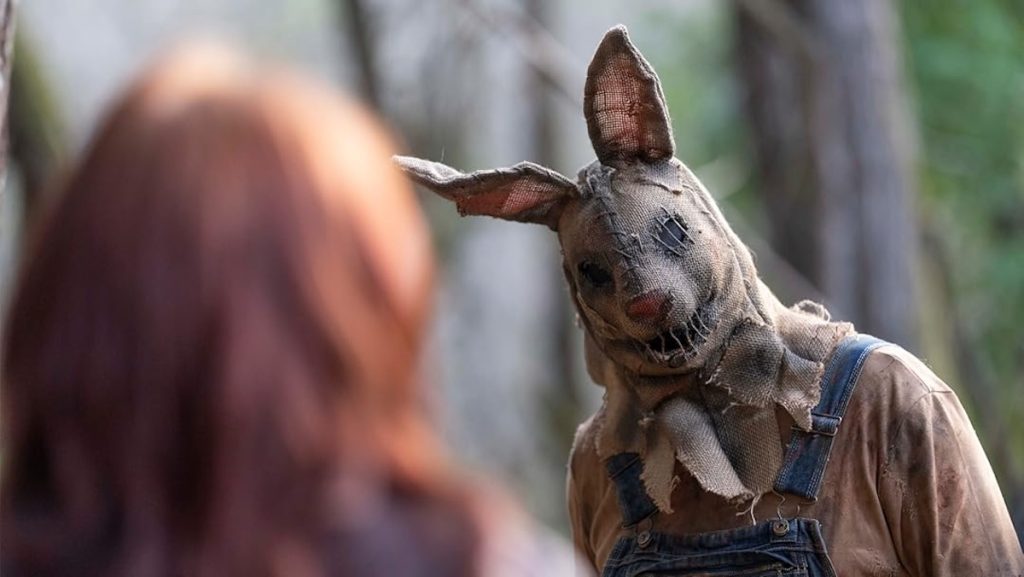
As always, there were a few entries at this year’s Sundance Film Festival that failed to generate empathy, i.e., were bad. But we won’t dwell on them (except for Krazy House, which is bad enough to warrant a shaming mention). Instead, here are five good ones that helped us see the world through someone else’s eyes, in some cases literally.
Steven Soderbergh’s latest lark (he seems to enjoy making movies secretly, then releasing them suddenly), called Presence, is a haunted house movie from the perspective of the haunter. The camera is the title character, an entity floating omnisciently through a house, unseen by the family that has just moved in. The teenage daughter, Chloe (Callina Liang), reeling from the recent overdose death of her best friend, is a little closer to the spirit world than her workaholic mother (Lucy Liu), lawyer father (Chris Sullivan), or bastardy older brother, Tyler (Eddy Maday). Plus, it seems to be in Chloe’s bedroom that the presence has taken residence.
Written by genre veteran David Koepp (Panic Room, Stir of Echoes, Snake Eyes, Spider-Man, Secret Window, Jurassic Park, the list goes on and on), Presence absolutely does not reinvent the wheel; it just shows us the wheel from a different angle. The usual elements are here, adhering to the usual ghost-story formula — complete with distractions and red herrings, which feel like irrelevant padding in such a short movie. But Koepp and Soderbergh have a few tricks up their sleeves, and the peculiarities of the family dynamic (why does Mom dote on Ty while practically ignoring Chloe?) keep things interesting. Fittingly for a movie built around the act of observing, the message is that we need to watch out for each other. Grade: B

Fresh from losing his wife in Asteroid City, Jason Schwartzman returns as another widower in Between the Temples, a sharp but tender comedy about finding love amid grief. Schwartzman plays Ben Gottlieb, a cantor at his upstate New York synagogue who has recently lost his wife and his mojo. He can’t sing anymore (which is what a cantor does), so he expects Rabbi Bruce (Robert Smigel) to fire him. His two moms, Meira (Caroline Aaron) and Judith (Dolly De Leon), whom he’s recently moved back in with, do the typical Jewish mother stuff to him.
It is the ever-loopy Carol Kane who turns his world upside-down (turning things upside-down is a Carol Kane specialty). She is Carla Kessler, a free-spirited nut who happens to have been Ben’s music teacher in elementary school and who now, at her advanced age, wants to have the bat mitzvah she was denied at 13. This requires a year of study and training, which Ben agrees to provide, Carla’s unorthodox (and un-Orthodox) behavior notwithstanding. In the process, they become friends.
Director Nathan Silver and cinematographer Sean Price Williams shot much of the film in closeup with handheld cameras — the cinema of giant faces. Schwartzman, so good at playing self-effacing sad-sacks that we take him for granted, is a perfect scene partner for Kane, who’s spent the last half-century showing up in things to make them weirder. The two have great comedic chemistry, the rest of the cast working smoothly in support as all of the characters try to help Ben find his way again. It’s moving to see people (even fictional people) rally around someone in a time of crisis, a reminder that nobody gets through this life alone. Grade: B
Ghostlight is more sincere and sweet than it has any right to be given its premise, which is corny as hell: A Chicago-area construction worker dad at the end of his rope after a family tragedy finds peace when he’s dragged into a community theater production of Romeo and Juliet. The healing power of art! The timelessness of Shakespeare! I’m rolling my eyes reading that, and I’ve seen (and liked!) the movie.
Kudos to the directors, Kelly O’Sullivan (who also scripted) and Alex Thompson, and to their fine cast — which includes an actual family — for keeping things down to earth. Keith Kupferer, a veteran actor in his first leading film role, plays the father, Dan, who’s accosted by a woman on the street (Dolly De Leon) and coerced into helping out with her friends’ theater group. Kupferer’s wife, Tara Mallen, plays his theater-teacher wife, with their daughter, Katherine Mallen Kupferer as their theater-kid daughter. All are grieving in their ways (I’ll let you discover why, as it’s revealed gradually, but I will note that the uncanny parallels between Dan’s real life and the play he’s in are liable to induce more eye-rolling).
Dan is skittish at first, unsure how to pretend to be someone else and do things he himself would never do. But the small group of amateur thespians draw him in with their silly theater traditions (for which the film has great fondness). By example, they teach him that acting is an exercise in empathy: To play a character well, you have to understand that person, even if you don’t agree with their behavior.
Kupferer is terrific, a real find. He doesn’t lean into the stereotype of the blue-collar dad who don’t got no time for this theater baloney but plays it realistically, taking us through Dan’s gradual process of understanding theater. (One indication that Kupferer is a good actor: He can convincingly play a bad actor who gradually becomes a less-bad one.) Dan’s Romeo and Juliet castmates are more eager than talented, but this isn’t a Waiting for Guffman-style takedown. The focus is on Dan and his family, who really are healed by art, and it really is funny and humane and corny and lovely. Grade: B
You probably don’t love hummingbirds as much as Terry Masear does, but the exceedingly graceful, beautifully photographed documentary Every Little Thing will help change that. Masear’s full-time occupation every April through August is rehabbing injured or orphaned hummingbirds at her Southern California home. We’re introduced (by name) to several of Masear’s little charges, some healthy but young and motherless, others injured or ill; in every case, you will hope with all your might that he or she makes it back into the wild.
It’s comforting when Masear says, for example, “I believe that Jimmy will grow up to be a very successful hummingbird,” because you know she wouldn’t say it if she didn’t really believe it. Not every hummingbird does survive — Masear is pragmatic about that — but rest assured, Every Little Thing focuses on the success stories. (It also features plenty of gorgeous video of hummingbirds in flight, slowed down to about 1/25 speed so we can see the motion of their wings in relation to their bodies. It’s stunning.)
As we get to know these tiny birds, director Sally Aitken gradually shares Masear’s personal story with us, too, sublimely drawing parallels between injured birds and wounded people, the universal need, across all species, for love. Can we not be this gentle and kind with our fellow humans? With ourselves? See if you don’t leave Every Little Thing loving birds and people more than you did before. Grade: A-
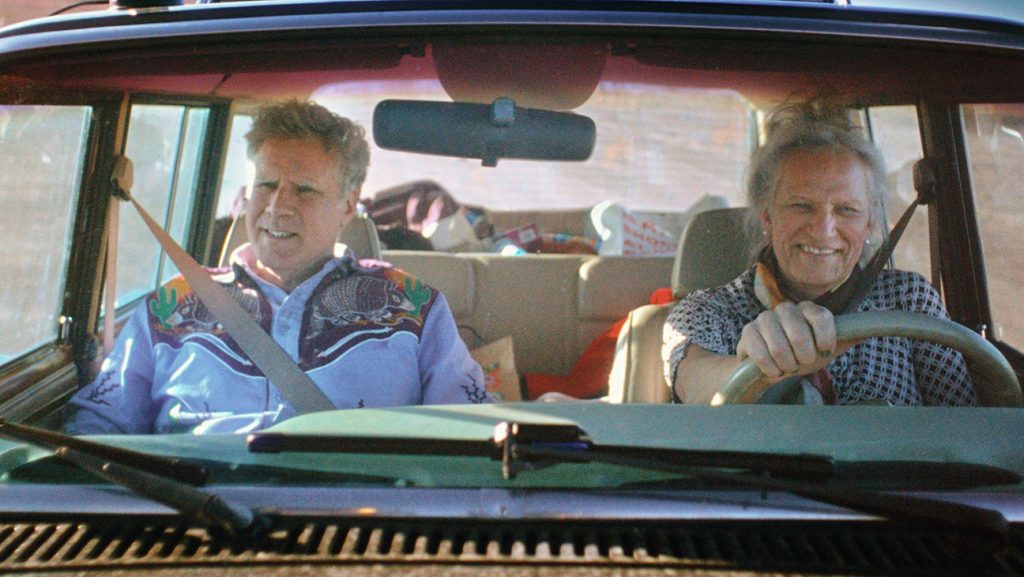
“Will Ferrell goes on a cross-country road trip with a friend who has just come out as a transgender woman” sounds like the premise of a highly problematic comedy. But relax: Will & Harper is a documentary.
Ferrell met Harper Steele (then known as Andrew; the film uses her deadname when discussing those early days) when she was hired as a Saturday Night Live writer the same week in 1995 that Ferrell was hired as a performer. Steele wrote many of Ferrell’s sketches and later some of his weirder films (like Casa de Mi Padre, the one that’s entirely in Spanish), and the two have been close friends ever since.
Now, at age 61, Steele has come out to her wife and children and is transitioning to womanhood. When she identified as a man, she loved driving across the United States and hanging out in truck stops and dive bars. Is that an option now that she has breasts and wears women’s clothes but still has a masculine face and voice? Amid news reports of anti-trans laws being passed in many states, Steele and her old friend Will Ferrell head out on the road to see how it goes. “I’m gonna see the country that I love, as myself,” she says.
Ferrell is well aware that his presence with Steele in public taints the experiment. Few people, no matter how transphobic, would be rude to the friend of a beloved comedy star. What Ferrell does in these instances is use his celebrity to be an ally. Maybe you don’t know any trans people. Maybe your thinking about trans people reflects that. But you “know” Will Ferrell — and here he is in your bar in Oklahoma introducing you to a trans woman who he says is his close friend of 27 years (not to mention the writer of the “Oops! I Crapped My Pants” sketch). Well, you think, any friend of Will Ferrell’s….
As a longtime, diehard fan of Will Ferrell, I’m pleased to see evidence that he’s a good person and that we could probably be best friends. Director Josh Greenbaum (who also made the non-documentaries Barb and Star Go to Vista Del Mar and Strays) shows Will crying with Harper, lamenting his own well-intentioned mistakes (dressing as Sherlock Holmes for a steak dinner turns out to have backfired) and wishing he could have done more for his friend during her closeted years. They joke together as you’d expect, but Ferrell, who’s never been a “mean” comic anyway, comes across only as compassionate and protective in public.
Will and Harper have some bad experiences, too. Internet trolls react crappily when the two are spotted at a Pacers game. But the prevailing theme is the same one we see in almost every documentary that deals with “ordinary Americans”: Most people are decent. Most people are kind. Most hatred comes from ignorance, not malice. As Harper realizes late in the film, “I’m not afraid of these people. I’m afraid of hating myself.” It seems impossible to go on this journey with Will and Harper and not end up feeling more compassion for transgender people, though I suspect some will try. Grade: B+
All photos courtesy of the Sundance Institute.