Craig J. Clark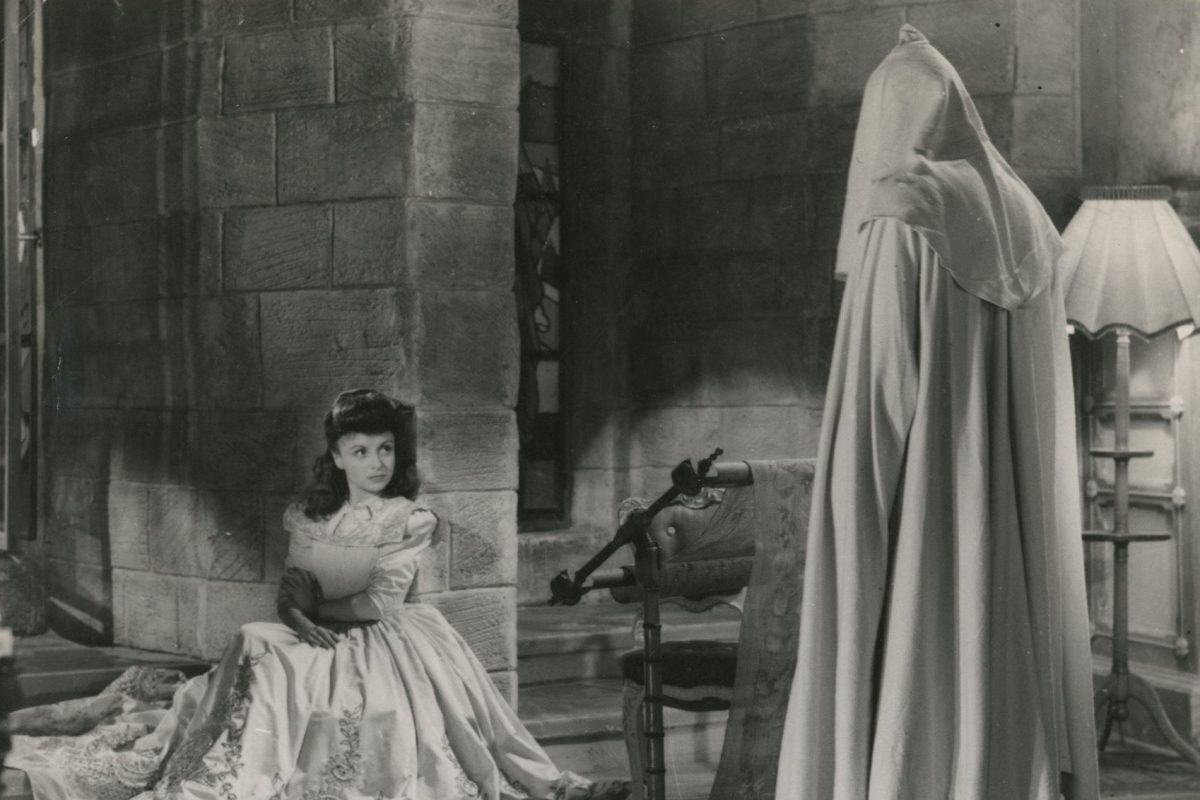
When François Truffaut penned “A Certain Tendency in the French Cinema,” his 1954 Cahiers du Cinéma essay deriding the French film industry’s “Tradition of Quality,” one of the directors in its crosshairs was Claude Autant-Lara. Active since the early ’20s, Autant-Lara started out as an art director and production designer, worked as an assistant director for René Clair, and made his directorial debut with an experimental short in 1923. He even spent a few years in Hollywood making French-language versions of Buster Keaton’s early talkies. The experience soured him on working in America, however, and when he returned to Europe in the early ’30s, it was to stay.
Ironically, his fortunes changed following the Nazi invasion of France, as the films he made during the German occupation proved popular, and useful as escapist entertainment for his countrymen. Collected under the banner of Criterion’s Eclipse series, these Four Romantic Escapes from Occupied France span the years from 1942 to 1946, culminating in Sylvie et le fantôme, an enchanting fantasy to rival Jean Cocteau’s La Belle et la Bête, released the same year and produced under similarly trying circumstances.
While the first three films in the Eclipse set are all set squarely in the past (during the Belle Époque and the reign of Napoleon III), Sylvie is decidedly a product of the 20th century, albeit one at a remove from the recent hostilities. Sylvie doesn’t have a hostile bone in its body, and neither does its fantôme, who is wordlessly embodied (or perhaps that should be disembodied) by Jacques Tati in his first feature.
As the film opens, the soon-to-be 16-year-old Sylvie is regaling her friends with the tragic story of Alain de Francigny, whose portrait they’re admiring. Nicknamed “The White Hunter,” Alain has captured Sylvie’s heart to such an extent she can’t imagine marrying someone made of flesh and blood. Unbeknownst to her, Sylvie’s father the Baron sells the portrait to an antiques dealer, but as it’s being carried off, its subject’s ghost emerges from the crate along with that of his dog, the namesake of Sylvie’s own pet Pyramus, the castle’s only occupant (apart from Sylvie) able to sense their presence.
In the early going, Autant-Lara and screenwriter Jean Aurenche (a frequent collaborator and one of Truffaut’s other targets) concoct various ways for Alain to interact with the living – blowing out a match or holding out his hand to prevent Sylvie from blowing out the candles on her birthday cake. He also has the ability to pass through walls and floors, which allows him to watch over Sylvie. It soon comes to pass, however, that he has not one, but two potential romantic rivals.
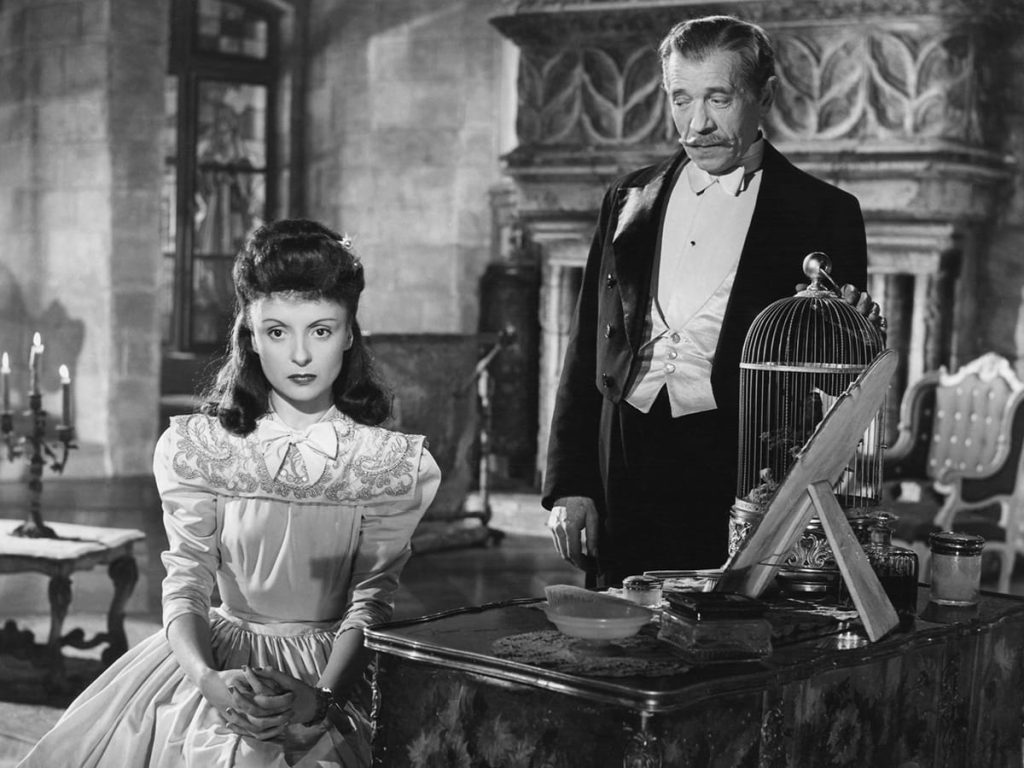
The first is Frederick, the son of the antiques dealer, who feels bad about how his father takes advantage of the Baron’s money woes. The second is Ramure, a thief who sneaks into Sylvie’s bedroom on the eve of her birthday and steals her cameo – one of the few things of value she owns – only sticking around to avoid the cops trailing him. When both are mistaken for actors hired by the Baron to play the ghost at Sylvie’s party, they realize there’s more to the job than merely making a girl happy, as her father puts it: “For a few hours, I’d like you to be the individual a 16-year-old girl dreams of.”
Once Frederick and Ramure consent to share the part – and are joined by the actor who was actually hired to do it – the film reaches its lyrical peak as they take turns donning the Christian Dior-designed hooded shrouds and appearing to Sylvie and her guests. Even Alain gets in on the act, borrowing one of the actors’ costumes so he can actually be seen by the young woman whose feelings he reciprocates. It’s a moment the whole narrative has built up to, and Autant-Lara, Aurenche, Tati, and Odette Joyeux (who plays Sylvie despite being twice as old as her character) pull it off beautifully.
Released on February 6, 1946, less than a year after the end of the war, Sylvie et le fantôme was the light entertainment the people of France needed to forget their hardships, and it can serve a similar purpose today, provided modern-day viewers are willing to suspend their disbelief. (While not credible as a teenager, Joyeux has a sweet naïveté that can be hard to resist.) Meanwhile, the in-camera effects used to insert Tati’s ghostly image into his scenes are still impressive, proving the simplest solutions are sometimes the most effective. Not only is Sylvie the crown jewel of Autant-Lara’s Eclipse set, it’s a high-water mark for poetic fantasy that’s worthy of a higher profile.
Autant-Lara’s films continued to be popular in the postwar years, but his career tapered off as the French New Wave came into vogue and his style of filmmaking fell out of favor. He also made a sharp rightward turn when he entered politics in his later years, but that’s not the part of his life to dwell upon. Better to remember the charming films he made when that quality wasn’t considered a liability.
“Sylvie et le fantôme” can be conjured up on the Criterion Channel.