Jason Bailey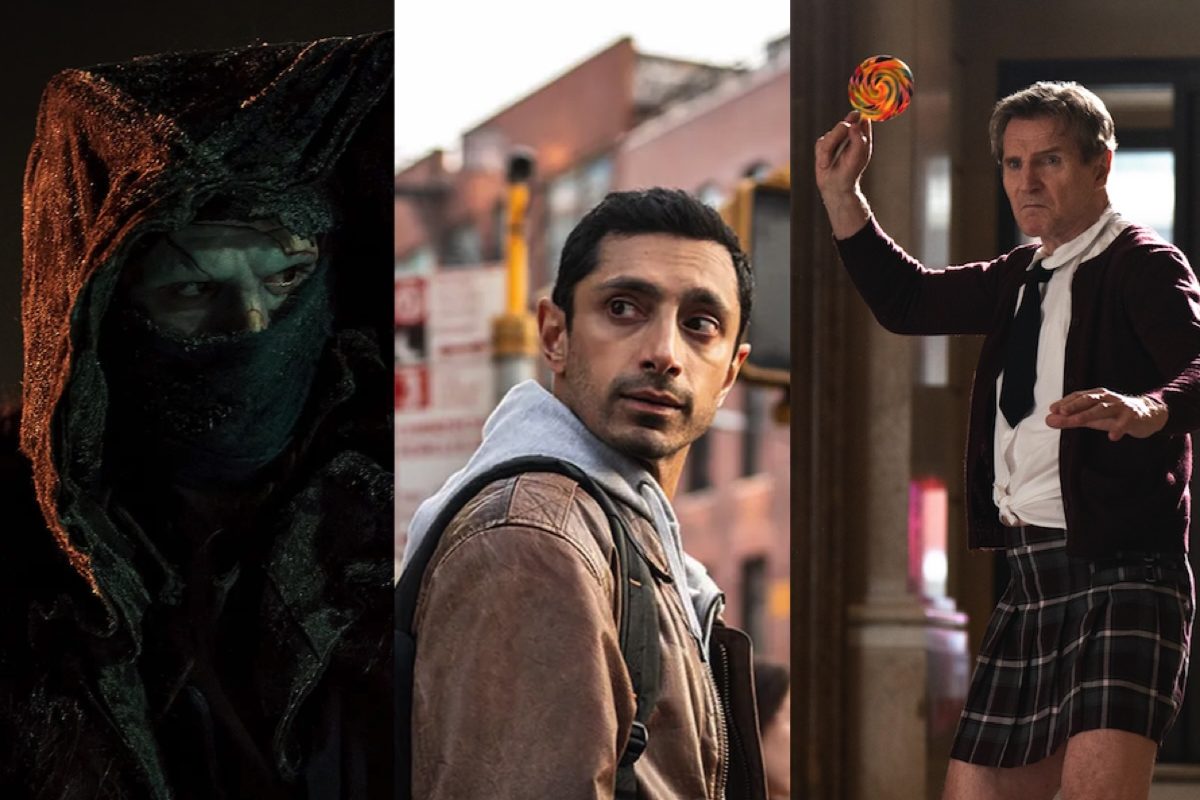
Every Tuesday, discriminating viewers are confronted with a flurry of choices: new releases on disc and on demand, vintage and original movies on any number of streaming platforms, catalogue titles making a splash on Blu-ray or 4K. This twice-monthly column sifts through all of those choices to pluck out the movies most worth your time, no matter how you’re watching.
PICK OF THE WEEK:
Hard Boiled: John Woo’s final film before going Hollywood — and the latest release from Shout Factory’s essential “Hong Kong Cinema Classics” — may well be Woo’s best, a kind of courtroom summation of everything that he invented, expanded, and/or perfected while revolutionizing Asian action cinema in the late ‘80s and early ‘90s. Chow Yun-fat has never been cooler as a cop hellbent on revenge for the cold-blooded murder of his partner and pal; Tony Leung exudes brooding sexuality as a Triad assassin who becomes an unlikely ally. Their byplay is enormously entertaining (and ever-so-slightly, and delightfully, homoerotic) and Woo is simply operating at the peak of his abilities, stacking one bullet-blasting, bone-crunching set piece on top of another. These films have been traditionally ill-served by domestic video releases, but Shout mounts yet another knockout; this is the best I’ve ever seen this one look and sound. (Includes new and archival audio commentaries, new and archival interviews, deleted and extended scenes, and trailers.)
ON NETFLIX:
Frankenstein: The Creature of Dr. Victor Frankenstein doesn’t show up until nearly an hour into Guillermo del Toro’s take on Mary Shelley’s tale, and that’s exactly how it should be; unlike the simplest adaptations of this chestnut, he’s no mere monster, and Dr. Frankenstein isn’t simply a scientist, but a man motivated by his own demons and darkness. del Toro immediately frames the Creature as a sympathetic figure, and Jacob Elordi does much of that work with only his eyes, a potential disadvantage that the gifted actor turns into an affecting tool. There are moments of black humor and unexpected eroticism, and don’t worry, gore hounds — it gets good and grisly in the home stretch. Some of the CGI is a lil’ janky, and del Toro’s script can be too on-the-nose with the themes (William’s dying words to his brother are “You are the monster”). But overall, it’s a gorgeous, delicate work, making an oft-told tale into something fresh and distinct.
ON 4K / BLU-RAY / DVD / VOD:
Mission: Impossible – The Final Reckoning: The subtitle to the new (and possibly final) Mission: Impossible film is a have-it-both-ways solution to the fact that it is the direct sequel and continuation of the 2023 entry, Mission: Impossible — Dead Reckoning, Part One. Apparently, some brain genius over at Paramount or Skydance decided that the (comparatively, for this series) disappointing critical and commercial response to that film was because of the “part one,” not because a) it was too damn long, b) it took itself a bit too seriously, c) it needed one more big action set piece, and/or d) they (spoiler alert) killed Ilsa. But “part two” would be an appropriate title for The Final Reckoning, since it has all of the same flaws (except for d, obviously). It also has many of the same virtues: it’s handsomely mounted, well cast, and frequently fun. At least you can’t say you don’t know what you’re getting into. (Includes audio commentaries, isolated score track, deleted shots montage, featurettes, and trailers.)
ON BLU-RAY / DVD / VOD:
The Naked Gun: The rat-tat-tat coming timing and anything-goes sensibility of the Zucker-Abrams-Zucker team has proven nearly impossible to replicate; even the ZAZ boys themselves couldn’t reanimate it for the likes of BASEketball, Mafia!, and the later Scary Movie films. But Lonely Island alum Akiva Schaffer, who co-wrote and directed, finds the right balance of silliness and smarts, taking aim at a wide range of targets from contemporary cop movies to the criminal misadventures of the series’ earlier co-stars. And he hits the jackpot with star Liam Neeson, delightfully game as the son of Frank Drebin, masterfully aping Nielsen’s inexplicable ability to seem both oblivious to the joke, and fully in on it. (Also streaming on Paramount+.) (Includes deleted, alternate, and extended scenes, featurettes, and mock ads.)
Relay: This sleek thriller, set in contemporary New York City and elbow-deep in the shadowy world of “fixers” and corporate whistle-blowers, drew understandable comparisons to Michael Clayton when it hit theaters earlier this year; less obvious but no less overwhelming are the Conversation vibes, telling as it does the story of a mysterious and solitary figure who arranges handsome payoffs to keep potentially damning material secret. Riz Ahmed is mesmerizing as said figure, Lily James generates considerable sympathy as his client, and both hold our attention (and develop palpable chemistry) even while playing most of their scenes solo. The snag is a big plot twist that this viewer (who never spots such things) called a good half-hour before it was revealed; your mileage may vary, and it certainly doesn’t sink the enterprise, but it keeps it from the greatness promised by its hypnotic opening scenes. (No bonus features.)
Spinal Tap II: The End Continues: Expectations matter, and mine were rock-bottom going into this one; Christopher Guest’s last great comedy was out nearly 20 years ago, it’s been more like 30 since Rob Reiner directed anything worth a damn, and the previous attempts at Spinal Tap reunions were forgettable at best. But the truth is, it’s fun to see these guys together again. The story goes that Spinal Tap hasn’t played together in 15 years, but they’re doing one more gig to pay off a contractual obligation, so they must put aside their old beefs and personality conflicts if, for nothing else, another payday. The material dealing specifically with their status as aging rockers is funny (because it’s not just rehashing old jokes), the new performers and characters get some laughs (ditto), and the payoff to the big concert, which culminates in a performance of “Stonehenge,” lands nicely. It’s no “This is Spinal Tap,” but hey, what else is? (Includes deleted scenes and trailers.)
Materialists: A24 marketed Celine Song’s follow-up to Past Lives as a romantic comedy (probably wisely), but here’s the catch: it’s decidedly not about romance. Love is, if anything, a distraction for its characters, a deterrent, immaterial and unimportant. That makes it a marked divergence from her previous film, which was so heartbreakingly romantic, and that might make some audiences resistant. It does not equal her stunning debut, but it’s not trying to replicate it either; she’s doing something new, and riskier. In the process, she’s made a piercing movie about grownups, for grownups—and that’s nearly as rare these days. (Also streaming on HBO Max.) (Includes audio commentary and featurettes.)
ON 4K:
One Flew Over the Cuckoo’s Nest: The cover art is hideous, but that’s about the only bad thing you can say about Warner’s glorious new 50th anniversary restoration (via the Academy Film Archive) of Milos Forman’s classic, one of only three films in history to sweep the Big Five Oscars (best picture, actor, actress, director, and screenplay). Forman adapted Ken Kesey’s 1962 novel, about a rabble-rousing new patient who shakes up the ward of a remote psychiatric hospital, into a pointed commentary on authoritarianism — and a showcase for a career-best performance by Jack Nicholson, who brings all of his maniacal glee, offhand danger, and inherent humor to the iconic role of Randle Patrick McMurphy. (Includes new featurettes, archival documentary, and deleted scenes.)
Burden of Dreams: The production of Werner Herzog’s Fitzcarraldo was one of the most contentious and dramatic of its time. Shot deep on the Amazon and employing natives of the area, director Herzog was attempting to stage a dangerous mission led by a madman, all the while creating potential dangers of his own and battling Klaus Kinski, whom he’d hired to play the role. Director Les Blank captured much of the production in this captivating documentary (a 4K upgrade from the Criterion Collection), which provokes both amazement at the risks Herzog is willing to take, and admiration for the vision that will not let him bend. (Includes audio commentary, interview, deleted scenes, trailer, Blank’s “Werner Herzog Eats His Show” short, and essay by Paul Arthur.)
The Breakfast Club: John Hughes’s 1985 comedy/drama (a controversial inclusion in the Criterion Collection, also getting the 4K upgrade) remains one of the most vivid cinematic depictions of teen angst. Written like a play (and reportedly rehearsed like one), Hughes uses his single set to create a theatrical intimacy; this far on, the iconographic imagery (sliding down the hallway, dancing down the banister) can overshadow the elegance of the construction and the delicacy with which he threads in the laughs. Sure, some of it hasn’t aged so well—Ally Sheedy’s transformation is totally cringe, and let’s not even get started on Emilio’s Footloose-esque angry dance—and it has moments of almost painful self-importance. But it’s the kind of youth-oriented movie where viewing is cyclical; you see it as a teenager and it rings totally true, you see it a decade later and it’s embarrassingly earnest, and then you see it in another decade and that earnestness, that closeness to that moment, is what gives it such value.
The Man Who Could Cheat Death: Hammer Films followed up the massive successes of their Curse of Frankenstein and Dracula with this big-budget co-production with Paramount Pictures, reuniting director Terence Fisher and star Christopher Lee. It was hacked apart and reassembled thereafter, so Vinegar Syndrome proudly announces their new 4K as the picture’s “first-ever complete home video presentation,” and it looks great in the format, beautifully showcasing the rich color saturation that would become Hammer’s signature. There aren’t a lot of scares in this story of a surgeon who’s discovered the grisly secret to eternal life, but it’s gloomy and doomy and well-acted, and its climax is a (literal) barn-burner. (Includes two cuts of the film, audio commentary, interviews, and alternate censored ending.)
Ruby: It does not feel like a coincidence that Piper Laurie starred in a horror movie with a woman’s name as its title that came out less than a year after Carrie. But that cheerful exploitativeness is part of what makes this supernatural horror thriller (new to 4K from Vinegar Syndrome) such a hoot — that, and the take-no-prisoners leading turn by Laurie. She plays the title character, a former gun moll and honeypot for bootleggers whose past transgressions come back to haunt her in the form of her mute, possessed teenage daughter. (The title is lifted from Carrie, but the premise is straight-up Exorcist-ploitation). Laurie acts circles around everyone else, with the exception of Stuart Whitman as her loyal henchman, and it’s fun to watch her work. The whole thing is awfully uneven (particularly the goofy ending), but it’s undeniably entertaining anyway. (Includes new and archival audio commentaries, alternate TV version, new and archival interviews, Sinister Image episodes, trailer, and radio spot.)
Freaked: Flush from the success of the Bill & Ted movies, Alex Winter co-wrote, co-directed, and starred in this nutso item about a dumbass heartthrob actor who sells out to a mysterious conglomerate and heads down to South America, where he and his traveling companions are kidnapped by an sideshow proprietor (Randy Quaid, in the role he was born to play), mutated, and turned into “freaks.” Some of the gags have aged poorly, and some just aren’t funny, but Winter and co-director Tom Stern maintain such a frenetic pace that it barely even matters; there’s a tempo and density to the jokes that (once again) recalls the glory days of ZAZ. The cast is wild — from William Sadler to Brooke Shields to Mr. T to good ol’ Keanu Reeves — and the practical make-up and effects look great in 4K, which is pretty impressive for a low-budget cult movie from 1993. (Includes audio commentary, alternate cuts, deleted scenes, new and archival interviews, short film, make-up tests, behind-the-scenes footage, and trailers.)
Aeon Flux: This live-action adaptation of the MTV animated series was, to put it mildly, poorly received upon its initial release in 2004. But it’s worth another look, for both its place as an early indicator of Charlize Theron’s future as an action star, and as an outlier in the filmography of director Karyn Kusama (Girlfight, Destroyer). And enough time has passed that it also plays now like a time capsule, with the kind of music, fighting, and filmmaking that mark it as very much an object of its era, for better and for worse. (Includes audio commentaries and featurettes.)
The Mask: It’s hard to imagine, but it was a big risk for director Chuck Russell to cast Jim Carrey in this 1994 comedy — his first starring vehicle, Ace Ventura: Pet Detective, had not yet been released, and there was no reason to think it would be a hit. Then it was, and it was, and The Mask became one of that summer’s biggest hits. It’s not hard to see why; its cartoony plot and special effects turned the go-to description of Carrey as “rubber faced” from metaphor into reality, and Russell scored a similarly impressive bit of luck when he cast Cameron Diaz, in her film debut, as the picture’s jaw-dropping femme fatale. Arrow Video’s 4K presentation is nice and sharp, and even the cringe-inducing ‘90s swing revival music sounds great. (Includes audio commentaries, interviews, featurettes, deleted scenes, trailer, and essay by Alexandra Heller-Nicholas.)
Outland: From its release in 1981, Peter Hyams’s sci-fi drama was framed as “High Noon in space,” and it’s not that it’s an inaccurate description. But it feels like that comparison was made in a conscious attempt to divert from its much more obvious inspiration: from the lived-in, beat-up space station setting to the cynicism of its characters to its working-class ethos (there’s on-the-job death right up top), Outland is a pretty clear descendent of Alien, released two years earlier. But it’s also not a rip-off; the jaded portrayal of corporate culture, primarily in the performance of Peter Boyle as a gleefully corrupt company man, makes it feel like a bridge between Alien and Aliens. Sean Connery is excellent in the lead, a fine mixture of soulful and tough, while Frances Sternhagen is delightfully cranky as an enemy-turned-ally. (Also, keep an eye out for baby Clarke Peters in a key supporting role). And the special effects look phenomenal, holding up nicely even under the microscope of Arrow’s crisp 4K presentation. (Includes new and archival audio commentaries, featurettes, interviews, trailers, and essays by Priscilla Page and Brandon Streussnig.)
ON BLU-RAY:
X Trilogy: Collector’s Edition Box Set: A24 collects director Ti West and star Mia Goth’s trilogy of period horror movies, consisting of 2021’s ‘70s-set X, the following year’s prequel Pearl, and the ‘80s-era conclusion MaXXXine. And that’s the rub: the first two films are excellent, energetic, entertaining throwbacks, while the third film is a crushing disappointment. But that’s by no means a consensus opinion, and even those who share it will find this set worth picking up — the physical presentation is impressive, up to and even surpassing the label’s high standards, the bonus features are copious, and even MaXXXine is fun enough if your expectations are properly in check. (Includes new commentary tracks, making-of featurettes, and bonus booklet featuring production art and essay by Jon Dieringer.)
Men From the Gutter: Vinegar Syndrome Archive launches a new series of “Shaw-sploitation” (Shaw Brothers productions outside their usual martial arts wheelhouse) with this 1983 cops-and-robbers flick from director Ngai Choi Lam. The studio certainly attempted to change with the times; it’s striking, how little it feels like a Shaw Brothers picture, and how in tune it is with ‘80s action movies from the U.S. and, soon enough, Hong Kong. The brawls are rough and messy, the frames are filled with blazing neon and smashing glass, the score is lousy with wailing guitars, and while there’s not a lot of competition, it boasts the best racquetball game I’ve ever seen in a movie. (Includes audio commentary, featurettes, and essays by Walter Chaw, Ariel Esteban Cayer, and Keith Allison.)
True Crime Triple Ripper: AGFA and Something Weird’s latest exploitation triple feature, all of cheapo movies inspired by real crimes, is mostly noteworthy for the inclusion of The Sadist (aka Sweet Baby Charlie, its onscreen title), a pre-Badlands riff on the crime spree of Charles Starkweather. He’s played by Arch Hall Jr., familiar to MST3K fans as the star (?) of Eegah, but all the awkward lunk-headedness and missing charisma that made him such a terrible leading man makes him a widly effective creepy sociopath. He’s completely unhinged, creating genuine tension that, coupled with the sunbaked cinematography of a young Vilmos Zsigmond, makes this an effectively nasty little thriller. The “B” and “C” pictures are far less successful. The Other Side of Bonnie & Clyde is essentially a model for the Unsolved Mysteries-style true crime television of the future, coupling genuine archival photos and interviews with clumsy reenactments. Since it takes the 1968 book by the cop who caught Bonnie Parker and Clyde Barrow (written in response to the rapturous reception and cultural ubiquity of Bonnie and Clyde) as its inspiration, Other Side has the unenviable task of making them seem uncool, and it does not land that plane. The Zodiac Killer: Noir has a better backstory than anything onscreen: it was created with the specific intent of luring the Zodiac killer, known as a cinephile, to a San Francisco theater to be caught (it was unclear exactly how). Zodiac Killer vacillates wildly between historical fact and total fiction, but some of the variations are so insane that it becomes oddly compelling. (Includes two restorations and introduction for The Sadist, audio commentaries, and trailers.)