Jason Bailey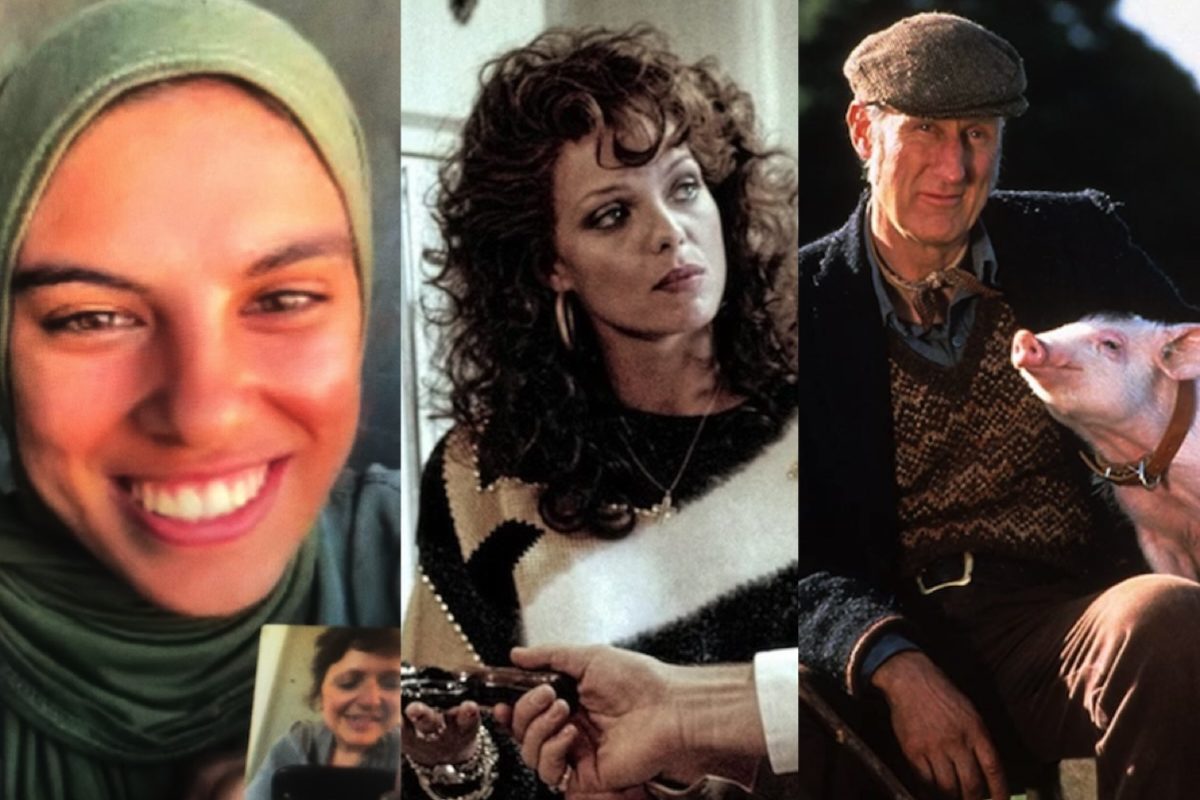
Every Tuesday, discriminating viewers are confronted with a flurry of choices: new releases on disc and on demand, vintage and original movies on any number of streaming platforms, catalogue titles making a splash on Blu-ray or 4K. This twice-monthly column sifts through all of those choices to pluck out the movies most worth your time, no matter how you’re watching.
PICK OF THE WEEK:
Married to the Mob: Smack-dab in the middle of an epic late ‘80s/early ‘90s run that included Something Wild, Swimming to Cambodia, Silence of the Lambs, and Philadelphia, Jonathan Demme directed this crackerjack crime comedy (making its 4K debut from Cinématographe), with one of the first and best full-on leading roles for Michelle Pfeiffer. She stars as Angela de Marco, the recently widowed bride of the wonderfully-named Frankie “The Cucumber” de Marco (Alec Baldwin, delightfully sleazy) who finds herself pulled between the aggressive affections of a mob boss (Dean Stockwell, equal parts oily and menacing) and an FBI agent (a wonderfully earnest Matthew Modine). The script by Barry Strugatz and Mark R. Burns has a jazzy, screwball snap, and as ever, Demme’s sheer affection for both his characters and his actors keeps the entire affair deliciously fleet-footed. (Includes audio commentaries, interviews, podcast episode, trailer, and essays by Mitchell Beaupre, Aisha Harris, Nick Newman, and David Stewart.)
ON TUBI:
Love Lies Bleeding: Rose Glass’s electrifying follow-up to Saint Maud is a jaw-dropping mash-up of crime movie, erotic thriller, and girl/girl romance. Kristen Stewart is at her low-key best as the daughter of a small-time crime boss who can’t get out of his orbit, no matter how hard she tries; Katy O’Brian is the bodybuilder she falls for, a potential escape hatch who reveals trouble of her own. But this one’s less about the plot than the feel, how Glass captures the feverish intensity of losing control with someone you love, and how quickly it can go sideways. An ambitious effort, full of big swings that land with grace. (Also streaming on Kanopy and Hoopla.)
ON BLU-RAY / DVD / VOD:
Put Your Soul on Your Hand and Walk: Early in the Israeli occupation of Gaza, Iranian director Sepideh Farsi, unable to enter Gaza to document what was happening there, started talking to Palestinian photojournalist and poet Fatima Hassouna via video calls. They found they had much in common (“Both our lives are conditioned by walls and wars,” Hassouna notes), and Farsi’s documentary is comprised mostly of her recordings of those calls, with some context provided by news broadcasts and on-screen text, as well as Hassouna’s photos of the fallout there. Its simplicity is somewhat revelatory; it’s a series of conversations over cell phones, and while that may not be terribly cinematic, it becomes something of a digital My Dinner With Andre, filled with harrowing stories and touching observations. “We will be laughing and living our lives, whether they want it or not,” Hassouna explains, a sentiment that doesn’t only apply to Gaza. (Includes Q&A with Farsi, short film, and trailer.)
ON 4K:
Dead Man: Jim Jarmusch’s 1995 existentialist Western (reissued by Criterion in a gorgeous 4K presentation))features Johnny Depp as William Blake (no, not that one), backed by an awe-inspiring line-up of odd and/or grizzled character actors. (My personal favorite is the three-act of Iggy Pop, Billy Bob Thornton, and Jared Harris, but your mileage may vary). Jarmusch renders the picture with an off-hand bleakness and deadpan absurdity, aided considerably by Neil Young’s moody, electric-guitar-and-feedback score and Robby Müller’s sumptuous black and white photography. It’s an odd duck, this movie, somehow both deeply felt and stylishly stand-offish, but whatever Jarmusch is doing here, it works. (Also streaming on the Criterion Channel.) (Includes selected-scene audio commentary, deleted scenes, director Q&A, interview, readings of William Blake poems, trailer, and essays by Amy Taubin and Ben Ratliff.)
Yi Yi: Director Edward Yang’s 2000 family drama (also getting the 4K boost from Criterion) is an epic family drama, a combination of descriptors that is less common than you’d think. Its events are confined to a calendar year, concerned with the lives of three generations of a Taiwanese family in Taipei. As in his earlier A Brighter Summer’s Day, he takes his expansive running time (173 minutes) to fill in the details and live in the corners of these lives, patient and unhurried but never dull or narratively aimless. It won Yang the Best Director award at Cannes, yet was tragically his final film — he would die seven years later, following a protracted battle with colon cancer — and stands as a monument to his considerable gifts. (Includes audio commentary, interview, trailer, and essays by Yang and Kent Jones.)
The Gambler: Axel Freed (James Caan) comes from a well-to-do Upper West Side family, and has a solid gig as an English professor at City College. He’s also a compulsive gambler, a liar and an addict, and James Toback’s insightful script knows, and knows well, the language of liars. It also knows the language of addiction, the single-mindedness that becomes so prevalent in a person, you can see it in their eyes, darting away to think about a fix, even in the middle of conversations that will enable that very activity. It’s not surprising to learn that Caan was himself in the thrall of a cocaine addiction while crafting this, one of his finest performances; he’s more exciting in The Godfather, perhaps, or more melancholy in Thief, but I’m not sure he’s ever been more present in a movie, more urgently thinking and plotting and alive onscreen. Another A+ restoration job by Cinématographe, spotlighting a movie too often lost in the well-stacked deck of great ‘70s New York movies. (Includes audio commentaries, new and archival interviews and video essays, and essays by Aisha Harris, Jordan Hoffman, Adam Nayman, and Scott Tobias.)
Babe: It sounded like a prank: George Miller, the mastermind of the Mad Max movies, making a children’s film? To be clear (perhaps aware of the incongruence of the assignment), he was merely the co-writer and co-producer, handing off directorial duties to his co-screenwriter Chris Noonan. But together, they tested the theories that were ultimately proven by the likes of Fantastic Mr. Fox and Where the Wild Things Are: when an idiosyncratic adult-oriented filmmaker takes a stab at family entertainment and refuses to condescend, the results can be magical. This story of a brave little pig who fancies himself a sheepdog was both a marvel of fairy tale storytelling and technical filmmaking (the talking animals were convincing then, and remain so), all while slipping in a tiny bit of social commentary in the process. (Whaddaya want, it’s an Animal Farm). KL Studio Classics’ new 4K scan from the original camera negative is a knockout; it’s a bright, sunny, delightful movie. (Includes audio commentaries, interviews, archival featurettes, and theatrical trailer.)
Babe: Pig in the City: After the thundering success of Babe — massive box office, critical raves, even a Best Picture nomination — Miller stepped into the director’s chair for this follow-up (also debuting on 4K from KL), and chaos ensued. The filmmaker wasn’t content to simply replicate his previous hit, expanding the canvas into a Metropolis-style urban adventure, and leaning into his darker narrative impulses. A commercial failure at the time, it was nevertheless championed by critics (it was Gene Siskel’s final pick for best film of the year) and has subsequently been properly appraised as a small masterpiece, a marvel of production design and episodic storytelling, bolstered by the grace and clockwork execution of its slapstick sequences. (Includes audio commentary, interview, and trailer.)
Thunderheart: Us movie-loving grumps of a certain age love to pine for the mid-budget grown-up movies of the 1990s, and it’s hard to think of a better example of that notion than this 1992 mystery thriller from the accomplished director Michael Apted. It’s also a nicely timed 4K release from Sony; stars Val Kilmer and Graham Greene both passed last year, and each of their performances is a fine reminder of what they did well. Kilmer plays an FBI agent whose long-buried Native ancestry lands him an assignment investigating a murder on tribal grounds; Greene is the chief of police on the rez, and Sam Shepard is Kilmer’s partner, whose folksy, seen-it-all demeanor may hide some secrets. It is, in many ways, a conventional thriller, with chases and shoot-outs and the like. But they actually matter, because the characters and story are so carefully and intelligently constructed, and the performers are so deeply invested and credible. (Includes audio commentary, archival interviews, and trailer.)
The Pink Panther: When it was released in 1963, The Pink Panther — the first of four films in the franchise making their 4K debuts via KL Studio Classics — was intended as a vehicle for star David Niven and a showcase for the kind of light, elegant, sophisticated comedy that director Blake Edwards had done so well two years before with Breakfast at Tiffany’s. But then Edwards cast brilliant comedian Peter Sellers in the supporting role of police inspector Jacques Clouseau, which developed into his most iconic character–a comically stupid, stunningly clutzy, yet supremely confident French investigator who mangles the English language with his ridiculously overblown French accent. This first incarnation of Clouseau, and the film that surrounds it, is much more subtle than in the series that it spawned; Sellers’s mangled French accent is less pronounced in this first outing, and while there are moments of slapstick, the film is much more interested in the comings-and-goings of Niven and Capucine than Clouseau’s antics. Overall, The Pink Panther is enjoyable, particularly for Sellers’ restrained but still funny performance and Henry Mancini’s immortal score. But as far as the series goes, it’s rather a bumpy take-off. (Includes audio commentary, interviews, featurettes, and trailer.)
A Shot in the Dark: Edwards moved immediately from The Pink Panther into his next project, a film version of the Broadway comedy A Shot In The Dark (adapted from a French farce). The Pink Panther had not yet been released, but Edwards felt that the Clouseau character had more mileage, so he and co-screenwriter William Peter Blatty (later of The Exorcist) re-wrote the text as a Clouseau vehicle. It became the boilerplate Clouseau film: the dialogue is witty, the plotting is surprisingly tight, the pace is breezy but never sags, and the slapstick is well-conceived and beautifully executed by Sellers (and series regulars Herbert Lom and Bert Kwouk). Laugh-out-loud funny and relentlessly entertaining, A Shot In The Dark is the crown jewel (or Pink Panther diamond) of the series. (Includes audio commentary, featurette, Edwards and Julie Andrews on The Dick Cavett Show, and theatrical trailers.)
The Pink Panther Strikes Again: After the studio’s unsuccessful attempt to keep the series going without Sellers and Edwards (resulting in 1968’s all-but-forgotten Alan Arkin-led Inspector Clouseau), the pair reunited for in 1975 for The Return of the Pink Panther, a film whose complicated ownership frequently keeps it out of Panther collections (it’s due in March from KL). At any rate, it was a big enough hit for the pair to quickly reunite the following year for this, their fourth outing. The emphasis is squarely on the slapstick this time around, with far less attention paid to the wacky wordplay of earlier installments. Its plot is grounded in no discernible reality; I’m not sure if Edwards was trying to send up the “mad genius” villains of the Bond films, but the story is just plain nutty, and Edwards’s attempts to be topical by inserting thinly-veiled versions of then-President Ford and his staff into the proceedings dates the picture in a way that the series usually avoids. But there’s a great Cato fight, the now-classic “parallel bars” gag, and an uproariously funny interrogation of a kidnapped scientist’s staff; the series is getting a bit creaky, but there’s still much to like here. (Includes audio commentary, interviews, archival featurette, TV and radio spots, and trailers.)
Revenge of the Pink Panther: The laughs are fewer and further between in Edwards and Sellers’s final Panther picture, mainly due to Edwards (and his screenwriters) taking a 180 degree turn from the previous film and taking this one’s plot absolutely seriously. And it ends haphazardly, with a third act of car crashes and explosions (scored by Henry Mancini cues that try way too hard to sound wacky) that’s fairly typical of its 1978 release. But Sellers still shines, including a clever beat that results in Clouseau in drag, and another, unquestionably the comic highlight, in which he dons a “Godfather” disguise. (Includes audio commentary, TV and radio spots, and trailers.)
Behind the Green Door: Sometimes a movie becomes a classic of its genre for the plain and simple reason that it’s well-done and innovative, and just as it’s easy to see why we’re still talking about Citizen Kane or Casablanca, it’s still abundantly clear why the Mitchell Brothers’ 1972 sensation (making its 4K debut via Mélusine’s new partnership with Mitchell Brothers Film Group) changed adult movies forever. Framed as the telling of an urban legend, a campfire tale for perverts, it’s set in a sex club where rich patrons are clad in masks and both observe and participate (maybe its own 4K release is merely front of mind, but one can’t help but feel its influence on Eyes Wide Shut). It became a punchline for “dirty movies,” but there’s real craftsmanship here, from the table-setting of the opening scenes (the sex doesn’t start until 20 minutes in) to the clever and even experimental cinematography and intercutting, particularly in the home stretch. And Marilyn Chambers is a charismatic lead — sneer if you want, but she creates a character, gives a performance, and (to put it mildly) goes on a journey over the pictures’s scant but packed 71 minutes. (Includes audio commentary, interview, featurettes, 8mm digest version, trailers, and soundtrack CD.)
Under Siege: Steven Seagal achieved his biggest critical and commercial success with this ’92 hit (new to 4K from Arrow Video), in which his Navy SEAL-turned-chef (and his Playboy Playmate sidekick, played with verve by real-life Playboy Playmate Erika Eleniak) are the only ones who can stop a nefarious missile theft plot hatched by Tommy Lee Jones and Gary Busey—who, believe it or not, once commanded equal billing. Tightly orchestrated by Andrew Davis (who would later direct Jones to an Oscar in The Fugitive) and breathlessly paced, this is one of the best of the Die Hard riffs that dominated action cinema in the early 1990s. (Includes audio commentary, interviews, trailer, and writing by Vern and Martyn Pedler.)
ON BLU-RAY:
The Resurrection of Eve: The blockbuster success of Behind the Green Door prompted Mitchell to engage Chambers for a follow-up as quickly as possible, and they got this one into theaters barely nine months later. It’s more ambitious, narratively and cinematically (it opens with a William Blake quote, for goodness’s sake), which means a good deal more dialogue, which is not exactly the Michells’ strong suit. But it’s got a pointed, borderline anti-men energy (the male lead is a loathsome creation indeed), some clever sequences, and a real sexual evolution that veers from mostly-vanilla missionary encounters early on to all-out, wild-out bacchanals (as motivated by the story!) in the third act. It’s not as successful as Green Door, then or now, but it does the job with laudable inventiveness. (Includes audio commentary, interview, featurettes, trims and outtakes, 8mm digest version, and trailers.)
Cheap Thrills: E.L. Katz’s dark morality tale requires a bit of a strong stomach, but it’s bluntly effective and undeniably unsettling. Compliance’s Pat Healy (again hiding his capacity for menace behind flat, regular-guy features) plays an average guy in bad financial straits who, along with a similarly down-on-his-luck old buddy (an all but unrecognizable Ethan Embry), ends up spending an evening of escalating excess with a rich couple (David Koechner and Sara Paxton, both very good). Trent Haaga and David Chirchirillo’s script focuses tightly on these four characters and the shifting power dynamics between them, establishing a wild, careening freedom within the narrative; it could go any number of ways, none of them good. Its squirming climax and chilling closing scenes are increasingly unbelievable in theory, but you buy them — the film’s steadily mounting nihilistic brio lends a sense of inevitability to this disturbing but satisfying picture. (Includes audio commentaries, interviews, archival featurettes, trailer, and essays by Heather Wixson and Matt Donato.)