Chris Stanton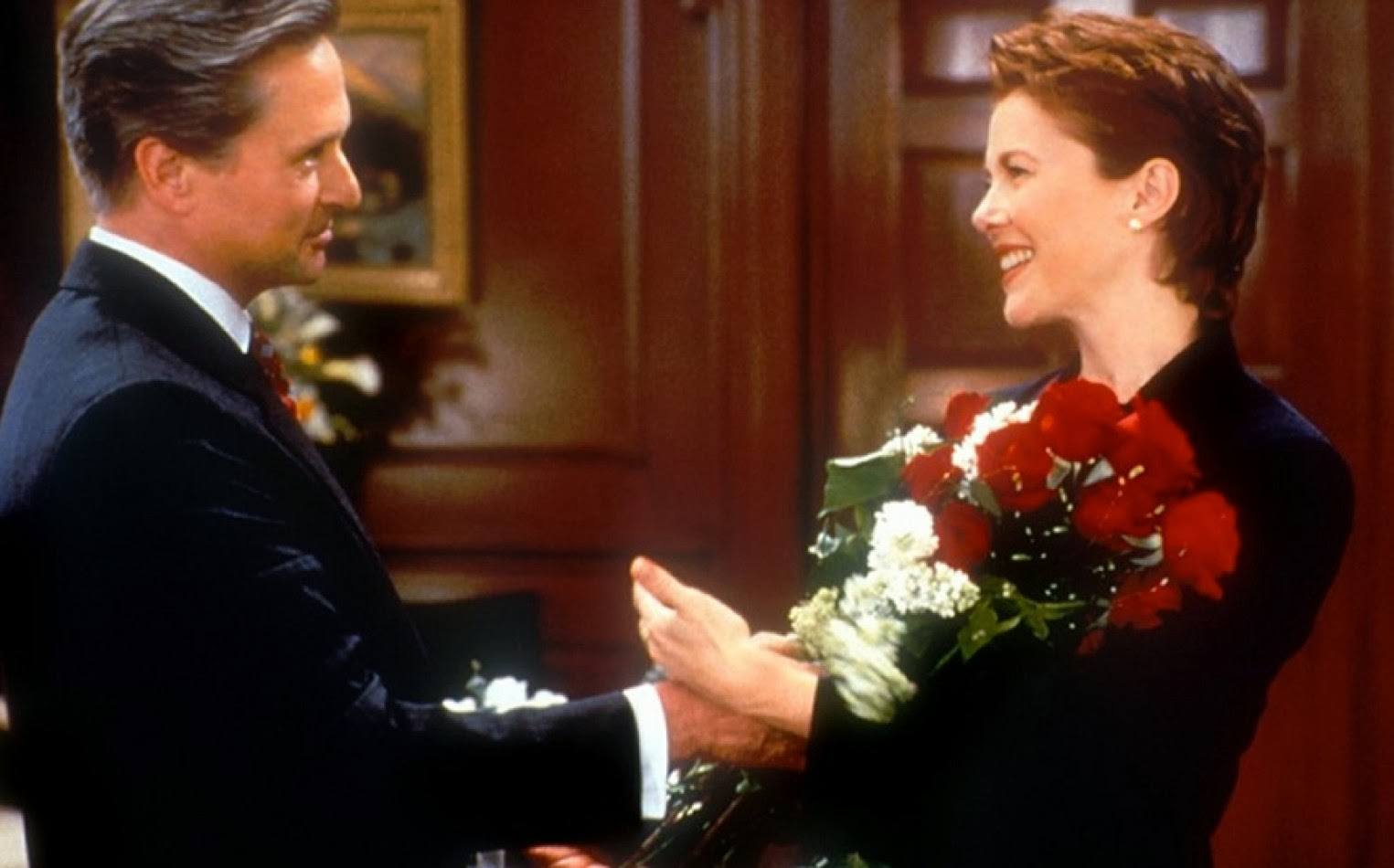
Aaron Sorkin kind of asked for it. By centering the majority of his work over the last decade around real-life events, he’s positioned himself as an Interpreter of These Crazy Times, throwing the defining issues of the era into his speechifying blender and all but inviting critiques of his overly optimistic, center-left politics. His latest effort, The Trial of the Chicago 7, wades further into that territory, and it can’t help but come off as Sorkin’s attempt at speaking to the current moment, even if he began developing it as early as 2006. Whether he’s in pundit mode or not, though, his best movies tend to work by pairing his monologue-heavy, swing-for-the-fences style of dialogue with the predictable plot beats of well-worn Hollywood genres: the courtroom drama, the underdog sports movie, the rom-com. (Casting movie stars always helps.) He’s a classical Hollywood guy through and through, bending every story — real or invented — to his will so that the big character moments and plot payoffs arrive like clockwork.
That meat-and-potatoes approach to storytelling is on full display in Sorkin’s pair of collaborations with director Rob Reiner, A Few Good Men and The American President, the latter of which turns 25 this month. A glossy, $60 million rom-com that quite literally shouts out its Old Hollywood inspirations (“I’m trying to savor the Capra-esque quality”), American President stars Michael Douglas as Andrew Shepherd, a widowed Democratic president nearing the end of his first term and coasting to reelection on high favorability ratings.
Complicating matters is his budding romance with environmental lobbyist Sydney Ellen Wade (Annette Bening), which opens Shepherd up to attacks on his character from Republican challenger Bob Rumson (Richard Dreyfuss, somehow channeling Dick Cheney years before the Bush administration came to power). Along the way, Shepherd and his aides (Martin Sheen, Anna Deavere Smith, and Michael J. Fox) have to deliberate whether pursuing a progressive policy agenda is worth the political risk.
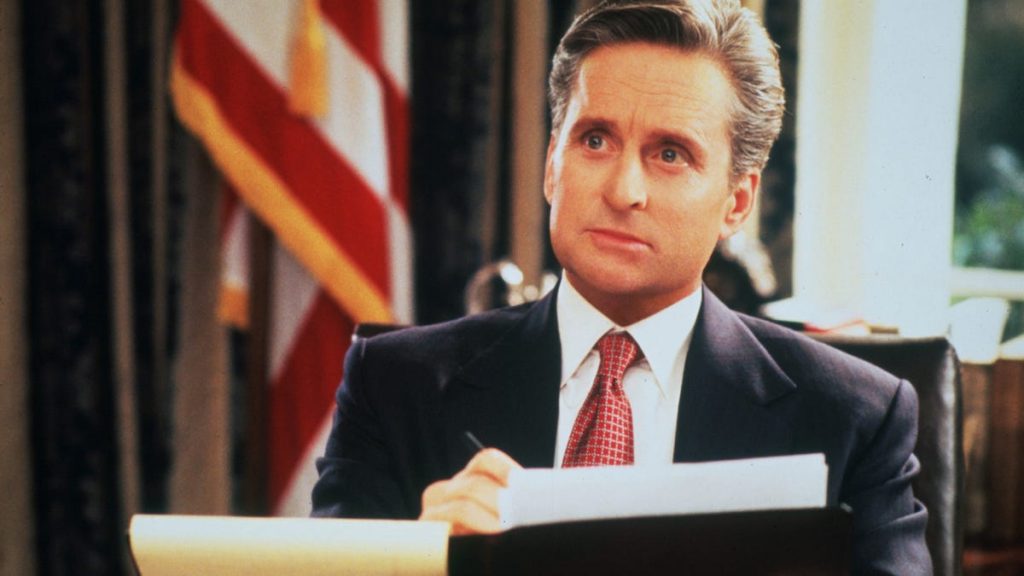
It’s all very West Wing, and Sorkin admits to having developed that show out of scraps leftover from his original 385-page (!) draft of The American President. The two projects share some more superficial similarities, too, from their soaring, patriotic scores to the soft-filtered opening credits sequences — not to mention the casting of Martin Sheen, who gets a promotion from chief of staff in the movie to president in The West Wing. Between the two projects, Sorkin constructs his idealized vision of the president as a man who projects earnestness, wit, and an impossible degree of human decency.
The president’s staff, in this dream world, are possessed of an undying faith in the country’s institutions and the belief that if you phrase your argument just right, you can talk sense into anyone. And while this increasingly fantastical vision of presidential politics played out on The West Wing over seven seasons (though Sorkin only scripted the first four), The American President still offers a potent dose of it — its grandiose, often corny speeches on democracy undulled by later iterations on the same themes. (“In the absence of genuine leadership, they’ll listen to anyone who steps up to the microphone” lands differently in 2020.)
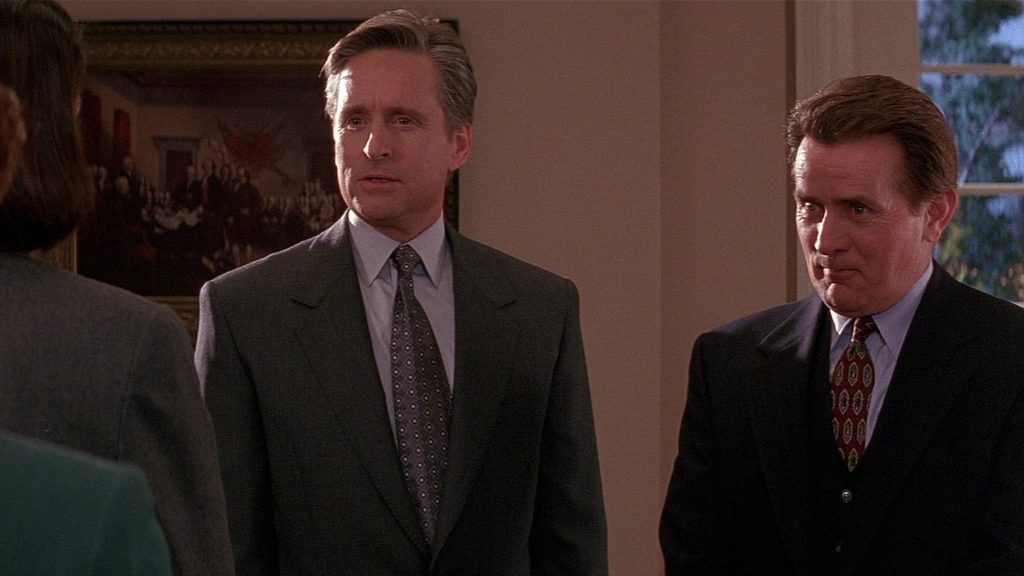
West Wing similarities aside, The American President lives and dies on the undeniable charms of the romance at its center. As Shepherd, Douglas takes a rare break from playing philandering scumbags, instead tapping into the melancholy of a guy who lost his wife and just has to keep it together enough to lead the free world — and also make some time to raise his daughter. (Father-daughter relationships are to Sorkin projects what dead wives are to Christopher Nolan movies.) Douglas plays “quiet dignity” well, but the movie hits a whole other stride once Bening shows up, and Reiner knows it, filling the frame with her movie-star smile whenever he gets the chance. The pair’s chemistry is undeniable, but the real fun of their romantic arc is in how it playfully undercuts the movie’s somber respect for the presidency, presenting all the pomp and circumstance of the White House as one enormous cockblock.
“Politics is perception,” we’re reminded more than once, and Shepherd asking out a lobbyist sends his staff scrambling to “put together some numbers.” Later, he attempts to send Sydney flowers without having an assistant do it, only to discover that his credit cards are in storage in Wisconsin. In the bedroom department, he makes sure to clarify beforehand that “the most powerful man in the world” is a mere “political distinction,” and not a guarantee of any other skill set. (Don’t worry, he gets a positive review afterward.) It’s all a little hokey, sure, but so too is the idea that a president could change the hearts and minds of Congress on any issue if only he said exactly the right words with the proper conviction. American President offers a straightforward rom-com and the most Sorkin-y political fantasy imaginable, and its biggest accomplishment is somehow getting you to invest in both.