Josh Bell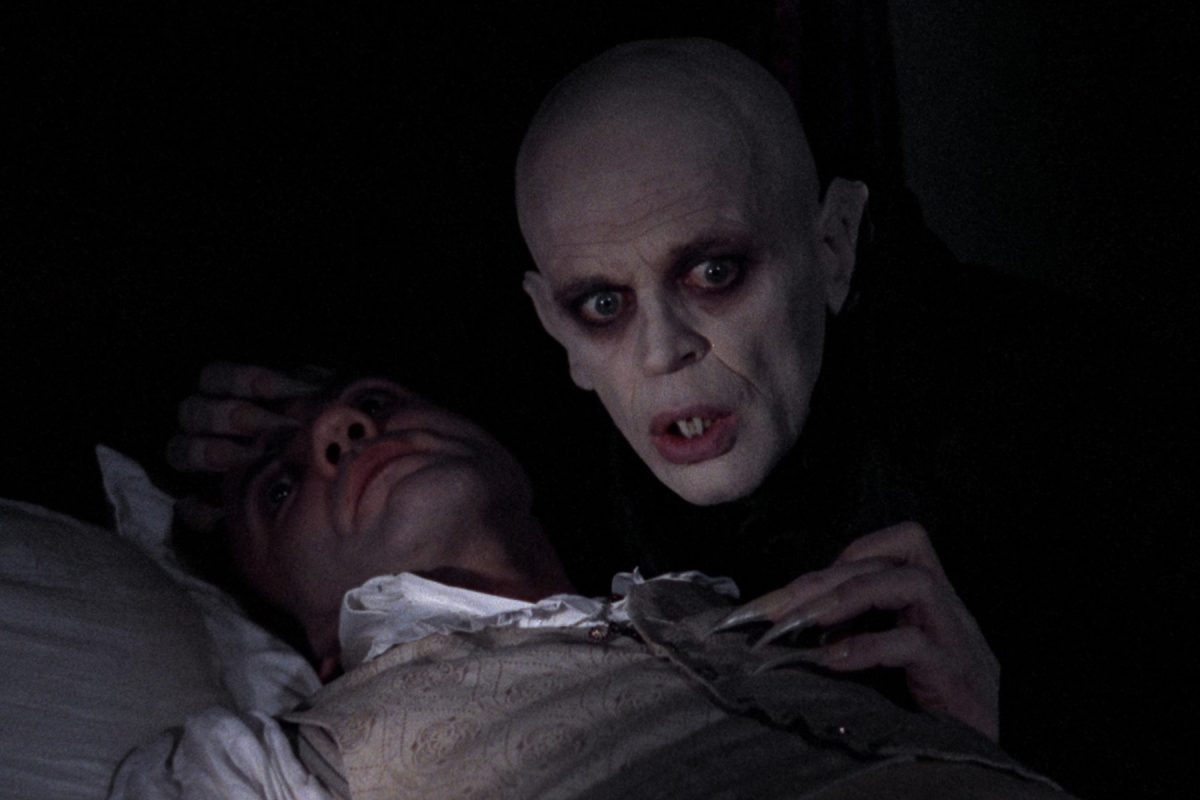
Forty-five years before Robert Eggers, another visionary, idiosyncratic filmmaker took on F.W. Murnau’s silent horror classic Nosferatu, bringing his own stark, ethereal approach to the iconic original. Werner Herzog’s 1979 film Nosferatu the Vampyre didn’t get the major Hollywood rollout that Eggers’ film is receiving, but it holds up as a unique take on Murnau’s work, and one of the best and most underrated narrative films in Herzog’s sprawling oeuvre.
Although his filmography is split fairly evenly between documentary and fiction, these days Herzog is known primarily for his distinctive existentialist documentaries, often marveling at the unfeeling horrors of both nature and modern technology. There’s plenty of that existential despair in Nosferatu, which sometimes resembles what a Herzog documentary about vampires would be like, if vampires were real.
Herzog’s version of the immortal Count Dracula, played by his longtime collaborator and frenemy Klaus Kinski, isn’t seductive or intimidating. He’s desperate and pathetic, a pale, sniveling monster of a man who has the same look as Max Schreck in Murnau’s film, but none of the otherworldly menace. “Time is an abyss, profound as a thousand nights,” he tells solicitor Jonathan Harker (Bruno Ganz), in a bleak monologue that can easily be imagined as narration in Herzog’s signature gloomy intonation.
Dracula is far from the only character in Nosferatu with a fatalistic outlook on life. “God is far away when we need him,” says Jonathan’s wife Lucy (Isabelle Adjani), who becomes the only person to fight back against Dracula in Herzog’s pessimistic presentation of human surrender. With Bram Stoker’s 1897 novel Dracula having passed into the public domain, Herzog is free to use the original character names instead of Murnau’s alterations, but he’s under no obligation to follow Stoker’s story, and there’s no triumph over evil in the way Herzog envisions it.
The broad strokes are similar, as Jonathan is enlisted to travel from the German city of Wismar to Transylvania in order to present Dracula with papers for a large, rundown house he plans to buy. The mad, manic Renfield (Roland Topor) is Harker’s boss in a ramshackle office literally overflowing with documents, and Renfield clearly already has a connection to Dracula, although it’s uncertain how that connection was formed.
Jonathan soon finds himself under Dracula’s spell as well, although it’s less of an enchantment and more of an infectious disease, and it progresses with the same inevitability. He trudges through mountains and rivers like another crazed Herzog/Kinski protagonist, the title character of 1972’s Aguirre, the Wrath of God, to reach Dracula’s remote, dilapidated castle. There he finds a man who appears wan and sickly, who moans not in ecstasy or anticipation, but in what sounds like agony.
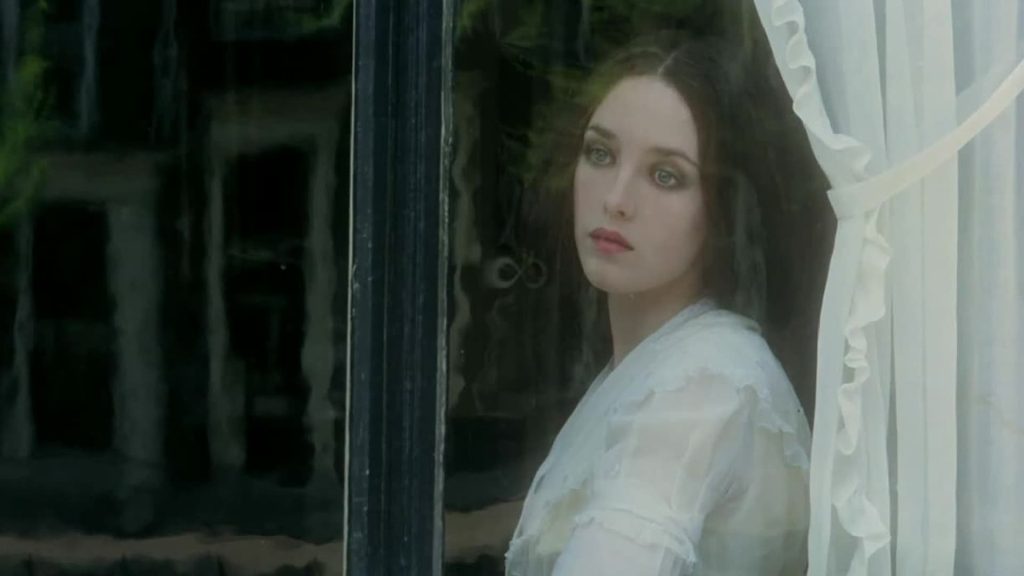
Back home, Lucy has visions of Dracula that seem like portents of an expected seduction, but there’s nothing sexy about her connection to Dracula, no matter how gorgeous Adjani looks. When he finally arrives in Lucy’s bedroom, Dracula whines and begs for her love, easily giving up when she rejects him. It’s only when she’s discovered how to defeat him that Lucy willingly invites him into her bed, as part of a trick that could lead to his demise.
Dracula’s presence in Wismar is more dangerous because of what he brings along with him than because of any threat he poses himself. Herzog’s Nosferatu is as much a movie about the devastation of the plague as it is about vampirism, and the rats that accompany Dracula on his boat from Transylvania cause far more death and destruction than Dracula himself ever could.
The characters’ unrelenting despair makes more sense as Herzog shows how quickly and easily the plague destroys the town. When a town official merely reads the word “plague” in the captain’s log from the doomed ship, it sends everyone in the town hall into an immediate panic. Seemingly overnight, the streets are deserted, left over to the rats or to wandering pigs and sheep.
Although he evokes Murnau with shots of Dracula’s shadow looming large over various buildings, Herzog’s most striking visuals are his representations of the plague. An overhead shot of the town square shows processions of men carrying dozens of coffins. As Lucy wanders the streets, trying to find anyone who will listen to her about Dracula, she passes an overturned carriage, with a horse just lying dead next to it, unattended. A group of people indulge in a fancy outdoor dinner, telling Lucy that they have all contracted the plague and are having one final celebration before death. Herzog underscores the futility by cutting from a shot of the assembled group to a shot of the abandoned table from the same angle, as it’s entirely covered with rats.
Herzog emphasizes dirty, cramped spaces with threadbare trappings, showing the past as a time of grubby discomfort. He films in lush color in contrast to Murnau’s black and white, but those colors only further highlight the grime and ugliness of the era. The movie’s entire world is a reflection of Kinski’s Dracula, a repulsive, petty, miserable man, whose supernatural powers are neither a blessing nor a curse, just a burden to carry through the meaningless drudgery of life. No wonder Herzog finds him fascinating.
“Nosferatu the Vampyre” is streaming on Amazon Prime Video, Peacock, Kanopy, Tubi, PlutoTV, Shout Factory TV, and more.