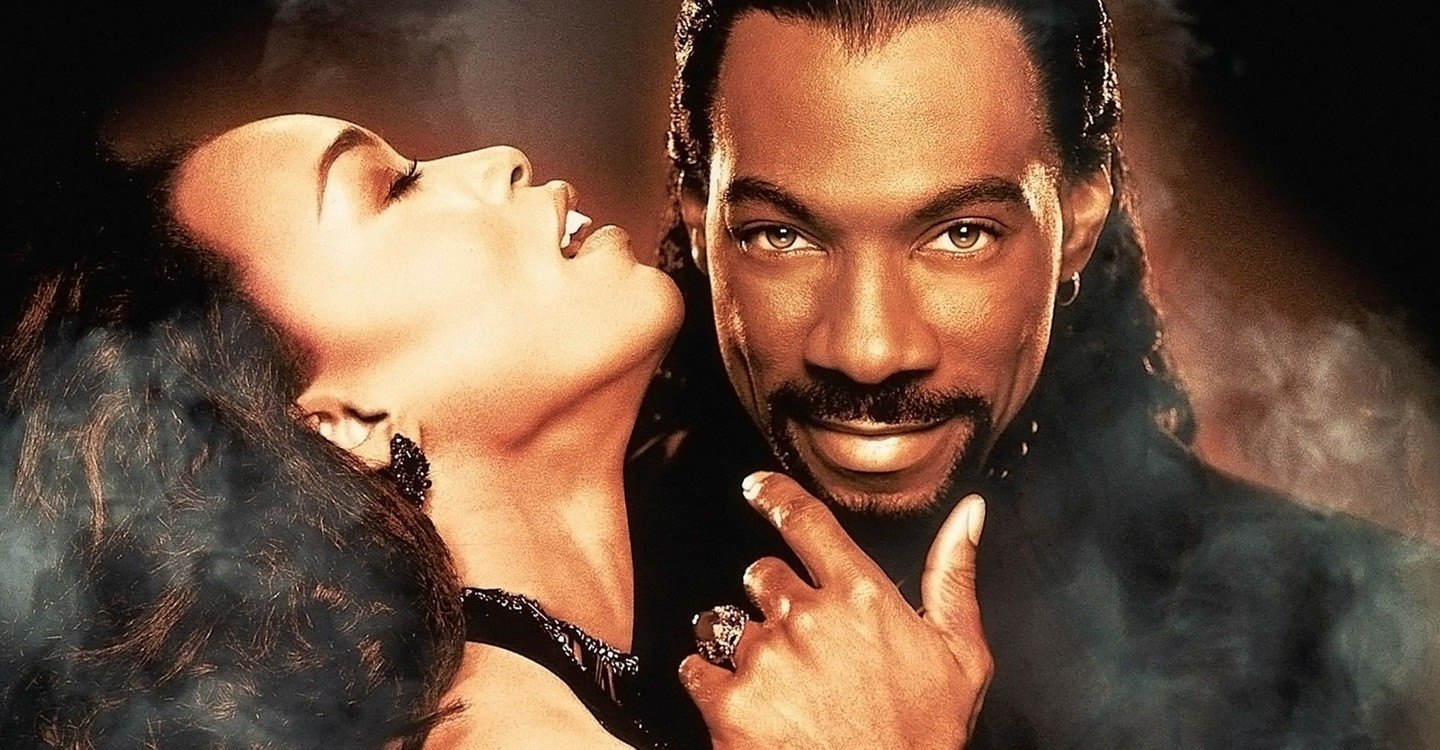
It’s nighttime in Brooklyn and a faint mist has settled over the city. A young blonde woman makes her way through a dimly lit park as a small dog on a leash leads her further into the shadows. Just out of frame, a cloaked figure stalks her journey. When Maximillian (Eddie Murphy) finally steps into the woman’s view, her eyes go wide and she shakily raises her pepper spray. She has no idea that he’s a vampire out for blood; she believes he’s after her wallet or worse.
It’s a scene borne out of the type of horror fare that director Wes Craven had spent decades mastering.. Since Craven had taken us to the edge of terror so many times before, we know a reaction is coming. Perhaps she’ll scream. Maybe she’ll attempt to run away. Actually, she opts to talk her way out of whatever ill fate awaits her. “I understand the Negro people,” she stammers, “I understand how you’ve been chained down by the oppression in white capitalist society.” It’s a moment that’s supposed to elicit laughs, a brief bit of comic relief in a scene that’s about to turn fatal as Maximillian bares his fangs. This oddly placed social commentary peeking from beneath a bristly patchwork of comedy and horror is what makes 1995’s Vampire in Brooklyn such a quirky film.
When Craven signed on to direct Vampire in Brooklyn, he intended to make a comedy horror film, something different than the slasher features he’d become known for. Unfortunately Murphy, his superstar comic lead, wanted to show off his dramatic acting chops. “He didn’t want to be funny at all,” Craven recalled years later. “He wanted to play it totally straight so I couldn’t get the humor into it that I wanted to get into it. But it was an interesting experience.” That tonal indecisiveness at the root of Vampire in Brooklyn is what I love and hate about the film. It has a befuddled charm that teeters towards madness.
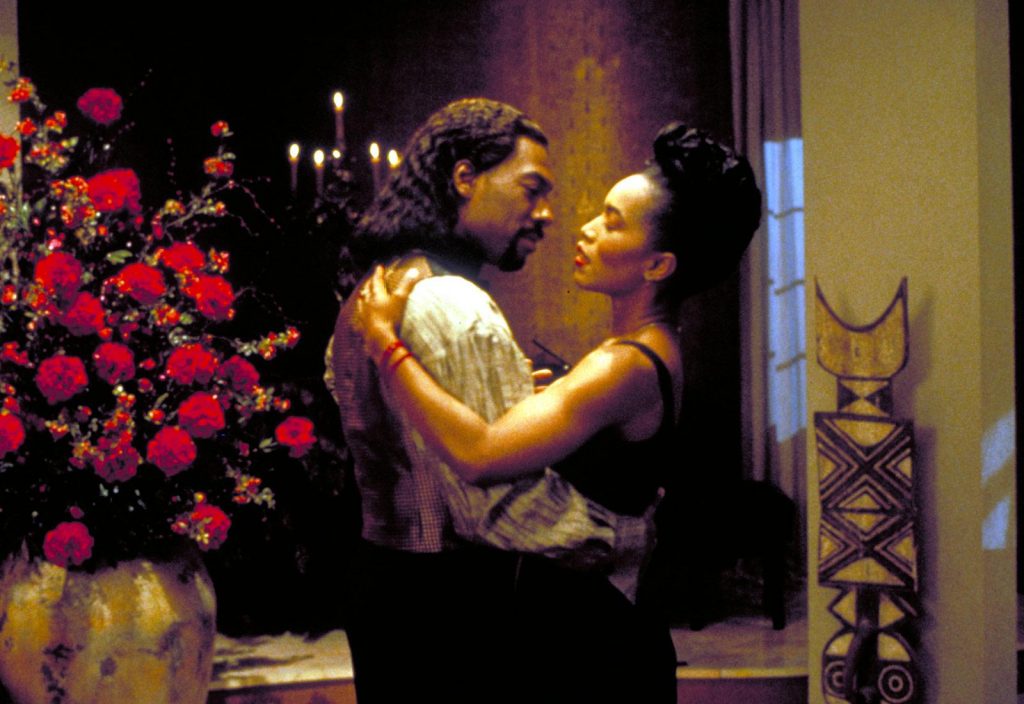
The story, co-written by Murphy’s brother Charlie, focuses on Maximillian —the last full-blooded vampire in the world—as he hits the streets of the New York City borough in an attempt to find a woman he believes to be the daughter of a human and a vampire. His search brings him to Rita (Angela Bassett), one of the detectives tasked with investigating the murders of the crew aboard the cargo ship Maximillian arrived in, so there’s both romance and a murder mystery in the mix. All of these competing aspects prevent Vampire in Brooklyn from reaching its true destiny as a social thriller.
Featuring a predominantly black cast (in addition to Murphy and Bassett, Allen Payne, Kadeem Hardison, and John Witherspoon also star), the film posits vampires as a race of people on the brink of extinction, driven from their native land by violent conquerors. For a time, they were able to take refuge in a remote Carribean village, but since a conqueror’s thirst is never quenched, Maximilian eventually finds himself the only survivor of a once vibrant tribe. What’s drawn him to Brooklyn is a desperation to survive; he craves companionship like the humans that have plundered and pillaged his people. Even though Rita doesn’t know that she’s half vampire, or have the benefit of understanding her ancestry, Maximilian has to convince her to tap into a part of herself she’s long disconnected from in order to ensure that he and the vampire line live on.
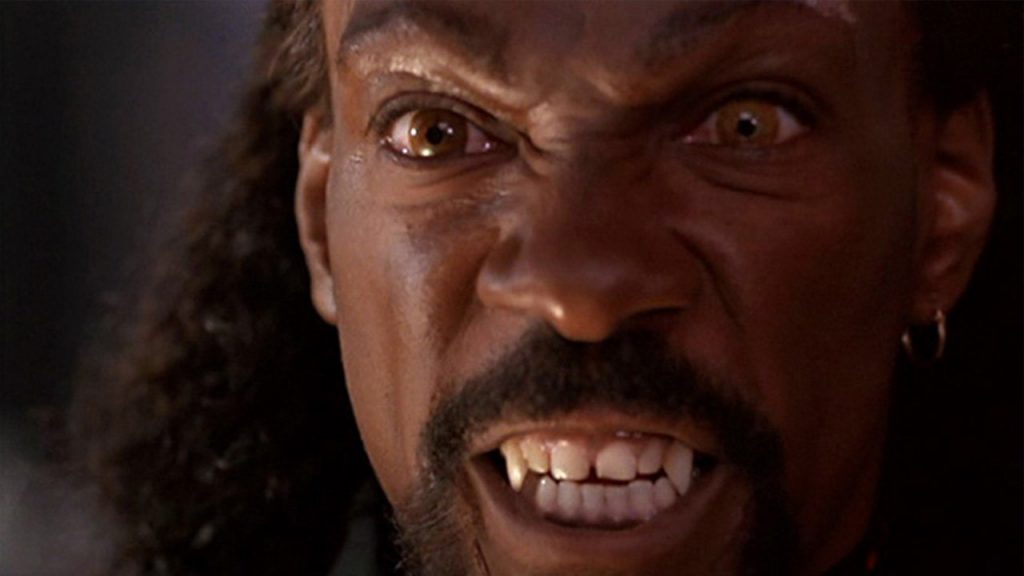
Most cultures rely on the idea of handing something down through generations, but what comprises a legacy is often tied to experiences and memories that are shared and relived – the tangible parts can be too easily appropriated or destroyed. For Maximillian, his culture has already been leveled. He pursues Rita as a tether to his past, but any life they could have together would pale in comparison to the rich history he descends from.
The parallels between ethnic displacement and the film’s themes of otherness and racial subjugation simmer just beneath the surface, but despite the racially charged atmosphere of the early ‘90s, film studios were hesitant to embrace horror movies with a cerebral edge. Craven himself first attempted to stoke deeper conversations with The People Under the Stairs in 1991, a horror satire about gentrification and wayward conservatism, but neither of his attempts would garner critical or commercial acclaim. It would be another twenty years before the social thriller genre was amplified by Jordan Peele’s Get Out (2017) and Bong Joon-ho’s Parasite (2019). But Vampire in Brooklyn remains a unique glimpse at the depths the genre could ultimately explore. 
“Vampire in Brooklyn” is currently streaming on HBO Max.