Josh Bell
Japanese filmmaker Hirokazu Kore-eda is a poet of the mundane, and his best-known films in the U.S. are character-driven dramas like Still Walking, Nobody Knows and the Oscar-nominated Shoplifters. But Kore-eda’s second narrative feature, 1998’s After Life, takes that quiet observational style into the realm of the fantastic, highlighting the profundity of everyday life more expansively. After years of unavailability on home video or streaming in the U.S., After Life gets a well-deserved DVD and Blu-ray release this week from the Criterion Collection, at a moment when its influence is evident in a couple of notable recent American films.
After Life opens with a low-key scene of workers arriving at the office on a Monday. They enter the somewhat rundown, mostly empty building, chatting about the previous week’s work. They settle into a conference room where a janitor is just finishing cleaning the floors. Their supervisor calls them to order and congratulates them for processing all 18 cases the previous week, then brandishes the files of the 22 cases for processing in the upcoming week. It could be the opening to any other Kore-eda drama about average people’s daily lives.
The difference is that these are the bureaucrats of the afterlife, and the 22 cases they need to process are all recently deceased people, who are sent to this way station before going on to their eternal rest. Here, each person has three days to select a single memory from their life, which the staff will then recreate on film. The person then takes that memory, and only that memory, with them for eternity. It’s a solemn responsibility for the staff, and they approach it with appropriate reverence, even as they’re still in the midst of their own emotional processing.
Kore-eda started his career in documentaries, and his approach to After Life blends fiction and documentary elements, lending a naturalistic feel to the interviews with the newly deceased clients (some of which are constructed from documentary footage). Much of After Life consists of these characters talking about their lives as they work toward selecting their single essential memory, and the joys of the film are in its specificity. There are almost no conversations here about the meaning of life or the structure of the hereafter.
Instead, there are evocative recollections of the summer breeze on a school bus, a particular kind of mattress in a hotel, rice balls eaten as a treat as a child. Given the time period, there are several characters who recall their experiences during World War II, although those are just as often happy (an unexpected reunion, a moment of solidarity) as they are harrowing. Kore-eda employs frequent jump cuts during the interview scenes, giving the sense that the audience is getting only snippets of these characters’ rich, complex lives. After Life is deeply moving, not because it reaches any unique insights about human existence, but because of the care and respect it affords these individual people.
Kore-eda eventually applies that same sensitivity to the counselors, especially the young (or at least young-looking) Takashi Mochizuki (Arata) and Shiori Satonaka (Erika Oda). Takashi forms a strong but troubled connection with Ichiro Watanabe (Taketoshi Naito), a businessman who is convinced that his entire life was unmemorable.
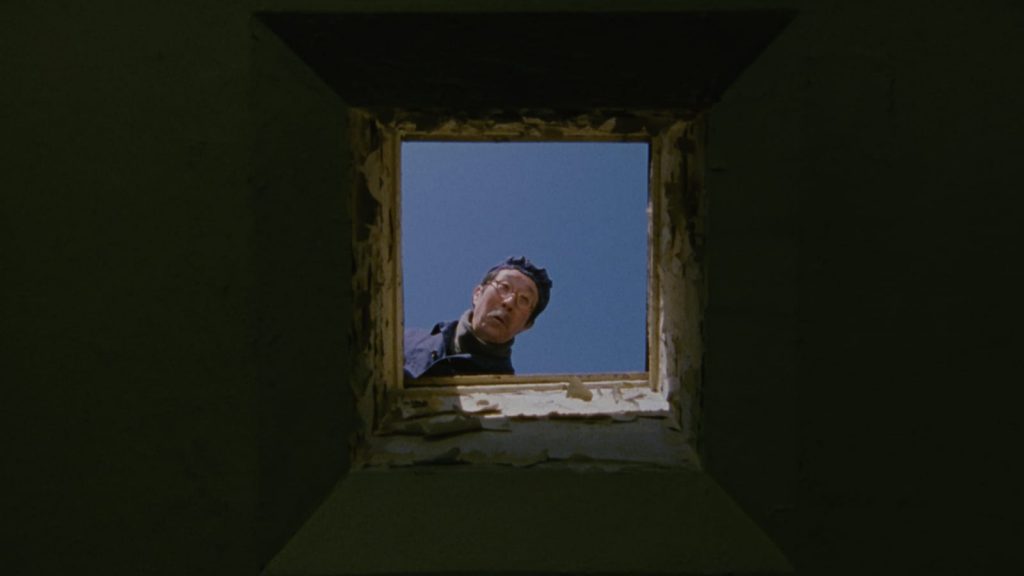
The shy Shiori works as an assistant, slowly building her confidence in providing just the right kind of counseling to nudge clients toward their ideal memories. When a teenage girl decides that she wants to take a memory of a day at Disneyland, Shiori gently tells her that she’s the 30th person in the past year to choose a Disneyland memory, and that inspires the girl to pick something more personal and meaningful.
As the staff is tasked with shooting mini-movies of each client’s chosen memory, After Life becomes a sort of Kore-eda omnibus, each character’s story representing the potential for an entire Kore-eda film about the everyday moments that make up a life. It’s that kind of distinctiveness that’s missing from Edson Oda’s recent acclaimed film Nine Days, which is so heavily indebted to After Life that it’s practically a remake.
In Nine Days, the souls being interviewed have not yet been born, and main character Will (Winston Duke) must decide which one deserves the chance at a human life, while offering the others a single recreated moment before they go. There’s nothing like the gorgeously idiosyncratic details of After Life’s characters in the moral dilemmas that Will presents to his interviewees, and the focus on judgment distracts from the wonder of the life that awaits.
Likewise, Pixar’s 2020 release Soul focuses on the mechanics of souls preparing to be born, although director Pete Docter captures more of Kore-eda’s penchant for everyday wonder in the character of jazz musician Joe Gardner (voiced by Jamie Foxx). If Joe were faced with one of After Life’s interviewers, he’d have plenty of memories to choose from, and he spends most of Soul learning to appreciate them.
But the zippy Pixar energy of Soul is antithetical to the meditative pacing and tone of After Life, which buries its most devastating emotional moments in tossed-off remarks. Takashi and Shiori guide these delicate souls to moments of reflection and peace, and they unexpectedly find their own version along the way. 
“After Life” is now available on DVD and Blu-ray from the Criterion Collection.