Josh Bell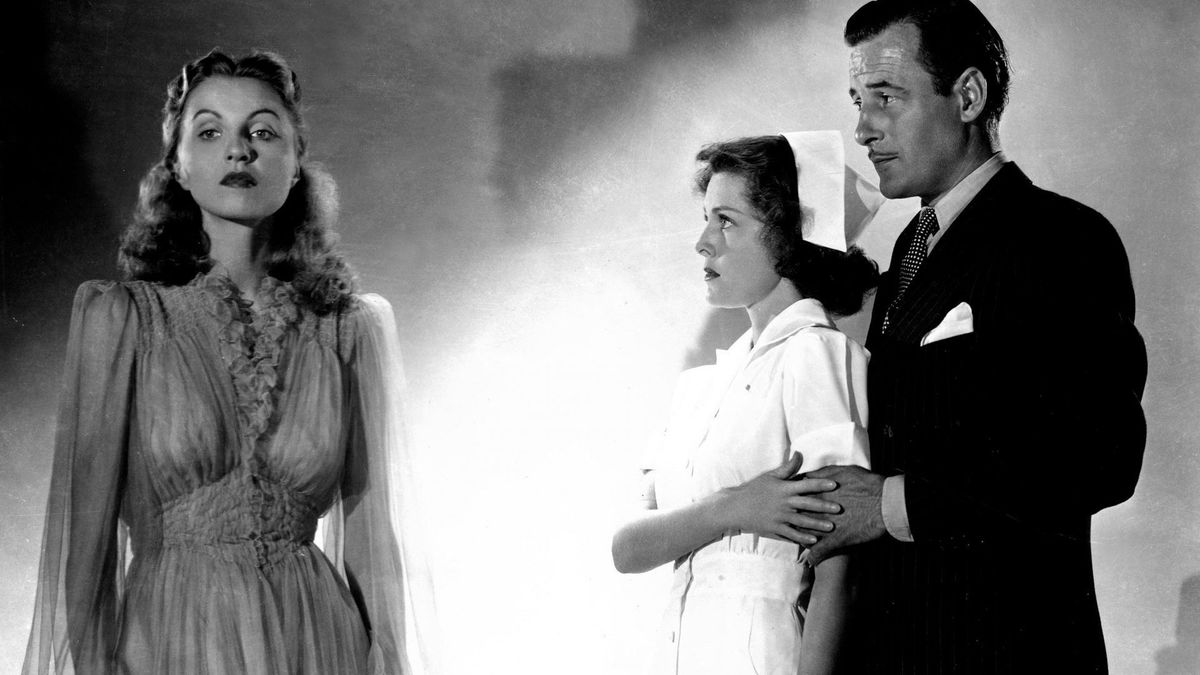
When Canadian nurse Betsy Connell (Frances Dee) begins her opening narration of 1943’s I Walked With a Zombie by uttering the title phrase, she follows it with a rueful chuckle. The concept of a zombie didn’t carry the same terrifying connotation for her that it does for modern moviegoers, and I Walked With a Zombie — released 80 years ago this week — is one of a handful of films to deal with the subject before George Romero’s 1968 landmark Night of the Living Dead. The zombie in I Walked With a Zombie isn’t a flesh-hungry undead corpse, but a haunted woman in a sort of catatonic state, wandering through existence without awareness or agency. It’s an apt metaphor for her treatment as the kept wife of a wealthy British sugar plantation owner in the Caribbean.
Betsy comes to the island of Saint Sebastian as a private nurse for Jessica Holland (Christine Gordon), whose official medical diagnosis is nerve damage from a severe tropical fever. Local maid Alma (Theresa Harris) seems more than capable of caring for Jessica, though, and it’s easy to suspect that Jessica’s husband Paul (Tom Conway) hired Betsy more for himself than for his wife. Starting on the boat trip to the island, Paul cozies up to Betsy, literally intruding on her thoughts as he seemingly responds directly to her pensive voice-over about the beauty of the sea. “There’s no beauty here, only death and decay,” he tells her in a way that somehow makes it sound even more romantic and enticing.
The allure of the macabre is one of the main themes of I Walked With a Zombie, which was inspired partially by Charlotte Brontë’s Jane Eyre. The movie is thick with gothic atmosphere once Betsy arrives at Paul’s seaside estate, and Paul’s bitter half-brother Wesley Rand (James Ellison) refers to his sibling as “quite the Byronic character.”
Director Jacques Tourneur returns to Betsy’s melancholy narration throughout the film, giving the story an elegiac tone and centering her emotional experiences. Tourneur and screenwriters Curt Siodmak and Ardel Wray provide an explanation of zombie-ism that would have been lurid enough for the intended B-movie audience, but it’s still a reflection of the characters’ inner feelings and attitudes.
It’s also a reflection of colonialism and the legacy of slavery, a topic that I Walked With a Zombie handles with remarkable nuance and honesty for its time period. Paul doesn’t hide the fact that his ancestors brought slaves to Saint Sebastian, the descendants of whom now work as his servants. He expresses sadness for what he calls “the misery and pain of slavery,” but that doesn’t stop him from continuing to exploit the land and its people.
Betsy, an independent working woman from the progressive land of Canada, may take a more sympathetic view, but even she can’t help occasionally being condescending to the locals. “They brought you to a beautiful place, didn’t they?” she asks the Black coachman after he tells her about the island’s history. “If you say, Miss,” is his measured, diplomatic response.
The locals assert their power in a different way, through the voodoo religion that the white overseers dismiss as foolish superstition. Paul and Wesley’s mother Mrs. Rand (Edith Barrett), the widow of a Christian missionary, describes the practices as “native nonsense,” although both she and the local white medical doctor will invoke the names of voodoo gods if it helps them convince the locals to follow orders. Yet it’s clear from the beginning that Jessica is under a voodoo spell, that her condition is mystical rather than medical.
Jessica’s zombie state isn’t the result of revenge from the locals, but the product of arrogance and jealousy among the Holland/Rand family, tied up in a love triangle between the brothers and the petty meddling of their mother. They see voodoo as silly hokum until it serves their purposes, then they lash out when faced with the consequences of their actions. Betsy almost immediately swoons over Paul and becomes his devoted companion, but there’s no sense that her fate will be any less tragic than Jessica’s if she stays on the island. This is not the kind of love story that has a happy ending.
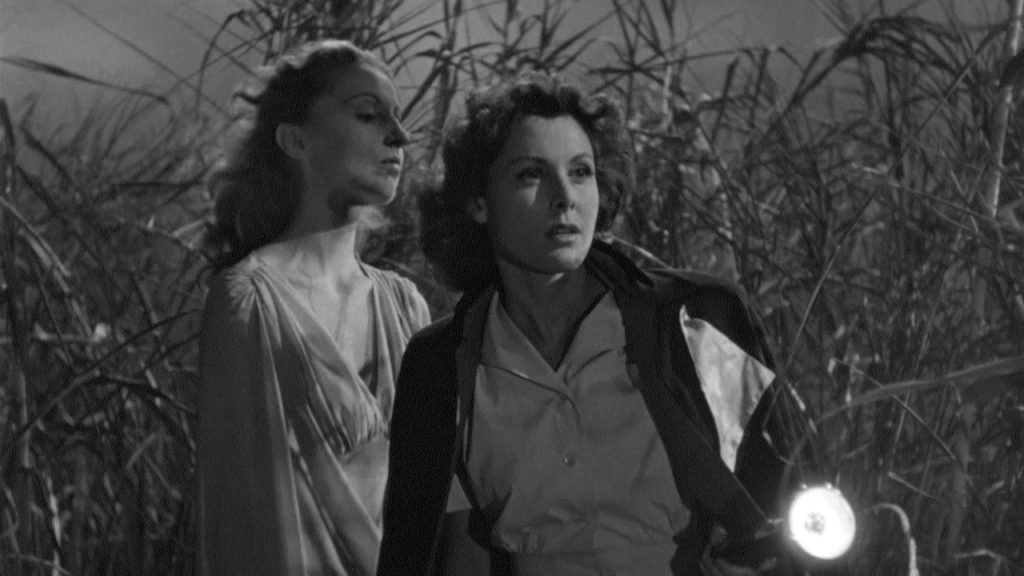
In his second collaboration with producer Val Lewton, Tourneur, known for moody, evocative classics like Out of the Past, Cat People, and Night of the Demon, masterfully uses the interplay of shadow and light to make the Holland estate into a place of eerie stillness and solemnity. Betsy first glimpses Jessica wandering in the garden at night, dressed in a flowing white nightgown that makes her look like a wayward specter. The shadows of the slatted doors and windows are always falling on Betsy’s face, framing her as if she’s a prisoner. Everyone on the estate is a prisoner of some kind, often of their own making.
I Walked With a Zombie is never scary, even during the intense voodoo rituals that Betsy witnesses at the makeshift temple known as the houmfort. The story is more tragedy than horror, something that has been mostly lost as the zombie genre has been redefined for mass pop-culture consumption. It’s rare for any movie to return to the older definition of zombies; the last major example was Wes Craven’s The Serpent and the Rainbow in 1988. The idea may seem quaint now, but Tourneur makes it immersive and affecting.
“I Walked With a Zombie” is available for digital rental or purchase.