Zach Vasquez
When people hear the term ‘the Valley’, they’re likely to call up images of the San Fernando Valley, the northern urbanized area that comprises large swaths of Los Angeles and several of its neighboring cities, and which is home to a number of big Hollywood studios (including Warner Bros. and Walt Disney).
The Valley casts a long shadow over American pop culture and movies in particular, thanks to its depiction by those aforementioned studios and their ilk—from titular examples such as Valley Girl and Mulholland Drive; to period pieces about its charged, often sordid history like Chinatown and Boogie Nights; to any number of titles simply set within it: The Karate Kid, E.T., Fast Times at Ridgemont High, La Bamba, just to name a very few.
But right next door, bordering Los Angeles to the east, there exists another valley: the San Gabriel Valley. Slightly smaller in size and population than its famous neighbor, the area falls below the looming San Gabriel Mountains and comprises over 50 cities and unincorporated neighborhoods, including Pasadena (the largest in the region), Alhambra, El Monte, Baldwin Park, and Rosemead. Whittier—my home town and the stomping grounds of one Richard Milhous Nixon—is considered part of the Gateway Cities region that connects Los Angeles to Orange County, although it is usually lumped in with the rest of the SGV.
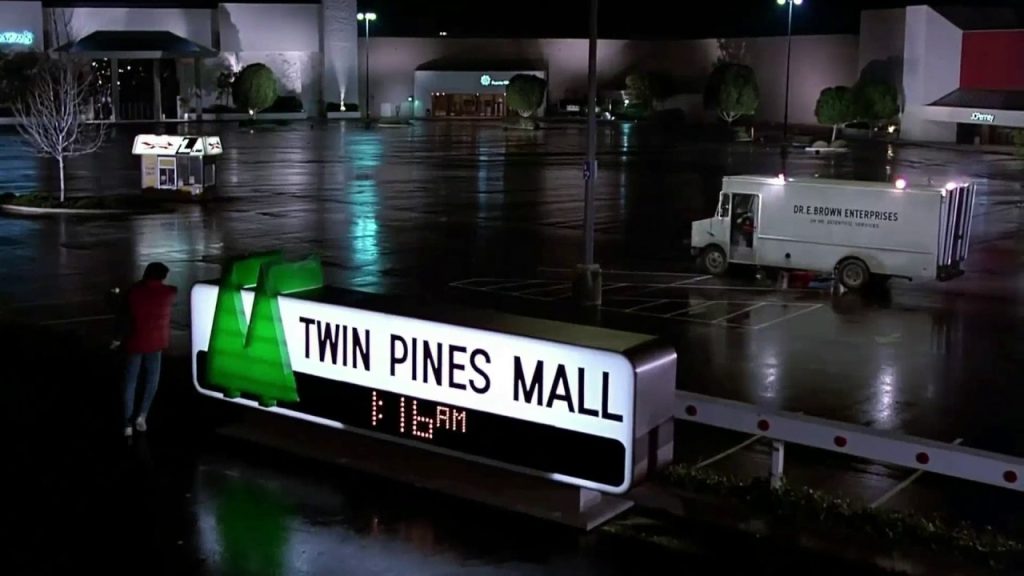
The San Gabriel Valley is as deeply entrenched in the movie industry as the rest of Greater Los Angeles, its usefulness as a shooting locale dating back to Golden Age productions (such as 1953’s War of the Worlds), before much of the area was urbanized. Some of the most popular American films ever made were shot in the SGV. John Carpenter used suburban Pasadena to double for the fictional small town of Haddenfield in the original Halloween. Robert Zemeckis packed the football stadium at Monterey Park’s East Los Angeles College with hundreds of CGI extras for a scene in Forrest Gump. Pretty much the entirety of Back to the Future was filmed across the area, from Whittier to Pasadena to El Monte to City of Industry.
And yet, for as ubiquitous as the SGV is on both the big and small screen—TV shows filmed there range from The Wonder Years to Roswell to CSI: Miami—unlike the San Fernando Valley, it is exceedingly rare that the stories shot within its borders are also explicitly set there. In fact, it is more likely that the San Gabriel Valley is used to double for more famous L.A. spots—see: Melrose Place and Beverly Hills Ninja—than represent itself.
Once in a while a movie may include a shoutout to some part of the SGV. There are numerous references to Whittier in Oliver Stone’s Nixon, natch; the opening armored car robbery in Den of Thieves goes down in Montebello (though it was shot in Atlanta); and the underrated ‘90s neo-noir City of Industry is named after one its main industrial hubs—although, again, none of it was actually filmed on location. (Apparently, the Netflix original series The Brothers Sun is both set and shot in the SGV, so there’s that.)
Enter the new independent drama Rosemead, the directorial debut of cinematographer Eric Lin (The Sound of Silence, Hearts Beat Loud). Named after that city within the SGV, the film—based on a tragic true story covered by The Los Angeles Times in 2017—follows a widowed Taiwanese immigrant (Lucy Lui, doing career-best work) dying of cancer while trying everything she can to care for her schizophrenic 17-year-old son. When her child’s behavior grows more volatile and disturbing, it leads to a horrifying turn of events.
Rosemead is the city my father grew up in and which, up to the death of my paternal grandmother in 2016 (following the passing of my grandfather 11 years earlier), served as home base for all gatherings on that side of the family tree. I spent a large amount of my youth hanging out in Rosemead with my cousins.
Majority Asian, with the second largest demographic being Hispanic, Rosemead is a culturally vibrant city, while still undeniably rough. It’s not as heavily associated with crime and gang violence as other cities within the area or throughout L.A., but is definitely regarded as ‘hood’ (even as a growing number of gated communities have popped up over the years). This urban grittiness is contrasted by an eerie, at times surreal sense of desolation via the unmissable signs of its pre-urbanized past: long, winding roads that snake through the surrounding Whittier Narrows marshlands; ghostly single storefronts standing opposite or catty-corner from its countless strip malls; the concrete wash that cuts through much of the city, carrying water from Lake Los Angeles just over the San Gabriel mountains all the way down to Seal Beach in Orange County. Try to imagine what Southern California Gothic might look like and you get Rosemead.
Unfortunately, Lin’s film—which on its own is an effectively troubling and heartbreaking domestic drama—doesn’t quite capture these qualities of the city. Partly, that’s by design: the story he’s telling is very much an insular one about a co-dependant relationship where the parties become increasingly isolated from their own tight-knit community, to say nothing of the larger world beyond.
For a movie is called Rosemead, one would think it might include a little bit more of its namesake. However, as covered in the New York Times, the film was not only not shot in that city (save for a couple of exterior shots following principal photography), it wasn’t even shot in California. Instead, it was filmed in New York in order to take advantage of that state’s generous tax incentives, a situation representative of larger frustrations about how unfriendly Los Angeles has become to the industry with which it is most synonymous.(Frustratingly, the team behind Rosemead learned that they had been approved for California tax credits only after they’d already set up shop across the country.)
Still, while I would have loved to see more of the city represented, the filmmakers chose to keep their story set in the place where the real events occurred despite considerations to change it so as to avoid all the trouble of selling New York as the San Gabriel Valley. This is no small feat and ultimately it feels respectful of the events they’ve dramatized.
That decision could also provide inspiration to future projects set explicitly within the area, although it’s not necessarily one that locals and civic leaders would be stoked about. The San Gabriel Valley has no shortage of true crime stories ripe for adaptation, from the 1958 unsolved rape and murder of Jean Ellroy (mother of crime novelist James Ellroy, who delved into the case in his 1996 memoir My Dark Places) in El Monte, to much of the crime spree of Richard Ramirez (aka the Night Stalker) during the summer of 1985 (with one of his early murders taking place in Rosemead).
It’s always possible that the area could produce its own version of Paul Thomas Anderson, someone so in thrall with it that they are constantly finding new, eclectic stories to tell within and about it. One can only hope. But in the meantime, given how essential and yet invisible the SGV has been to Hollywood, we’ll settle for infamy.