Audrey Fox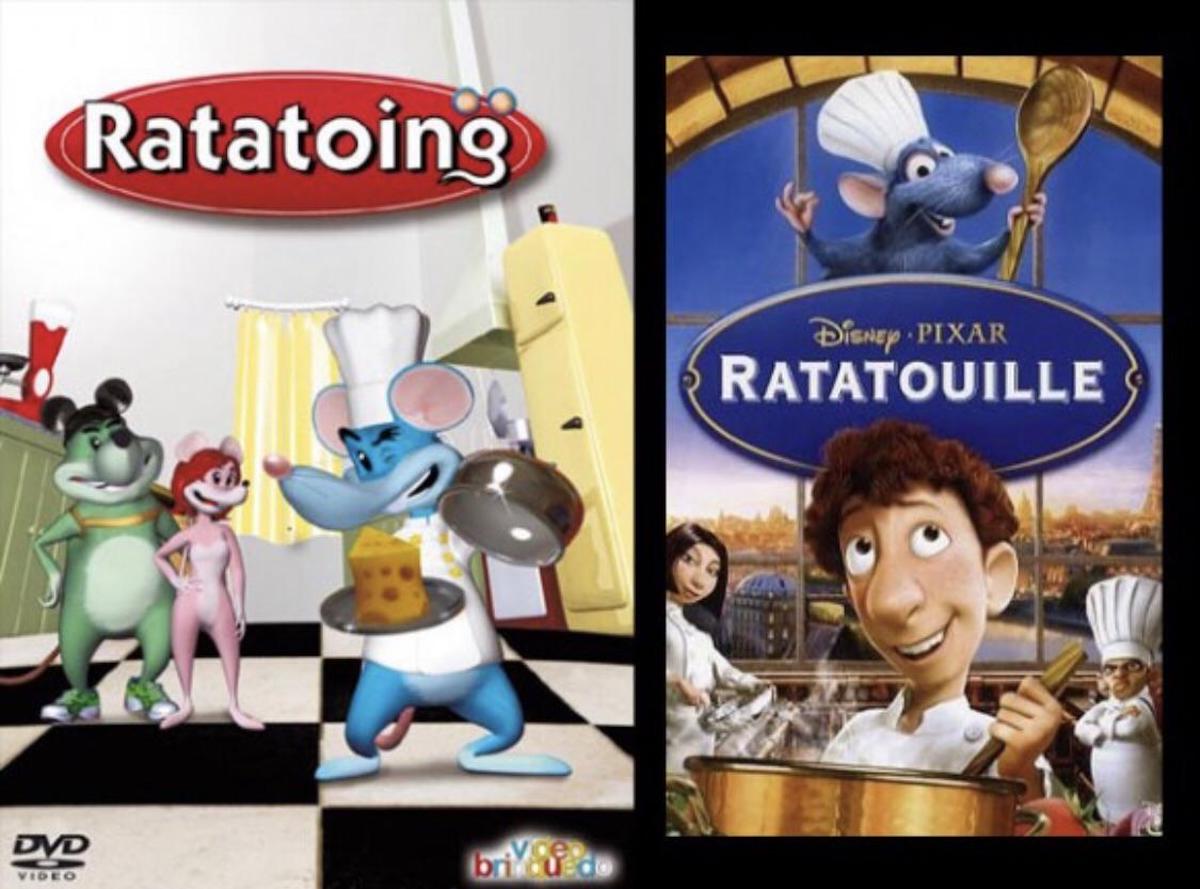
People will try to tell you that imitation is the highest form of flattery. But at the same time, if you’re a Brazilian production company that has just released an animated film called Ratatoing about a rodent chef suspiciously close to the premiere of Ratatouille, Pixar’s probably not buying it. Mockbusters have been around for ages: the impulse to churn out low quality copies of popular films to turn a quick profit is too much for any unscrupulous producer to resist. But as animated films have become bigger and bigger money makers, they’ve sprung into an entire niche market of their own. Extremely liberal in their artistic reappropriation of creative content and shameless in exactly how much to cross the line, the mockbuster is an objectively hilarious footnote on the history of animation that not even the great Disney corporation has figured out how to fully combat.
The concept is simple: when you learn that Disney or Pixar or, heck, even Dreamworks is working on a new film, you spring into action. Only you’re going to spend a fraction of the money of one of those major animation studios, because your movie doesn’t actually have to be good. All it really needs is to have a similar enough title and cover art so that when you release it direct-to-video, enough harried and sleep-deprived parents will confuse it for the real thing. (Their official line is that they’re merely providing new material in the same genre that kids already love, but at the time of reporting, there were approximately zero people who believed that.)
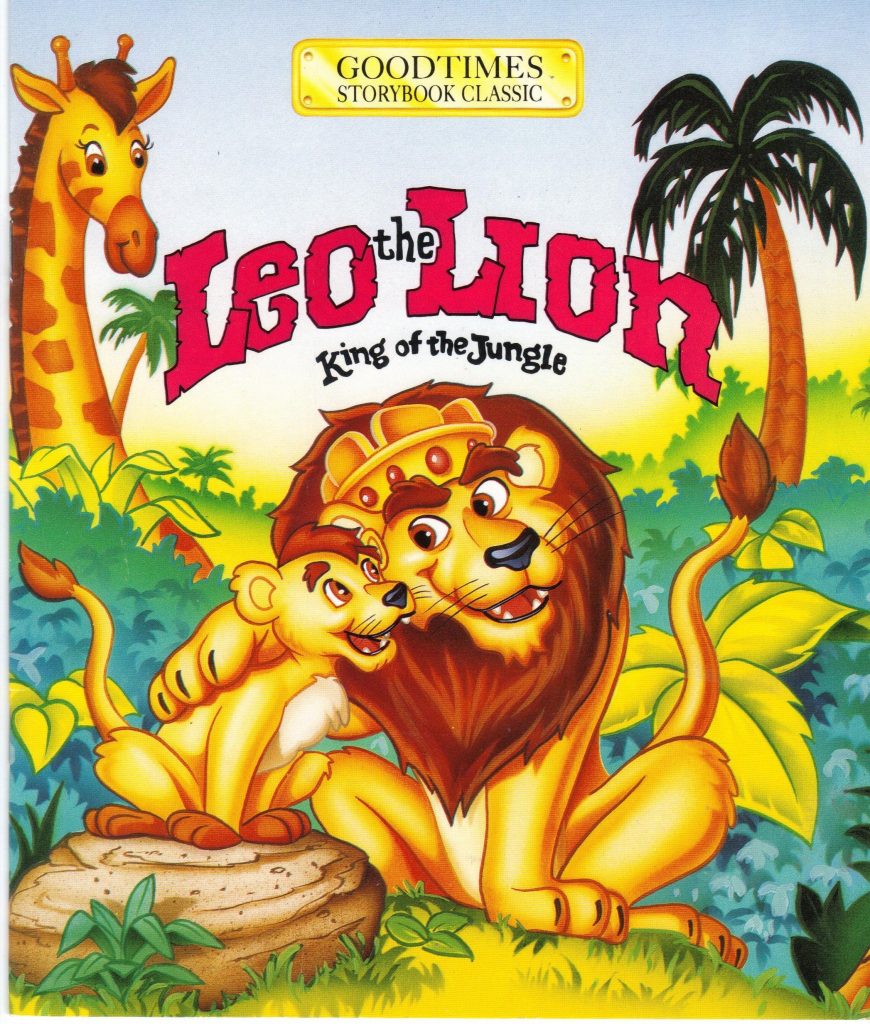
So when kids are high on Happy Feet, Tappy Toes from Dove Movies is waiting in the wings. Well-intentioned grandparents end up buying copies of Leo the Lion: King of the Jungle for their The Lion King-obsessed grandchildren. The number of people who are taken in by this ruse doesn’t need to be particularly high, because these movies are (and this can’t be stressed enough) incredibly cheaply made. Dreamworks’ Puss in Boots was made by a team of 300 people over the course of four years to the tune of $130 million. Renegade Animation’s Puss in Boots: A Furry Tale, by contrast, had twelve people working on it for six months, and it cost less than $1 million to produce.
Now, you may be asking yourself, how is this legal? Surely the Walt Disney Corporation, a famously litigious financial behemoth with a veritable army of lawyers ready and willing to take a bullet for the Almighty Mouse, would have sued the pants off these production companies before the ink was dry on their creepy look-alike marketing posters? Yeah, of course they did. But here’s the thing: since so many of Disney’s films are based on fairy tales that have long since entered the public domain, they don’t have a legal claim to exclusive rights. Lumiere and Cogsworth from Beauty and the Beast are Disney property, for example, but there’s nothing stopping some opportunistic animation studio from making another film based on the Beauty and the Beast folktale that just happens to look a lot like the Disney version.
That, of course, didn’t stop Disney from going all sue-happy, launching lawsuits in 1992 and 1993 against GoodTimes Entertainment, who in 1992 alone released their own versions of Aladdin, Thumbelina, Beauty and the Beast, and The Little Mermaid. At this point, they were really starting to cheese the Disney executives off. Disney’s lawyers made the argument that the GoodTimes videocassette covers were too similar to Disney’s, which was leading customers to be confused about what product they were actually purchasing. The judges were unconvinced: they ruled that artwork similarity wasn’t enough to make Disney’s case, especially since Disney’s VHS packaging varied from film to film. They did, however, request that GoodTimes feature their company’s name prominently on the covers of their VHS tapes, to prevent any claims of false advertising. GoodTimes happily complied: their president Joe Cayre even reported that many stores put up signs saying, “this is not Disney’s Aladdin.”
Disney had a bit more luck in recent years, when they sued Canadian animation studio Phase 4 in 2013 over their marketing materials for a film called The Legend of Sarila, which they hastily renamed Frozen Land. They were spectacularly unsubtle about their artistic influences: they essentially just used the Frozen title design and slapped the word “land” underneath it. Phase 4 was ordered by the courts to make every effort to change their promotional artwork and pay Disney $100,000 in damages.
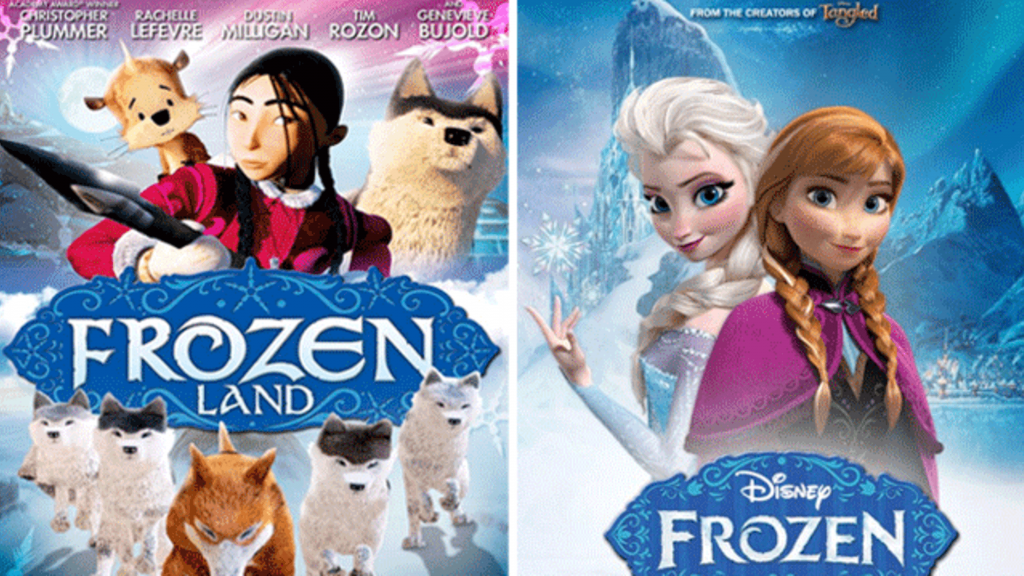
When it comes to these “adaptations,” the ones that are least suspect are the films that merely adapt a much older fairy tale (and just happen to be timed perfectly with the release of a version of the same story by one of the big animation houses.) After all, stories like Cinderella and The Little Mermaid have been retold dozens upon dozens of times over the years, so it feels a bit churlish to get too bent out of shape over it. But the real fun comes from the films that clearly serve no other purpose than to siphon audiences away from Disney and Pixar, by hook or by crook. The poster artwork is king, and all that matters is how close they can make it look to Disney without getting into trouble: the narrative is 100% an afterthought.
That’s how you get a film like What’s Up?: Balloon to the Rescue, which looks almost exactly like Up (although it features one giant hot air balloon supporting the house, rather than hundreds of regular-sized balloons), but is about a team of monster hunters and has a French character who only exists so the other characters can mock his accent. Or The Secret of Mulan, which seems to be cribbing from both Mulan and A Bug’s Life: the Mulan character does all of the same “saving China” stuff, only she’s…a caterpillar? And then there’s Lion and the King, a Dingo Pictures production out of Germany, where the heir to the lion throne goes on an adventure to find the treasure of the Black Panther. If anything, it seems like Disney should have been thrilled: think of the crossover potential!
The world of mockbusters is a bizarre rabbit hole of plagiarism and opportunism, the Wild West where animators will push artistic appropriation to the absolute limits. Some of their films are shoddily made but otherwise respectable, while others seem to revel in their freedom to create the absolute weirdest stories and have them mistakenly attributed to Disney. But while their efforts may be legally dubious, it’s difficult not to respect their game. Many of these production companies have spent decades outfoxing the Mouse in a truly bizarre dance of never-ending litigation, and for that, we salute them.