Jason Bailey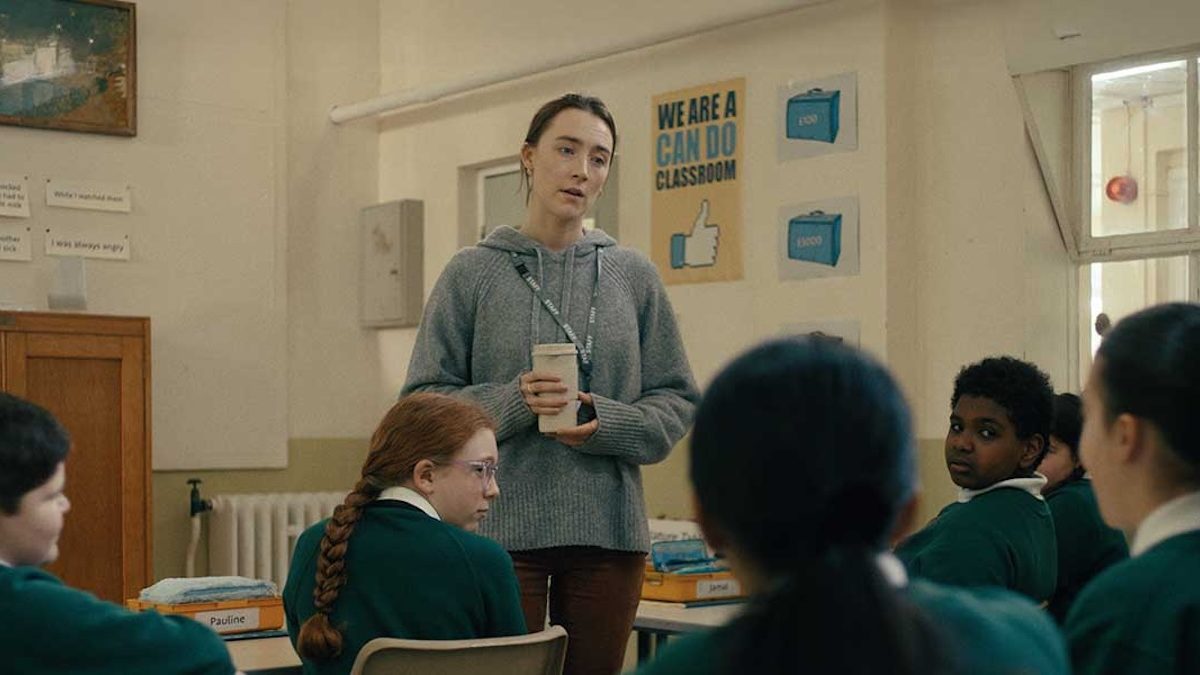
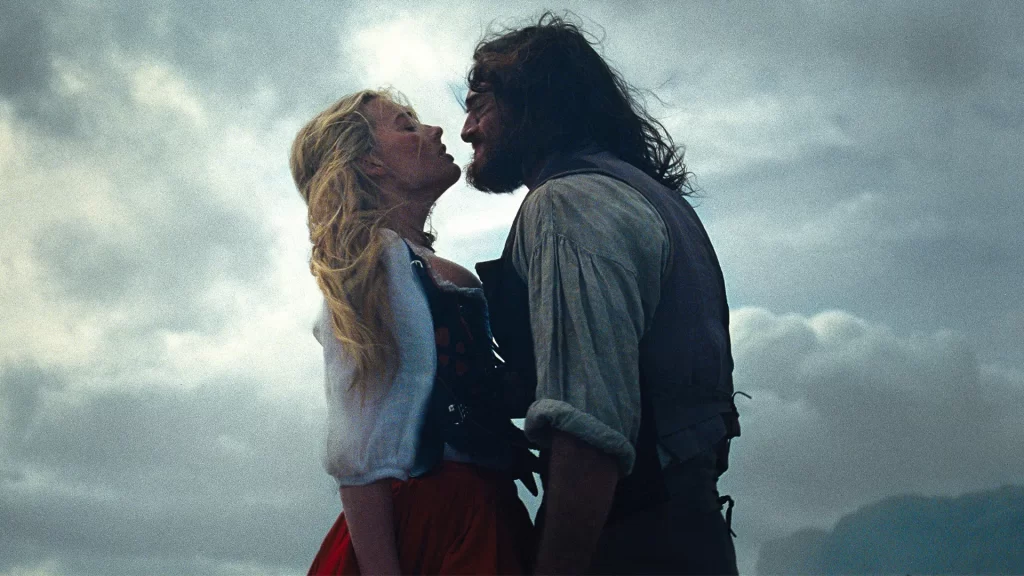
So few films — even indies, even festival favorites — are willing to take the risk of tinkering with standard storytelling techniques, with the ways in which a movie moves from one scene to another, chronologically and stylistically, and that’s the most obvious explanation for why Sophy Romvari’s feature debut Blue Heron is so thrilling. It starts out as one kind of movie, a kind of sun-kissed memory play in which the filmmaker reanimates her scattered memories and big family full of tricky personalities, and it does that well; she has a gift for recapturing the way it feels and sounds, when kids are playing, when things are hectic around the house, when parents are fighting.
And then, unexpectedly, she flips the script, jumping decades and changing styles, looking at this story from a completely different (and altogether unexpected) point of view, before crossing those streams in a manner both innovative and devastating. If it were a question of formal achievement alone, this would be one of the standouts of TIFF — but it’s also an emotional haymaker, and Romvari’s quiet, observational approach, capturing even the most dramatic events without judgment, is astonishing.
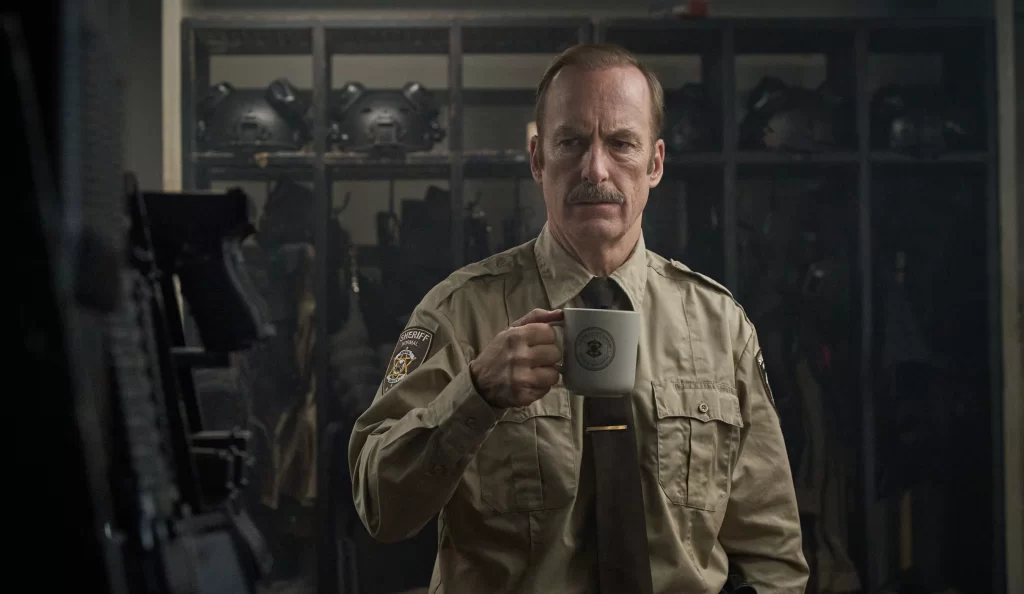
I’ll confess that my mind wandered a bit during the last big fight scene in Ben Wheatley’s Normal, but in a good way, because I found myself feeling happy for Bob Odenkirk. He’s had such a singular and unexpected career path, from sketch comedian to comic relief to serious character actor and now, improbably enough, to action star. Here, he reteams with John Wick screenwriter Derek Kolstad, who penned his Nobody films; Odenkirk is also credited with co-writing the story, and as a producer. And that scans, since the left-turn element of those films is part of their fun, but this one feels suited to both his old and new skill sets.
He stars as Ulysses, the beautifully mustachioed interim sheriff of Normal, Minnesota, where he’s stepping in for a few weeks after the sudden death of the small town’s previous lawman. Contrary to his typical hands-off nature, Ulysses starts poking around, looking into that sheriff’s passing, and things start going sideways. The comparisons to Fargo are inevitable (particularly when we discover that the previous sheriff’s name was Gunderson), but Wheatley is ultimately working for something closer to Rio Bravo, with some nice subversions along the way. The action beats all land (even if the filmmakers don’t trust the audience to make even the simplest connections), but Odenkirk is what makes it memorable; he does a fine job of filling in the shadows and shadings of what could have been a stock character.
If Odenkirk is still settling into his job as action hero, Saoirse Ronan is even more of a novice to all-out comedy (though she’s handled plenty of lighter moments, in films like Lady Bird, with ease). She’s extremely funny in Bad Apples, mostly because she plays it entirely straight and totally real, starring as a dissatisfied primary schoolteacher whose entire job (and, consequently, her life outside of it) is smashed up on a daily basis by one rotten kid. And you can see how — this child is an absolute monster, and in one tight sequence, director Jonatan Etzler crisply demonstrates how just this one disruptive kid can bust it all apart, how easily the havoc is wreaked. And then, one day, she gets a tantalizing taste of what her job would be like if he just… wasn’t… there.
More than that I will not divulge, because one of the pleasures of Bad Apples is its sense of uncharted territory, how Etzler and his deliciously game star are willing to eschew the rules of sympathy and politeness followed by other movies, and how that untethers the narrative from our expectations. This movie’s got stones, and its third act is like a rapidly enlarging snowball, just rolling down the hill and building up speed.
There’s a similar freedom to the storytelling in Alex Winter’s Adulthood, which starts with a juicy premise and doesn’t look back. Adult siblings Meg (Kaya Scodelario) and Noah (Josh Gad) are cleaning up the basement of their childhood home after their aging mother’s stroke when they make an unexpected discovery: the long-decayed dead body of a family friend, hidden in the walls. This isn’t the kind of thing they can just casually report without major repercussions, they reason, so they decide to get rid of the body. That turns out to be the first of several ill-advised decisions.
The strongest aspect of Michael M.B. Galvin’s screenplay is its clear line of narrative logic, in which each mistake prompts another, building and building and careening out of their control (though there is one major plot hole that keeps it from being quite as airtight as it should be). The relationship between the siblings is credible, as is the clever way in which their roles flip over the course of the story; he’s initially the clear-headed one, thinking ahead several moves, but the more the noose tightens, she becomes cool and collected while he turns into a whimpering puddle, consistently in a blurry daze. Billie Lourd, as usual, steals every scene, and Winter’s brief appearance is a hoot. Adulthood is a black comedy that doesn’t make light of where they go and what they do, and as it winds down, Winter slowly, methodically sifts the comedy out — a risky move, but it makes sense if your characters have a moral center.
The next time I’m feeling like being a working parent is stressful, I’ll think about Love+War and check myself with a quickness. This bio-documentary from directors Chai Vasarhelyi and Jimmy Chin (Free Solo) profiles Pulitzer Prize–winning conflict photographer Lynsey Addario, whom we first see on the ground in the early days of the Ukraine invasion, capturing raw and horrifying images of carnage from Russian forces bombing civilian evacuation routes (a war crime!) which make the front page of the New York Times and the floor of the Senate. And then she takes a car, plane, and train back home — and makes it in time for her son’s music performance. “Oh my god, kids are so much harder than war,” she says, at the end of the day.
If Vasarhelyi and Chin were just telling the story of her time in war zones — including her harrowing tenure in Iraq and her week-long kidnapping in Libya — Love+War would be worth watching. But it’s tough to think of a film that more directly and viscerally tackles the issue of “work-life balance,” and because it’s so much about that, it’s freed from the confines of the typical bio-documentary; it’s organized thematically rather than chronologically, working towards a catharsis that hits much harder than it might have otherwise.
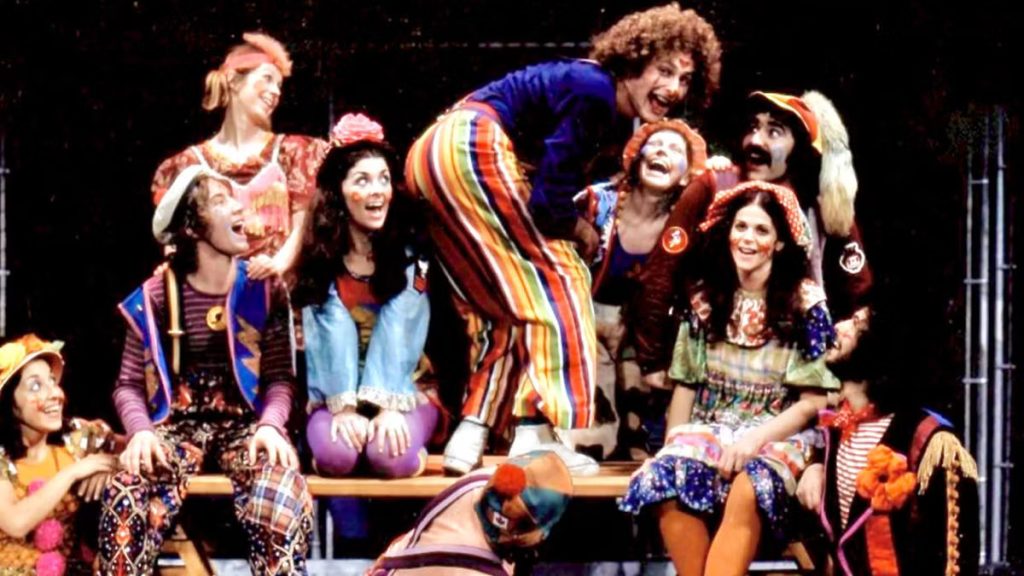
I first heard about the Toronto production of Godspell a couple of years back, when I was researching an eventually-aborted biography of John Candy — who wasn’t in it, to be clear, but pretty much everyone he ended up working with on SCTV was, as well as future SNL original players Gilda Radner and Paul Schaffer and the great Victor Garber (the only one in their cast who ended up in the film version). It was the kind of ground zero event that comedy nerds love to fixate on, particularly since only an amateur audio recording exists.
You Had to Be There: How the Toronto Godspell Ignited the Comedy Revolution, Spread Love & Overalls, and Created a Community That Changed the World (In a Canadian Kind of Way) (four-star title, by the way) tells the story of that production, and its aftermath, with a carefully calibrated mixture of laughs, nostalgia, and insight, pinpointing how that show was so specific to its moment, and why it launched as many careers as it did: Radner, Schaffer, Garber, Martin Short, Eugene Levy, Andrea Martin, Dave Thomas, and more. All who are still around show up to tell their well-practiced stories with vigor; these are the kind of old theater tales you tell for years after shows close. But they didn’t all become stars, and director Nick Davis digs into that as well, with some poignancy. It’s hard to imagine anyone outside the hardcore comedy nerd audience summoning up much interest in this one — but god, they’ll be in hog heaven.
Lloyd Lee Choi’s feature directorial debut Lucky Lu owes a clear debt to struggling-in-New-York indies like Ramin Bahrani’s Man Push Cart and Sean Baker’s Prince of Broadway, not only reigniting but escalating the nerve-wracking tension of watching a sympathetic, hard-working protagonist barely keeping their head above water. The granddaddy to them all, of course, is De Sica’s Bicycle Thieves, which couldn’t be more explicitly referenced here, as the thin ice of our food-delivering hero’s world beings to crack when the bike with which he earns a living is suddenly, shockingly stolen.
Despite those reference points, the actual struggles of immigrants, blue-collar people, and the working poor are woefully underrepresented in American movies (even indies), and Choi meticulously dramatizes both the logistical challenges and the existential angst of living this life. Chang Chen absolutely breaks your heart in the central role, as a man whose ultimate downfall is that he is a decent and honorable man, even when desperate times call for desperate measures. In one key early scene, he asks an old friend for a loan; he needs $1200, and he is handed $32. That gulf, between what we need and what we can get, is where dreams go to die.
Xie Miao, star of choreographer-turned-director Kenji Tanigaki’s The Furious, is simply fun to watch, sporting a jaw-dropping athleticism and magnetic physicality that reminds one of Tom Cruise (and not just because his first big action beat includes some impressively fast running). This guy moves like lightning, and his introverted character, a mute handyman, garners sympathy even before his little girl is kidnapped by human traffickers, kicking off the all-but-nonstop action of this visceral, kinetic extravaganza.
It’s more than a little bottom-heavy, with a structure that feels like a movie and its sequel packed into one. (But hey, that makes it a good moviegoing bargain.) And the sheer volume of mayhem spins a bit out of control, particularly the climactic fights, which are mostly staged at night in dark settings, so it’s sometimes hard to tell what the hell’s going on. The dialogue is, to put it politely, utilitarian, while characterizations don’t run much deeper than “That guy’s bad-ass.” But the action is astonishing, full of inventive fight choreography and prop work, and enough blood-spurting and bone-crunching to satisfy action fans and gore hounds alike. Tanigaki clearly knows perched on the razor’s edge between action and satire, so he delivers it all with a knowing, welcome wink. This one won’t convert any skeptics, but the folks who like this kind of thing are really going to like this.
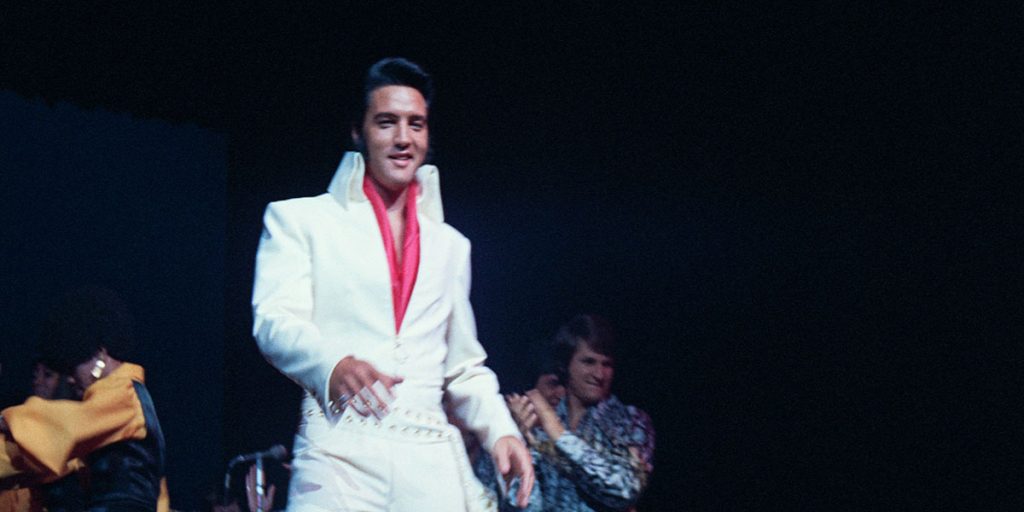
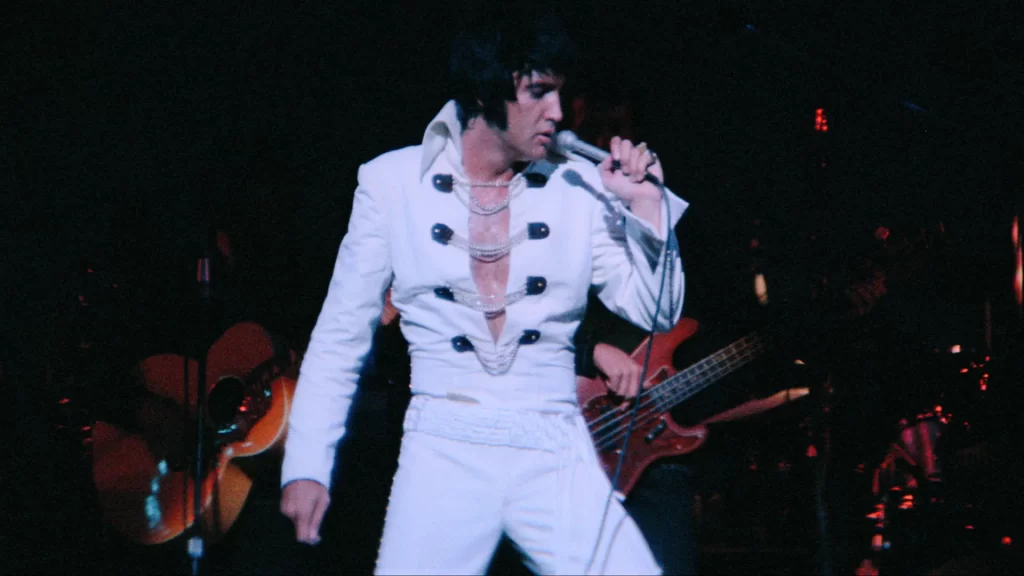
Baz Luhrmann’s EPiC: Elvis Presley in Concert opens with the “branding” of Luhrman’s proper Elvis biopic, a film I have not seen and know enough about myself to know I should not see. But if it led to this big, splashy, IMAX-formatted spotlight for the real thing, well, I’m thankful for it. The director reportedly came across scores of unused footage (much of it shot for Warner Bros’ 1970s concert movies Elvis: That’s the Way It Is and Elvis on Tour), painstakingly restored it, combined it with other archival footage and interviews, and came up with the idea of this combination of bio-documentary and concert movie.
It’s impeccably assembled, beginning with an efficient biographical summary (he gives you what you need to know about the pre-live era, and illustrates it well) before moving into the meat of the movie, spotlighting the King’s live performances in the late ‘60s and early ‘70s. (It mercifully does not include the later years.) As with the earlier docs, the rehearsal footage is enlightening, spotlighting the camaraderie and familial feeling of the band and backing vocalists, his playfulness, and his skill as a bandleader (perhaps his most underrated talent). And the concert footage is electrifying; I found myself watching every single song with a big, stupid grin on my face. Most importantly, folding the bio-doc into the concert movie is a masterstroke, dropping in archival audio of Elvis’s stories and memories between the songs that best illustrate and complement them. It’s not a cradle-to-grave documentary, but for God’s sake, we’ve had plenty of those for him; this is its own thing, and it’s a real treat.
I’ve enjoyed every film Raoul Peck has made since I Am Not Your Negro, my favorite film (documentary or narrative) of 2016, while quietly wondering if he had another one that great in him. With Orwell: 2 + 2 = 5, he proves, unquestionably, that he does. It’s the follow-up film most like Negro, again spotlighting the work of a timeless author solely by his words, accompanied by images from both the times that inspired them and the current political moment that they may as well be commenting on. But one can forgive him for repeating himself, since he does it so effectively.
The subject, obviously, is George Orwell, an author whose ideas and terminology seem to only grow more relevant with time, yet are often carelessly deployed by those who don’t understand them, or even to mean the opposite of what he intended (ironically enough). It’s impeccably assembled, using everything from film adaptations of his novels to contemporary war footage and acts of political violence (Mr. Trump, as you can imagine, gets plenty of screen time) to illustrate such undeniable notions as “The very concept of objective truth is fading out in this world.” By the time he’s giving us pointed examples of newspeak in 2025, it’s clear that Peck has made the movie of the moment. “All that matters has already been written,” Orwell is quoted as writing early in the film, and by the time it’s repeated at the end, it’s a real you can say that again moment.
It would be so easy, at this point in his career, for Steven Soderbergh to rest on his laurels, churning out Oscar-bait prestige pieces and/or riffs on his earlier hits. But he’s not just looking to score runs these days; he’s building a distinct and impressive body of work. I can’t think of a single item in his 30+ feature filmography that resembles The Christophers, which is basically a two-hander, with Ian McKellan (really leaning into old-coot mode) as a legendary but cantankerous artist and Michaela Coel as an art restorer who’s been hired by his children to “finish” (forge, basically) a series of his long-thought-lost paintings. He talks and talks and talks, complaining and pontificating and offending; she mostly listens, and Coel is a first-class reactor; she says more with her wide eyes and pursed lips than in paragraphs of dialogue.
They have such contrasting energies as actors (beyond the point-by-point differences on the surface) that they make quite a compelling pairing; it’s like watching two jazz soloists figure out how to play together, and when the characters finally connect, it’s sort of seismic. Ed Solomon’s script is smart and quotable, working through variations on their dynamic, and Soderbergh directs with a warmth and coziness that contrasts the cool, sleekness of his recent work. The Christophers is so modest in the early scenes that it almost seems inert. But then it picks up steam as we get to know them, and to understand them. It barely feels like a Soderbergh movie, save for the fact that it’s elegant and intelligent and very, very good.