Rob Nixon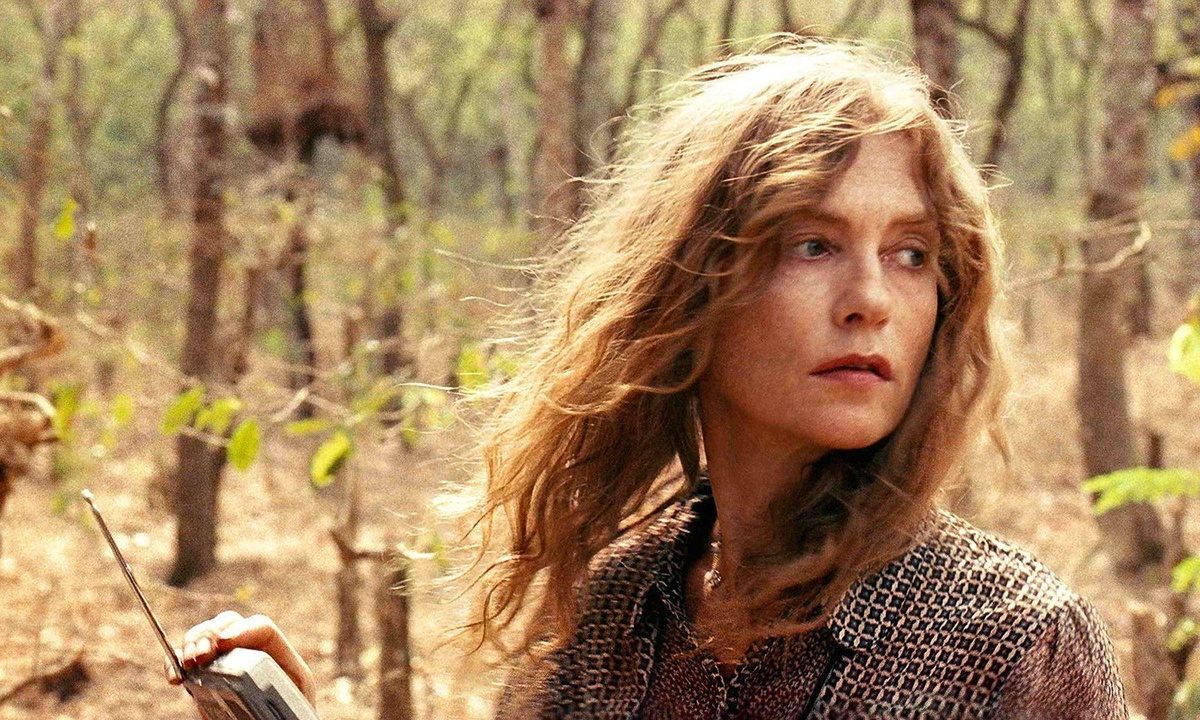
It begins, as many scary movies do, with a quietly unsettling opening sequence. Headlights move down a remote rural road at night to somber, tense music. A pack of ghostly dogs runs across the frame, in flight or pursuit. A subjective camera follows a flashlight through a dark, empty house, catching glimpses of primitive masks with haunting expressions, a broken lamp, a dead and bloodied man. Armed soldiers watch fields and buildings burn. A tattooed, shaven-headed man is locked into a smoke-filled room, collapsing on the floor. Then, broad daylight. A woman is alone on a rural dirt road (the same one?) frantically trying to hail a speeding car, hiding from a truckload of soldiers (the same ones?), running, finally climbing onto the bumper of a bus, hoping to get home. Her expression is exhausted, anxious; the flatness of her voice barely masks her desperation.
These are cues familiar from found footage horror films or those that begin on lonely, ominous roads. This could be a story of a woman terrorized or a mother fighting unseen forces to save her home and family. But this is White Material, master filmmaker Claire Denis’s intense drama about the violent collapse of European colonialism in an African nation. There are frightening moments to be sure, but no tricky jump scares or excessive gore. Most of the violence occurs off-screen, and even the bloodiest, most horrifying scene, near the end, is done with an eerie hush and calm that makes it all the more tragic and shocking. This is not a horror movie. And yet…
This is a film of terror and dread. While she might have chosen to present her subject as a sweeping historical epic or polemical statement, Denis approaches it instead as an intimate, personal nightmare, intensified by tropes associated with movies about serial slashers, zombies, widespread contagion and alien invasions, folk horror, and cursed houses with deadly family secrets:
- The main character (Isabelle Huppert) is frequently seen from behind and through window frames and doorways, as if being watched or stalked, a creepy sensation heightened by the jittery hand-held camera.
- She is single-minded, delusional in her fight for survival, perhaps driven mad by her circumstances, in deep denial and unable to fully grasp the reality of her plight. She constantly makes bad decisions that lead her back into danger.
- She is never sure who she can trust. Even those most familiar to her — neighbors, merchants, town officials — become threatening, and when she returns to the sympathetic characters who once offered some hope for help or protection, she finds them slaughtered.
- Despite her efforts to save her son, she witnesses him become part of the threat. It’s as if the “infection” rampant in the countryside has finally taken hold of him, turning him into something less human. One character says, “He’s become a dog,” recalling those ghostly opening images.
- Broadcasts from a found radio warn about the coming violence and share messages from displaced people trying to locate their loved ones. Television news reports show buildings and land on fire as the threat spreads.
- Abandoned everyday personal items and clothing are stumbled upon like omens or evidence.
- A severed horned goat head is deliberately placed as a portent of death.
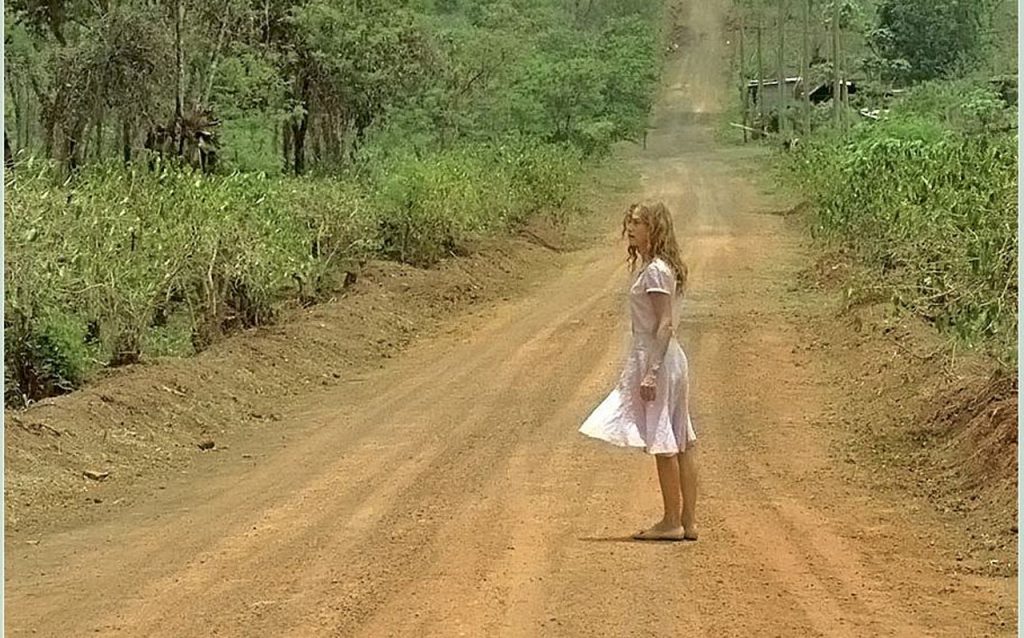
Critics and theorists (notably Robin Wood) have long maintained that the horror genre reflects the Return of the Repressed, our deepest fears and insecurities erupting out of the narrative as monsters, demons, and hostile forces from beyond. White Western colonialism, in the shape of this woman desperately trying to maintain her life and livelihood in the face of rebellion and annihilation, has hidden behind a veneer of civilization, couching its oppressive, exploitative practices as the necessary tools for economic survival and progress.
Despite her attempts to maintain a level head and a benevolent spirit, convinced that money will get her past each obstacle, her delusions are shattered bit by bit as a two-headed beast erupts out of them; she appears to be in as much danger from the army as from the rebels. The audience is kept further off balance by shifting perspectives and a fractured timeline that leave us questioning where the “evil” lies. Regardless of who ends up with the power, the terror remains.
White Material ends with the kind of twist we know from the likes of the original Night of the Living Dead (1968) or an M. Night Shyamalan or Ari Aster movie. On the heels of a heart-wrenching scene of sleeping children conscripted into the rebellion as murderous soldiers, the woman we’ve been following, even rooting for, suddenly, brutally attacks one of her own. The reaction these final scenes inspire is much like that of Kurtz in Joseph Conrad’s novel Heart of Darkness, another story about the potential for savagery and chaos under the unstable, impermanent surface of a fragile civilization: “The horror! The horror!”
“White Material” is streaming on the Criterion Channel and MUBI.