Josh Spiegel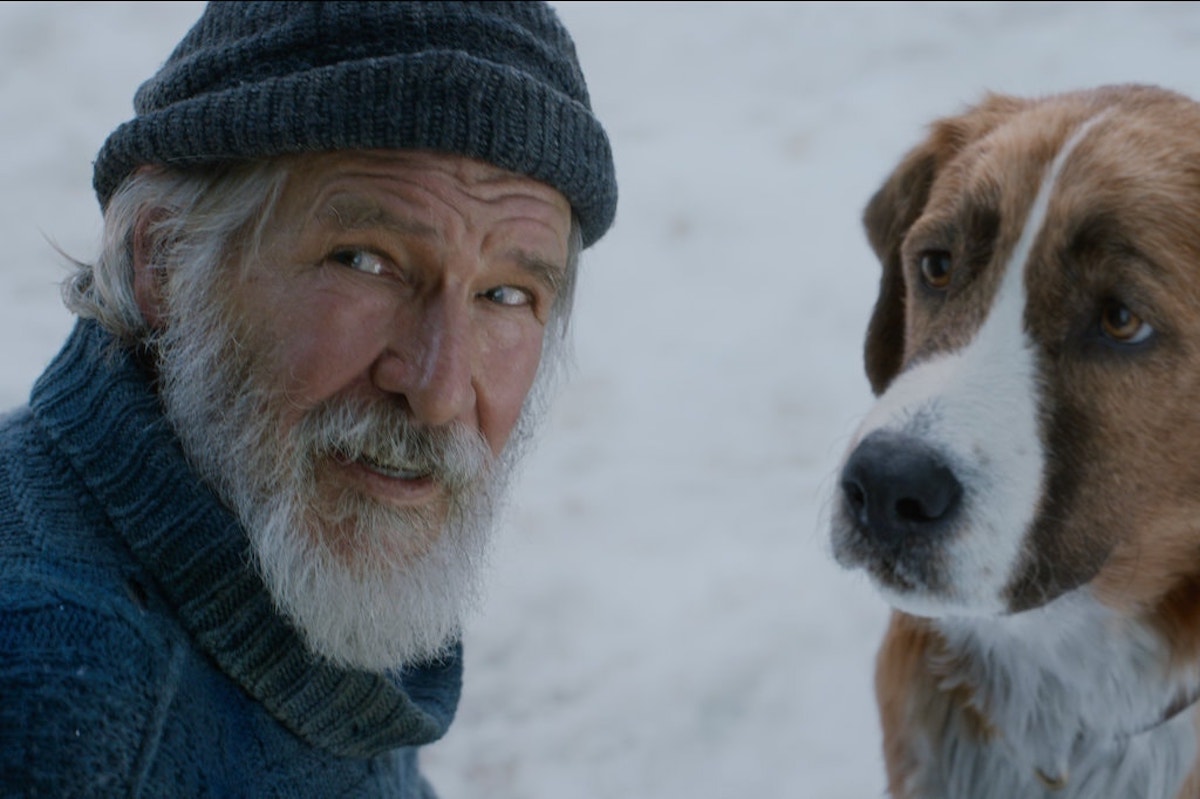
In the era before streaming dominated both television and film, discussions would crop up about this or that TV actor making the leap to movies. Being a star on the small screen never guarantees the same kind of success on the big screen, as actors like David Caruso, the male half of Friends, and Shelley Long discovered. (George Clooney may be the exception who proves the rule.) Nowadays, there’s a more notable leap from one medium to the other, but it’s behind the camera: some big-name animation directors have, in the last decade, jumped from the drawing board to live-action filmmaking. And the leaps they’re making can be extremely shaky.
One such leap occurred with the recent adaptation of Jack London’s The Call of the Wild. The adventure, which mixed live-action with CGI (since apparently, a real dog wouldn’t be as believable as one manipulated by computer), starred Harrison Ford and was directed by Chris Sanders. You may not recognize Sanders’ name, but you may well know his work: he was the co-writer and director of Disney’s 2002 animated film Lilo & Stitch, as well as the co-director of the 2010 DreamWorks Animation film How to Train Your Dragon. Sanders, whose last directing credit was the 2013 film The Croods (remember the days when Film Twitter was lit up with Croods memes? Good times), had no live-action directing credits to his name prior to The Call of the Wild.

Though his live-action debut had a reported budget of a whopping $125 million, the film didn’t exactly stumble at the box office. In its opening weekend, The Call of the Wild landed in second place, coming close behind the video-game adaptation of Sonic the Hedgehog, with over $24 million domestically. That number’s nothing to sniff at (whether you’re a real or CGI dog), of course. But a $125 million budget means no one at Disney or 20th Century Pictures is popping any champagne right now. What could have been a respectable worldwide gross of more than $80 million is marred by the fact that The Call of the Wild is set to lose $50 million at the box office, according to Variety.
Sanders, at least, is merely following in line with some other major filmmakers. Their primary work is in animation, but they’ve been compelled to shift to live-action, especially within the last 10 years. Two of the brightest lights from Pixar Animation Studios, Brad Bird and Andrew Stanton, tried their hand at live-action filmmaking in the 2010s. The same is true of Travis Knight, who moved from the stop-motion-focused Laika Animation Studios to a live-action brand deposit in the Transformers franchise. And two of the more well-liked comedy filmmakers of the last decade, Phil Lord and Christopher Miller, started with animated features, such as 2009’s Cloudy with a Chance of Meatballs, before moving onto 21 Jump Street in 2012, and then The Lego Movie and 22 Jump Street within just a month of each other in 2014.
The trend got off on the right foot with Bird’s 2011 entry in the Mission: Impossible franchise, Ghost Protocol. Though we’re now looking forward to the arrival of a seventh and eighth Mission: Impossible in the 2020s (because Tom Cruise has yet to accept that he’s approaching 60 years old and might just break his body into a million pieces one of these days), Bird’s slick, thrilling film set off the shift in the globe-trotting franchise. Though the Mission: Impossible franchise is typified by Cruise’s tireless energy, Ghost Protocol quickly proved that the action-filmmaking flair Bird had shown off in The Incredibles wasn’t the kind of talent limited to the world of animation.
Yet both Bird and his Pixar cohort had their names attached to two very notable live-action/CG financial flops from Walt Disney Pictures. Only a few months after the arrival of Ghost Protocol, Disney released Andrew Stanton’s first (and so far, only) live-action effort, 2012’s John Carter. Based on the stories written by Edgar Rice Burroughs, John Carter was designed to be a visually exciting, complex, and entertaining old-fashioned sci-fi serial, with a cast including Willem Dafoe, Thomas Haden Church, Samantha Morton, Bryan Cranston, Dominic West, and Taylor Kitsch as the eponymous hero. While Disney spared no expense in the production, it failed to hit with audiences. John Carter was a distinctive, weird sci-fi film, but one that could only garner a cult audience. With a budget ballooning close to $300 million, the film failed to surpass that number worldwide, with just $284 million around the globe. Stanton headed back retreated to animation, with the 2016 sequel Finding Dory.
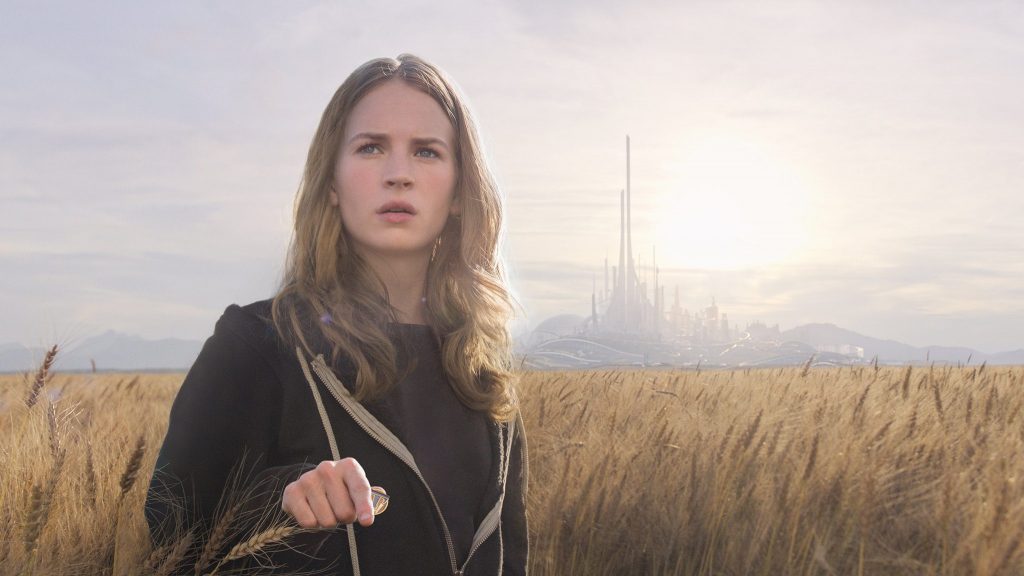
Bird followed a disturbingly similar path with his next live-action effort, 2015’s Tomorrowland. Inspired by the land of the same name at the Disney theme parks, Tomorrowland at least boasted an A-Lister (Clooney, as luck would have it, in a rare family-film appearance), and a mysterious, compelling teaser campaign that felt in keeping with the work of one of its screenwriters, Damon Lindelof of Lost and the recent Watchmen. Yet as with John Carter, Tomorrowland had a massive budget (admittedly lower than that of John Carter, somewhere in the neighborhood of $190 million), weak box office, and a small cult audience. Worldwide, the film grossed just $209 million. Bird’s next film was… a return to animation, with the 2018 sequel Incredibles 2. That, just like Finding Dory, wasn’t just any old sequel; it was a situation where a well-known and respected filmmaker returned to Pixar to make a follow-up to his most popular film to date, creating the unavoidable sense that when they were dealt with one massive blow at the box office, they went back to something safer.
Lord and Miller, on the face of it, have had more success in both animation and live-action. The two Jump Street movies were successful riffs on a cheesy 80s TV drama, with the likable and raunchy Channing Tatum and Jonah Hill as a duo of New Orleans cops who enjoy reliving high school a lot more than they should. Cloudy with a Chance of Meatballs and The Lego Movie were among the funniest, sharpest, and savviest animated films of the new century; the sequels didn’t quite measure up, perhaps in part because neither Lord nor Miller directed them. (Let’s not forget Spider-Man: Into the Spider-Verse, which Lord and Miller produced, and Lord co-wrote.)
But of course, Lord and Miller (kind of) have Solo: A Star Wars Story on their joint resume. The 2018 prequel to the original Star Wars trilogy, in which Alden Ehrenreich played the raffish pilot of the Millennium Falcon, was intended to let audiences revisit one of the franchise’s most beloved characters. And, of equal importance, it was intended to be directed by Lord and Miller. Instead, midway through production, the duo were let go (oh, those pesky creative differences) and replaced with Ron Howard, who steered the production to completion. We’ll never quite know for sure why Lord and Miller were fired. But while the directing pair had plenty of success with seemingly impossible ideas — who would want to watch a 21 Jump Street movie? Or a movie about Lego bricks? — this was one impossible idea they couldn’t master.

Knight has arguably had the most success so far in shifting from animation to live-action, if only because he doesn’t have a big-budget flop associated with his name yet. After helming the genuinely brilliant 2016 stop-motion animated Kubo and the Two Strings, he was announced as the director of 2018’s Bumblebee, a Transformers spin-off all about the shape-shifting robot/car and the friendship it makes with a teenage girl in the 1980s. Unlike John Carter, Tomorrowland, or Solo, this latest Transformers title wasn’t a giant flop when it arrived in the holiday season. But Bumblebee also wasn’t an out-of-the-box hit, grossing just $127 million domestically off a budget of at least $100 million.
Knight, unlike the other helmers here, hasn’t yet made his second live-action film, at least ensuring a lack of a box-office disaster on his resume. There was a three-month period in 2019 when he was the latest name attached to direct Uncharted, the video-game adaptation that will definitely, totally happen in spite of being in development hell for years. (Knight left the project right at the end of last year.)
To be fair, these aren’t the only modern animation directors who’ve leapt from one medium to the other. Perhaps the most famous and enduring example is Tim Burton, who started his career at Walt Disney Animation Studios, before transitioning to live-action fare like Beetlejuice and Batman, then producing titles like The Nightmare Before Christmas and directing Frankenweenie (the feature remake from 2012). There’s also Mike Mitchell, whose feature-directing career began with Deuce Bigalow: Male Gigolo (yes, really) before directing Shrek Forever After, Trolls, and The Lego Movie 2: The Second Part.
Fellow DreamWorks Animation director Jennifer Yuh Nelson also moved to live-action with the 2018 live-action film The Darkest Minds. Yuh Nelson made history as the first sole female director of a DreamWorks Animation feature film with Kung Fu Panda 2 (and to be more specific, she was the first sole female director of any American-made animated feature film from a major studio, including Disney and Pixar). The Darkest Minds, sadly, made minimal impact at all, grossing just $41 million at the box office. And later this year, another female animation director will make the shift to live-action: Brenda Chapman, one of the co-directors of Brave, has helmed the live-action drama Come Away, starring Angelina Jolie and David Oyelowo. (The film premiered in January at Sundance.)
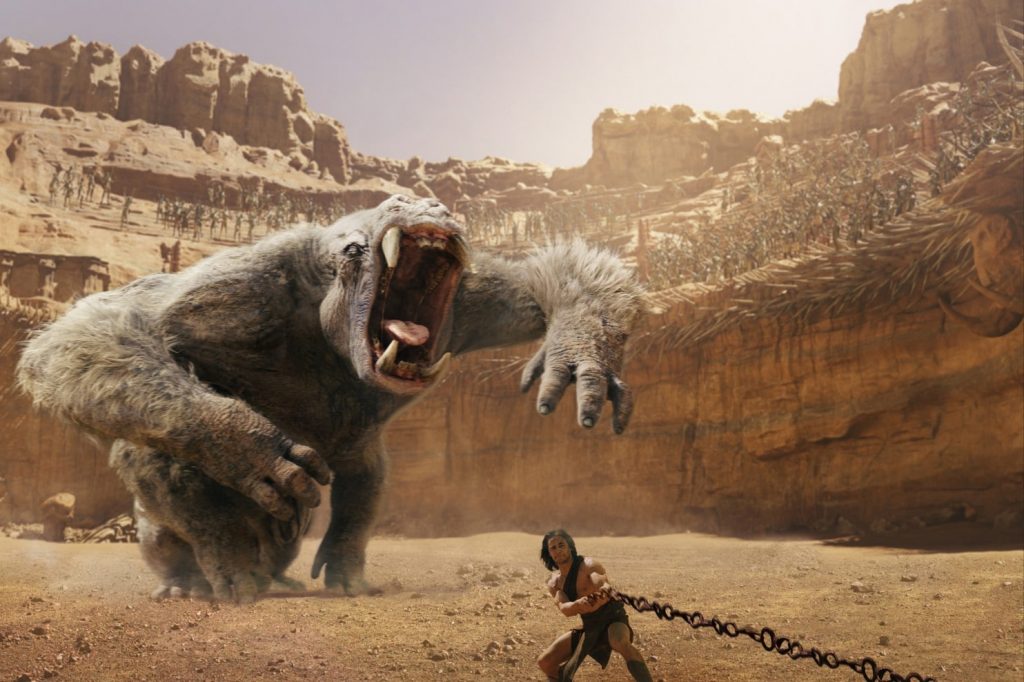
The appeal of making live-action stories is clear for these animation filmmakers, who could feel hemmed in by perceived constraints of hand-drawn, stop-motion, and computer animation. (Stanton, for one, was drawn into the storytelling of John Carter as a way to pay homage to films like Star Wars and Lawrence of Arabia, as he noted in a New Yorker profile in 2011.) Yet the world of animation is one of few borders and plentiful possibilities. That same profile in The New Yorker makes it clear that Stanton attempted to bring the Pixar style to live-action, which led to expensive reshoots and a perception that his directing style was alienating and frustrating, despite working wonders in the Pixar studios.
Both Bird and Stanton wanted to broaden their horizons. Bird’s great unrealized project focuses on the devastating San Francisco earthquake of 1906, which at one point would have been a co-production between Disney and Warner Bros., precisely because of how massive his storytelling ambitions were. But Bird, unlike his fellow Pixar director, hasn’t returned to live-action since the failure of Tomorrowland. (Stanton has shifted his live-action ambitions to the small screen, directing recent episodes of Better Call Saul and Stranger Things.)
So why have these skilled directors not found the same level of success in live-action/CG fare that they have in animation? Lord and Miller found success surprised everyone with the success of the two Jump Street movies, but when it came to a project with a ballooning budget and weighty expectations, they struggled. (And in all fairness, so did Ron Howard.) Brad Bird did prove his live-action worth with Mission: Impossible – Ghost Protocol, though the film was more impersonal than his animated projects. Chris Sanders made a moderately well-received live-action/CG adventure that could’ve been a sleeper hit if only it wasn’t reliant on CG.
Modern feature animation has allowed filmmakers such as Lord and Miller, Bird, and Sanders the freedom to explore emotional depths infrequently depicted in live-action fare, from the struggles of parenthood to more profound questions pondering our very existence. Live-action filmmaking is a siren song for these same filmmakers, but the creative freedom they’ve found in animation isn’t as easy to touch upon. American animation may still be heavily targeted to family audiences; however, some of its best practitioners realize only too late that its storytelling capacities are far more boundless than those of the real world.