“Growing up can be a little bit scary and weird,” explains Kayla (Elsie Fisher) in one of the YouTube videos that frame Bo Burnham’s Eighth Grade – and also, it seems, articulating one of the many running themes in this year’s SXSW Film Festival slate. That’s not terribly surprising, as the coming-of-age drama is one of the most venerable corners of indie filmmaking, but four of this year’s films (all focused on young women) are particularly noteworthy for their sensitivity, candor, and intelligence.

Kayla’s videos are filled with vague advice about “putting yourself out there” and “how to be confident,” but they often amount to wishful thinking, the young woman merely talking herself into those ideas. One of the many things Eighth Grade (in theaters this summer) understands about being young in the year 2018 is how clear the divide is between our best online selves, confidently surfing social media services and filling out Buzzfeed quizzes, and the IRL version, which spend the rest of the day in a constant state of social anxiety. Kayla, who is a week away from finishing middle school, tries to pep-talk herself into a better life, covering her mirror in Post-It reminders and affirmations, engaging in the kind of rehearsed “conversations” that are not exclusive to her age. But when she gest to school, she walks the halls with her eyes downcast, and her conversations with classmates are painfully uncomfortable.
In those moments, Eighth Grade is as visceral as any horror movie – you just keep holding your breath for her, hoping for the best as she navigates these small moments of skin-crawling awkwardness, aware that those interactions (much like these teenage years) will get better someday. Fisher is a real find, wielding the character’s roller-coaster mood swings and open-wound insecurities with bravery and wit, and the supporting roles are equally convincing (refreshingly, it’s a movie full of eighth graders who actually look like eighth graders). Burnham, a stand-up comic best known in movies for his turn as the least talented of Kumail’s stand-up friends in The Big Sick, is a generous and graceful filmmaker, and this is a promising debut.

But before she disappears, one of their impromptu jam sessions – he was a musician, once upon a time, as was her late mother – yields a pop song that is, surprisingly enough, pretty great. (Clemons has first-class pipes, which helps.) Their unexpected collaboration prompts a new bond between the pair, which has outcomes both good (Sam begins to understand her dad, belatedly, through his music) and bad (he’s still holding on to some hard-to-shake old dreams).
Both actors are capable of projecting nuclear levels of charisma, so it’s fun just to watch them share the screen (and Offerman generates similar easy-breezy chemistry with co-stars Toni Collette and Ted Danson). The logline of Hearts Beat Loud makes it sound like the prototypical festival movie, a film that was built in a lab for the express purpose of going over well at SXSW or Sundance (where it premiered), and, in spots, it shows. But it’s hard to ding a movie that likes its characters, or frankly its audience, as much as this one.

Griffiths’ lived-in screenplay nails the everybody-knows-everybody vibe of their small, insular community, the perfectly-named Shady Plains Mobile Home Park, as well as the little shockwaves a relationship like this can send through such a place. Lynskey is marvelous (as usual) and Gallagher is particularly strong, using his well-practiced good-guy charisma to shield a layer of real darkness. Some of the character touches are a bit too much, and Griffiths’ approach is so low-key that, in spots, the picture threatens to slow to inertia. But it’s full of tiny, perfect touches (like the specific way the mother and daughter curl up together on their tiny trailer bed), and there’s something refreshing about the way the movie just lets these character talk – and listen – to each other.
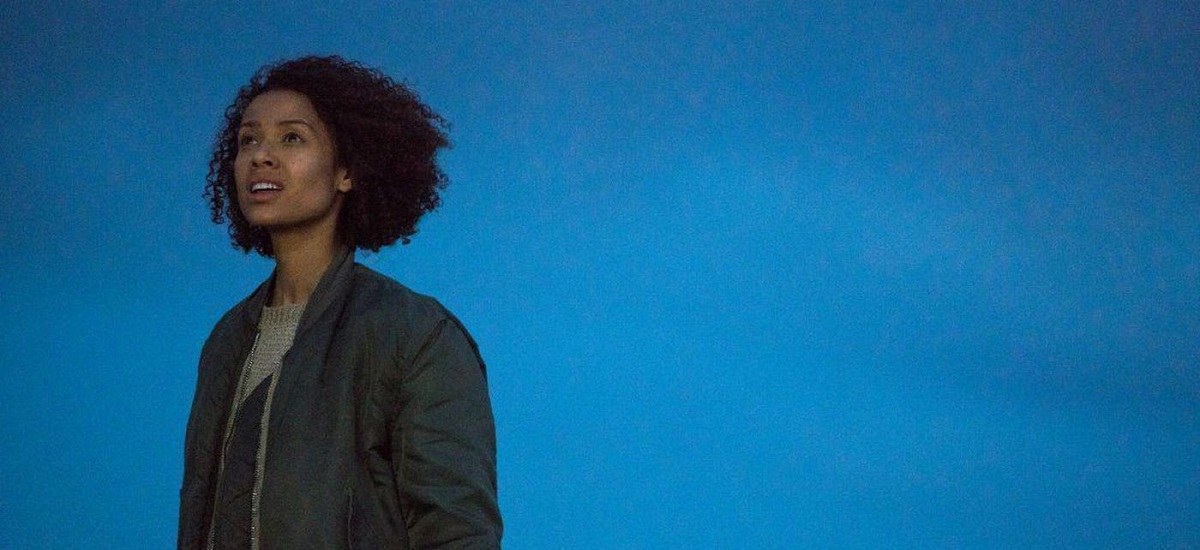
The young woman of interest this time is Lila (Saniyya Sidney) – though we’re first introduced to her mother Ruth (Gugu Mbatha-Raw), a recovering addict whose seizures start earthquakes. She’s making her way back to the home where she left Lila in the care of her mother (Lorraine Toussaint); it soon becomes clear that Ruth’s seizures are not an anomaly, but that all three women have “abilities,” parlor tricks powers passed down from generation to generation. Although Ruth insists, “We’re not superheroes,” there’s something of an origin story element at work here.
But that reduces this very special film to disposable superhero babble. The writing (by Hart and producer Jordan Horowitz) is richly detailed, the elegance and patience of the visual storytelling is astonishing, and the performances are marvelous – after several films of wheel-spinning, it’s a thrill to see Mbatha-Raw finally bite into a role worthy of her talents, and Ms. Toussaint, one of our finest but less-acknowledged character actors, shines in a long-overdue showcase role. And the closing passages are just shattering, as the matriarch of this family not only clarifies her own destiny, but those of the women she’s raised. It’s an astonishing piece of work – and one in which, for a change, the coming of age arc isn’t reserved solely for its youngest character.