Every Tuesday, discriminating viewers are confronted with a flurry of choices: new releases on disc and on demand, vintage and original movies on any number of streaming platforms, catalogue titles making a splash on Blu-ray or 4K. This twice-monthly column sifts through all of those choices to pluck out the movies most worth your time, no matter how you’re watching.
PICK OF THE WEEK:
Eyes Wide Shut: The timing couldn’t be better for Stanley Kubrick’s posthumously released final film to join the Criterion Collection (in 4K, no less), between its critical reappraisal in recent years, its newfound relevance in light of the drip-drip of Epstein information, and its status as a subversive Christmas movie thanks to its holiday setting. And that might be the most subversive lens to view it through, eschewing religious observance, holiday cheer, and the warmth of family. Kubrick knows what this time of year is really all about: the quest for jealousy sex to get back at your hot, taunting wife. (Includes new and archival interviews, documentaries, press conference, teaser, trailer, promos, and essay by Megan Abbott.)
ON NETFLIX:
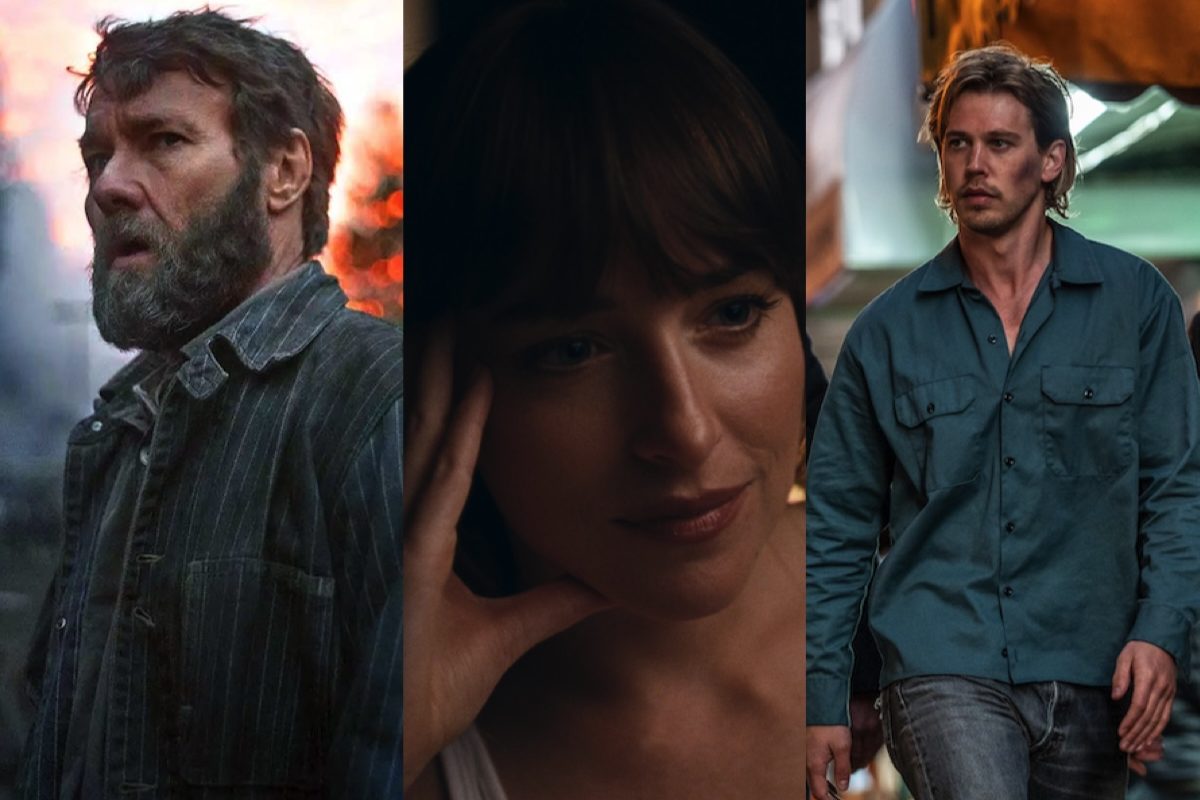
Train Dreams: Clint Bentley’s adaptation of Denis Johnson’s novella will no doubt be described by many as “Malick-esque,” because of its aesthetics: nature photography, lens flares, hushed narration whose lyricism matches the sweeping beauty of the images. But it more directly recalls the shorthand of his storytelling — how he’ll let an offhand moment or an unexpected tableau tell us everything about the characters and their relationships. It’s a tender, achingly accurate portrait of overwhelming grief, ranking with Loving as Joel Edgerton’s best work to date, mostly in his heart-wrenching and devastating reactive moments. And what a delight it is that William H. Macy is now old enough to play coots and codgers.
Selena y Los Dinos: Director Isabel Castro helms a fairly conventional, family-approved bio-documentary about the Tejano singing superstar Selena Quintanilla, detailing her rise to fame via home movies and testimonials and performance footage and archival interviews — so if you love or are at least interested in the artist, you’ll find it compelling. One aspect is worth shouting out, however; Castro treats Selena’s tragic death in 1995 as the shock it was at the time, letting it land unexpectedly just as it did in real life. She does not mention her killer, who was part of the inner circle for years, or foreshadow what’s to come with ominous music and foreboding sound bytes, and that’s a wise, unexpected choice that gives her passing the impact it deserves.
ON AMAZON PRIME:
After the Hunt: Luca Guadagnino’s latest is a story about cancel culture that refuses the easy cop-outs, and lets everyone be messy. I’m not sure why it still feels like such a subversion when Roberts plays an unlikable, or even merely flawed, character — that’s just a good long stint as America’s Sweetheart, I guess — but it’s exhilarating here, so that it’s not a matter of cheering our heroine on as she rails against trigger warnings or they/them pronouns or whatever. It’s understanding that these are the grievances of a broken person who resents being asked to consider another point-of-view. Thankfully, Guadagnino and screenwriter Nora Garrett harbor no such resistance, and are willing to see all their characters equally (which means to see them all as messy). He’s making a social drama in the visual and aural language of a thriller, and it works — up until the unnecessary epilogue, which is becoming the scourge of modern screenwriting.
ON HULU:
Love+War: This bio-documentary from directors Chai Vasarhelyi and Jimmy Chin (Free Solo) profiles Pulitzer Prize–winning conflict photographer Lynsey Addario, whom we first see on the ground in the early days of the Ukraine invasion, capturing raw and horrifying images of carnage from Russian forces bombing civilian evacuation routes (a war crime!) which make the front page of the New York Times and the floor of the Senate. And then she takes a car, plane, and train back home — and makes it in time for her son’s music performance. “Oh my god, kids are so much harder than war,” she says, at the end of the day. If Vasarhelyi and Chin were just telling the story of her time in war zones — including her harrowing tenure in Iraq and her week-long kidnapping in Libya — Love+War would be worth watching. But it’s tough to think of a film that more directly and viscerally tackles the issue of “work-life balance,” and because it’s so much about that, it’s freed from the confines of the typical bio-documentary; it’s organized thematically rather than chronologically, working towards a catharsis that hits much harder than it might have otherwise.
ON 4K / BLU-RAY / DVD / VOD:
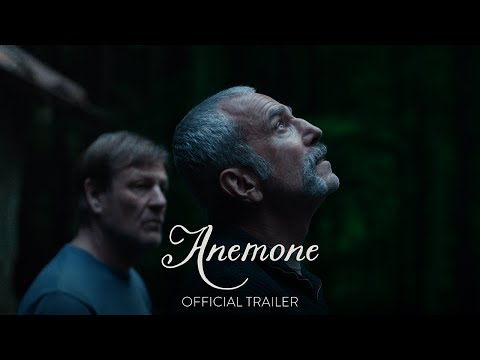
Anemone: This fall festival drama marked Daniel Day-Lewis’s first film appearance in eight years, after starring in Phantom Thread and then retiring, presumably (and sensibly) believing that it wasn’t going to get any better than that. It doesn’t here, but he had other motives; Anemone is the feature directorial debut of his son, Ronan Day-Lewis, and they wrote the script together. It feels like the kind of role an actor would write to rouse himself out of retirement: lots of long, searching monologues, non-verbal stewing, and enigmatic self-awareness. He’s the best thing in it — Sean Bean and Samantha Morton don’t have enough to do in their supporting roles, and though the younger Day-Lewis can move the camera well, the deliberate pacing and the slow drip of exposition will drive less patient viewers mad. But it hopefully re-lit the fires for Daniel Day-Lewis enough that we’ll see more work yet, perhaps with a fine filmmaker he’s not related to.
ON BLU-RAY / DVD / VOD:
Splitsville: Michael Angelo Covino and Kyle Marvin broke through with 2019’s The Climb, proving themselves hysterically funny and also compact filmmakers: Covino directs, while they co-write, co-produce, and co-star. For their follow-up, they’ve added a couple of marquee names — Dakota Johnson and Hit Man sensation Adria Arjona — but kept the wry sensibility and wary self-awareness that made The Climb so special. They’re writing is deft, keenly observed and off-handedly funny (the references to Vanilla Sky and Lorenzo’s Oil are utterly inexplicable, which is part of why they’re hilarious), and it’s that rarest of cinematic beasts, a character-driven comedy that’s also visually dynamic. Splitsville is whip-smart, sexy as hell, and features what may be the single funniest fight scene in movie history. (Includes featurettes, trailers, and TV spots.)
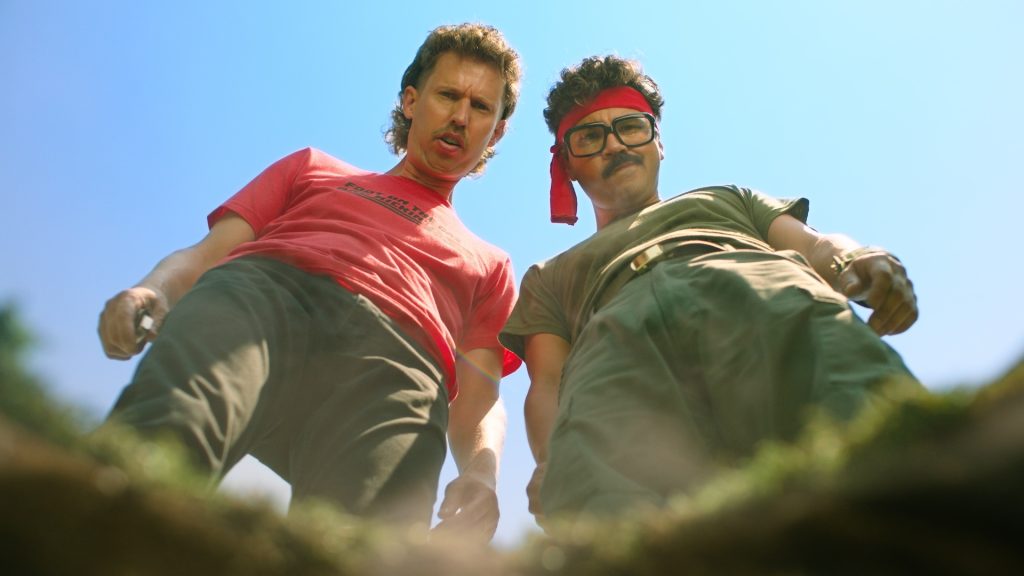
Caught Stealing: Darren Aronfsky has come to take himself so seriously over the past few years (and films) that it’s kind of a blast to watch him let his hair down with this late-‘90s Gotham crime caper, and the clever cutting and whiz-bang camerawork (by his longtime collaborator Matthew Libatique) nicely recaptures the kineticism that made his early pictures so thrilling. Austin Butler is a solid anchor (I appreciate how much of the movie he spends getting his ass beat) and he generates genuine sparks with Zoe Kravitz, but the real juice comes from the supporting players — particularly the trigger-happy Hasids played by Liev Schreiber and Vincent D’Onofrio, whom I’d gladly watch in an action movie of their own. (Includes featurettes.)
Together: For folks who just can’t get enough body horror, first-time writer/director Michael Shanks offers up double the ick. Real-life couple Dave Franco and Alison Brie play a long-time pair who move to the sticks, only to trigger a mysterious curse that keeps attaching them to each other at inopportune moments. (Yes, including that one.) Shanks’s script is fairly clever, but Franco and Brie work overtime, to great effect; these are sweaty, bleary-eyed, feral performances, and the pair are equally gifted at teasing out the dread and the pitch-black comedy. The big ending doesn’t quite live up to what comes before (the effects get pretty dodgy), but gore-hounds and sickos will find much to like here. (Includes interviews, featurette, teaser, and trailer.)
Eleanor the Great: Scarlett Johansson makes her directorial debut with this modest, gentle story of a woman who lies about being a Holocaust survivor. Wait, come back! It’s frankly a testament to her sure hand as a filmmaker that she mostly pulls it off — both in her low-key approach to the material, and in the good sense exhibited by casting June Squibb in the title role. Squibb is a 94-year-old former New Yorker who moves back to the city when her live-in best friend (an actual survivor) passes away. She accidentally wanders into a meeting of survivors and finds herself, mostly out of politeness, telling her friend’s story as her own, and things go awry from there. Squibb is a delight, unsurprisingly; the real find here is young Erin Kellyman, warm and winning as the journalism student who intends to profile Eleanor, and ends up in a sticky friendship with her.
Riefenstahl: Nazi propagandist Leni Riefenstahl got the full, cradle-to-grave treatment (with her own participation) in the three-plus hour 1993 documentary The Wonderful, Horrible Life of Leni Riefenstahl. What director Andres Veiel is up to in this new documentary is something more impressionistic, an exploration of her attempts to rehabilitate her image in her later years, via obfuscation, excuse-making, accusations of slander, and full-on fictionalizing. Drawing on her extensive archives, copious clips, and even outtakes from the earlier doc, it’s less a biographical profile than a meditation on casual evil — which makes it mighty topical at the moment. (Includes trailers.)
Secret Mall Apartment: It sounds like a wacky anecdote movie, and maybe it even starts as one; for four years in the early 2000s, a group of artists and friends took over an “underutilized space” in the Providence Place Mall in Providence, Rhode Island, filling it with cast-off furniture and entertainment devices and creating a little home away from home. It makes for a funny story, but Jeremy Workman’s documentary goes beyond that, providing context for the tumultuous history of the community around the mall, analyzing its purpose as a found art project, and detailing the fallout of their inevitable, eventual discovery. It’s fast and funny, but surprisingly introspective as well. (Includes deleted and additional scenes, interviews, Q&As, featurettes, and trailers.)
I’m “George Lucas”: A Connor Ratliff Story: Ryan Jacobi’s documentary is similarly structured, beginning with a funny bit of business — detailing how improvisational comedian Connor Ratliff created “The George Lucas Talk Show” on the stage of the Upright Citizens Brigade, turning his longtime obsession with the “Star Wars” creator into an odd exploration of much more than Wookies and droids. But it becomes a sharply nuanced character study, as Ratliff feels the “bit” slowly taking over his life and career, and rethinking both in the process. Ratliff is a naturally funny and inherently fascinating figure, and Jacobi details this identity crisis with sympathy and humor. (Includes audio commentaries, deleted scenes, extended interviews, introduction, Q&A, live show footage, and theatrical trailer.)
Christmas Eve in Miller’s Point: Omnes Films, the filmmaking collective behind this year’s sleeper hit Eephus, previously produced this 2024 comedy/drama (new on Blu from IFC Films), set during and around an extended family’s final holiday gathering in the Long Island home where they were raised. The cast of characters is sprawling, including the family, their various romantic partners, and townfolk who come into their orbit over the one, long, pre-Christmas night, and the picture’s primary achievement is in establishing them and getting to business — you know exactly who everyone is, right off the bat, without resorting to lazy stereotypes. There are ongoing arguments and longstanding traditions, and we prepare for those conflicts to wrap themselves up eventually. But director Tyler Thomas Taormina, his co-writer Eric Berger, and cinematographer Carson Lund (who directed Eephus) do something entirely unexpected, spinning off on an out-of-the-house detour in the second half that moves the entire enterprise into something closer to magic realism. It shouldn’t work, but it does; that goes for the whole movie. (Includes interview, trailer, and essay by Brandon Streussnig.)

ON 4K:
A Better Tomorrow Trilogy: The latest release from Shout Factory’s immediately indispensable “Hong Kong Cinema Classics” line begins with John Woo’s 1986 breakthrough film A Better Tomorrow, which is truly the starter pistol for the entire “heroic bloodshed” genre, as well as the “gun fu” action films that would define Woo, and Hong Kong filmmaking, for years to come. It’s a formative movie, and you see him still figuring it out, finding the balance between melodrama and gunplay; sometimes it’s a little wobbly, but when it hits, it hits. It was also the big break of Woo’s frequent star Chow Yun-fat, very much a supporting player in the first film but elevated to the star of the following year’s A Better Tomorrow II, in spite of his very graphic death at the end of part one. (Woo solves this little inconvenience by having Chow play the original character’s twin, a goofy notion that they nevertheless have fun with.) Woo’s footing is more assured this time around, the tonal shifts are smoother, and the action is even sharper — up to and including the jaw-dropping, blood-spurting conclusion, one of the best pure action sequences of Woo’s career (and therefore, in all of cinema). Producer Tsui Hark took over for the prequel A Better Tomorrow III: Love & Death in Saigon, and while it’s the weakest of the three (try as he might, Hark simply cannot replicate the manic energy of Woo’s action beats), it sports yet another killer Chow Yun-fat turn, and a fine match for him in his guns-a-blazing co-star Anita Mui. (Includes A Better Tomorrow II workprint, A Better Tomorrow III Taiwanese cute, audio commentaries, interviews, and trailers.)
Él: A new, and worthy, addition to the Criterion Collection. The quickie, hand-drawn, “Made in Mexico” logo that flashes on the screen at its inception seems an apt encapsulation of the specific charms of Luis Buñuel’s adaptation of Mercedes Pinto’s novel — it’s a sleek, well-executed thriller from a master filmmaker, but it also feels handmade, the work of a sui generis artist with a specific, distinctive worldview. Arturo de Córdova stars as a wealthy boor who pursues the fiancee of an ostensible friend; as soon as he attains her, of course, he reverts to jealousy, convinced she’s constantly stepping out on him. As their new marriage curdles, Buñuel crafts a sometimes harrowing portrait of psychological abuse where physical violence is always a looming threat, zeroing in perceptively on the insecurities and entitlement that motivates this monster. (Includes new and archival interviews, video essay, panel discussion, and essay by Fernanda Solórzano.)
Hell’s Angels: Most modern cinephiles know all about Howard Hughes’s 1930 budget-buster thanks to its chronicling in Martin Scorsese’s The Aviator, and unfortunately, the story behind it is more compelling than the story onscreen — its story of two servicemen brothers in love with the same girl was an old chestnut even when Hughes started the picture in 1927, and Ben Lyon and James Hall are charisma vacuums in those roles (though Jean Harlow is a peach as the girl in question). It’s worth seeing, however, as a fascinating curio of an art form in transition; since it was begun as a silent (with several sequences retained), transitioned to a talkie, and included primitive color photography techniques, it feels like an illustrated walk through the technologies that changed the art in rapid succession. And the dogfight footage, the source of so many of the film’s costs and delays, remains astonishing nearly a century later. (Includes interviews, outtakes with commentary, and essay by Fred Kaplan.)
Howards End: If you lived through the Cool Indie Movies of the ‘90s, you remember what a bad rap Merchant-Ivory got; the king of the era himself, Quentin Tarantino, skewered them as musty, dull, and (worst of all) respectable. But, as we so often say these days, we don’t know how good we had it — and not just because Howards End (out in a luminous new 4K from Cohen Media Group) is the kind of intelligent yet sentimental adult-oriented movie we rarely get anymore, from indie filmmakers or anyone else. It’s that the reputation is all off; this isn’t snooty Masterpiece Theatre fare, but an earthy, funny, emotionally wrenching story of class guilt, romantic compromise, and familial tension. Emma Thompson won an Oscar, and deserved one, for her marvelous work at the story’s center, while Anthony Hopkins reminded us of his considerable range a mere year after winning that honor for Silence of the Lambs. Helena Bonham-Carter is equally memorable as Thompson’s sister, creating a sibling bond that’s deliciously credible (and, later, tragic when it’s severed). (Includes audio commentary, interviews, Q&A, featurettes, and trailers.)
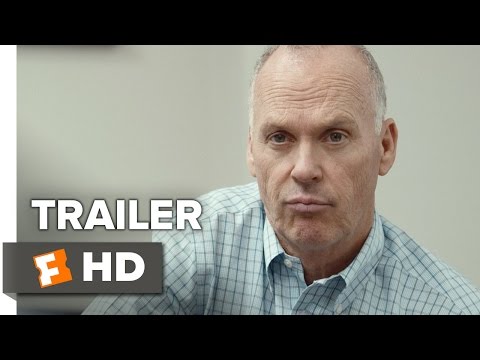
Spotlight: Tom McCarthy’s enthralling Oscar winner (new to 4K from Shout Selects) is obsessed with details: the shop-talk of an editorial meeting, the shorthand of an investigative team, the euphemisms of a diocese directory, the logistics of sealed documents and exhibit attachments. McCarthy, as the film’s critics noted with a bit too much derision, isn’t concerned with dazzling us with style; he’s more concerned with immersion, with putting us in those rooms next to those reporters, to better understand the thrills of their discoveries, the disappointments of their own fumbles, and the horror as they realize what they’ve unlocked, and how far out it reaches. Every performance sings, every scene punches, every payoff delivers. It’s first-class filmmaking, full stop. (Includes featurettes.)
Alec Guinness Masterpiece Collection: The Ealing Studios made an enduring mark on postwar British cinema with a series of wry, sophisticated comedies, many of them starring the great Alec Guinness (here’s your obligatory Star Wars mention for the ol’ SEO), collected here in crisp 4K editions from KL. Kind Hearts and Coronets is a pitch-black murder comedy, a ruthless class satire in which an illegitimate heir sets about bumping off everyone ahead of him, one by one (and all played, hilariously, by Mr. Guinness). The execution is so high-minded, so classy and clipped, that the low-down cold-bloodedness of the script is even funnier – there’s nothing quite like “good” people doing horrible things. The Man in the White Suit is, similarly, a comedy in theory and style, but it’s dealing with the very serious business of class structure, workers’ woes, and corporate intrigue, with Guinness as a scientist who discovers an endlessly durable and cleanable fabric that will, he discovers, put a lot of people out of business. It’s a smart, pointed picture that navigates gracefully into knockabout farce in act three. (Includes audio commentary, interviews, and trailer.) The Lavender Hill Mob stars Guinness as a fussy bank inspector who cooks up a clever plan to rob his employers. Most of the early laughs come from the incongruity of his stiff-upper-lip figure as a criminal mastermind, but the brilliant script has enough clever ideas for several different comedies, and director Charles Crichton (later of A Fish Called Wanda) cheerfully pursues all of them. But the best of the bunch is The Ladykillers, a heist movie with a structure later swiped by Quick Change (and many more), in which the job itself is a breeze, and everything that follows is absolutely impossible. The complications come courtesy of the sweet little old lady (Katie Johnson, resplendent) from whom our criminal gang rents a room, and the Switch watch precision with which William Rose’s screenplay carefully tees up and swats down the turns of the narrative is awe-inspiring. (Includes audio commentaries, interviews, featurettes, and trailers.)
Airport: The Complete Four-Film Collection: There’s an odd phenomenon that occurs when a satire becomes ubiquitous. Take, for example, Airplane!, the 1980 classic that helped solidify the template for the laugh-a-minute spoof movie. I’ve been watching that film for 40 years, which makes my first viewing of the original 1970 Airport — the centerpiece of not only this new set from KL Studio Classics but the entire disaster movie genre of the ‘70s — particularly surreal, since the guys behind Airplane! weren’t just mocking the narrative or the genre, but the entire visual style and filmmaking approach of that picture. But once you get past that, it’s a surprisingly robust piece of popcorn filmmaking, with impressive production values, energetic direction by director George Seaton, and a killer cast doing soap opera subplots with vigor. The formula had solidified by the time the lesser follow-up Airport 1975 hit theaters, to the extent that it feels more like accidental camp than intentional entertainment, save for a tip-top lead performance by Karen Black, who always understood the assignment. Airport ’77, which features a jet liner crashing into the ocean, feels like an extremely calculated attempt to mate Airport with The Poseidon Adventure, but the star power (particularly a frazzled Jack Lemmon as the pilot) keeps it engaging. The franchise was running on fumes by the time it closed out with The Concorde: Airport ’79, where even the stars feel like B-listers. That said, taken together, the quartet functions as a fairly insightful snapshot into mainstream moviemaking in the ‘70s — the kinds of pictures that were making the fortunes which allowed our New Hollywood faves to experiment. (Includes audio commentaries, trailers, and essay by Julie Kirgo.)
Paul: This 2011 comedy, new on 4K from KL, has mostly been memory-holed — odd, since it combines the talents behind Superbad (director Gregg Matolla and co-star Seth Rogen), Adventureland (Matolla and co-stars Bill Hader and Kristen Wiig) and Hot Fuzz (writers and stars Simon Pegg and Nick Frost). Maybe with that kind of firepower, anything less than comic perfection felt underwhelming. But there’s much to like here, including Pegg and Frost’s portraits of likable layabouts, Jason Bateman’s turn as an uptight government agent, and Rogen’s voice-only appearance as the logical outcome of the question “what if E.T., but stoned?” (Includes audio commentary, featurettes, bloopers, TV spots, theatrical trailers, and unrated cut on Blu-ray.)

Abbott & Costello Meet Frankenstein: Universal had watched both its monster franchises and the comedies of Abbott and Costello cool at the box office when some smart guy decided to combine them — and ended up with a rare horror/comedy that’s both funny and scary. It also marked a new direction for the comedy team, who took on several additional monsters in future vehicles; this film, and several of its successors, are getting the 4K treatment from KL Studio Classics, and while all of them hold up, Frankenstein remains the gold standard for horror/comedy. Few have summed up why it works more articulately than Quentin Tarantino, who credited its early influence with teaching him that different tones could be juggled in the same film. “This was one of my favorite movies as a kid,” he proclaimed in 2006. “When it was supposed to be funny, it was really funny, and when it was supposed to be scary, it was really scary.” (Includes audio commentaries and trailer.)
Abbott & Costello Meet the Invisible Man: Frankenstein’s closing gag introduces the idea of Bud and Lou meeting the Invisible Man (voiced there by Vincent Price), but it took Universal three years to deliver on that promise. The team was firmly in decline by that point, and the result was certainly not one of their best, exerting a bit too much energy on the kind of tired boxing hijinks that were more at home in a Bowery Boys programmer. But the boys have a few funny bits, the supporting cast is excellent (Sheldon Leonard and William Frawley both turn up), and the invisibility effects hold up, even in 4K. (Includes audio commentaries and trailer.)
Abbott & Costello Meet Dr. Jekyll and Mr. Hyde: Perhaps the most transparent attempt to recapture the magic of Frankenstein, this 1953 A&C vehicle works for many of the same reasons: it takes it horror trappings seriously, and it has a stellar villain in Boris Karloff, who wisely plays Jekyll and Hyde as if it’s a straight-up adaptation rather than a comic spin. As a result, you get two movies for the price of one, both of them pretty good, and it’s always fun to see Bud and Lou doing their thing in a period setting. (Includes audio commentaries and trailer.)
Abbott & Costello Meet the Mummy: This 1955 effort was their Universal swan song and penultimate picture as a team, and their schtick is certainly showing its age; the disappearing monsters and corpses, double-dealing villains, and bellowing Lou feel, most of the time, like the recycled bits that they are. But director Charles Lamont worked with the boys enough to know how to play the hits, and he stages the slapstick sequences with particular ingenuity. It’s definitely the least of this KL batch, and one of their lesser movies period — but if you’re enough of a fan (hello), there are still laughs to be had. (Includes audio commentaries and trailer.)
The Ninja Trilogy: In the early 1980s, when chairmen Menachem Golan and Yoram Globus were furiously attempting to make themselves into moguls via the somewhat-less-than-respected Cannon Films, they wisely saw martial arts movies as one of the more potentially lucrative trends to chase. They reworked the tropes of ‘70s kung fun movies into the emerging fascination with ninjas and came up with Enter the Ninja, a 1981 vehicle for Franco Nero and Sho Kosugi that Golan directed himself. It’s energetic and entertaining, if fairly pro forma; ditto 1983’s Revenge of the Ninja, with Cannon house director Sam Firstenberg taking over the reins. But the highlight here is the following year’s Ninja III: The Domination, a cuckoo-bananas, everything-but-the-kitchen-sink exploitation petri dish that somehow combines elements of the ninja pictures, The Exorcist, and the studio’s other big hit, Breakin’. And if those elements sound incongruent, boy you don’t know that half of it. (Includes audio commentaries, interviews, trailers, and intro for Revenge of the Ninja.)

ON BLU-RAY:
Four-Film Collection: James Cagney: Warner Archive returns with another round of their nicely priced, star-oriented Blu-ray sets, this one spotlighting the gifts of the immortal Mr. Cagney. And once again, their selections showcase the range of the performer in question; few studios were as readily identified with the gangster picture as WB, and few actors appeared in as many of them as Cagney, so three of the best are included here: one of the first, 1931’s The Public Enemy (with its infamous grapefruit scene); one of the last 1949’s White Heat (with its unforgettable “Top of the world, ma!” conclusion); and one of the best from the midpoint, 1938’s Angels With Dirty Faces (in which Cagney faces off against Humphrey Bogart). But Cagney was also a noted song-and-dance man, and so the set is rounded out by Yankee Doodle Dandy, the 1942 musical from director Michael Curtiz (Casabalanca) with Cagney memorably tapping and crooning as the great George M. Cohan. (Includes audio commentaries, featurettes, radio adaptations, trailers, Yankee Doodle Dandy audio vault, and “Warner Night at the Movies” for each, featuring introductions by Leonard Maltin, newsreels, short films, cartoons, and trailers.)
Four-Film Collection: Gene Kelly: Kelly, on the other hand, rarely strayed from the musical comedies that made him a star, and this set is worth grabbing if only for the inclusion of two of the finest ever made: Singin’ in the Rain, a first-class Hollywood satire and top-of-the-form toe-tapper, and An American in Paris, one of the most ambitious yet unpretentious of all the MGM classics. But the filler here consists of two gems that pair Kelly with fellow MGM stalwart Judy Garland — The Pirate and For Me and My Gal — and when two sparklers like that qualify as filler, you’re looking at a must-have. (Includes audio commentaries, featurettes, radio adaptations, short films, cartoons, audio outtakes, radio interviews, trailers, and Kelly’s American Masters documentary.)
The Gracie Allen Murder Case: So here’s a fascinating little oddity. Philo Vance creator S.S. Van Dine did, in fact, place George Burns’s comedy (and life) partner in the center of his eleventh Vance novel — though they’d been turning them into movies for quite a while by that point, and he was probably writing the books towards that eventuality. And so it happened the following year, with director Alfred E. Green (the great Pre-Code barn-burner Baby Face) and screenwriter Nat Perrin (who co-wrote Duck Soup and Helzapoppin’) creating something like the better Abbott & Costello mash-ups: it works as both a well-crafted mystery and a giggly persona-based comedy. Allen is, of course, a delight, lighting up every scene with her natural charisma and dizzy-dame non-sequiturs (she even sings!), and while Warren William, as Vance, is no William Powell, the murderer’s row of character actors (including Donald McBride and H.B. Warner) provide ample support. (Includes audio commentary.)
Sightseers: Ben Wheatley’s third feature isn’t the easy, chuckle-headed black comedy promised by its trailers—this tale of two drab thirty-somethings, newly in love, whose pastoral holiday becomes a killing spree works in unexpected ways. Wheatley instills a feeling of uncertainty and discomfort as their crimes escalate; it initially appeals to our buried, murderous impulses, but as the offenses become more petty and slight, he doesn’t shy away from the implications of the material. And the way Tina (the wonderful Alice Lowe) becomes our object of sympathy by acting—by anyone’s standards—less sympathetic is a thrilling subversion of audience assumption and expectation. (Includes new and archival audio commentaries, featurettes, interviews, outtakes, trailers, and essay by Heidi Honeycutt.)
Girls Town: A mid-‘90s indie fave, newly refurbished for Blu-ray by Film Movement Classics, in which a trio of high school girls try to make sense of a best friend’s suicide. The marquee name here is Lili Taylor, and for good reason; despite looking a tad above the age range (they try to explain it away by saying she’s flunked a few times), she brings her signature mixture of pathos and rage to the role of teen mom Patti (who, alert to Sopranos fans, breaks up with baby daddy John Ventimiglia and ends up with Michael Imperioli). Some of the dialogue feels like aimless improvisation, and the ending isn’t much. But it feels real and grounded, thanks to the scrappy filmmaking and the accurately emo intensity of being this age and absolutely loathing high school. (Includes select scene commentaries, interview, featurette, and essay by Julia Gunnison.)
Krazee Kidz Video Party: Yet another wild multi-movie treat from AGFA and Something Weird video, this time focusing on one of the darkest and most disturbing corners of no-budget moviemaking: family films. There’s something especially calculating and upsetting about a bad movie for kids, about some scuzzy producer seeing dollar signs in dressing up failed actors in animal costumes and paying them to cavort mirthlessly, and this disc offers up no less than five movies that absolutely, positively should’ve never been made (served up individually or in a five-hour “all night slumber party mode,” for maximum madness). And they come out swinging with The Big Bad Wolf, a piece of all-out nightmare fuel that feels like it could have been the inspiration for David Lynch’s rabbit shorts. Next up is Fun in Balloon Land, which you may have seen via Rifftrax, and is all but unwatchable without their commentary. Polly Pockets is like hanging out with your least talented Musical Theater major pals, and The Princess and the Magic Frog should only be shown to children who are being punished. Finally, Kingdom of Crooked Mirrors plays like all the kids in a low-rent children’s theater production got drunk for their last performance. Not to be missed! (Includes trailers.)